
Fibroblast growth factor 19/15-mediated metabolic regulation supports its drug development potential: a narrative review
 0
Graphical Abstract
Abstract
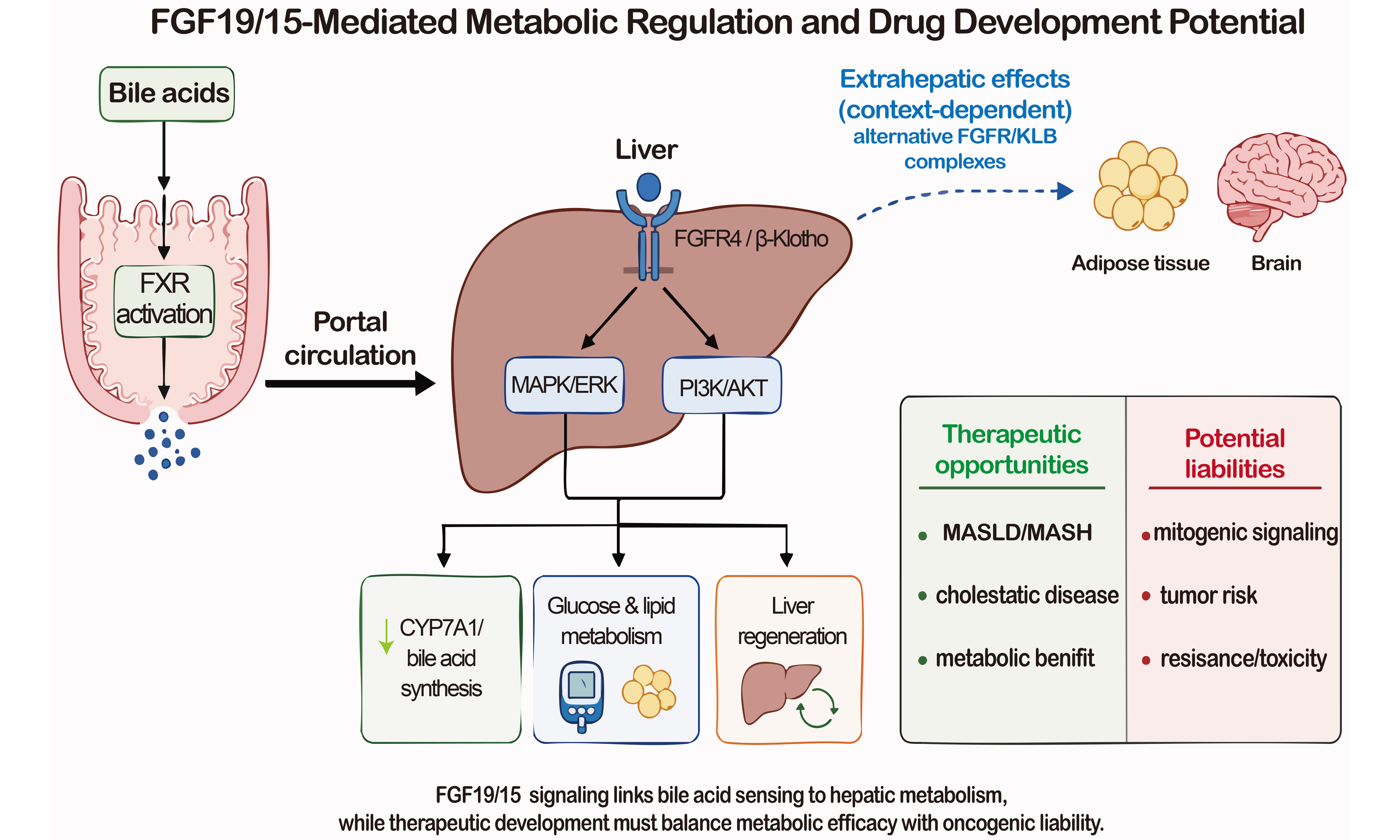
This narrative review summarizes the regulation, physiological and pathological functions, and therapeutic development of endocrine fibroblast growth factor 19 (FGF19) in humans and its murine ortholog fibroblast growth factor 15 (FGF15). FGF19/15 refers to the conserved gut-liver endocrine axis, whereas FGF19 and FGF15 are used for human and mouse evidence, respectively. FGF19/15 is mainly induced in ileal enterocytes by bile acid-activated farnesoid X receptor (FXR), enters the portal circulation, and acts on target organs, especially the liver, through the fibroblast growth factor receptor 4 (FGFR4)/β-Klotho (KLB) complex. FGF19/15 regulates bile acid synthesis, glucose metabolism, energy balance, hepatocyte proliferation, and tissue repair through pathways including mitogen-activated protein kinase/extracellular signal-regulated kinase (MAPK/ERK) and phosphatidylinositol 3-kinase/protein kinase B (PI3K/AKT). The pathway maintains metabolic homeostasis by repressing cholesterol 7 alpha-hydroxylase (CYP7A1), modulating glycogen synthesis and gluconeogenesis, and contributing to thermogenic and systemic energy regulation. These functions support the therapeutic potential of FGF19 analogs for metabolic dysfunction-associated steatotic liver disease/metabolic dysfunction-associated steatohepatitis (MASLD/MASH), cholestatic disorders, and type 2 diabetes. However, FGF19/15 also has context-dependent tumor-related effects and can promote hepatocellular carcinoma through FGF19-FGFR4 signaling. Drug development has therefore advanced in two directions: non-tumorigenic FGF19 analogs for metabolic or cholestatic diseases and selective FGFR4 inhibitors for biomarker-selected tumors. Current clinical data remain heterogeneous because of safety concerns, tissue specificity, resistance, and species-dependent interpretation. Future studies should refine biomarkers, optimize tissue-selective drug designs, and evaluate rational combination strategies.
Keywords


 Download PDF
INTRODUCTION
The fibroblast growth factor (FGF) family is one of the most diverse groups of growth factors in vertebrates, with 22 FGF ligands identified in both mice and humans[1]. Based on sequence homology and phylogenetic relationships, 18 classical mammalian FGFs are classified into six subfamilies, including five paracrine subfamilies (e.g., FGF1, FGF4, FGF7, FGF8, and FGF9) and one endocrine subfamily (FGF19)[1,2]. FGF family members regulate multiple critical processes involved in development, metabolism, and tissue homeostasis through paracrine or endocrine mechanisms[3]. These FGFs function by binding and activating high‑affinity fibroblast growth factor receptors (FGFRs, isoforms FGFR1‑4), with heparan sulfate proteoglycans (HSPGs) and Klotho family members that modulate the binding of FGFs to FGFRs[4]. The FGF signaling pathway plays a pivotal role in embryonic development, metabolism, and tissue homeostasis, and its dysregulation is closely linked to various human diseases[5].
The FGF19 subfamily is the only endocrine-acting subfamily of the FGF family. Its members exhibit low affinity for HSPGs and require Klotho co-receptors on the cell membrane to activate intracellular signaling responses[6]. This subfamily comprises three core members: FGF19, FGF21, and FGF23[6-8]. Unlike classical paracrine FGFs, members of the FGF19 subfamily lack typical heparin-binding domains, enabling them to traverse the heparan sulfate-rich extracellular matrix and enter the bloodstream[9]. As endocrine signaling molecules, they bind to FGFRs to exert systemic regulatory effects[6,7,10]. These hormone-like FGFs play significant roles in metabolic regulation and participate in the homeostasis of cholesterol, bile acids, glucose, lipids, and minerals[11].
Human fibroblast growth factor 19 (FGF19) and murine fibroblast growth factor 15 (FGF15) are functional orthologs, but they are not identical molecules[12]. They share only approximately half of their amino acid sequence identity and differ in species distribution, nomenclature, receptor-selectivity details, and translational interpretation[11]. Human studies should therefore be interpreted as FGF19 biology, whereas murine loss-of-function or gain-of-function studies usually reflect FGF15-dependent regulation[12]. Nevertheless, both hormones are induced predominantly in ileal enterocytes by bile acid-activated farnesoid X receptor (FXR) and converge on hepatic fibroblast growth factor receptor 4 (FGFR4)/β-Klotho (KLB) to suppress cholesterol 7α-hydroxylase (CYP7A1) and maintain bile acid homeostasis[11,13]. Throughout this review, the term FGF19/15 is used for the conserved axis, whereas FGF19 or FGF15 is specified when the evidence is species-specific.
FGF19/15 is primarily synthesized and secreted by ileal enterocytes[14], and its production is positively regulated by bile acid-activated FXR. After secretion, FGF19/15 enters the liver via portal circulation, where it binds to FGFR4 and the co-receptor KLB to activate downstream signaling pathways[15]. The core function of this pathway is the inhibition of CYP7A1 expression in the liver, thereby providing negative feedback regulation of bile acid synthesis to maintain bile acid homeostasis[11,16]. Notably, the functional scope of the FGF19/15 signaling pathway extends beyond classical bile acid feedback regulation. Its roles in glucose metabolism, energy balance, liver regeneration, and tumor biology have expanded its relevance from physiology to drug development.
The aim of this narrative review is to provide a comprehensive overview of the biological characteristics, regulatory mechanisms, physiological and pathological functions, and therapeutic development of the FGF19/15 signaling pathway. The rationale for this review is that FGF19/15 sits at the intersection of bile acid feedback, postprandial metabolic regulation, tissue repair, and oncogenic signaling. This biological duality makes the pathway both a therapeutic opportunity and a safety challenge: agonistic strategies may benefit metabolic or cholestatic liver diseases, whereas antagonistic strategies may be useful in FGF19-driven tumors. Accordingly, this article focuses on (i) endocrine and receptor biology; (ii) physiological and pathological functions; (iii) regulatory mechanisms and signaling pathways; (iv) the similarities and differences between human FGF19 and murine FGF15; and (v) current progress and limitations in FGF19/15-targeted drug development. Because species-related interpretation is central to this review, the key similarities and differences between human FGF19 and murine FGF15 are summarized in Table 1.
Comparison of human FGF19 and murine FGF15
| Feature | Human FGF19 | Murine FGF15 | Implication for this review |
| Species distribution | Encoded by the human FGF19 gene | Encoded by the mouse Fgf15 gene; Humans do not encode a gene named FGF15; the corresponding human ortholog is FGF19[11,12] | Species should be specified when discussing experimental data |
| Sequence relationship | Ortholog of mouse FGF15, with limited sequence identity | Ortholog of human FGF19, with approximately 50%-52% amino acid identity reported[11,12] | Functional conservation does not imply full molecular equivalence[11] |
| Major source | Mainly ileal enterocytes after bile acid-FXR activation | Mainly ileal enterocytes after bile acid-FXR activation | Supports use of FGF19/15 for the conserved gut-liver endocrine axis[11,17] |
| Main hepatic receptor complex | FGFR4/KLB | FGFR4/KLB | Both repress CYP7A1 and bile acid synthesis[11,15] |
| Translational caution | Human clinical relevance and drug target | Preclinical model for mechanism and pharmacology | Mouse FGF15 data should be validated using human FGF19 systems when possible[12,18] |
METHODS
This narrative review was based on literature searches conducted in PubMed, Web of Science Core Collection, Scopus, Google Scholar, and ClinicalTrials.gov through June 2026. The search strategy included combinations of the following keywords: FGF19, FGF15, FGFR4, KLB, FXR, bile acid metabolism, CYP7A1, glucose metabolism, lipid metabolism, liver regeneration, cancer, MASLD/MASH, and FGF19/15-targeted therapies. Original mechanistic studies, translational studies, clinical trials, authoritative reviews, and registry records directly relevant to FGF19/15 biology or therapeutic development were considered. Because this article is a narrative review, no formal systematic-review screening or risk-of-bias assessment was performed.
ENDOCRINE HORMONE CHARACTERISTICS AND RECEPTOR OF FGF19/15
As a representative member of the endocrine FGF subfamily, the functional characteristics and receptor mechanisms of FGF19/15 are fundamental for understanding its systemic regulatory roles. This section describes its features as a gut-derived hormone, receptor-mediated mechanisms involving FGFR4 and KLB, and how these properties collectively determine its dual regulatory functions in metabolic and growth signaling.
Endocrine hormone characteristics of FGF19/15
FGF19/15 is primarily synthesized and secreted by ileal intestinal epithelial cells[17]. Its expression is precisely regulated by the bile acid-FXR pathway; postprandial elevation of intestinal bile acid levels activates FXR in the ileum, thereby inducing the transcription of the FGF19/15 genes and protein secretion[11,19]. The liver is the most critical target organ for FGF19/15. Through systemic circulation, FGF19/15 acts on the liver to regulate various metabolic processes, including gluconeogenesis, bile acid synthesis, and glycogen and protein synthesis, independently maintaining hepatic metabolic homeostasis during the late postprandial phase, when insulin levels decline[20]. In human-oriented contexts, these effects are generally described as FGF19-mediated responses, whereas in mouse models they are usually attributed to FGF15. This distinction is important because many metabolic and tissue-repair conclusions are derived from murine Fgf15-deficient or Fgf15-overexpression models but are extrapolated to human FGF19 biology[11].
Experimental studies indicate that FGF19/15 contributes to adipose-tissue plasticity and thermogenic adaptation[13]. Central FGF19 signaling can also enhance energy expenditure and adipose thermogenesis through sympathetic activation[21].
The receptor FGFR4 and its coreceptor KLB mediate the actions of FGF19/15
FGFR4 is the key receptor for FGF19/15 signaling in the liver[11]. By binding to FGFR4, FGF19/15 activates the downstream fibroblast growth factor receptor substrate 2 alpha (FRS2α)/extracellular signal-regulated kinase 1/2 (ERK1/2) signaling pathway, thereby suppressing the activity of cAMP response element-binding protein (CREB) and downregulating peroxisome proliferator-activated receptor gamma coactivator 1-alpha (PGC-1α) expression. In FGFR4-knockout mice, the expression of hepatic gluconeogenic genes such as Pgc1a, G6pase, and Pepck is significantly elevated, and postprandial glucose clearance is impaired[20]. Notably, inhibition of hepatic lipogenesis by FGF19/15 relies on the small heterodimer partner (SHP) rather than directly through the downstream pathway of FGFR4, indicating that FGFR4 is a major receptor component for hepatic FGF19/15 signaling, whereas some metabolic outputs are further shaped by SHP-dependent regulatory mechanisms[17].
KLB is an essential coreceptor for FGF19/15 signaling[22]. In the liver, FGFR4-KLB is the predominant receptor complex, whereas alternative FGFR/KLB complexes may contribute to metabolic responses in extrahepatic tissues[11,23]. Liver-specific KLB deletion renders FGF19 unable to suppress hepatic gluconeogenesis, indicating that KLB is a critical determinant of tissue-specific functionality of FGF19/15[11]. Under pathological conditions such as obesity, hepatic microRNA-34a is abnormally elevated in mice and targets and suppresses KLB expression, leading to reduced hepatic responsiveness to FGF19 and exacerbating hepatic lipid accumulation[24]. Under physiological conditions, FXR transiently induces hepatic KLB expression, thereby priming the liver for FGF19/15 signal transduction, as illustrated in Figure 1.
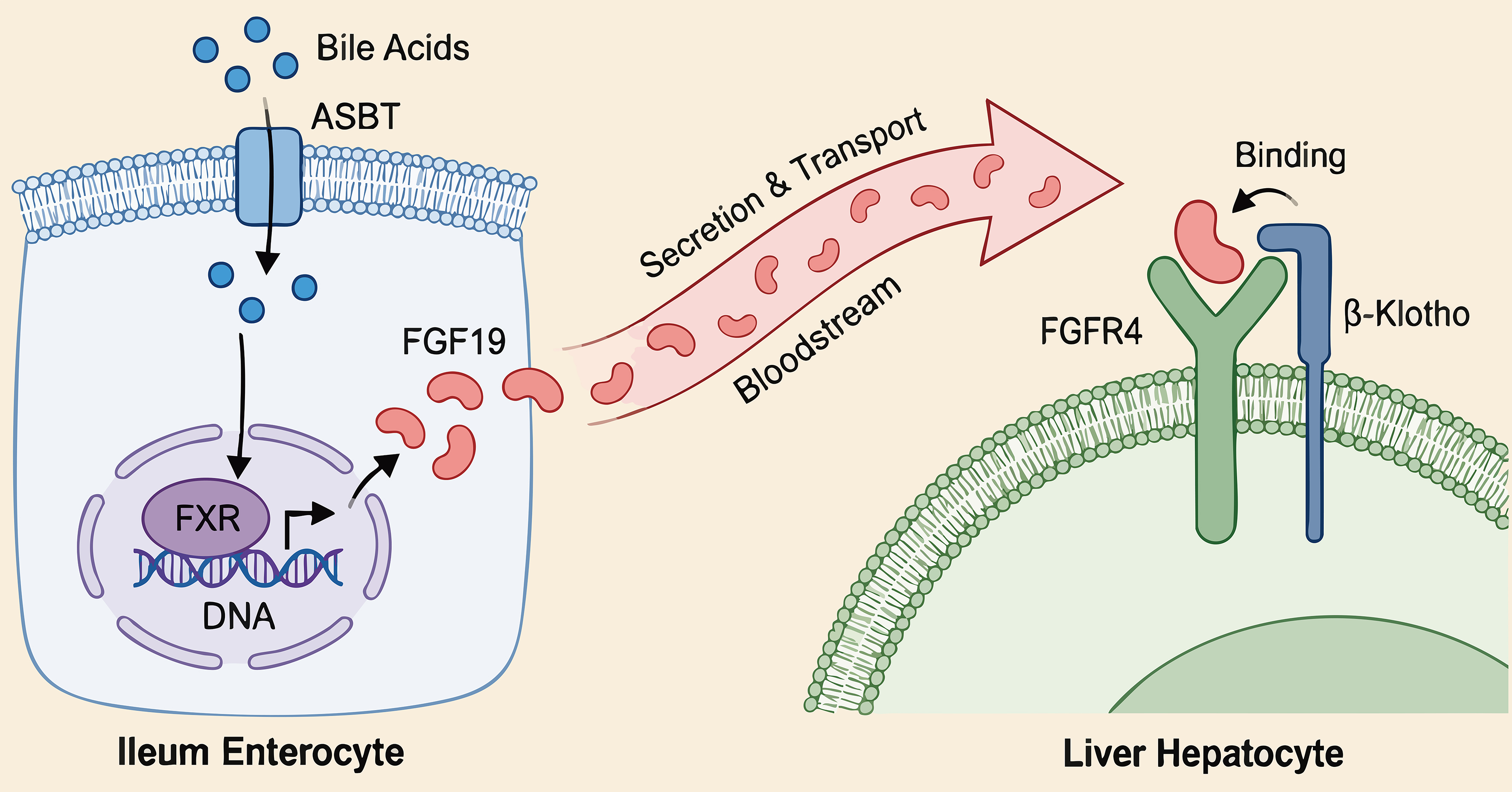
Figure 1. Endocrine Pathway of FGF19 via the Gut-Liver Axis. This illustration depicts the endocrine pathway of FGF19 as it travels from the ileum to the liver, highlighting its hormonal role in metabolic regulation. Bile acids enter the ileal enterocyte through ASBT, activating FXR within the nucleus. This activation stimulates the transcription and secretion of FGF19. Secreted FGF19 moves through the bloodstream toward the liver, where it binds to FGFR4 and KLB on the hepatocyte membrane. This binding is essential for regulating bile acid synthesis, gluconeogenesis, and lipid metabolism. In murine systems, the corresponding conserved axis is mediated by FGF15. ASBT: Apical sodium-dependent bile acid transporter; DNA: deoxyribonucleic acid; FGF15: fibroblast growth factor 15; FGF19: fibroblast growth factor 19; FGFR4: fibroblast growth factor receptor 4; FXR: farnesoid X receptor; KLB: β-Klotho.
PHYSIOLOGICAL AND PATHOLOGICAL FUNCTIONS OF FGF19/15
Building on the basic functional properties of FGF19/15, its multiple roles in physiological and pathological processes have been revealed. This section focuses on the physiological functions of FGF19/15 in liver regeneration and tissue repair, bile acid and glucose metabolic homeostasis, and energy balance regulation, while also delving into its “double-edged sword” role in tumorigenesis and progression, thereby comprehensively illustrating its broad involvement in health maintenance and disease intervention. Dysregulation of these processes is closely associated with chronic disorders including metabolic dysfunction-associated steatotic liver disease/metabolic dysfunction-associated steatohepatitis (MASLD/MASH), obesity, type 2 diabetes, and fibrosis, which remain difficult to treat. Beyond the gut-liver endocrine axis, the spleen-liver axis may modify MASLD progression through immune-cell trafficking, cytokine signaling, and portal hemodynamics. Direct mechanistic coupling between FGF19/15 signaling and these splenic immune programs remains incompletely defined; nevertheless, inflammatory and hemodynamic context may influence the response to FGF19-directed therapies.
FGF19/15 promotes liver regeneration and tissue repair
The chimeric protein Fibapo, derived from FGF19, significantly enhanced hepatocyte proliferation (Ki-67+), accelerated liver mass recovery, and improved survival rates in acute liver injury models such as acetaminophen toxicity and aged mice undergoing partial hepatectomy. This is achieved by activating the mechanistic target of rapamycin complex 1 (mTORC1)-p70 ribosomal S6 kinase (p70S6K) pathway, upregulating cell cycle genes such as Foxm1b and Cdc25b, and downregulating hepatocyte nuclear factor α[25,26]. For liver protection, activation of the intestinal FXR-FGF19/15 axis by C. scindens suppresses hepatic CYP7A1 expression and reduces bile acid synthesis, alleviating cholestatic liver injury and fibrosis[11].
FGF19/15 regulates bile acid synthesis and glucose metabolic homeostasis
FGF19/15 is a key hormone involved in the negative feedback regulation of bile acid synthesis[27]. Postprandial elevation of bile acid levels in the ileum activates FXR, inducing FGF19/15 expression and secretion into the bloodstream. FGF19/15 then binds to the FGFR4/KLB receptor complex on hepatocytes, suppressing the expression of CYP7A1 and thereby reducing bile acid synthesis[11,28,29]. In Fgf15-knockout mice, Cyp7a1 expression was significantly upregulated and the bile acid pool expanded, further confirming its central role in maintaining bile acid homeostasis[30]. In addition to bile acid regulation, FGF19 also exhibits insulin-independent glucose-lowering effects. It inhibits hepatic gluconeogenesis by downregulating key gluconeogenic genes, such as phosphoenolpyruvate carboxykinase and glucose-6-phosphatase, thereby reducing endogenous glucose production[20]. FGF19 also promotes hepatic protein and glycogen synthesis; in insulin-deficient diabetic animal models, FGF19 treatment restores depleted hepatic glycogen through an insulin-independent postprandial pathway[31]. Clinical observations have revealed that plasma FGF19 levels are reduced in patients with type 2 diabetes but significantly increase after bariatric surgery, further supporting its role in glucose homeostasis[32]. Experimental evidence further suggests that intestinal FGF15 signaling interacts with bile acid metabolism and energy expenditure during metabolic surgery, although its contribution to the metabolic benefits of surgery is context-dependent[33].
Although FGF19/15-mediated enterohepatic signaling is primarily recognized as an endocrine pathway controlling bile acid synthesis and hepatic metabolic homeostasis, metabolic liver diseases such as MASLD are also shaped by persistent immune activation and inflammatory remodeling[34,35]. Therefore, the biological effects of FGF19/15 signaling should be considered within a broader immunometabolic framework involving endocrine regulation, immune-cell communication, and tissue-specific inflammatory responses.
The spleen-liver axis represents an additional regulatory layer that contributes to hepatic inflammation and fibrosis progression[36]. In metabolic disorders, splenic immune remodeling may alter the distribution and activation state of several immune populations, including splenic monocytes, myeloid-derived suppressor cells (MDSCs), and natural killer T (NKT) cells[36]. These immune subsets can influence hepatic inflammatory responses through migration toward the liver and/or secretion of soluble mediators. Previous studies have implicated cytokines such as tumor necrosis factor-α (TNF-α), interleukin-6 (IL-6), and transforming growth factor-β (TGF-β) in promoting Kupffer cell activation, hepatic stellate cell (HSC) stimulation, and fibrogenic remodeling[37].
From a mechanistic perspective, FGF19/15 signaling and the spleen-liver axis may converge on shared pathological processes during MASLD progression. Under physiological conditions, FXR activation induces intestinal FGF19/15 secretion, which subsequently acts through hepatic FGFR4/KLB signaling to suppress CYP7A1-mediated bile acid synthesis and maintain metabolic homeostasis. However, chronic metabolic stress and inflammatory activation may enhance splenic immune responses and increase hepatic inflammatory burden through immune-cell trafficking, cytokine release, and portal circulation-mediated communication. The spleen-liver axis has been proposed to involve bidirectional interactions mediated by immune-cell movement and inflammatory signaling, including splenic monocytes, natural killer (NK)/NKT cells, TNF-α, IL-6, and TGF-β-related pathways[36].
Importantly, current evidence does not establish a direct molecular pathway whereby FGF19/15 specifically regulates splenic immune-cell recruitment or activation. Instead, these two systems should be considered as interacting but distinct regulatory networks: FGF19/15 functions primarily as an endocrine metabolic coordinator, whereas the spleen-liver axis provides an immunological and inflammatory regulatory layer. Understanding the interaction between these pathways may help explain the heterogeneous therapeutic responses observed with FGF19-based interventions and may provide additional considerations for patient stratification according to metabolic and inflammatory states[38].
FGF19/15 regulates energy balance
FGF19 acts on the hypothalamus to integrate peripheral and environmental signals and regulate energy metabolism. Central FGF19 signaling enhances sympathetic nervous system activity and stimulates adipose-tissue thermogenesis[21]. FGF19 can also activate thermogenic adipose programs, although its anti-obesity effects do not strictly require uncoupling protein 1 (UCP1)-dependent thermogenesis[39]. Transgenic mice expressing human FGF19 display increased metabolic rate, decreased adiposity, and resistance to diet-induced obesity, supporting a systemic role in energy expenditure[40]. In addition, FGF19 mitigates peripheral inflammation and enhances cold tolerance. Cold exposure increases hypothalamic FGF19 receptor expression, suggesting an adaptive role of FGF19 in energy balance and thermoregulation. These benefits disappear when sympathetic nervous system activity is inhibited, further confirming its dependence on sympathetic activation[21].
Dual roles in tumorigenesis and progression
FGF19 and its murine ortholog FGF15 exhibit a striking dual role in tumorigenesis and progression, and their functions are highly dependent on tissue context and molecular background. In hepatocellular carcinoma (HCC), FGF19/15 exerts a clear pro-tumorigenic effect via the FGF19-FGFR4-KLB signaling pathway[41-43]. Clinical samples show co-upregulation of pathway members in nonalcoholic steatohepatitis (NASH; now termed MASH)-related HCC, and animal models have confirmed that elevated FGF15 expression promotes HCC development[44]. Mechanisms include activation of epithelial-mesenchymal transition and the Wnt/β-catenin pathway, enhancing migration, invasion, and proliferation, which are reversible by pathway inhibitors. FGF19/15 also upregulates stem cell markers and synergizes with autocrine/paracrine signaling and lipid metabolism crosstalk to promote cancer[44].
Conversely, in FGFR4-deficient breast cancer models, ileal FGF15 expression is markedly upregulated, accompanied by systemic increases in FGF21 and adiponectin and broader metabolic remodeling associated with delayed tumor progression and improved survival[23]. The associated metabolic remodeling may involve FGF15 and FGF21 signaling through FGFR1-KLB; however, because FGF15, FGF21, and adiponectin changed concurrently in this model, the specific contribution of FGF15 cannot be isolated[23]. Thus, this model does not establish a direct tumor-suppressive effect of FGF19/15, but it illustrates how systemic endocrine and metabolic context can modify tumor progression. Major physiological functions and the pro-tumorigenic HCC context are summarized in Figure 2.
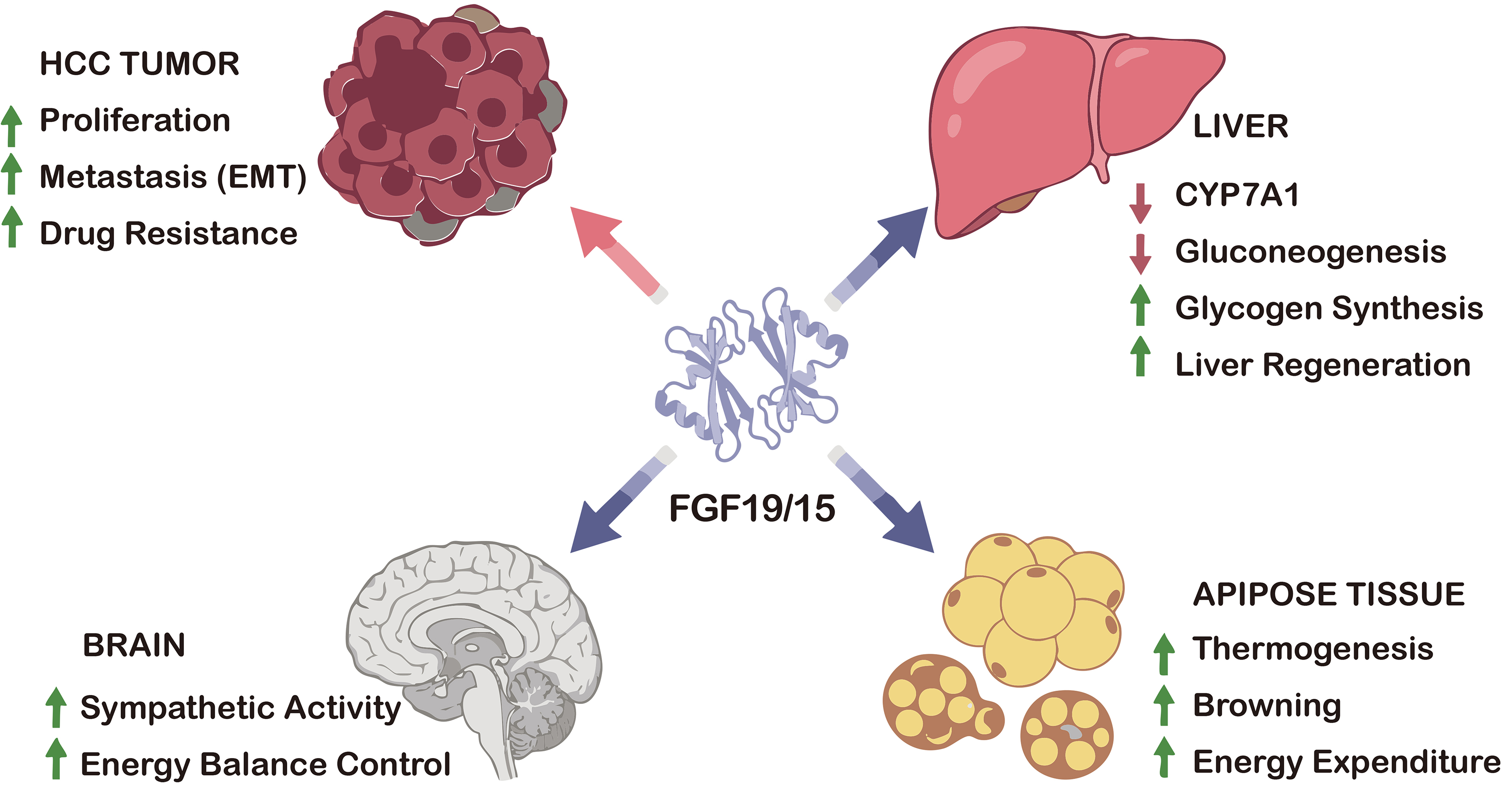
Figure 2. Major Physiological Functions and Pro-tumorigenic Role of FGF19/15 in HCC. This figure summarizes major physiological functions of FGF19/15 and its pro-tumorigenic role in HCC. In the liver, it suppresses CYP7A1 and gluconeogenesis while promoting glycogen synthesis and liver regeneration; in adipose tissue, it enhances thermogenesis and browning to increase energy expenditure; in the brain, it enhances sympathetic activity and regulates energy balance; and in HCC, it may drive proliferation, metastasis, and drug resistance. Upward arrows indicate increased expression, activity, or the indicated biological process, whereas downward arrows indicate decreases. Arrows connecting FGF19/15 to organs indicate its target tissues. CYP7A1: Cholesterol 7α-hydroxylase; EMT: epithelial-mesenchymal transition; FGF15: fibroblast growth factor 15; FGF19: fibroblast growth factor 19; HCC: hepatocellular carcinoma.
SEX DIFFERENCES IN FGF19/15-MEDIATED METABOLIC REGULATION
Sex differences represent important determinants of metabolic disease susceptibility, progression, and therapeutic responses. Increasing evidence indicates that biological sex influences metabolic phenotypes through differences in sex hormones, bile acid composition, immune regulation, and tissue-specific signaling pathways[45]. As an endocrine regulator integrating intestinal bile acid sensing with hepatic metabolic control, the FGF19/15 signaling axis may represent an important molecular link between sex-specific biological factors and metabolic homeostasis.
Although the fundamental components of the FGF19/15-FGFR4/KLB pathway are conserved between males and females, emerging evidence suggests that the magnitude and consequences of FGF19/15 signaling may differ according to hormonal status, receptor expression patterns, and metabolic environments. Understanding these sex-dependent characteristics may provide new insights into personalized approaches targeting the FGF19/15 pathway.
Hormonal and molecular basis of sex-specific FGF19/15 regulation
Sex-related biological factors may influence FGF19/15 signaling through modulation of bile acid metabolism, nuclear receptor activity, and hepatic responsiveness[46]. Estrogen signaling affects hepatic lipid metabolism, inflammatory responses, and bile acid composition, all of which are closely connected with the FXR-FGF19/15 pathway[47,48].
Because intestinal FXR activation is a primary regulator of FGF19/15 production, sex-dependent differences in bile acid profiles and FXR activity may contribute to variation in FGF19/15 secretion between males and females[49,50]. In addition, differences in hepatic expression or activity of FGFR4 and KLB may alter tissue sensitivity to circulating FGF19[51].
Recent evidence has begun to link FGF15 signaling with hepatic sexual dimorphism; however, direct evidence demonstrating sex-specific regulation of the FGF19/15-FGFR4/KLB axis remains limited. Future studies using sex-stratified experimental designs are required to determine whether sex hormones directly modify FGF19/15 signaling activity[52].
Sex-specific responses of FGF19/15 signaling in metabolic disorders
The FGF19/15 axis plays an important role in metabolic regulation by controlling hepatic glucose production, lipid metabolism, and energy homeostasis[18,53,54]. However, metabolic disorders display substantial sex-dependent differences in prevalence, progression, and therapeutic responses, suggesting that the biological effects of FGF19/15 signaling may be modified by sex-specific factors[55,56].
In glucose metabolism, FGF19 improves metabolic control through insulin-independent mechanisms and regulates hepatic glucose utilization[57]. Differences in insulin sensitivity, adipose tissue distribution, and hormonal status between males and females may influence the metabolic consequences of altered FGF19 signaling.
Similarly, FGF19/15 regulates lipid homeostasis through bile acid metabolism and hepatic lipid handling[22,58]. The hepatic KLB-dependent response to FGF19 is essential for maintaining lipid balance, and disruption of this pathway leads to metabolic abnormalities[59]. Whether sex-dependent differences in KLB expression or bile acid composition contribute to differential responses remains an important area of investigation.
These observations suggest that biological sex should be considered when evaluating FGF19-based metabolic therapies.
Sex differences in FGF19/15-associated liver diseases and regeneration
Sex differences are particularly evident in metabolic-associated liver diseases, including MASLD and MASH[60-62]. Before menopause, estrogen signaling provides protective effects against hepatic lipid accumulation, inflammation, and fibrosis development, whereas estrogen decline after menopause increases metabolic vulnerability[63].
Because FGF19/15 regulates bile acid synthesis, hepatic lipid metabolism, and tissue repair, alterations in this pathway may contribute to sex-dependent susceptibility to liver diseases. Reduced FGF19 activity or impaired hepatic responsiveness to FGF19 signaling has been associated with metabolic dysfunction and abnormal hepatic lipid accumulation.
Sex differences are also observed in cholestatic liver diseases. Several cholestatic disorders exhibit sex-biased prevalence patterns, suggesting potential interactions between sex hormones and bile acid regulatory pathways[64-66]. Through regulation of CYP7A1 suppression and hepatocyte proliferation, FGF19/15 signaling may participate in sex-dependent responses to hepatic injury and regeneration.
Nevertheless, direct evidence linking sex differences with FGF19/15-mediated liver repair remains limited and requires further investigation.
Sex differences in FGF19/15-associated cancer biology
Aberrant activation of the FGF19-FGFR4/KLB signaling pathway contributes to tumor development, particularly in HCC[67]. However, cancer susceptibility and progression are strongly influenced by biological sex through differences in hormone signaling, immune regulation, and metabolic environments[68,69].
Androgen and estrogen signaling can modify hepatic tumor development and may interact with metabolic pathways involved in FGF19/FGFR4 activation[70]. Therefore, sex-dependent regulation of FGF19 signaling may contribute to differences in tumor biology and therapeutic responses.
Understanding whether sex-specific factors influence FGF19-driven tumor progression may provide valuable information for biomarker development and personalized therapeutic strategies targeting FGFR4 or related pathways[71].
REGULATORY MECHANISMS AND SIGNALING PATHWAYS OF FGF19/15
The functional execution of FGF19/15 relies on a precise, multilevel regulatory network. This section focuses on its expression regulatory mechanisms and downstream signaling pathways, detailing the transcriptional regulation by factors such as FXR, the activation patterns of key signaling pathways such as mitogen-activated protein kinase/extracellular signal-regulated kinase (MAPK/ERK) and phosphatidylinositol 3-kinase/protein kinase B (PI3K/AKT), and the differences in feedback regulation under physiological vs. pathological conditions, providing a theoretical basis for understanding its functional plasticity and targeted intervention.
Transcriptional regulation by FXR and other factors
FGF19/15 expression in the ileum is tightly regulated by the transcription factors FXR and T-cell factor 4 (TCF4). FXR, the central regulator of bile acid homeostasis, binds directly to regulatory elements controlling FGF19/15 transcription after activation by intestinal bile acids[11]. TCF4 also directly regulates Fgf15 and cooperates with the intestinal bile-acid signaling program to maintain bile acid and lipid homeostasis[10]. Bile acid species and intestinal uptake efficiency, including uptake dependent on the apical sodium-dependent bile acid transporter (ASBT), can dynamically modulate this signaling axis during physiological states such as pregnancy[72].
As a key downstream effector of FXR, FGF19/15 is synthesized and released into the bloodstream and acts on the liver via portal circulation[73]. In hepatocytes, FGF19/15 binds FGFR4 and KLB, activating downstream pathways such as Ras/MAPK and PI3K/AKT to suppress the expression of the bile acid synthesis rate-limiting enzyme CYP7A1[11]. This “gut senses bile acids - FXR induces FGF19/15 - liver receives signal - inhibits bile acid synthesis” enterohepatic axis forms a core negative feedback loop for systemic bile acid and metabolic homeostasis.
Downstream signaling: MAPK/ERK and PI3K/AKT pathways
Upon binding to FGFR4/KLB, FGF19/15 primarily activates the Ras/MAPK/ERK and PI3K/AKT pathways, the tissue- and context-dependent activation of which governs a wide range of physiological and pathological processes[74]. Rather than acting through PI3K or c-Jun N-terminal kinase (JNK) alone, FGF19/FGFR4 can phosphorylate ELK1 to drive the expression of the transcription factor ETV4, thereby regulating oncogenes[75]. In physiological metabolic regulation, intestinal FXR-derived FGF19/15 reaches the liver via the circulation and strongly suppresses CYP7A1 expression through MAPK pathway activation, thereby maintaining bile acid homeostasis[76].
In contrast, the PI3K/AKT pathway is a critical downstream effector of FGF19 in tumor-related contexts. In cholangiocarcinoma, FGF19 promotes cancer cell proliferation, migration, invasion, and resistance to apoptosis via PI3K/AKT activation[77]. This pro-tumorigenic mechanism also informs therapeutic strategies; the multi-kinase inhibitor lenvatinib exerts anti-tumor effects by downregulating FGF19 expression and inhibiting PI3K/AKT phosphorylation, with functional studies confirming this axis as a key mediator of lenvatinib efficacy[77]. In summary, the precise regulation and crosstalk of these pathways determine the cellular fate and systemic metabolic outcomes, providing a theoretical foundation for drug development.
Feedback regulation of FGF19/15 activation
Physiological FGF19/15 signaling is constrained by the FXR-FGF19/15-FGFR4/KLB-CYP7A1 negative-feedback loop described above[9].
However, in the tumor microenvironment, homeostatic regulation is disrupted and replaced by self-reinforcing positive feedback loops and mechanisms that resist signal termination. For instance, in HCC, FGF19 drives the expression of the transcription factor ETV4 via the FGFR4/ERK pathway, while ETV4 transactivates FGFR4 transcription, forming an FGF19-ETV4-FGFR4 positive feedback loop that amplifies signaling and drives tumor progression[75]. Concurrently, activated FGFR4 signaling also resists cell death through downstream metabolic reprogramming. In breast cancer resistance models, it suppresses ferroptosis by activating the β-catenin/TCF4 axis and upregulating SLC7A11 and FPN1, thereby ensuring cancer cell survival[78]. These mechanisms collectively contribute to the widespread failure of signal termination in cancer, highlighting the clinical value of targeting this pathway with FGFR4 inhibitors. The tissue-specific signaling characteristics and therapeutic strategies targeting the FGF19/15 pathway are summarized in Figure 3.
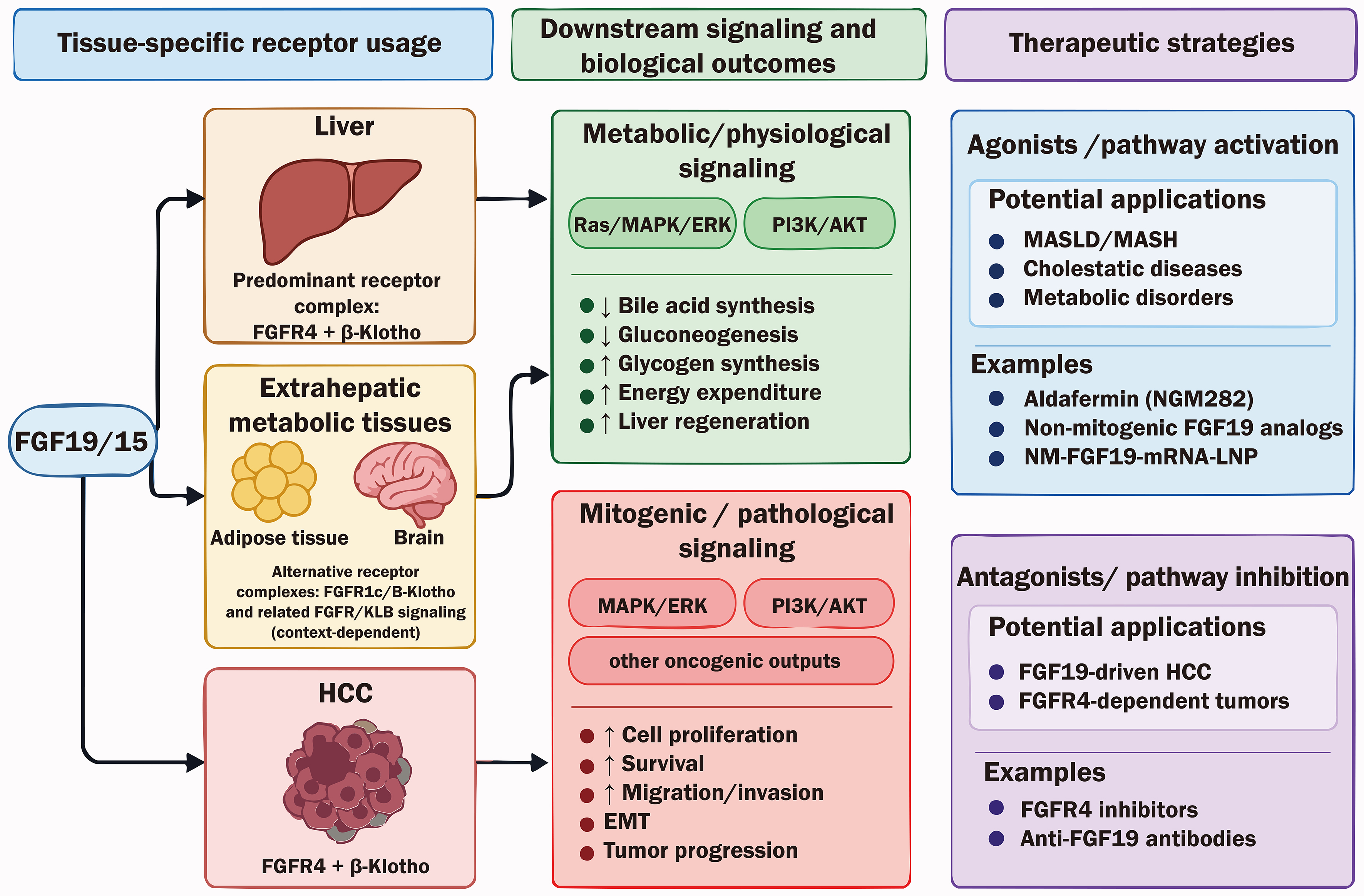
Figure 3. Tissue-specific signaling and therapeutic targeting of FGF19/15. This figure provides an integrated overview of tissue-specific receptor usage, downstream signaling divergence, and therapeutic strategies targeting the FGF19/15 pathway. In the liver, FGF19/15 primarily signals through the FGFR4/KLB complex to regulate metabolic processes, whereas alternative FGFR/KLB complexes may mediate context-dependent effects in extrahepatic tissues. In tumor settings, particularly FGF19-driven hepatocellular carcinoma, FGFR4/KLB signaling contributes to mitogenic responses. Therapeutic approaches are therefore divided into agonistic strategies, including engineered FGF19 analogs for metabolic and cholestatic diseases, and antagonistic strategies, including FGFR4 inhibitors and anti-FGF19 antibodies for tumor-related indications. Upward arrows indicate increased expression, activity, or the indicated biological process, whereas downward arrows indicate decreases. Connecting arrows indicate the direction of signaling or effects. AKT: Protein kinase B; EMT: epithelial-mesenchymal transition; ERK: extracellular signal-regulated kinase; FGF15: fibroblast growth factor 15; FGF19: fibroblast growth factor 19; FGFR: fibroblast growth factor receptor; FGFR1c: fibroblast growth factor receptor 1 isoform c; FGFR4: fibroblast growth factor receptor 4; HCC: hepatocellular carcinoma; KLB: β-Klotho; LNP: lipid nanoparticle; MAPK: mitogen-activated protein kinase; MASLD: metabolic dysfunction-associated steatotic liver disease; MASH: metabolic dysfunction-associated steatohepatitis; mRNA: messenger RNA; NM-FGF19: non-mitogenic fibroblast growth factor 19; PI3K: phosphatidylinositol 3-kinase; Ras: rat sarcoma small GTPase.
DRUG DEVELOPMENT TARGETING FGF19/15
The translational outcome of pathway modulation depends on receptor context and disease state: metabolic efficacy must be balanced against mitogenic liability, bile-acid-related toxicity, and adaptive resistance. FGF19/15 has emerged as a highly promising therapeutic target because of its dual role in metabolic homeostasis and tumorigenesis, although its application strategy is highly dependent on disease context. The critical role of this pathway has been established in MASLD/MASH and selected cholestatic liver diseases, while alterations in FGF19 biology have also been observed in type 2 diabetes[11,24,32,79]. Modulating the FXR-FGF19/15 axis can improve hepatic steatosis, bile acid overload, and fibrosis-related markers, and FGF19 analogs have demonstrated clinical potential in metabolic and cholestatic liver diseases[80-83].
In contrast, its role in tumors is context-dependent. In HCC, the FGF19/FGFR4 signaling pathway exhibits clear oncogenic activity, making it an attractive target for inhibitor development. In an FGFR4-deficient breast-cancer model, delayed tumor progression was associated with broader endocrine metabolic remodeling rather than a proven direct antitumor effect of FGF19/15[23]. This context dependency underscores the need for future translational research to develop tissue-specific drugs while carefully balancing efficacy and risk. Based on this therapeutic potential, drug development targeting the FGF19/15 pathway has advanced in two main directions, agonists and antagonists, and has achieved progress in both preclinical and clinical studies.
Progress in the development of FGF19/15 agonists
Preclinical studies have provided a foundation for the metabolic benefits of engineered FGF19 analogs. Aldafermin suppresses the key hepatic bile acid-synthesizing enzyme CYP7A1, reduces hepatic bile acid load, and improves steatosis and fibrosis-related features in experimental models. Clinical development of aldafermin illustrates both the promise and complexity of FGF19 agonism. In an early multicenter phase 2 trial, NGM282 improved liver fat content and biological markers in patients with NASH (now termed MASH)[81]. In the ALPINE 2/3 phase 2b trial, aldafermin was generally well tolerated and improved several secondary endpoints, but it did not meet the primary dose-response endpoint for fibrosis improvement without worsening of NASH (now termed MASH)[84]. In contrast, the ALPINE 4 trial in patients with NASH (now termed MASH)-related compensated cirrhosis reported significant improvement in the Enhanced Liver Fibrosis score at 48 weeks, supporting continued interest in selected advanced liver disease populations[80]. These mixed results suggest that FGF19 analog development may require refined disease-stage selection, validated noninvasive endpoints, and careful monitoring of lipid and bile-acid-related safety.
In addition, the FGF19-apolipoprotein A-I chimera Fibapo has shown potential beyond metabolic regulation in various liver injury models. In acetaminophen-induced liver injury and partial hepatectomy models in aged mice, Fibapo not only reduced serum liver enzyme levels but also markedly promoted hepatocyte proliferation and liver regeneration, improving survival rates. These findings provide a preclinical basis for potential application in acute liver failure and regeneration-impaired diseases[26]. An emerging preclinical strategy uses liver-targeted lipid nanoparticles (LNPs) encoding non-mitogenic FGF19 mRNA; in a diet-induced MASH model, NM-FGF19-mRNA-LNP treatment improved steatosis and metabolic parameters without worsening fibrosis[85-87].
Progress in the development of FGF19/15 inhibitors
In oncology, antagonizing the FGF19/FGFR4 signaling axis has attracted significant attention. Extensive preclinical models have confirmed that, in HCC with aberrant activation of FGF19 signaling, FGFR4 small-molecule inhibitors such as BLU-554/fisogatinib, FGF401/roblitinib, H3B-6527, INCB062079, and irpagratinib can block downstream signaling, including ERK1/2, thereby inhibiting tumor cell proliferation and invasion while inducing apoptosis[88-95].
Beyond small-molecule FGFR4 inhibitors, anti-FGF19 antibodies have shown antitumor activity in FGF19-dependent HCC models. N-terminally directed antibody designs may preserve antitumor activity while reducing bile-acid-related toxicity.
BLU-554/fisogatinib, a highly selective oral FGFR4 inhibitor, was evaluated in a first-in-human phase I trial in patients with advanced HCC using FGF19 immunohistochemistry (IHC) as a biomarker for pathway activation. The study established a recommended dose of 600 mg once daily and showed manageable toxicity dominated by gastrointestinal adverse events. Importantly, objective responses were observed in FGF19-positive patients, whereas no response was observed in FGF19-negative patients, supporting the druggability of the FGF19/FGFR4 axis in biomarker-selected HCC[90,96,97].
Additional FGFR4 inhibitors have broadened the clinical landscape. Roblitinib/FGF401 was evaluated alone and in combination with spartalizumab in patients with HCC or biomarker-selected solid tumors and showed biologically active dosing, manageable safety, and preliminary efficacy[88]. H3B-6527 entered phase I evaluation in HCC and ICC, with early evidence of antitumor activity in selected patients[92]. INCB062079, an irreversible FGFR4 inhibitor, demonstrated on-target pharmacodynamic activity but encountered dose-limiting gastrointestinal and hepatobiliary toxicities, emphasizing the need to manage bile acid pathway disruption when blocking FGFR4[91].
More recent clinical development has focused on biomarker-defined and combination strategies. Irpagratinib/ABSK011 has shown encouraging activity in FGF19-overexpressing advanced HCC in early-phase studies and is being evaluated in combination with atezolizumab; updated phase II data reported objective response rates of 50.0% in the treatment-naive cohort and 52.9% in the previously treated cohort[93,94]. TYRA-430, an FGFR4/3-biased inhibitor designed for FGF19-positive/FGFR4-driven cancers, has also entered a first-in-human phase I study in advanced HCC and other solid tumors with activating FGF/FGFR pathway aberrations[98]. These developments indicate that the field is moving from single-agent proof-of-concept studies toward precision oncology approaches combining FGFR4 blockade, immune checkpoint inhibition, and resistance-aware drug design. Because most of these studies are early-phase and biomarker-enriched, the observed response signals require confirmation in larger randomized cohorts. To provide a clearer overview of current translational progress, representative FGF19/15-targeted therapeutic strategies are summarized in Table 2.
Drug development targeting FGF19/15
| No. | Drug/strategy | Target | Development stage | Major effects | Mechanism and current notes |
| 1 | Aldafermin (NGM282) | Engineered FGF19 analog | Clinical phase 2/2b | Improves liver fat, bile acid-related markers, and fibrosis-related endpoints in selected MASLD/MASH or cholestatic populations | Suppresses CYP7A1 and bile acid synthesis; ALPINE 2/3 did not meet the primary fibrosis endpoint, whereas ALPINE 4 showed ELF improvement in compensated cirrhosis. In PSC, the primary ALP endpoint was not met, although markers of bile-acid synthesis and fibrosis improved[80-82,85] |
| 2 | Fibapo | FGF19/APOA-I chimera | Preclinical | Liver regeneration and hepatoprotection | Reduces liver enzyme levels, promotes hepatocyte proliferation and regeneration, and improves survival in liver injury and aged hepatectomy models[26] |
| 3 | Anti-FGF19 antibodies | FGF19 | Preclinical | Antitumor activity in FGF19-dependent HCC models | Neutralizes FGF19-FGFR4/KLB signaling; antibody design must avoid excessive disruption of physiological bile acid feedback and bile-acid-related toxicity[99] |
| 4 | Fisogatinib (BLU-554) | FGFR4 | Clinical phase 1 | Precision therapy for FGF19-positive HCC | Selective FGFR4 inhibition; responses observed in FGF19-positive but not FGF19-negative HCC patients[90] |
| 5 | Roblitinib (FGF401) | FGFR4 | Clinical phase 1/2 | HCC and biomarker-selected solid tumors | Single-agent and spartalizumab-combination evaluation showed manageable safety and preliminary efficacy[88] |
| 6 | H3B-6527 | FGFR4 | Clinical phase 1 | HCC and ICC | Selective covalent FGFR4 inhibition; early-phase evidence of antitumor activity in advanced HCC/ICC[92] |
| 7 | INCB062079 | FGFR4 | Clinical phase 1 | Advanced solid tumors including hepatobiliary cancers | Irreversible FGFR4 inhibition with on-target pharmacodynamic activity; dose escalation limited by gastrointestinal/hepatobiliary toxicity[91] |
| 8 | Irpagratinib (ABSK011) | FGFR4 | Clinical phase 1/2 | FGF19-overexpressing advanced HCC | Biomarker-selected monotherapy and atezolizumab-combination studies show encouraging response signals; further randomized validation is needed[93,94] |
| 9 | TYRA-430 | FGFR4/3-biased inhibitor | Clinical phase 1 | FGF19-positive/FGFR4-driven HCC and other solid tumors | First-in-human SURF431 study evaluating safety, tolerability, pharmacokinetics, pharmacodynamics, and preliminary antitumor activity[98] |
CONCLUSIONS AND FUTURE PERSPECTIVES
This review summarizes recent advances in FGF19/15 research, including its endocrine characteristics, receptor biology, physiological and pathological functions, regulatory mechanisms, species-specific interpretation, and progress in drug development. The FGF19/15-FGFR4/KLB axis is central to bile acid feedback and also participates in glucose metabolism, lipid metabolism, energy balance, liver regeneration, and tumor biology. These broad functions explain why the pathway can be exploited therapeutically in different directions: agonism for metabolic or cholestatic diseases and antagonism for FGF19-driven tumors.
Several limitations should be considered. Because this is a narrative review, the literature search and interpretation were not accompanied by formal risk-of-bias assessment, pooled effect-size calculation, or meta-analysis, and study selection may still reflect publication availability and author judgment. Translation from murine FGF15 models to human FGF19 biology also requires caution because the orthologs differ in sequence identity, receptor engagement, and disease-specific responses[9]. Therapeutic evidence remains uneven across disease areas: FGF19 agonist trials have produced mixed results across disease stages, whereas most FGFR4 inhibitor data derive from relatively small, biomarker-selected early-phase studies. Finally, the biological duality of FGF19/15 creates an intrinsic safety challenge because metabolic agonism must minimize proliferative risk, whereas FGFR4 inhibition can disrupt physiological bile-acid feedback and cause gastrointestinal or hepatobiliary toxicity.
Despite its therapeutic promise, clinical translation of FGF19/15-targeted therapies faces challenges in specificity, safety, biomarker precision, and resistance. A primary issue is tissue specificity: FGF19 agonists must deliver metabolic benefits while minimizing proliferative risk, whereas FGFR4 antagonists can disrupt bile acid homeostasis and cause dose-limiting toxicities such as diarrhea[85,91]. Biomarker precision also requires refinement; FGF19 IHC-based patient selection has shown predictive enrichment in early clinical studies[90]. Resistance remains a further hurdle; FGF19/FGFR4 signaling can contribute to therapeutic resistance, including sorafenib resistance in HCC[100].
Addressing these challenges requires next-generation technologies and rational combinations. Developing liver-targeted agonists, non-tumorigenic FGF19 analogs, next-generation FGFR4 inhibitors, and degrader-based approaches may improve therapeutic indices. Combination therapies, such as pairing FGFR4 inhibitors with immune checkpoint blockade or other targeted agents, may overcome resistance, whereas combining FGF19 analogs with metabolic modulators may provide new avenues for complex metabolic diseases. Future studies should also define when human FGF19 data can be inferred from murine FGF15 models and when species-specific validation is indispensable.
DECLARATIONS
Authors’ contributions
Conceptualised the study: Yang Q
Contributed to the study design: Bai L, Yang Q
Performed data collection: Bai L, Han L
Performed data analysis and interpretation: Bai L
Performed the literature search: Bai L
Led the drafting of the manuscript: Bai L, Han L, Yang Q
Critically revised the manuscript for important intellectual content: Bai D, Yang Q
Supervised the study: Yang Q
Availability of data and materials
Not applicable.
AI and AI-assisted tools statement
During the preparation of this manuscript, the AI tool ChatGPT (version GPT-5, released 2025-08-07) was used solely as a supplementary tool to identify potential errors, inconsistencies, and omissions in the manuscript. The tool did not influence the study design, data collection, analysis, interpretation, or the scientific content of the work. All authors take full responsibility for the accuracy, integrity, and final content of the manuscript.
Financial support and sponsorship
The authors gratefully acknowledge funding from the National Natural Science Foundation of China (No. 82675061 and No. 82272925) and the Shanghai Jiao Tong University School of Medicine Research Physician Program (No. 20240815).
Conflicts of interest
All authors declared that there are no conflicts of interest.
Ethical approval and consent to participate
Not applicable.
Consent for publication
Not applicable.
Copyright
© The Author(s) 2026.
REFERENCES
1. Xie Y, Su N, Yang J, et al. FGF/FGFR signaling in health and disease. Signal Transduct Target Ther. 2020;5:181.
2. Chen G, Chen L, Li X, Mohammadi M. FGF-based drug discovery: advances and challenges. Nat Rev Drug Discov. 2025;24:335-57.
3. Itoh N, Ohta H, Konishi M. Endocrine FGFs: evolution, physiology, pathophysiology, and pharmacotherapy. Front Endocrinol. 2015;6:154.
4. Katoh M, Nakagama H. FGF receptors: cancer biology and therapeutics. Med Res Rev. 2014;34:280-300.
5. Li HZ, Zhang JL, Yuan DL, et al. Role of signaling pathways in age-related orthopedic diseases: focus on the fibroblast growth factor family. Mil Med Res. 2024;11:40.
6. Giacomini A, Grillo E, Rezzola S, et al. The FGF/FGFR system in the physiopathology of the prostate gland. Physiol Rev. 2021;101:569-610.
7. Yang L, Zhou F, Zheng D, et al. FGF/FGFR signaling: from lung development to respiratory diseases. Cytokine Growth Factor Rev. 2021;62:94-104.
8. Ursic-Bedoya J, Desandré G, Chavey C, et al. FGF19 and its analog Aldafermin cooperate with MYC to induce aggressive hepatocarcinogenesis. EMBO Mol Med. 2024;16:238-50.
9. Beenken A, Mohammadi M. The structural biology of the FGF19 subfamily. Adv Exp Med Biol. 2012;728:1-24.
10. Bhat N, Esteghamat F, Chaube BK, et al. TCF7L2 transcriptionally regulates Fgf15 to maintain bile acid and lipid homeostasis through gut-liver crosstalk. FASEB J. 2022;36:e22185.
11. Katafuchi T, Makishima M. Molecular basis of bile acid-FXR-FGF15/19 signaling axis. Int J Mol Sci. 2022;23:6046.
12. Wright TJ, Ladher R, McWhirter J, Murre C, Schoenwolf GC, Mansour SL. Mouse FGF15 is the ortholog of human and chick FGF19, but is not uniquely required for otic induction. Dev Biol. 2004;269:264-75.
13. Morón-Ros S, Uriarte I, Berasain C, et al. FGF15/19 is required for adipose tissue plasticity in response to thermogenic adaptations. Mol Metab. 2021;43:101113.
14. Xiao J, Hou Y, Luo X, et al. Clostridium scindens protects against vancomycin-induced cholestasis and liver fibrosis by activating intestinal FXR-FGF15/19 signaling. Adv Sci. 2025;12:e2406445.
15. Lin BC, Wang M, Blackmore C, Desnoyers LR. Liver-specific activities of FGF19 require Klotho beta. J Biol Chem. 2007;282:27277-84.
16. Benoit B, Jalabert A, Meugnier E, et al. Pregnane X receptor deletion induces a lean phenotype in chow-fed mice through a liver-ileum-muscle axis involving 6α-hydroxylated bile acids and Fgf15. Mol Metab. 2026;113:102442.
17. Kim YC, Seok S, Zhang Y, et al. Intestinal FGF15/19 physiologically repress hepatic lipogenesis in the late fed-state by activating SHP and DNMT3A. Nat Commun. 2020;11:5969.
18. Bouju A, Nusse R, Wu PV. A primer on the pleiotropic endocrine fibroblast growth factor FGF19/FGF15. Differentiation. 2024;140:100816.
19. Chaudhari SN, Chen Y, Ferraz-Bannitz R, et al. Alterations in intestinal bile acid transport provide a therapeutic target in patients with post-bariatric hypoglycaemia. Nat Metab. 2025;7:792-807.
20. Potthoff MJ, Boney-Montoya J, Choi M, et al. FGF15/19 regulates hepatic glucose metabolism by inhibiting the CREB-PGC-1α pathway. Cell Metab. 2011;13:729-38.
21. Zangerolamo L, Carvalho M, Solon C, et al. Central FGF19 signaling enhances energy homeostasis and adipose tissue thermogenesis through sympathetic activation in obese mice. Am J Physiol Endocrinol Metab. 2025;328:E524-42.
22. Aaldijk AS, Verzijl CRC, Hovingh MV, et al. Adult-onset deficiency of β-klotho in the liver reveals a novel role in lipid homeostasis. Mol Metab. 2026;113:102443.
23. Luo Y, Yang C, Ye M, et al. Deficiency of metabolic regulator FGFR4 delays breast cancer progression through systemic and microenvironmental metabolic alterations. Cancer Metab. 2013;1:21.
24. Fu T, Choi SE, Kim DH, et al. Aberrantly elevated microRNA-34a in obesity attenuates hepatic responses to FGF19 by targeting a membrane coreceptor β-Klotho. Proc Natl Acad Sci U S A. 2012;109:16137-42.
25. Wan ZY, Tian JS, Tan HW, et al. Mechanistic target of rapamycin complex 1 is an essential mediator of metabolic and mitogenic effects of fibroblast growth factor 19 in hepatoma cells. Hepatology. 2016;64:1289-301.
26. Alvarez-Sola G, Uriarte I, Latasa MU, et al. Engineered fibroblast growth factor 19 protects from acetaminophen-induced liver injury and stimulates aged liver regeneration in mice. Cell Death Dis. 2017;8:e3083.
27. Mohammed TA, Zalzala MH. Farnesoid X receptor-mediated bile acids regulation in cholestasis. Indian J Clin Biochem. 2026;41:181-7.
28. Yu Cai Lim M, Kiat Ho H. Pharmacological modulation of cholesterol 7α-hydroxylase (CYP7A1) as a therapeutic strategy for hypercholesterolemia. Biochem Pharmacol. 2024;220:115985.
29. Zhou Z, Xu D, Huang L, Cui Y, Chen H, Tang J. Farnesoid X receptor regulated sepsis-induced abnormal bile acid metabolism via the fibroblast growth factor 15/fibroblast growth factor receptor 4 pathway. Immun Inflamm Dis. 2025;13:e70155.
30. Cheng K, Metry M, Felton J, et al. Diminished gallbladder filling, increased fecal bile acids, and promotion of colon epithelial cell proliferation and neoplasia in fibroblast growth factor 15-deficient mice. Oncotarget. 2018;9:25572-85.
31. Kir S, Beddow SA, Samuel VT, et al. FGF19 as a postprandial, insulin-independent activator of hepatic protein and glycogen synthesis. Science. 2011;331:1621-4.
32. Wahlström A, Aydin Ö, Olsson LM, et al. Alterations in bile acid kinetics after bariatric surgery in patients with obesity with or without type 2 diabetes. EBioMedicine. 2024;106:105265.
33. Chow MD, Otersen K, Wassef A, et al. Effects of intestine-specific deletion of FGF15 on the development of fatty liver disease with vertical sleeve gastrectomy. Hepatol Commun. 2024;8:e0444.
34. Gadaleta RM, Moschetta A. Metabolic messengers: fibroblast growth factor 15/19. Nat Metab. 2019;1:588-94.
35. Tilg H, Moschen AR. Evolution of inflammation in nonalcoholic fatty liver disease: the multiple parallel hits hypothesis. Hepatology. 2010;52:1836-46.
36. Tarantino G, Citro V. Liver-spleen axis: deciphering a crucial crosstalk in non-alcoholic fatty liver disease progression and therapeutic implications. World J Gastroenterol. 2026;32:119467.
38. Liu WY, Xie DM, Zhu GQ, et al. Targeting fibroblast growth factor 19 in liver disease: a potential biomarker and therapeutic target. Expert Opin Ther Targets. 2015;19:675-85.
39. Antonellis PJ, Droz BA, Cosgrove R, et al. The anti-obesity effect of FGF19 does not require UCP1-dependent thermogenesis. Mol Metab. 2019;30:131-9.
40. Tomlinson E, Fu L, John L, et al. Transgenic mice expressing human fibroblast growth factor-19 display increased metabolic rate and decreased adiposity. Endocrinology. 2002;143:1741-7.
41. Miura S, Mitsuhashi N, Shimizu H, et al. Fibroblast growth factor 19 expression correlates with tumor progression and poorer prognosis of hepatocellular carcinoma. BMC Cancer. 2012;12:56.
42. Li X, Lu W, Kharitonenkov A, Luo Y. Targeting the FGF19-FGFR4 pathway for cholestatic, metabolic, and cancerous diseases. J Intern Med. 2024;295:292-312.
43. Guo C, Zhou N, Lu Y, et al. FGF19/FGFR4 signaling contributes to hepatocellular carcinoma survival and immune escape by regulating IGF2BP1-mediated expression of PD-L1. Biomed Pharmacother. 2024;170:115955.
44. Cui G, Martin RC, Jin H, et al. Up-regulation of FGF15/19 signaling promotes hepatocellular carcinoma in the background of fatty liver. J Exp Clin Cancer Res. 2018;37:136.
45. Patton ME, Kelekar S, Taylor LJ, et al. Sex differences in bile acid homeostasis and excretion underlie the disparity in liver cancer incidence between males and females. Elife. 2025;13:RP96783.
46. Baars A, Oosting A, Lohuis M, et al. Sex differences in lipid metabolism are affected by presence of the gut microbiota. Sci Rep. 2018;8:13426.
47. Seidemann L, Lippold CP, Rohm CM, et al. Sex hormones differently regulate lipid metabolism genes in primary human hepatocytes. BMC Endocr Disord. 2024;24:135.
48. Jiang J, Fan M, Yuan W, et al. Hepatic and intestinal tissue-specific Fxr deficiency alters bile acid homeostasis in female mice. Am J Physiol Gastrointest Liver Physiol. 2025;328:G774-90.
49. Henry ZR, Armstrong L, Maliha S, et al. Deletion of hepatic FXR leads to more severe MASH development in female mice. Hepatol Commun. 2025;9:e0693.
50. Duan X, Nie Y, Xie X, et al. Sex differences and testosterone interfere with the structure of the gut microbiota through the bile acid signaling pathway. Front Microbiol. 2024;15:1421608.
51. Golonka RM, Yeoh BS, Saha P, et al. Sex dimorphic effects of bile acid metabolism in liver cancer in mice. Cell Mol Gastroenterol Hepatol. 2024;17:719-35.
52. Dai M, Shi H, Basaly V, Meadows V, Kong B, Guo GL. Persistent activation of growth hormone contributes to sexual dimorphic expression of hepatic drug metabolizing enzymes in Fgf15 transgenic mice. Drug Metab Dispos. 2026;54:100368.
53. Yan F, Yang C, Huang S, et al. The role of β-Klotho in FGF signaling: from molecular insights to therapeutic innovations. Am J Physiol Endocrinol Metab. 2026;331:E253-71.
54. Bozadjieva-Kramer N, McMahon G, Li Z, et al. Gut-derived FGF15 modulates lean mass, bone, and bile acid responses to weight loss. Diabetes. 2026;75:938-50.
55. Costa DN, Santosa S, Jensen MD. Sex differences in the metabolism of glucose and fatty acids by adipose tissue and skeletal muscle in humans. Physiol Rev. 2025;105:897-934.
56. Kataki C. Sexual dimorphisms in endocrinopathies: their impact on the evolution of metabolic diseases. Mol Cell Endocrinol. 2025;601:112521.
57. Zhang J, Li H, Bai N, et al. Decrease of FGF19 contributes to the increase of fasting glucose in human in an insulin-independent manner. J Endocrinol Invest. 2019;42:1019-27.
58. Bozadjieva-Kramer N, Shin JH, Li Z, et al. Intestinal FGF15 regulates bile acid and cholesterol metabolism but not glucose and energy balance. JCI Insight. 2024;9:e174164.
59. Aaldijk AS, Verzijl CRC, Jonker JW, Struik D. Biological and pharmacological functions of the FGF19- and FGF21-coreceptor beta klotho. Front Endocrinol. 2023;14:1150222.
60. Miller KC, Geyer B, Alexopoulos AS, Moylan CA, Pagidipati N. Disparities in metabolic dysfunction-associated steatotic liver disease prevalence, diagnosis, treatment, and outcomes: a narrative review. Dig Dis Sci. 2025;70:154-67.
61. Taylor LC, Arthur G, de Carvalho Cruz M, Stec DE, Badmus OO. Contribution of sex differences to the development of cardiovascular disease in metabolic-associated steatotic liver disease (MASLD). Int J Transl Med. 2024;4:782-809.
62. Penmetsa R, Kapil S, VanWagner LB. Sex and gender differences in metabolic dysfunction-associated liver disease. Indian J Gastroenterol. 2026;45:192-201.
63. Ábel T, Benczúr B, Csobod ÉC. Sex differences in pathogenesis and treatment of dyslipidemia in patients with type 2 diabetes and steatotic liver disease. Front Med. 2024;11:1458025.
64. Zeng Z, Li H, Yang W, et al. Probiotic VSL#3 alleviates intrahepatic cholestasis of pregnancy by upregulating farnesoid X receptor-fibroblast growth factor 15 through regulation of the gut microbiota. J Reprod Immunol. 2025;172:104653.
65. Nguyen QT, Yoshimura K, Takahashi K, et al. Sex disparities in primary biliary cholangitis: insights from a Japanese multicentre cohort. Med Mol Morphol. 2026;Epub ahead of print.
66. Wu YH, Chiu YL, Lin JC, Chen HW. New insights into sex differences in primary biliary cholangitis. Gender difference in primary biliary cholangitis. J Pak Med Assoc. 2022;72:896-900.
67. Xu J, Sun P, Zhu W, Liu X, Ma L. FGF19 in solid tumors: molecular mechanisms, metabolic reprogramming, and emerging therapeutic opportunities. Theranostics. 2026;16:345-97.
68. Matz-Soja M, Berg T, Kietzmann T. Sex-related variations in liver homeostasis and disease: From zonation dynamics to clinical implications. J Hepatol. 2026;84:181-93.
69. Xu ZQ, Luo SQ, Wu ZJ, Liao R. Current status and perspectives of molecular mechanisms of gender difference in hepatocellular carcinoma: the tip of the iceberg? Biosci Trends 2025;19:266-80.
70. Barjesteh F, Heidari-Kalvani N, Alipourfard I, Najafi M, Bahreini E. Testosterone, β-estradiol, and hepatocellular carcinoma: stimulation or inhibition? A comparative effect analysis on cell cycle, apoptosis, and Wnt signaling of HepG2 cells. Naunyn Schmiedebergs Arch Pharmacol. 2024;397:6121-33.
71. Su L, Luo H, Yan Y, et al. Exploiting gender-based biomarkers and drug targets: advancing personalized therapeutic strategies in hepatocellular carcinoma. Front Pharmacol. 2024;15:1433540.
72. Ovadia C, Perdones-Montero A, Spagou K, et al. Enhanced microbial bile acid deconjugation and impaired ileal uptake in pregnancy repress intestinal regulation of bile acid synthesis. Hepatology. 2019;70:276-93.
73. Inagaki T, Choi M, Moschetta A, et al. Fibroblast growth factor 15 functions as an enterohepatic signal to regulate bile acid homeostasis. Cell Metab. 2005;2:217-25.
74. Kurosu H, Choi M, Ogawa Y, et al. Tissue-specific expression of betaKlotho and fibroblast growth factor (FGF) receptor isoforms determines metabolic activity of FGF19 and FGF21. J Biol Chem. 2007;282:26687-95.
75. Xie M, Lin Z, Ji X, et al. FGF19/FGFR4-mediated elevation of ETV4 facilitates hepatocellular carcinoma metastasis by upregulating PD-L1 and CCL2. J Hepatol. 2023;79:109-25.
76. Ding L, Yang L, Wang Z, Huang W. Bile acid nuclear receptor FXR and digestive system diseases. Acta Pharm Sin B. 2015;5:135-44.
77. Wei Y, Yang L, Tang C, et al. Lenvatinib inhibits cholangiocarcinoma progression by targeting the FGF19/PI3K/AKT signaling pathway. Apoptosis. 2025;30:185-96.
78. Zou Y, Zheng S, Xie X, et al. N6-methyladenosine regulated FGFR4 attenuates ferroptotic cell death in recalcitrant HER2-positive breast cancer. Nat Commun. 2022;13:2672.
79. Carvalho MB, Jorge GMCP, Zanardo LW, et al. The role of FGF19 in metabolic regulation: insights from preclinical models to clinical trials. Am J Physiol Endocrinol Metab. 2024;327:E279-89.
80. Rinella ME, Lieu HD, Kowdley KV, et al. A randomized, double-blind, placebo-controlled trial of aldafermin in patients with NASH and compensated cirrhosis. Hepatology. 2024;79:674-89.
81. Harrison SA, Rinella ME, Abdelmalek MF, et al. NGM282 for treatment of non-alcoholic steatohepatitis: a multicentre, randomised, double-blind, placebo-controlled, phase 2 trial. Lancet. 2018;391:1174-85.
82. Hirschfield GM, Chazouillères O, Drenth JP, et al. Effect of NGM282, an FGF19 analogue, in primary sclerosing cholangitis: a multicenter, randomized, double-blind, placebo-controlled phase II trial. J Hepatol. 2019;70:483-93.
83. Hasan MN, Wang H, Luo W, et al. A Gly-β-muricholic acid and FGF15 combination therapy synergistically reduces “humanized” bile acid pool toxicity in cholestasis mice. J Lipid Res. 2025;66:100936.
84. Harrison SA, Abdelmalek MF, Neff G, et al. Aldafermin in patients with non-alcoholic steatohepatitis (ALPINE 2/3): a randomised, double-blind, placebo-controlled, phase 2b trial. Lancet Gastroenterol Hepatol. 2022;7:603-16.
85. Zhou M, Learned RM, Rossi SJ, DePaoli AM, Tian H, Ling L. Engineered FGF19 eliminates bile acid toxicity and lipotoxicity leading to resolution of steatohepatitis and fibrosis in mice. Hepatol Commun. 2017;1:1024-42.
86. Shi H, Stofan M, Kong B, et al. Fibroblast growth factor 15 overexpression and combined peroxisome proliferator-activated receptor α activation attenuates metabolic dysfunction-associated steatohepatitis progression in mice. Drug Metab Dispos. 2025;53:100128.
87. Lopez-Pascual A, Russo-Cabrera JS, Ardaiz N, et al. Non-mitogenic FGF19 mRNA-based therapy for the treatment of experimental metabolic dysfunction-associated steatotic liver disease (MASLD). Clin Sci. 2024;138:1265-84.
88. Chan SL, Schuler M, Kang YK, et al. A first-in-human phase 1/2 study of FGF401 and combination of FGF401 with spartalizumab in patients with hepatocellular carcinoma or biomarker-selected solid tumors. J Exp Clin Cancer Res. 2022;41:189.
89. Schmidt B, Wei L, DePeralta DK, et al. Molecular subclasses of hepatocellular carcinoma predict sensitivity to fibroblast growth factor receptor inhibition. Int J Cancer. 2016;138:1494-505.
90. Kim RD, Sarker D, Meyer T, et al. First-in-Human phase I study of fisogatinib (BLU-554) validates aberrant FGF19 signaling as a driver event in hepatocellular carcinoma. Cancer Discov. 2019;9:1696-707.
91. Harding JJ, Jungels C, Machiels JP, et al. First-in-Human study of INCB062079, a fibroblast growth factor receptor 4 inhibitor, in patients with advanced solid tumors. Target Oncol. 2023;18:181-93.
92. Macarulla T, Moreno V, Chen LT, et al. Phase I study of H3B-6527 in hepatocellular carcinoma (HCC) or intrahepatic cholangiocarcinoma (ICC). J Clin Oncol. 2021;39:4090.
93. Chen XP, Yen CJ, Huang P, et al. 983P Updated safety and efficacy of ABSK-011 in advanced hepatocellular carcinoma (aHCC) with FGF19 overexpression from a phase I study. Ann Oncol. 2024;35:S671.
94. Cheng Q, Zhang Y, Wang J, et al. 149MO Irpagratinib (ABSK-011) plus atezolizumab in first-line (1L) and immune checkpoint inhibitors (ICIs) treated advanced hepatocellular carcinoma (HCC) with FGF19 overexpression (+): Updated results of the phase II ABSK-011-201 study. Ann Oncol. 2025;36:S63.
95. Huang F, Shi X, Hu M, et al. Blocking of FGFR4 signaling by F30 inhibits hepatocellular carcinoma cell proliferation through HMOX1-dependent ferroptosis pathway. Eur J Pharmacol. 2024;970:176493.
96. Zhou M, Zhu S, Xu C, Liu B, Shen J. A phase Ib/II study of BLU-554, a fibroblast growth factor receptor 4 inhibitor in combination with CS1001, an anti-PD-L1, in patients with locally advanced or metastatic hepatocellular carcinoma. Invest New Drugs. 2023;41:162-7.
97. Xie H, Alem Glison DM, Kim RD. FGFR4 inhibitors for the treatment of hepatocellular carcinoma: a synopsis of therapeutic potential. Expert Opin Investig Drugs. 2022;31:393-400.
98. Goyal L, Al-Rajabi R, Sahin IH, et al. 288eTiP A multicenter, open-label, first-in-human study of TYRA-430 in advanced hepatocellular carcinoma and other solid tumors with activating FGF/FGFR pathway aberrations (SURF431). Ann Oncol. 2025;36:S300.
99. Liu H, Zheng S, Hou X, et al. Novel Abs targeting the N-terminus of fibroblast growth factor 19 inhibit hepatocellular carcinoma growth without bile-acid-related side-effects. Cancer Sci. 2020;111:1750-60.
Cite This Article
 Open Access
How to Cite
Bai L, Bai D, Han L, Yang Q. Fibroblast growth factor 19/15-mediated metabolic regulation supports its drug development potential: a narrative review. Metab Target Organ Damage. 2026;6:64. https://dx.doi.org/10.20517/mtod.2026.128
Download Citation
If you have the appropriate software installed, you can download article citation data to the citation manager of your choice. Simply select your manager software from the list below and click on download.
Export Citation File
Type of Import
Tips on Downloading Citation
Citation Manager File Format
Type of Import
Direct Import: When the Direct Import option is selected (the default state), a dialogue box will give you the option to Save or Open the downloaded citation data. Choosing Open will either launch your citation manager or give you a choice of applications with which to use the metadata. The Save option saves the file locally for later use.
Indirect Import: When the Indirect Import option is selected, the metadata is displayed and may be copied and pasted as needed.
About This Article
Copyright

Data & Comments
Data
0











Comments
Comments must be written in English. Spam, offensive content, impersonation, and private information will not be permitted. If any comment is reported and identified as inappropriate content by OAE staff, the comment will be removed without notice. If you have any queries or need any help, please contact us at [email protected].