fig3
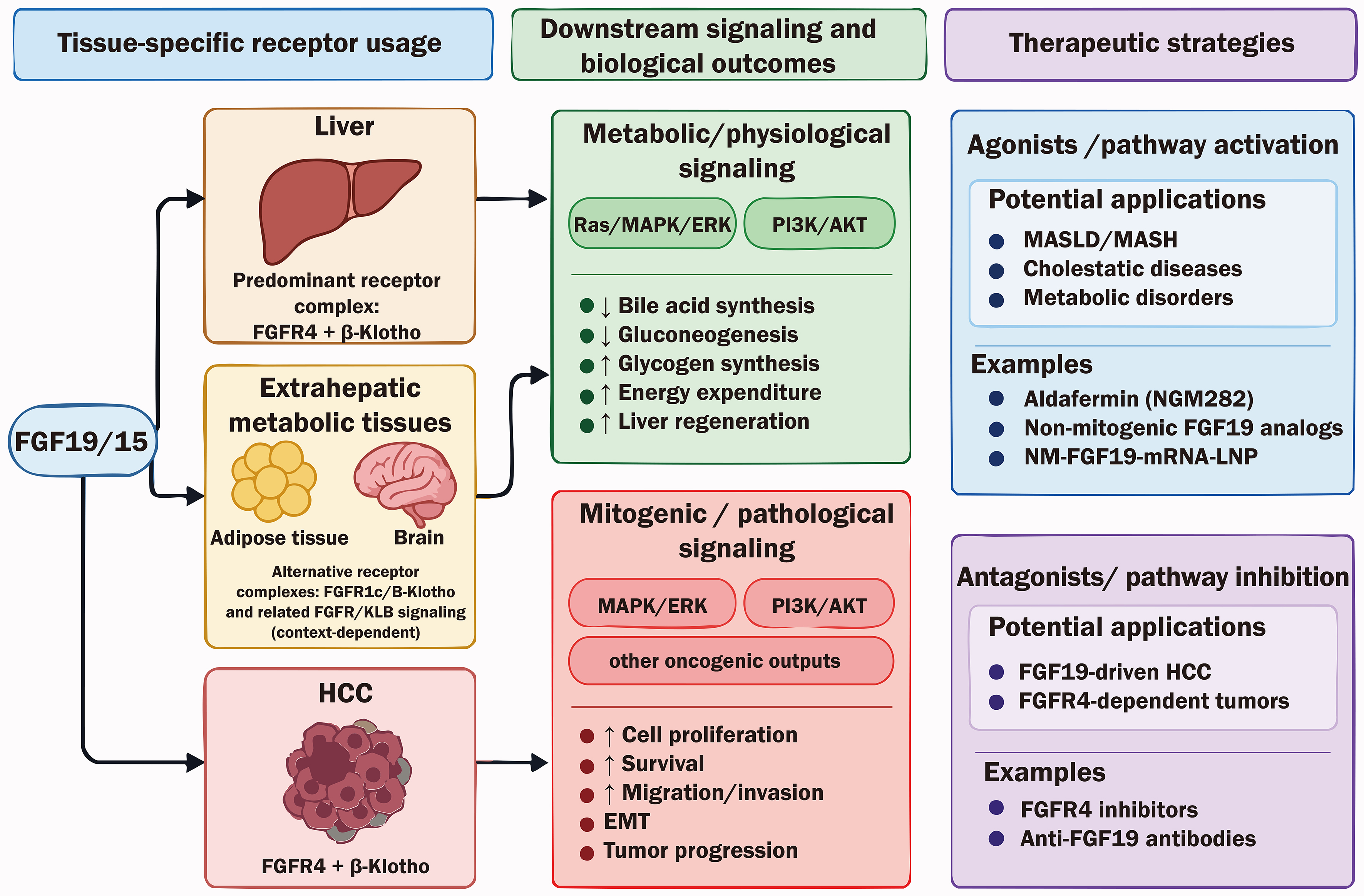
Figure 3. Tissue-specific signaling and therapeutic targeting of FGF19/15. This figure provides an integrated overview of tissue-specific receptor usage, downstream signaling divergence, and therapeutic strategies targeting the FGF19/15 pathway. In the liver, FGF19/15 primarily signals through the FGFR4/KLB complex to regulate metabolic processes, whereas alternative FGFR/KLB complexes may mediate context-dependent effects in extrahepatic tissues. In tumor settings, particularly FGF19-driven hepatocellular carcinoma, FGFR4/KLB signaling contributes to mitogenic responses. Therapeutic approaches are therefore divided into agonistic strategies, including engineered FGF19 analogs for metabolic and cholestatic diseases, and antagonistic strategies, including FGFR4 inhibitors and anti-FGF19 antibodies for tumor-related indications. Upward arrows indicate increased expression, activity, or the indicated biological process, whereas downward arrows indicate decreases. Connecting arrows indicate the direction of signaling or effects. AKT: Protein kinase B; EMT: epithelial-mesenchymal transition; ERK: extracellular signal-regulated kinase; FGF15: fibroblast growth factor 15; FGF19: fibroblast growth factor 19; FGFR: fibroblast growth factor receptor; FGFR1c: fibroblast growth factor receptor 1 isoform c; FGFR4: fibroblast growth factor receptor 4; HCC: hepatocellular carcinoma; KLB: β-Klotho; LNP: lipid nanoparticle; MAPK: mitogen-activated protein kinase; MASLD: metabolic dysfunction-associated steatotic liver disease; MASH: metabolic dysfunction-associated steatohepatitis; mRNA: messenger RNA; NM-FGF19: non-mitogenic fibroblast growth factor 19; PI3K: phosphatidylinositol 3-kinase; Ras: rat sarcoma small GTPase.