fig1
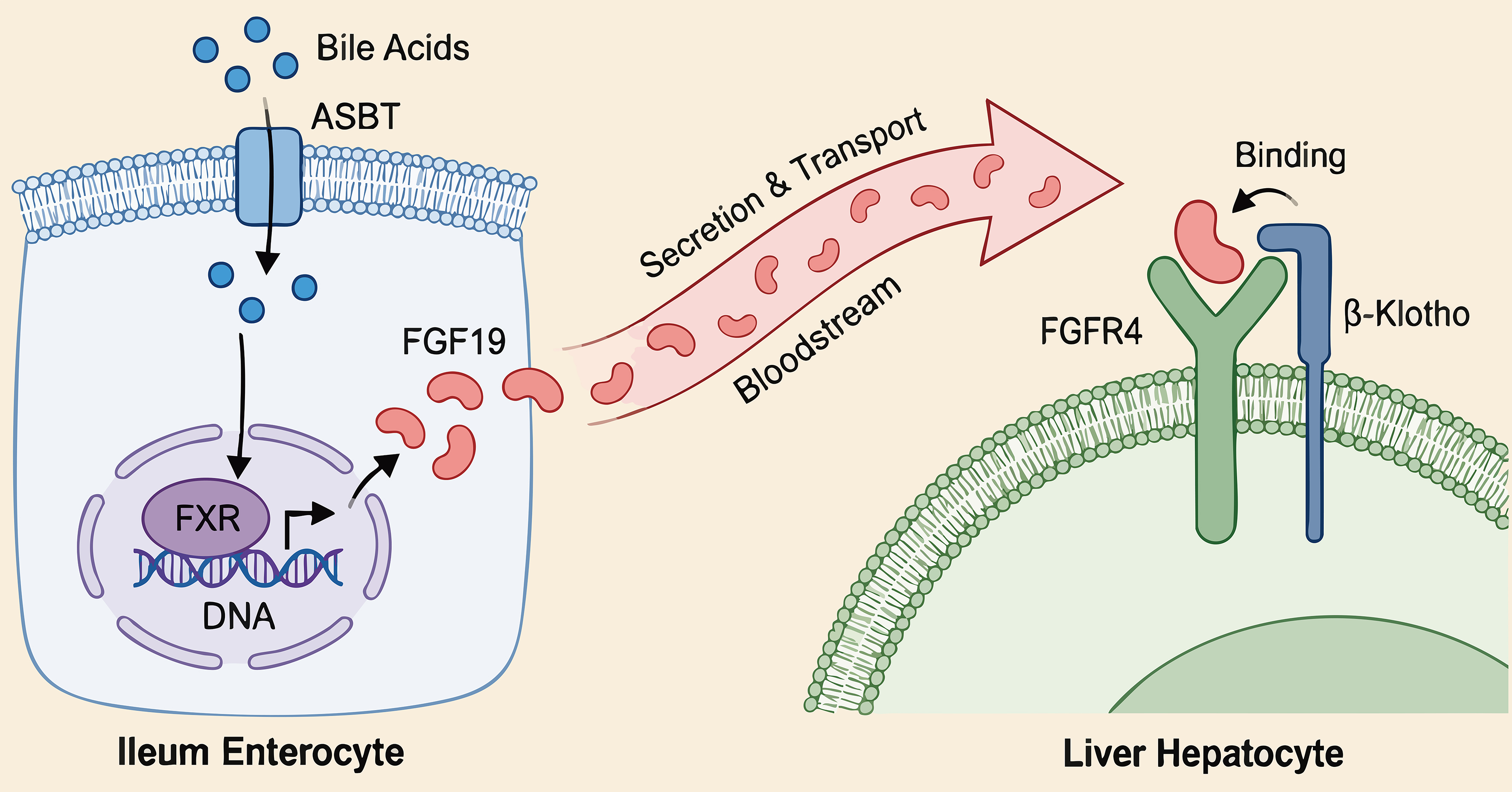
Figure 1. Endocrine Pathway of FGF19 via the Gut-Liver Axis. This illustration depicts the endocrine pathway of FGF19 as it travels from the ileum to the liver, highlighting its hormonal role in metabolic regulation. Bile acids enter the ileal enterocyte through ASBT, activating FXR within the nucleus. This activation stimulates the transcription and secretion of FGF19. Secreted FGF19 moves through the bloodstream toward the liver, where it binds to FGFR4 and KLB on the hepatocyte membrane. This binding is essential for regulating bile acid synthesis, gluconeogenesis, and lipid metabolism. In murine systems, the corresponding conserved axis is mediated by FGF15. ASBT: Apical sodium-dependent bile acid transporter; DNA: deoxyribonucleic acid; FGF15: fibroblast growth factor 15; FGF19: fibroblast growth factor 19; FGFR4: fibroblast growth factor receptor 4; FXR: farnesoid X receptor; KLB: β-Klotho.