fig2
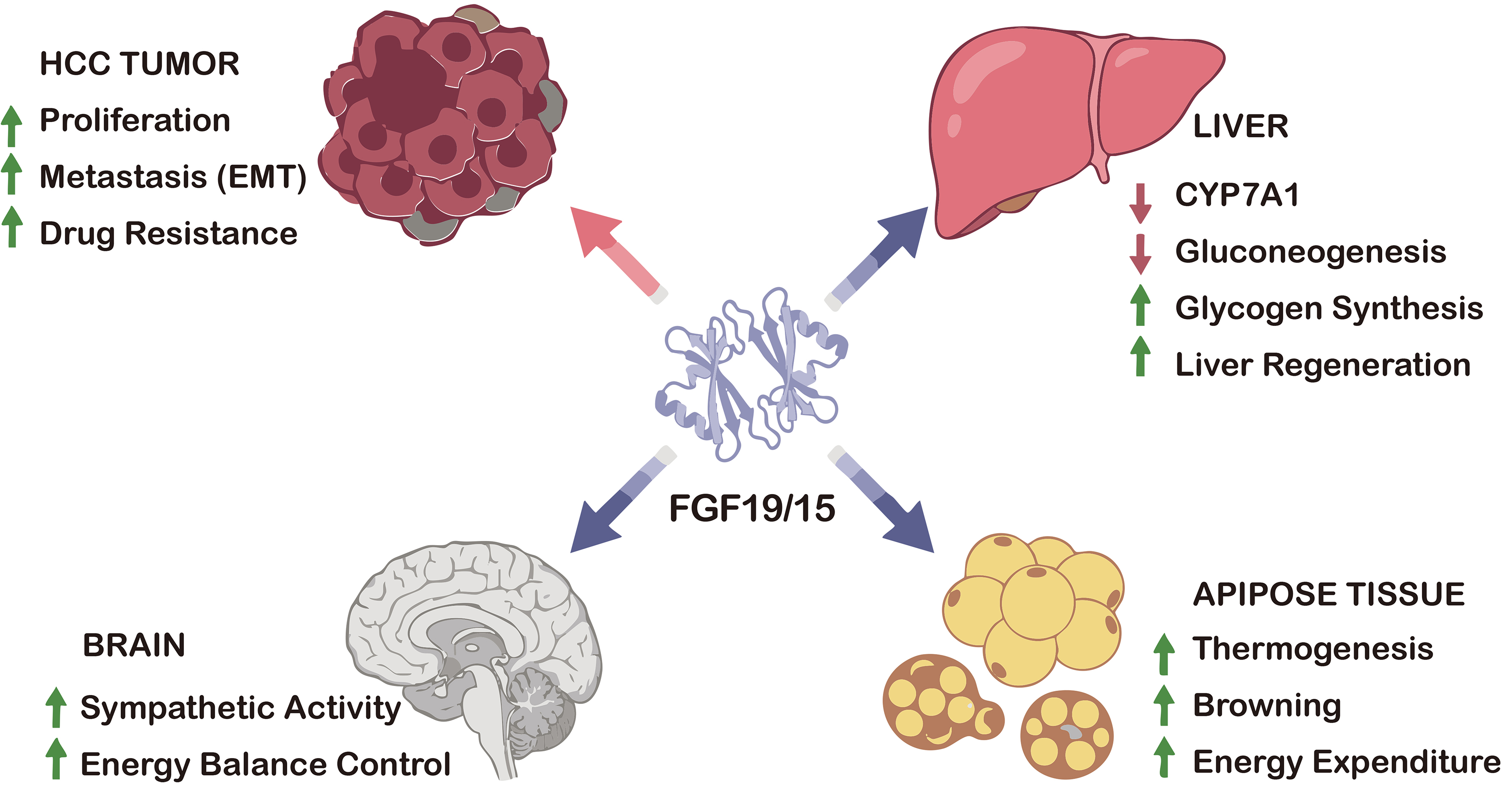
Figure 2. Major Physiological Functions and Pro-tumorigenic Role of FGF19/15 in HCC. This figure summarizes major physiological functions of FGF19/15 and its pro-tumorigenic role in HCC. In the liver, it suppresses CYP7A1 and gluconeogenesis while promoting glycogen synthesis and liver regeneration; in adipose tissue, it enhances thermogenesis and browning to increase energy expenditure; in the brain, it enhances sympathetic activity and regulates energy balance; and in HCC, it may drive proliferation, metastasis, and drug resistance. Upward arrows indicate increased expression, activity, or the indicated biological process, whereas downward arrows indicate decreases. Arrows connecting FGF19/15 to organs indicate its target tissues. CYP7A1: Cholesterol 7α-hydroxylase; EMT: epithelial-mesenchymal transition; FGF15: fibroblast growth factor 15; FGF19: fibroblast growth factor 19; HCC: hepatocellular carcinoma.