

Overcoming immunotherapy resistance in pMMR/MSS colorectal cancer: multi-target combination strategies
 0

Graphical Abstract
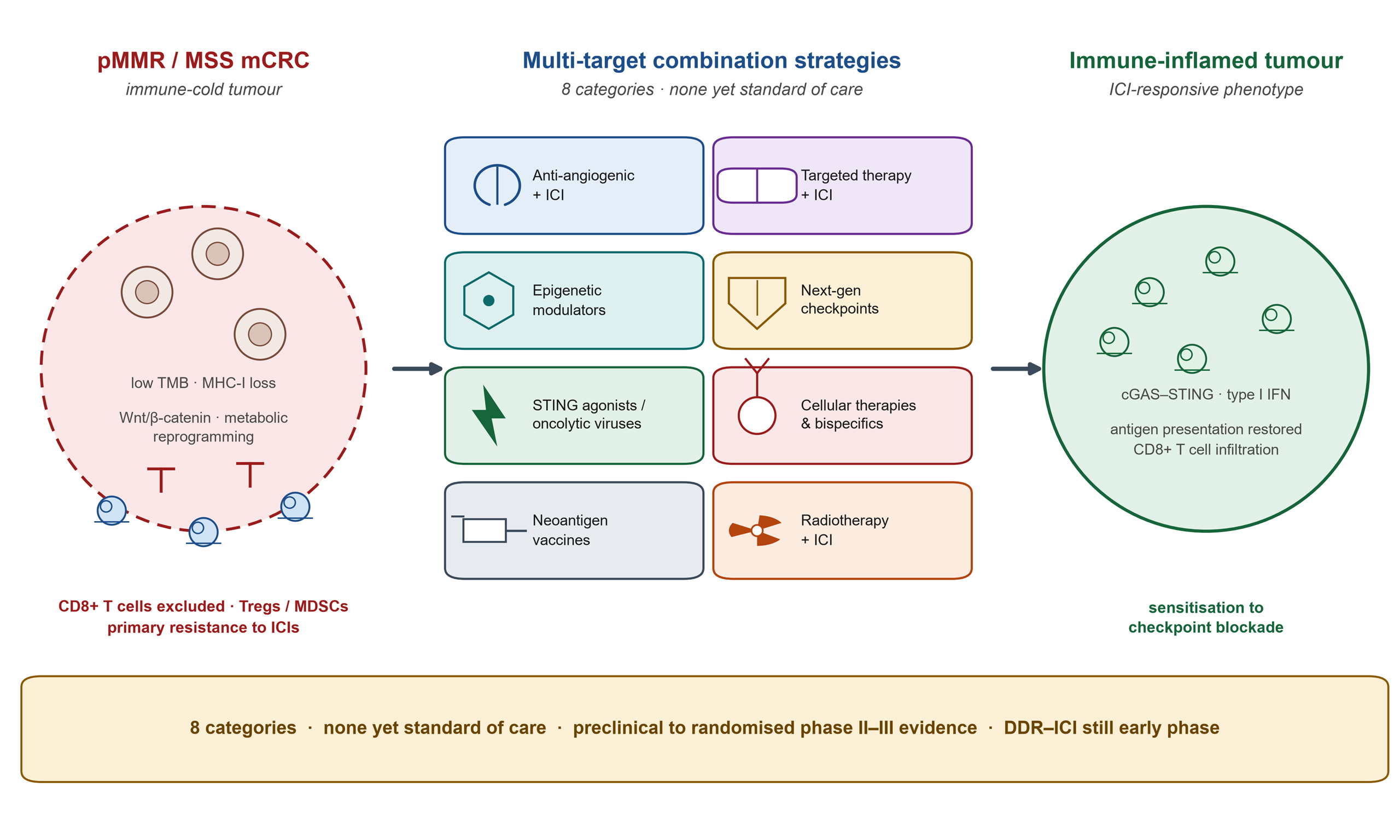
Abstract
Colorectal cancer (CRC) ranks among the leading causes of cancer-related mortality worldwide, yet the vast majority of metastatic cases, classified as proficient mismatch repair and microsatellite-stable(pMMR/MSS), derive little benefit from immune checkpoint inhibitors (ICIs). This primary resistance stems from convergent tumor-intrinsic alterations, including deficient antigen presentation, Wnt/β-catenin-driven T cell exclusion, and metabolic reprogramming, alongside microenvironmental barriers such as immunosuppressive myeloid cell infiltration, stromal exclusion, and gut microbiota dysbiosis. Here, we synthesize the multi-layered resistance mechanisms that render pMMR/MSS CRC refractory to immunotherapy and critically evaluate the expanding portfolio of combination strategies designed to overcome them. We categorize these approaches into eight domains: anti-angiogenic agents combined with ICIs, MAPK pathway inhibitors paired with immunotherapy, epigenetic modulators, next-generation immune checkpoint targets (LAG-3, TIM-3, TIGIT, CD47), stimulator of interferon genes agonists and oncolytic viruses, cellular therapies and bispecific antibodies, personalized neoantigen vaccines, and radiotherapy-immunotherapy combinations. Throughout, early-phase response signals are contrasted with the negative randomized trials IMblaze370 and LEAP-017, neither of which improved overall survival in pMMR/MSS disease. We further discuss biomarker-guided stratification frameworks integrating molecular profiling (BRAF, KRAS, HER2 status), circulating tumor DNA dynamics, stromal signatures, and microbiome composition, and summarize key clinical trials in a structured evidence table. We conclude by outlining key translational gaps: validated predictive biomarkers, optimized sequencing strategies, and rationally designed trial endpoints. By mapping the mechanistic rationale for each combinatorial approach onto the specific resistance circuitry it targets, this review provides a structured framework for advancing pMMR/MSS CRC toward clinically meaningful immunotherapy responses.
Keywords


 Download PDF
INTRODUCTION
Colorectal cancer (CRC) remains the third most commonly diagnosed malignancy and the second leading cause of cancer death globally, with an estimated 1.9 million new cases and 930,000 deaths annually[1,2]. While surgical resection offers curative potential for early-stage disease, approximately 25% of patients present with metastatic disease at diagnosis, and up to 50% develop metastases following initial treatment. For decades, the therapeutic armamentarium for metastatic CRC (mCRC) was confined to cytotoxic chemotherapy combinations, often with biological agents targeting the epidermal growth factor receptor (EGFR) or vascular endothelial growth factor (VEGF) pathways.
The advent of immune checkpoint inhibitors (ICIs) has revolutionized the treatment landscape for a specific molecular subset of CRC. Tumors harboring deficient mismatch repair (dMMR) or high microsatellite instability (MSI-H), which account for approximately 4%-5% of mCRC cases, exhibit robust and durable responses to antibodies targeting programmed cell death 1 (PDCD1, commonly PD-1) such as pembrolizumab and nivolumab[3]. This exceptional sensitivity reflects the high tumor mutational burden (TMB) and abundant neoantigen load characteristic of MSI-H tumors, which generate a spontaneously immune-inflamed tumor microenvironment (TME). In stark contrast, the remaining 90%-95% of mCRC cases, classified as proficient mismatch repair (pMMR) or microsatellite-stable (MSS), have proven largely refractory to single-agent ICI therapy, with objective response rates typically below 5%.
This stark dichotomy has motivated intense investigation into the mechanisms underlying primary immunotherapy resistance in pMMR/MSS CRC. Current evidence indicates that this resistance is not attributable to a single factor but rather arises from the convergence of multiple, often synergistic barriers that collectively create an immune-excluded or immune-desert phenotype[4-6]. These barriers include deficient antigen presentation machinery, oncogenic pathway activation (Wnt/β-catenin, MAPK, PI3K/AKT), metabolic reprogramming that suppresses effector T cell function, an immunosuppressive TME dominated by myeloid-derived suppressor cells (MDSCs) and M2-polarized tumor-associated macrophages (TAMs), physical stromal barriers, and gut microbiota dysbiosis[7-9].
The recognition that no single intervention is likely to overcome this multi-layered resistance has shifted the field toward rational combination strategies. The central premise is that simultaneously targeting multiple resistance nodes can convert the immune-cold pMMR/MSS TME into an immune-inflamed state capable of responding to ICI therapy[10]. Over the past several years, a diverse array of combinatorial approaches has entered clinical development, ranging from anti-angiogenic-ICI pairings that normalize tumor vasculature and enhance T cell infiltration, to small-molecule inhibitors of oncogenic pathways that reduce myeloid suppressor activity, to next-generation immune checkpoint blockers targeting LAG-3, TIM-3, and TIGIT[5,9].
It is also important to view these mechanisms in their temporal context. Colorectal carcinogenesis is a decades-long evolutionary process: whole-genome sequencing of hundreds of normal colorectal crypts has shown that probable driver mutations are already present in approximately 1% of morphologically normal crypts by middle age, indicating that established cancers are rare outcomes of a pervasive process of neoplastic change across normal epithelium[11]. This clonal evolution is not confined to the colon or to adulthood. Recent whole-genome sequencing of 981 colorectal cancer genomes from 11 countries has shown that the colibactin-associated mutational signatures SBS88 and ID18 are enriched in early-onset disease, being 3.3 times more common in patients diagnosed before 40 years of age than in those older than 70 years, that these signatures are imprinted early during tumor development, and that ID18 alone accounts for about 25% of APC driver insertions and deletions in colibactin-positive cases[12]. Because a mutagenic exposure must precede the mutations it generates, these findings place colibactin exposure early in the life course rather than at the time of diagnosis, providing a concrete example of life-course mutagenesis in CRC. The molecular pathological epidemiology (MPE) framework formalizes this longitudinal perspective by linking long-term exogenous exposures, including diet, lifestyle, and the gut microbiome, with the molecular and immune characteristics of incident tumors[13]. For immunotherapy resistance, this implies that modifiable exposures acting over decades may shape both the genomic landscape and the immune microenvironment of pMMR/MSS CRC, a dimension that cross-sectional studies cannot capture and that we return to in the closing section of this review.
This review provides a comprehensive and critical synthesis of the mechanisms driving immunotherapy resistance in pMMR/MSS CRC and evaluates the rapidly evolving landscape of multi-target combination strategies. We organize these approaches according to the specific resistance circuitry they are designed to disrupt, discuss biomarker-guided frameworks for patient stratification, and identify the most pressing translational challenges that must be addressed to achieve clinically meaningful immunotherapy responses in this underserved patient population.
Literature search strategy. We searched PubMed, Web of Science, and Scopus for studies published between January 2015 and September 2026 using combinations of the terms "colorectal cancer", "microsatellite stable", "pMMR/MSS", "ICIs", "immunotherapy resistance", and "combination therapy". Priority was given to clinical trials, prospective studies, and mechanistic investigations published within the past five years; seminal earlier studies were retained for historical context. Reference lists of key retrieved articles and recent review articles were manually screened for additional relevant studies. Although this is a narrative review rather than a systematic review, we followed a structured three-stage screening procedure that approximates PRISMA methodology: (i) title and abstract screening by two reviewers against pre-specified inclusion criteria (original research in CRC with explicit pMMR/MSS or MSS designation, or in non-CRC systems used only as mechanistic or proof-of-concept analogues and clearly flagged as such; combination strategies involving at least one immune-checkpoint inhibitor; English-language full-text availability); (ii) full-text eligibility assessment with reasons for exclusion recorded; and (iii) categorization of retained studies by design (randomized vs. single-arm vs. retrospective), line of therapy, biomarker eligibility, and maturity of evidence (established standard-of-care vs. investigational), as summarized in Table 1. Discrepancies between reviewers were resolved by discussion.
Clinical evidence base for combination strategies involving immune checkpoint inhibitors in pMMR/MSS metastatic colorectal cancer, grouped by evidence category
| Study (trial) | Design/phase | Setting and line | Biomarker selection | Regimen | N | Key efficacy | Main safety considerations |
| A. Prospective interventional trials in MSS/pMMR metastatic CRC (efficacy reported) | |||||||
| Wang et al. (2025)[33] | Phase 2, single-arm | First-line RAS-mutant MSS mCRC | RAS-mutant, MSS | Sintilimab + bevacizumab + CAPOX | 33 | ORR 72.7% (24/33); mPFS 12.9 mo; mOS not reached | Most irAEs grade 1-2; no treatment-related death |
| REGONIVO, EPOC1603 (2020)[34] | Phase 1b, single-arm | Refractory advanced GC/CRC (≥ 2 prior lines), Japan | MSS (24/25 CRC patients) | Regorafenib 80-120 mg + nivolumab | 50 (25 CRC) | ORR 36% (9/25) in CRC cohort; mPFS 7.9 mo | Gr ≥ 3 TRAE 40% (rash, proteinuria, HFSR); 1 treatment-related death (GC) |
| Fakih et al. (2021)[35] | Phase 2, single-arm | Refractory pMMR/MSS mCRC, North America | pMMR/MSS | Regorafenib (up to 120 mg) + nivolumab | 70 | ORR 7.1% (5/70); 21.7% (5/23) without liver mets; 0% with liver mets; mPFS ~2 mo | Gr ≥ 3 TEAE 63%; rash, fatigue |
| RIN trial (2023)[36] | Phase 1, dose-finding + expansion | MSS mCRC progressing after chemotherapy, no prior ICI | MSS | Regorafenib + ipilimumab + nivolumab | 39 (29 at RP2D) | ORR 27.6% (8/29 at RP2D); 36.4% without liver mets; mPFS 4 mo; mOS 20 mo | Skin and immune-related toxicity; dose optimization needed |
| REGOTORI (2021)[37] | Phase Ib/II, single-arm | Refractory pMMR/MSS/MSI-L mCRC (≥ 3rd line), China | pMMR/MSS/MSI-L | Regorafenib + toripalimab | 33 | ORR 15.2% (5/33); DCR 36.4%; mPFS 2.1 mo; mOS 15.5 mo | Gr 3 TRAE 38.5%; no gr 4-5; high Fusobacterium predicts worse PFS |
| Liu et al. (2026)[39] | Phase II, single-arm | MSS mCRC, ≥ 2 prior regimens | MSS | Electroacupuncture + fruquintinib + sintilimab | 31 (28 evaluable) | ORR 21.4% (6/28); DCR 92.9%; mPFS 6.1 mo; mOS 12.4 mo | Gr ≥ 3 TRAE 29%; no electroacupuncture-related toxicity |
| Morris et al. (2025)[44] | Phase 1/2, single-arm | MSS BRAF V600E mCRC | BRAF V600E, MSS | Encorafenib + cetuximab + nivolumab | 26 | ORR 50% (13/26); mPFS 7.4 mo | Reported manageable; detailed Gr ≥ 3 rates in primary publication |
| Zhang et al. (2025)[67] | Phase II, single-arm | pMMR/MSS/MSI-L mCRC after 1-2 lines | pMMR/MSS/MSI-L | Gamma Knife SRT + tislelizumab | 20 | ORR 70% (14/20); DCR 100%; mPFS 10.7 mo | No grade 4 events; anemia, nausea, fatigue most common |
| B. Randomized phase 3 trials in MSS/pMMR metastatic CRC (negative; shown for context) | |||||||
| IMblaze370 (2019)[42] | Phase 3, randomized (2:1:1) | Previously treated MSS mCRC, third line, 11 countries | MSS (MSI-H capped at 5%) | Atezolizumab + cobimetinib vs. atezolizumab vs. regorafenib | 363 (183/90/90) | mOS 8.87 vs. 7.10 vs. 8.51 mo; HR 1.00 (0.73-1.38) vs. regorafenib; primary endpoint not met | Gr 3-4 AE 61% vs. 31% vs. 58%; 2 treatment-related deaths (combination arm) |
| LEAP-017 (2024)[43] | Phase 3, randomized (1:1) | Previously treated pMMR or not MSI-H mCRC | pMMR or not MSI-H | Lenvatinib + pembrolizumab vs. regorafenib or trifluridine/tipiracil | 480 (241/239) | mOS 9.8 vs. 9.3 mo; HR 0.83 (0.68-1.02); P = 0.0379 vs. prespecified 0.0214; not significant | Gr ≥ 3 TRAE 58.4% vs. 42.1%; 2 treatment-related deaths (combination arm) |
| C. Retrospective series (not prospective evidence) | |||||||
| Yang et al. (2025)[40] | Retrospective, single-arm | Later-line salvage MSS/pMMR mCRC (retrospective series) | MSS/pMMR | Metronomic capecitabine + anti-angiogenic + PD-1 inhibitor | 21 | ORR 33.3% (7/21); DCR 90.5%; mPFS 5.4 mo; mOS 10.4 mo | Gr 3/4 toxicity in 9/21 patients |
| D. Evidence extrapolated from other cancer types (not CRC-specific) | |||||||
| CT041-ST-01 (2025)[57] | Randomized phase 2 (advanced gastric/GEJ cancer) | 3rd-line+ CLDN18.2+ advanced gastric/GEJ cancer (evidence extrapolated to CRC only) | CLDN18.2+ (IHC 2+/≥ 40%) | Satri-cel (CLDN18.2 CAR-T) vs. physician's choice | 156 | mPFS 3.25 vs. 1.77 mo (HR 0.37); first positive randomized CAR-T trial in solid tumors; no CRC-specific efficacy | Gr ≥ 3 TEAE 99% (cytopenias); CRS 95% |
| E. Cancer-prevention study in germline MMR deficiency (Lynch syndrome) | |||||||
| Nous-209 (2026)[64] | Phase 1b/2 (cancer prevention in Lynch syndrome) | Lynch syndrome carriers (cancer prevention) | Lynch syndrome | Nous-209 neoantigen vaccine | Cohort sizes reported in the primary publication | Safety and immunogenicity endpoints met; no therapeutic efficacy outcome | Reported well tolerated |
| F. Trial protocol only; no efficacy results reported to date | |||||||
| CombiCoR-Vax (2025)[65] | Phase II protocol | Refractory MSS mCRC (ongoing) | MSS | Pembrolizumab + DC vaccine, then trifluridine/tipiracil + bevacizumab | Not yet reported (trial ongoing) | No efficacy results reported to date; primary endpoint pending | Trial in progress |
MECHANISMS OF IMMUNE RESISTANCE IN pMMR/MSS CRC
The resistance of pMMR/MSS CRC to ICIs arises from a complex interplay of tumor-intrinsic alterations and microenvironmental factors that converge to create an immune-excluded or immune-desert phenotype. Understanding these mechanisms is essential for designing rational combination strategies. Figure 1 provides a schematic overview of the key resistance circuits discussed below, and Figure 2 summarizes the interplay between DNA damage, the DNA damage response (DDR), and anti-tumor immune resistance.
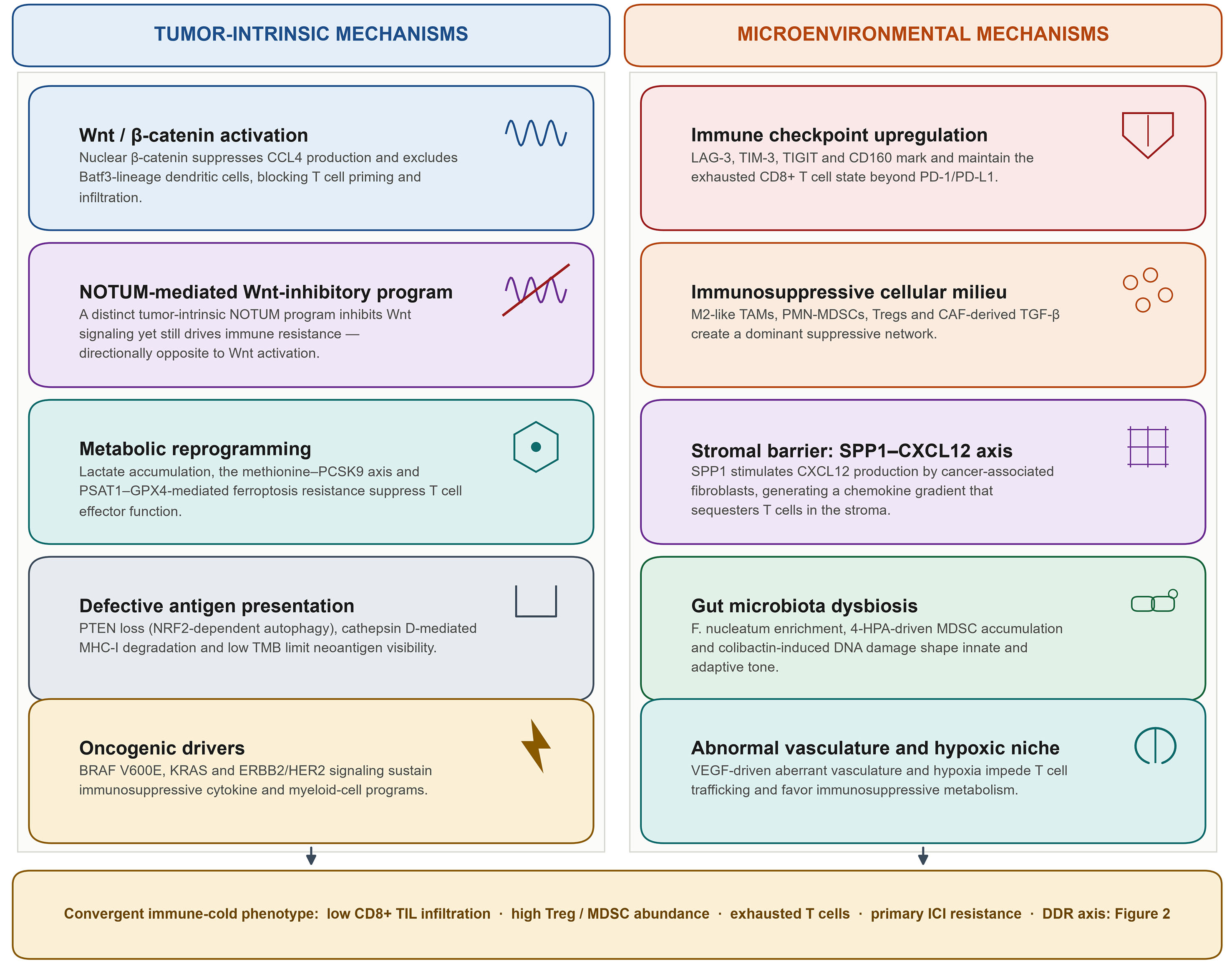
Figure 1. Multi-layered mechanisms driving primary resistance to immune checkpoint inhibitors in pMMR/MSS colorectal cancer. Tumor-intrinsic mechanisms (left panel) include Wnt/β-catenin activation driving T cell exclusion (suppressed CCL4 and Batf3-lineage dendritic cell exclusion); a distinct tumor-intrinsic NOTUM program that inhibits Wnt signaling yet drives immune resistance; metabolic reprogramming (lactate accumulation, methionine-PCSK9 axis, PSAT1-GPX4-mediated ferroptosis resistance); antigen presentation defects (PTEN loss-mediated MHC-I degradation, cathepsin D activity, low TMB); and oncogenic drivers (BRAF V600E, KRAS, ERBB2/HER2). Microenvironmental mechanisms (right panel) encompass immune checkpoint upregulation (LAG-3, TIM-3, TIGIT, CD160), immunosuppressive TME components (M2 TAMs, PMN-MDSCs, Tregs, CAFs, TGF-beta), gut microbiota dysbiosis (F. nucleatum enrichment, 4-HPA-mediated MDSC accumulation), and stromal barriers (SPP1-stimulated CXCL12 production by CAFs generating a T cell-sequestering chemokine gradient). These mechanisms converge to create an immune-cold TME characterized by low CD8+ TIL infiltration, high Treg/MDSC abundance, exhausted T cell phenotype, and primary resistance to ICIs.
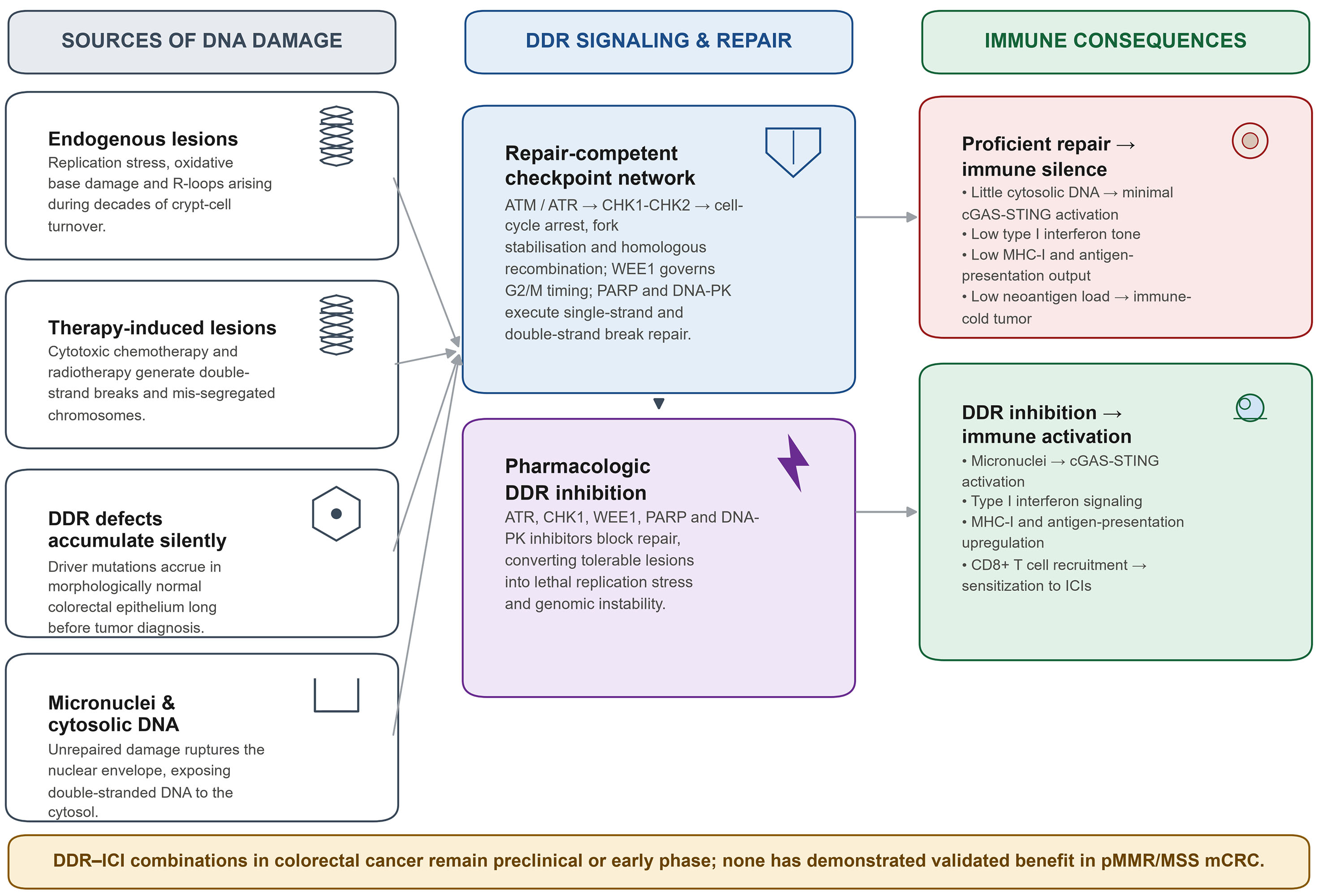
Figure 2. DNA damage, the DNA damage response (DDR) and anti-tumor immune resistance in pMMR/MSS colorectal cancer. Endogenous replication stress, therapy-induced lesions and DDR defects accumulated silently over decades of colorectal epithelial evolution converge on a repair-competent checkpoint network (ATM/ATR-CHK1/CHK2, WEE1, PARP and DNA-PK). When repair is proficient, cytosolic DNA release, cGAS-STING activation, type I interferon tone, MHC-I antigen presentation and neoantigen load all remain low, sustaining an immune-cold phenotype. Pharmacologic inhibition of DDR nodes converts tolerable lesions into lethal replication stress and micronuclei, activating the cGAS-STING-type I interferon axis, upregulating antigen-presentation machinery and recruiting CD8+ T cells, thereby sensitizing tumors to immune checkpoint blockade. DDR-directed-ICI combinations in colorectal cancer remain preclinical or early phase, and none has yet demonstrated validated benefit in pMMR/MSS metastatic disease.
Deficient antigen presentation and low immunogenicity
Effective anti-tumor T cell responses depend on the presentation of tumor-associated antigens via major histocompatibility complex class I (MHC-I) molecules. pMMR/MSS tumors characteristically exhibit low TMB and a paucity of neoantigens, resulting in weak spontaneous T cell priming. Beyond the inherently low mutational load, accumulating evidence reveals active mechanisms that further compromise antigen presentation. PTEN loss, observed in a substantial fraction of CRCs, triggers NRF2-dependent autophagy that degrades MHC-I molecules, effectively shielding tumor cells from CD8+ T cell recognition[14]. Independently, cathepsin D functions as a lysosomal protease that mediates MHC-I degradation in CRC cells, and its inhibition restores MHC-I surface expression and enhances T cell-mediated killing[15]. Such observations highlight that antigen presentation defects in pMMR/MSS CRC are not merely a consequence of low mutation burden but are actively maintained by druggable cellular processes.
An important exception complicates any simple equation of MSS status with low immunogenicity. Tumors carrying pathogenic exonuclease-domain mutations in the proofreading polymerases POLE or POLD1 accumulate an ultramutated genome while remaining mismatch repair proficient, and in a prospective multicenter trial of PD-1 blockade in MMR-proficient POLE-mutated tumors, objective responses were confined to pathogenic exonuclease-domain variants, whereas non-proofreading POLE variants derived no benefit[16]. MSS status should therefore be read as a statement about mismatch repair, not as a proxy for global DDR competence or for absent immunogenicity, and POLE/POLD1 proofreading deficiency should be sought when an MSS tumor shows an unexpectedly high mutational burden or an immune-inflamed phenotype.
Wnt/β-catenin signaling and T cell exclusion
Aberrant activation of the Wnt/β-catenin pathway is one of the most consistently identified drivers of immune exclusion in CRC. Nuclear β-catenin accumulation in tumor cells suppresses the transcription of CCL4 and other chemokines that recruit Batf3-lineage dendritic cells, which are essential for cross-presentation of tumor antigens to CD8+ T cells. A recent study identified NOTUM, a secreted Wnt deacylase, as a tumor-intrinsic factor that drives immune resistance specifically in MSS CRC by modulating the Wnt signaling landscape within the TME[17]. Importantly, NOTUM functions as a Wnt inhibitor rather than an activator: the tumor-intrinsic NOTUM program attenuates canonical Wnt/β-catenin signaling yet promotes an immune-resistant tumor cell state[17]. Wnt pathway alterations therefore contribute to immune exclusion through at least two distinct routes, β-catenin-driven dendritic cell exclusion and NOTUM-mediated tumor cell state changes, and therapeutic targeting of this axis will need to distinguish between them. The spatial distribution of β-catenin activation correlates with T cell exclusion zones identified by spatial transcriptomics, providing a mechanistic basis for the immune-excluded phenotype. Targeting β-catenin signaling thus represents a rational strategy to restore T cell infiltration, though clinically tractable inhibitors remain an area of active development. Delivery strategies are also being re-engineered to exploit this dependency: glycosylated nanoalbumin carriers designed to interrupt Wnt signaling have been reported to restore immune responsiveness in MSS CRC models, suggesting that the pathway may be druggable through tumor-selective delivery even where systemic inhibitors have been limited by toxicity[18].
Metabolic reprogramming and immune suppression
Metabolic alterations in pMMR/MSS CRC create a nutrient-depleted, metabolite-rich microenvironment that actively suppresses anti-tumor immunity. Tumor cells consume glucose at high rates, producing lactate that acidifies the TME and impairs T cell effector function while promoting the expansion of immunosuppressive MDSCs and Tregs. The methionine-PCSK9 axis constitutes a key metabolic checkpoint: elevated methionine metabolism in MSS CRC upregulates PCSK9 expression, which degrades MHC-I and attenuates the antitumor potency of PD-1 blockade[19]. Pharmacological inhibition of PCSK9 or dietary methionine restriction can restore MHC-I expression and sensitize tumors to ICI therapy. PSAT1 (phosphoserine aminotransferase 1) further impairs ferroptosis and reduces immunotherapy efficacy through GPX4 hydroxylation, linking amino acid metabolism to lipid peroxidation and immune evasion[20]. Lactate accumulation and protein lactylation reshape the epigenetic landscape of immune cells within the TME, polarizing macrophages toward an immunosuppressive phenotype. Autophagy provides a further metabolic handle on immunogenicity: in mismatch repair-proficient colorectal cancer models, pharmacological autophagy inhibition reduced regulatory T cells and increased intratumoral CD8+ T cells, and combined with PD-1 blockade suppressed tumor growth more effectively than either intervention alone[21], although whether this translates into clinical benefit in pMMR/MSS disease remains untested.
Gut microbiota dysbiosis
The gut microbiome plays a central role in modulating immunotherapy response in CRC. Specific bacterial species influence ICI efficacy through multiple mechanisms, including modulation of systemic immune tone, production of immunomodulatory metabolites, and direct interaction with tumor-infiltrating immune cells. Enrichment of Fusobacterium nucleatum, a bacterium consistently associated with CRC progression, promotes immune evasion by recruiting MDSCs and suppressing CD8+ T cell activity. A gut microbial metabolite, 4-hydroxybenzeneacetic acid (4-HPA), drives CRC progression by accumulating immunosuppressive polymorphonuclear MDSCs (PMN-MDSCs)[22]. At the molecular level, pks+ Escherichia coli produce the genotoxin colibactin, which alkylates DNA and generates a characteristic mutational signature that contributes to CRC initiation and may shape the immune visibility of resulting tumors[23]. Conversely, single-cell transcriptomic analyses reveal that beneficial microbiota can synergize with immunotherapy by remodeling the TME toward an immune-inflamed state[24]. Such findings have spurred clinical interest in microbiota-directed interventions, including fecal microbiota transplantation (FMT), probiotic supplementation, and dietary modifications, as adjuncts to ICI therapy[25,26]. Because the gut microbiome is itself shaped by long-term diet and lifestyle exposures, this axis provides a tractable mechanistic link between the MPE framework and the immune responsiveness of pMMR/MSS CRC. A distinction that is often blurred is that between gut luminal and tissue-resident microbial effects: intratumoral bacteria appear to act locally on tumor cells and on the surrounding immune infiltrate, whereas the gut microbiota exerts systemic effects on immune tone, and recent analyses argue that the two compartments should be studied and targeted separately[27].
Stromal barriers and the vascular niche
The desmoplastic stroma that characterizes a subset of CRCs creates a physical and biochemical barrier to T cell infiltration. Cancer-associated fibroblasts (CAFs) produce extracellular matrix components and immunosuppressive cytokines, including TGF-beta, that exclude T cells from the tumor parenchyma. SPP1 (secreted phosphoprotein 1) is not merely a marker of a CAF subset but a functional driver: SPP1 stimulates CXCL12 production in CAFs, and the resulting CXCL12 gradient sequesters T cells in the peritumoral stroma of colorectal cancer liver metastases, contributing to immunotherapy resistance[28]. A stromal biomarker-based framework can identify pMMR/MSS CRC patients with particularly poor outcomes and limited benefit from immunotherapy, enabling more precise patient selection for combination trials[29]. Spatial transcriptomics has further mapped the organization of PD-L1 (CD274) expression and TAM-enriched niches within MSS CRC, revealing distinct immune and mesenchymal states that correlate with treatment resistance[30]. Notably, the same CAF-dense, ECM-rich stromal architecture that excludes T cells also limits the penetration of systemically delivered therapeutics; matrix-modulation strategies originally developed in desmoplastic pancreatic cancer, in which Cerenkov-radiation-driven photodynamic therapy reduces collagen deposition and improves chemotherapeutic delivery[31], illustrate a transferable concept that may eventually be applied to stroma-rich pMMR/MSS CRC subsets.
DNA damage, the DDR, and immune resistance
Genomic instability arising from DDR defects interacts intimately with anti-tumor immunity, and this axis has become an increasingly relevant dimension of ICI resistance in pMMR/MSS CRC. Proficient DDR allows tumor cells to repair replication- and therapy-induced DNA lesions efficiently, limiting the release of immunostimulatory nucleic acids and helping to keep neoantigen load low. Conversely, pharmacologic inhibition of DDR nodes such as ATR, CHK1, WEE1, PARP, and DNA-PK increases replication stress and genomic instability, which can generate micronuclei, activate the cyclic GMP-AMP synthase-stimulator of interferon genes (cGAS-STING) pathway, induce type I interferon signaling, and upregulate MHC-I and antigen presentation machinery, thereby sensitizing otherwise immunologically cold tumors to ICI therapy[32]. This mechanistic crosstalk has prompted multiple clinical programs combining DDR inhibitors with immune checkpoint blockade across solid tumors, including CRC[32]. DDR alterations also accrue over decades in morphologically normal colorectal epithelium[11], implying that the DDR state of an established pMMR/MSS tumor reflects a long evolutionary history and may contribute to the heterogeneity of immune phenotypes observed among patients. Figure 2 summarizes how DNA damage, DDR activity, and DDR-directed therapeutics converge on anti-tumor immune responses. To date, however, DDR-ICI combinations in CRC remain preclinical or early phase, and none has demonstrated validated benefit in pMMR/MSS mCRC.
MULTI-TARGET COMBINATION STRATEGIES
The multi-layered nature of immune resistance in pMMR/MSS CRC demands combinatorial approaches that simultaneously disrupt multiple resistance nodes. Figure 3 summarizes the eight major combination strategy categories discussed in this section. These approaches share a common functional goal, the restoration of productive anti-tumor immunity, although they reach this goal through distinct entry points, and not all of them rely on PD-1/PD-L1 blockade as a therapeutic backbone. Table 1 provides a structured overview of the clinical evidence base in this setting, grouped by evidence category (CRC-specific prospective trials, negative randomized phase 3 trials, retrospective series, evidence extrapolated from other cancer types, cancer-prevention studies, and trial protocols without reported results), and an overview of the major mechanisms and strategies is provided in the Graphical Abstract.
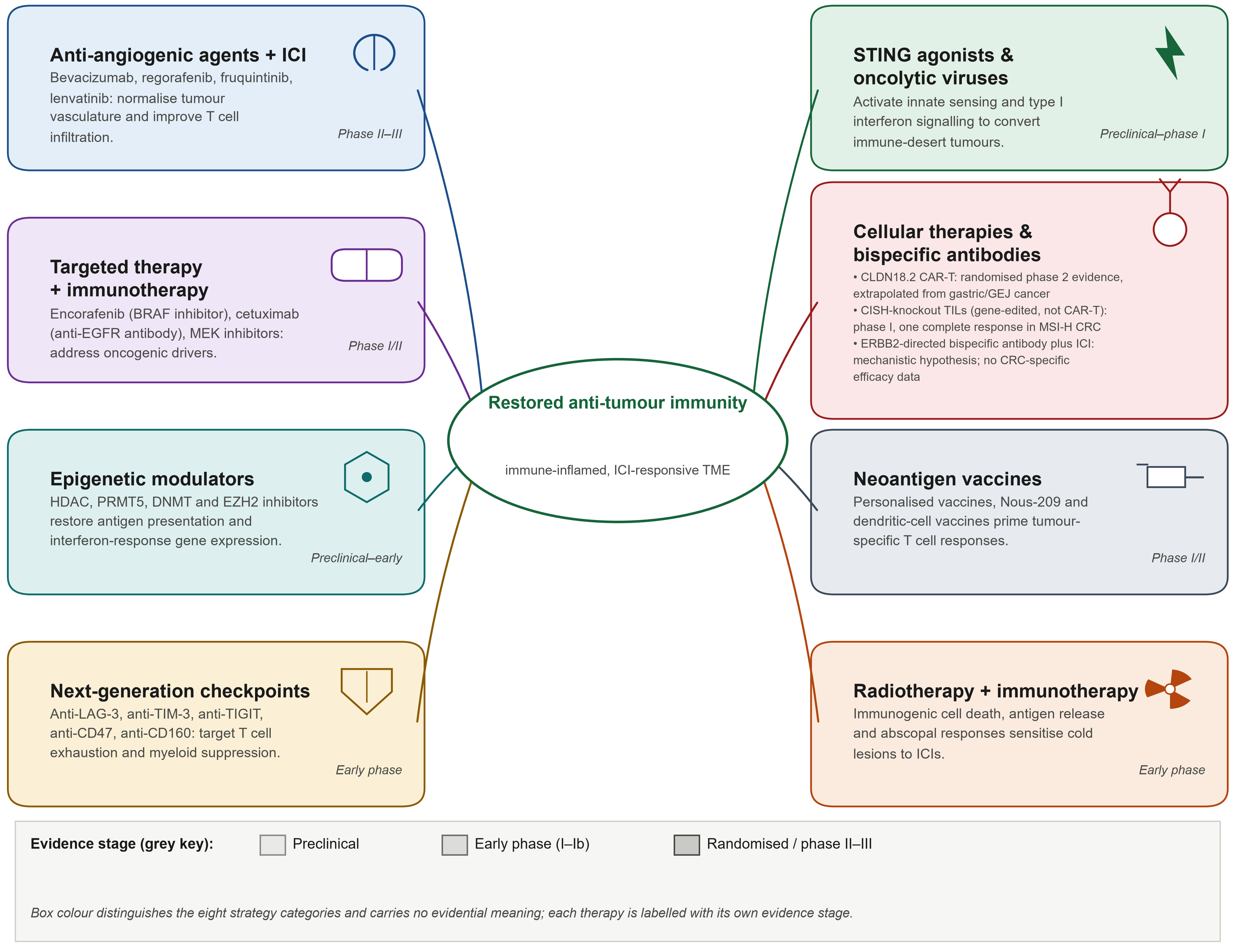
Figure 3. Eight combinatorial strategy categories aiming to restore productive anti-tumor immunity in pMMR/MSS CRC. Anti-angiogenic agents (bevacizumab, regorafenib, fruquintinib, lenvatinib) combined with ICIs normalize tumor vasculature and enhance immune infiltration; targeted therapy plus immunotherapy (the BRAF inhibitor encorafenib, the anti-EGFR antibody cetuximab, MEK inhibitors) addresses oncogenic drivers; epigenetic modulators (HDAC, PRMT5, DNMT, EZH2 inhibitors) restore antigen presentation and immune gene expression; novel checkpoint targets (LAG-3, TIM-3, TIGIT, CD47, CD160) address T cell exhaustion and myeloid suppression; STING agonists and oncolytic viruses activate innate immunity and type I interferon signaling; cellular therapies and bispecific antibodies, three distinct product classes that are listed separately because they should not be conflated: CLDN18.2-directed CAR-T cells, whose randomized phase 2 evidence is extrapolated from gastric/GEJ cancer; CISH-knockout tumor-infiltrating lymphocytes, a gene-edited TIL product and not a CAR-T product, reported in a phase I study with one complete response in MSI-H CRC; and ERBB2-directed bispecific antibody plus ICI, a mechanistic hypothesis with no CRC-specific efficacy data) enable targeted cellular immunotherapy; neoantigen vaccines (personalized vaccines, Nous-209, DC vaccines) prime tumor-specific T cell responses; and radiotherapy-ICI combinations exploit the abscopal effect and immunogenic cell death. Box color distinguishes the eight strategy categories and carries no evidential meaning; the grey evidence-stage key at the foot of the figure indicates the highest level of clinical evidence currently available, and where one category contains products of differing maturity, each product is labeled individually. All strategies aim to convert the immune-cold MSS CRC TME into an immune-inflamed, ICI-responsive phenotype, but none is yet an established standard of care in pMMR/MSS mCRC.
Anti-angiogenic agents combined with ICIs
Anti-angiogenic therapy is among the most clinically advanced combination strategies for pMMR/MSS CRC. The rationale is dual: VEGF not only drives aberrant tumor vascularization but also directly suppresses immune cell function by inhibiting dendritic cell maturation and promoting Treg and MDSC expansion. By normalizing tumor vasculature, anti-angiogenic agents can enhance immune cell infiltration and alleviate hypoxia-driven immunosuppression. Bevacizumab combined with sintilimab and CAPOX as first-line therapy for RAS-mutant MSS mCRC has shown particularly encouraging activity, with an ORR of 72.7% and a median PFS of 12.9 months reported in a phase 2 study[33]. Regorafenib, a multi-kinase inhibitor with anti-angiogenic activity, combined with nivolumab has produced objective response rates ranging from 7% to 36% in refractory MSS mCRC across phase Ib-II trials: the Japanese REGONIVO phase 1b trial reported a 36% response rate in its colorectal cancer cohort[34], a North American phase 2 study reported 7.1% overall (21.7% among patients without liver metastases[35]), the phase 1 RIN trial of regorafenib, ipilimumab, and nivolumab reported 27.6%[36], and the Chinese REGOTORI trial of regorafenib plus toripalimab reported 15.2%[37]. This wide spread in response rates across ostensibly similar regimens is itself instructive: comparative analyses indicate that the presence of liver metastases and the baseline immune state of the tumor are major determinants of benefit, with essentially no responses among patients with liver metastases in several series[38], a pattern also reflected in the microbiome-stratified outcomes of REGOTORI[37]. Table 1 summarizes these trials in detail. More recently, a single-arm phase II study of fruquintinib plus sintilimab with electroacupuncture reported an objective response rate of 21.4% and a disease control rate of 92.9% in refractory MSS mCRC[39]. Because that study had no electroacupuncture-free control arm, its tolerability can only be read as a historical comparison with fruquintinib-ICI doublets, and its response rate lies within the range already reported for such doublets; the single-arm design cannot establish that adding electroacupuncture reduced treatment toxicity. A triplet regimen of metronomic capecitabine plus an anti-angiogenic drug and PD-1 inhibitor achieved meaningful disease control as later-line salvage treatment for MSS/pMMR mCRC[40]. The tumor suppressor SLC9A2 reverses immunotherapy resistance by suppressing angiogenesis, providing a mechanistic rationale for combining anti-angiogenic and immune-mediated approaches[41].
The regorafenib-based single-arm experience must be read alongside its randomized counterweight, which has been negative. In IMblaze370 (NCT02788279), 363 patients with previously treated MSS metastatic CRC were randomized to atezolizumab plus cobimetinib, atezolizumab alone, or regorafenib; median overall survival was 8.87, 7.10 and 8.51 months, respectively, with a hazard ratio of 1.00 (95%CI: 0.73-1.38; P = 0.99) for the combination vs. regorafenib, and grade 3-4 adverse events occurred in 61% of patients receiving the combination[42]. In LEAP-017 (NCT04776148), 480 patients with pMMR or non-MSI-H metastatic CRC were randomized to lenvatinib plus pembrolizumab or to investigator's choice of regorafenib or trifluridine/tipiracil; median overall survival was 9.8 vs. 9.3 months (HR 0.83, 95%CI: 0.68-1.02;
MAPK pathway inhibitors combined with immunotherapy
Oncogenic activation of the MAPK pathway, particularly through BRAF V600E mutations, drives immune resistance by upregulating immunosuppressive cytokines and reducing MHC-I expression. A phase 1/2 trial demonstrated that combining encorafenib and cetuximab with nivolumab in MSS BRAF V600E-mutant mCRC achieved an objective response rate of 50% in 26 patients[44], far exceeding what any component alone would be expected to produce, although the small, single-arm design means that randomized confirmation is still awaited. For BRAF V600E-mutant MSS CRC, combined histone deacetylase (HDAC) and mitogen-activated protein kinase (MEK) inhibition synergistically suppresses HOXC6 and enhances PD-1 blockade efficacy, providing a mechanistic basis for triple combination regimens[45]. Cetuximab, an anti-EGFR monoclonal antibody, is also being combined with immunotherapy across molecular subtypes of MSS/pMMR CRC, with current evidence and remaining challenges comprehensively reviewed[46]. The convergence of targeted MAPK inhibition with immune checkpoint blockade exemplifies molecularly guided immunotherapy, where the specific driver mutation dictates the choice of combination partner.
Epigenetic modulators to sensitize immunotherapy
Epigenetic alterations contribute to immune resistance by silencing genes involved in antigen presentation, interferon signaling, and immune cell recruitment. HDAC inhibitors can upregulate MHC-I expression and enhance T cell chemokine production, thereby converting immune-cold tumors to immune-inflamed phenotypes. PRMT5 (protein arginine methyltransferase 5) inhibitors display potent synergy with chemotherapy to induce a state resembling mismatch repair deficiency, characterized by increased neoantigen production and enhanced response to anti-TIGIT therapy in MSS CRC[47]. This pharmacological induction of a dMMR-like phenotype is particularly noteworthy, as it attempts to recapitulate the immunogenic features that make MSI-H tumors responsive to ICIs. DNA methyltransferase inhibitors and EZH2 inhibitors are also under investigation for their ability to re-express silenced immune genes and augment ICI responses. All of these epigenetic strategies remain investigational in pMMR/MSS CRC, with no approved regimens to date.
Next-generation immune checkpoint targets
Beyond PD-1/PD-L1 and CTLA-4 (CTLA4), a new generation of immune checkpoint targets now offers additional therapeutic avenues, several of which are particularly relevant to pMMR/MSS CRC. LAG-3 (LAG3), TIM-3 (HAVCR2), and TIGIT are co-inhibitory receptors upregulated on exhausted T cells within the MSS CRC TME, and their targeting in combination with anti-PD-1 antibodies aims to reinvigorate dysfunctional T cell responses[48]. CD160 serves as a key regulator of CD8+ T cell exhaustion that dictates anti-PD-1 resistance in CRC, representing a novel therapeutic target[49]. The CD47-SIRPα axis, often referred to as a myeloid immune checkpoint, enables tumor cells to evade phagocytosis by macrophages. Targeting CD47 can enhance macrophage-mediated tumor clearance and promote cross-presentation of tumor antigens, complementing T cell-directed therapies. Radiotherapy combined with dual PD-L1 and TIM-3 blockade has demonstrated enhanced anti-tumor activity, providing a rationale for radiation-augmented checkpoint strategies in CRC[50]. Small-molecule inhibitors directly targeting the PD-1/PD-L1 interaction are also being developed as orally bioavailable alternatives to antibody-based therapies[51]. Beyond checkpoint blockade itself, preclinical strategies aimed at reprogramming macrophage-dominated immunosuppression continue to emerge: single-cell analyses show that cannabidiol inhibits alternative macrophage activation and synergizes with anti-PD-1 therapy in colon cancer models[52], and reprogramming of T cell-myeloid crosstalk has overcome immune resistance in CRC model systems[53]. Chemically characterized multi-component interventions, such as UPLC-MS/MS-profiled botanical formulations with multi-target effects on the CRC immune microenvironment, also remain at an early preclinical stage of exploration[54].
STING agonists and oncolytic viruses
The cyclic GMP-AMP synthase-stimulator of interferon genes (cGAS-STING) pathway is a key innate immune sensor of cytosolic DNA that triggers type I interferon production, dendritic cell activation, and cross-presentation of tumor antigens. STING agonists can convert immunologically cold tumors to hot by inducing interferon-beta production and enhancing T cell priming. Multifunctional copper-based nanoparticles have been engineered to potentiate CRC immunotherapy through synergistic metabolic remodeling and cGAS-STING pathway activation, achieving dual targeting of metabolic and innate immune resistance mechanisms[55]. Oncolytic viruses represent a complementary approach, directly lysing tumor cells to release tumor-associated antigens and danger signals that stimulate both innate and adaptive anti-tumor immunity. Preclinical and early clinical data support the integration of oncolytic virotherapy with ICI treatment for CRC, though challenges in delivery efficiency and neutralizing antibody responses remain[56].
Cellular therapies and bispecific antibodies
Chimeric antigen receptor (CAR)-T cell therapy, initially successful in hematological malignancies, is being adapted for solid tumors including CRC. Claudin-18 isoform 2 (CLDN18.2) is an attractive target, with the randomized phase 2 CT041-ST-01 trial of the CLDN18.2-specific CAR-T therapy satri-cel demonstrating superior progression-free survival vs. treatment of physician's choice in previously treated advanced gastric and gastro-oesophageal junction cancer[57]. This evidence, however, must not be directly extrapolated to CRC: in a large series of 1,175 colorectal adenocarcinomas, CLDN18.2 positivity (moderate-to-strong membranous staining in at least 75% of tumor cells) was present in only 3.4% of cases, and CLDN18.2-positive colorectal carcinomas were enriched for mismatch repair deficiency and BRAF V600E mutation[58]. CLDN18.2-directed cellular therapy in pMMR/MSS CRC therefore remains an investigational, biomarker-selected proposition. A separate first-in-human phase 1 study (NCT04426669) targeted the intracellular checkpoint CISH (cytokine-inducible SH2-containing protein) with CRISPR-Cas9-edited cells in metastatic CRC, and the product tested there should be distinguished from CAR-T platforms: it was a neoantigen-reactive tumor-infiltrating lymphocyte (TIL) product in which CISH was disrupted ex vivo, 12 patients were infused, and target recognition depended on the endogenous T-cell receptor repertoire rather than on a transduced receptor[59]. The only objective response, a complete and ongoing remission lasting more than 21 months, occurred in a young adult with MSI-H CRC refractory to anti-PD-1 and CTLA-4 blockade. The study therefore establishes the feasibility of CISH-edited TILs in metastatic CRC, not activity in pMMR/MSS disease, and the same caveat applies to any extrapolation of genome-edited cell therapy to MMR-proficient tumors. Bispecific antibodies, which simultaneously engage two targets, offer an alternative approach to multi-target therapy. Clinical trials of bispecific antibodies for CRC are advancing, with agents targeting immune checkpoint pairs and tumor-associated antigens showing promise[60]. Functional nanoparticles designed for immune reprogramming in MSS CRC, combining ER stress-induced proteostasis disruption with PD-L1-targeting miRNA and TLR7 activation, represent a nanotechnology-based approach to multi-target delivery[61]. Antigen selection for these platforms is also being refined: B7-H3 is expressed consistently in metastatic CRC and is being pursued as a target for antibody-based and cell-engaging constructs, including B7-H3-CD3 bispecific molecules now in first-in-human testing (NCT05999396)[62]; its expression is not confined to a single molecular subtype, which makes it attractive for pMMR/MSS disease but also raises the possibility of on-target toxicity in normal tissue. An ERBB2-directed bispecific antibody plus ICI is included here on mechanistic grounds only: no completed prospective trial has evaluated this combination in colorectal cancer, so it is presented as a mechanistic hypothesis with no CRC-specific efficacy data, and it must not be read as clinically validated treatment at any phase of development.
Personalized neoantigen vaccines
Neoantigen vaccines aim to prime and expand tumor-specific T cell responses in patients whose tumors lack spontaneous immune activation. A personalized neoantigen vaccine combined with regorafenib increases Rgs2+CD8+ T cell infiltration and reprograms the TME in MSS CRC liver metastases, demonstrating that vaccine-induced T cells can traffic to and infiltrate MSS tumors when combined with anti-angiogenic therapy[63]. The Nous-209 vaccine, designed to target shared neoantigens associated with Lynch syndrome, has completed a phase 1b/2 trial demonstrating safety and immunogenicity in cancer prevention[64]. The CombiCoR-Vax trial is evaluating sequential pembrolizumab plus dendritic cell vaccine followed by trifluridine/tipiracil and bevacizumab in refractory MSS mCRC, representing a multi-modal approach that integrates vaccination with both immunotherapy and chemotherapy[65]. Vaccination strategies are particularly attractive for pMMR/MSS CRC because they bypass the need for high endogenous TMB by actively priming T cell responses against tumor-specific antigens. Delivery is a second bottleneck: biomimetic nanovaccines, which wrap antigen and adjuvant in a cell-derived membrane, have been reviewed as a means of improving lymph-node targeting, antigen cross-presentation and manufacturing scalability, and they offer a plausible route to making neoantigen vaccination practical at scale[66].
Radiotherapy-immunotherapy combinations
Radiotherapy can induce immunogenic cell death, enhance antigen release, and promote type I interferon signaling, thereby converting immunologically cold tumors into immune-inflamed phenotypes. The abscopal effect, in which localized radiotherapy triggers systemic anti-tumor immune responses, provides a strong rationale for combining radiotherapy with ICIs. A phase II trial of Gamma Knife stereotactic radiotherapy combined with tislelizumab as later-line therapy for pMMR/MSS mCRC demonstrated an ORR of 70%, a DCR of 100%, and a median PFS of 10.7 months with no grade 4 events[67]. Preclinical studies have further optimized radiation-based combinations, demonstrating that triple therapy with radiation, anti-PD-L1, and anti-TIM-3 blockade achieves superior tumor control compared to dual combinations[50]. Pharmacological induction of immunogenic cell death can recapitulate some of these effects; for example, cepharanthine-mediated impairment of autophagy induces immunogenic cell death and enhances anti-PD-1 responses in MSS CRC models[68]. Physical and pharmacological interventions can thus synergize with immunotherapy through distinct but complementary mechanisms.
Recent advances in immune checkpoint blockade and drug delivery
Beyond the trial-level advances reviewed above, recent work continues to clarify how immune checkpoint proteins themselves participate in immune resistance. Tumor-cell-intrinsic PD-L1 (CD274) signaling, checkpoint protein expression on myeloid cells, and the interplay between checkpoint pathways and cellular metabolism have each been implicated in maintaining the immunosuppressive phenotype of MSS CRC. Recent mechanistic work has shown that intracellular iron overload unexpectedly upregulates both CD274 (PD-L1) and CD47, simultaneously engaging innate (CD47-macrophage) and adaptive (CD274-PDCD1) immune checkpoints to induce combined innate and adaptive immune tolerance; disrupting mitochondrial iron reverses this dual checkpoint induction and re-sensitizes tumors to immune attack[69]. On the therapeutic side, next-generation modalities, including bispecific checkpoint engagers, small-molecule PD-1/PD-L1 inhibitors[51], and engineered nanosystems capable of regulating PD-L1 expression while reprogramming the tumor immune microenvironment[70], are expanding the toolkit available for combination strategies. A dedicated review summarizes how engineered PD-L1 regulation nanosystems, including nanocarriers for PD-L1 antibodies, siRNA, miRNA, CRISPR systems, peptides, and small-molecule degraders, can circumvent the limitations of free PD-1/PD-L1 blockade such as lack of tumor-selective accumulation, systemic toxicity, and acquired resistance[70]. Nanoparticle-based approaches that perturb tumor cell metabolism, such as copper-based platforms activating cGAS-STING signaling[55], have shown preclinical capacity to convert immunologically cold tumors into ICI-responsive ones, although such platforms remain at an early stage of development. These advances reinforce the central premise of this review, namely that resistance mechanisms and therapeutic entry points are multiplexed, and that durable responses in pMMR/MSS CRC will likely require rational, biomarker-guided combinations rather than any single modality.
BIOMARKER-GUIDED PATIENT STRATIFICATION
The heterogeneity of pMMR/MSS CRC necessitates biomarker-guided approaches to identify patients most likely to benefit from specific combination strategies. Figure 4 presents a proposed investigational framework integrating key biomarkers for patient stratification; it is intended to structure research and trial design rather than to guide routine clinical decision-making, as none of the strategies discussed below constitutes an established standard of care in this setting. Molecular profiling of actionable targets, including BRAF V600E, KRAS/NRAS, and ERBB2 (HER2) amplification status, provides the foundation for rational combination selection. Patients with BRAF V600E-mutant MSS CRC are candidates for encorafenib-cetuximab-nivolumab combinations in the trial setting, while those with ERBB2 amplification are a rational candidate population for ERBB2-directed bispecific antibodies paired with immunotherapy; this pairing remains a mechanistic hypothesis with no CRC-specific efficacy data, however, since no completed prospective CRC trial has tested it and the clinical bispecific experience cited here derives from HER2-positive gastric and gastro-oesophageal junction cancer[71]. Transcriptional subtyping adds a further layer of precision: consensus molecular subtype classification captures clinically relevant variation in immune infiltration, microenvironmental composition, and systemic inflammation across CRC[72], and the integration of tumor-stroma ratio with circulating markers (CEA, CA19-9) and inflammation-based scores (CRP, modified Glasgow Prognostic Score) into composite scores such as the Stroma-Tumor Marker score offers a readily obtainable alternative to molecular subtyping in resected specimens[72]. Beyond intrinsic tumor features, long-term metabolite patterns provide an independent dimension of interpatient heterogeneity. Plasma metabolomic signatures of inflammation and metabolic dysregulation, derived from 277 metabolites in the Nurses' Health Study and Health Professionals Follow-up Study, have been associated with incident CRC risk in men (OR = 1.34 for the inflammation signature, OR = 1.25 for the metabolic-dysregulation signature per 1-SD increase), with sex-specific metabolite patterns that may explain part of the interpatient variation in immune phenotype[73]. Sex hormones and their receptors constitute a third dimension of immune heterogeneity; while most of the mechanistic evidence in this area comes from non-CRC tumors (notably prostate and bladder cancers), the same conceptual framework, in which androgen-receptor and estrogen-receptor signaling modulates immune infiltration and T-cell function, is increasingly recognized as applicable to CRC and may inform sex-stratified immunotherapy trial design[74]. Beyond genomic markers, immune gene expression signatures that quantify the degree of T cell infiltration and interferon signaling can distinguish patients with immune-excluded vs. immune-desert phenotypes, informing the choice of strategies targeting T cell trafficking vs. antigen presentation. Circulating tumor DNA (ctDNA) dynamics offer a minimally invasive approach to monitor treatment response in real time, enabling early detection of resistance and adaptive treatment modifications. Serial ctDNA analysis can track the emergence of resistance mutations, quantify residual disease, and predict response to combination immunotherapy. Stromal biomarker frameworks have been developed to identify pMMR/MSS CRC patients with particularly poor outcomes and limited immunotherapy benefit, allowing enrichment of clinical trials with patients most likely to benefit from combination approaches[29]. Gut microbiome composition, assessed through stool metagenomic sequencing, may predict ICI response and guide microbiota-directed interventions. The integration of these multi-dimensional biomarkers into composite scoring systems represents the next frontier in precision immunotherapy for pMMR/MSS CRC.
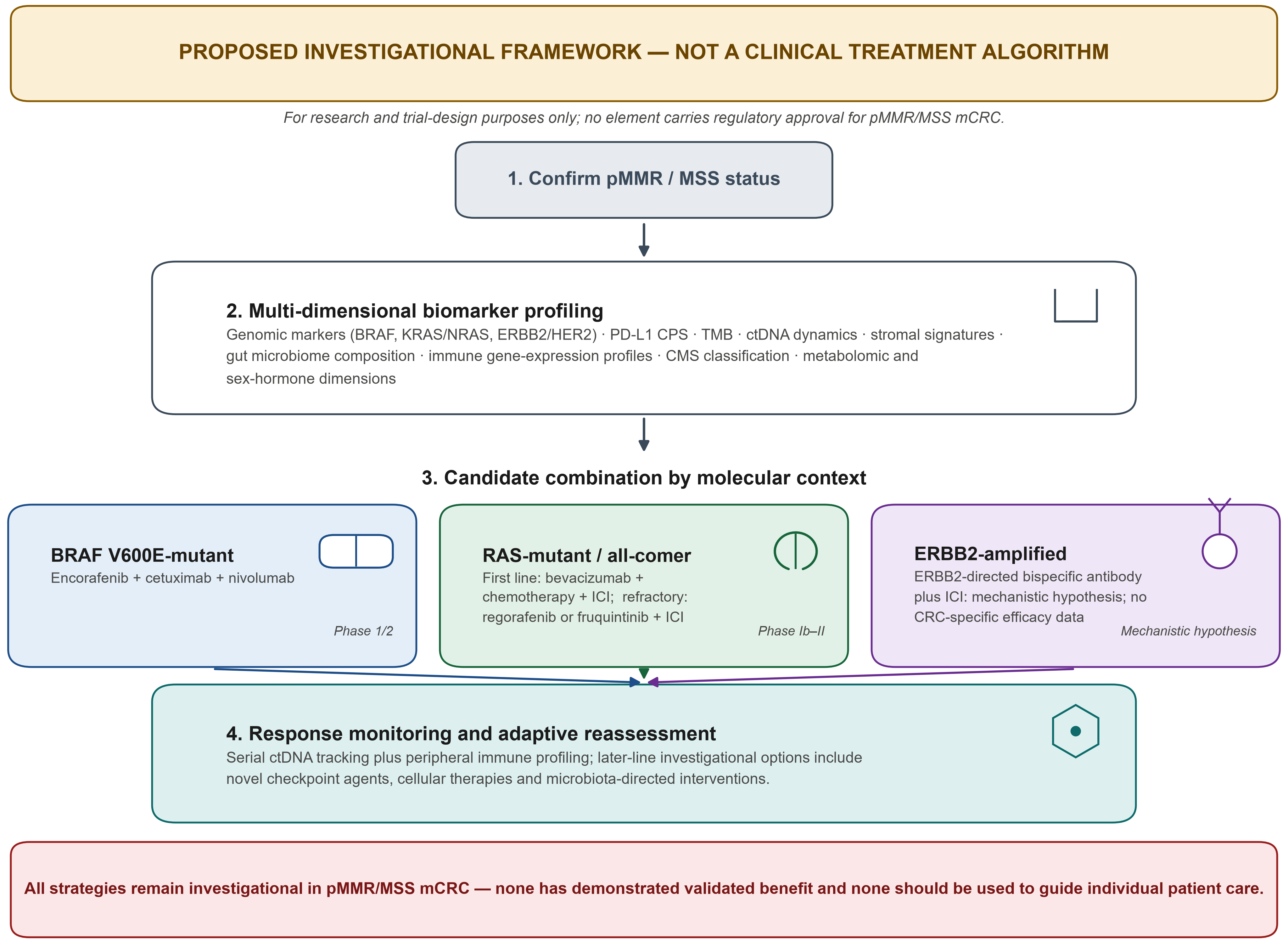
Figure 4. Investigational framework - NOT a clinical treatment algorithm Proposed investigational framework for biomarker-guided combination selection in pMMR/MSS mCRC, presented for research and trial-design purposes only; this figure is not a treatment algorithm and must not be used to guide individual clinical decisions. Following confirmation of pMMR/MSS status, biomarker profiling integrates genomic markers (BRAF, KRAS/NRAS, ERBB2/HER2), PD-L1 CPS, TMB, ctDNA dynamics, stromal signatures, gut microbiome composition, and immune gene expression profiles. Candidate combination selection by molecular subtype: BRAF V600E-mutant disease, encorafenib-cetuximab-nivolumab (phase 1/2 evidence); RAS-mutant or all-comer disease, bevacizumab-chemotherapy-ICI in the first-line setting (phase 2) or regorafenib/fruquintinib-ICI combinations in refractory disease (phase Ib-II); ERBB2-amplified disease, ERBB2-directed bispecific antibody plus ICI: mechanistic hypothesis; no CRC-specific efficacy data. Later-line investigational options include novel checkpoint agents (anti-LAG-3, anti-TIGIT, STING agonists), cellular therapies (neoantigen vaccines, CAR-T, CISH-knockout TILs), and microbiota-directed interventions (FMT, probiotics, dietary modulation). Treatment response is monitored by serial ctDNA tracking and peripheral immune profiling, shown for research use only; ctDNA-guided treatment change is not a validated decision rule. All listed strategies remain investigational in pMMR/MSS mCRC as of this submission; none has regulatory approval for this indication and none should be construed as standard of care.
It is necessary to separate three categories that are often conflated in this literature. Stromal and composite scores, including the Stroma-Tumor Marker score and the metabolomic signatures discussed above, are prognostic instruments: they index incident risk or outcome irrespective of treatment, and none has been shown to identify benefit from a specific combination. Only MMR status, BRAF V600E, ERBB2 amplification and, less securely, PD-L1 CPS and TMB carry treatment-interaction evidence in CRC, and even these have not been prospectively validated for combination selection. ctDNA-guided treatment change belongs to a third category: it is an unvalidated research strategy, with no prospective outcome data, substantial assay heterogeneity, and no qualified surrogate endpoint, and it should not yet be used to select or switch therapy outside a clinical trial. Figure 4 accordingly presents ctDNA tracking as a research-use component of the framework rather than as a decision rule.
CHALLENGES AND FUTURE PERSPECTIVES
Despite significant advances in understanding the mechanisms of immunotherapy resistance in pMMR/MSS CRC, formidable challenges remain. First, the vast majority of combination strategies are still being evaluated in early-phase trials, and robust phase III data are lacking for most approaches. The field must move beyond demonstrating safety and preliminary efficacy to establishing survival benefits in adequately powered randomized trials. Second, the optimal sequencing and scheduling of combination agents remains largely empirical. Whether anti-angiogenic therapy should precede or accompany ICI initiation, how long targeted therapy should continue before adding immunotherapy, and what constitutes an adequate treatment holiday are questions that require systematic investigation. Third, predictive biomarker development has not kept pace with the proliferation of combination strategies. Although multiple candidate biomarkers exist, none has been prospectively validated to the point of routine clinical use. The development of composite biomarker panels that integrate genomic, transcriptomic, proteomic, and microbiome data is essential for precise patient selection. Fourth, the immunosuppressive liver microenvironment poses unique challenges, as chemotherapy itself can trigger immune evasion by fostering LEPR+ Kupffer cell differentiation in liver metastases[75]. Overcoming this organ-specific resistance will require tailored strategies for patients with hepatic-dominant disease. Fifth, tumor-infiltrating bacteria disrupt epithelial cell interactions and induce cell-cycle arrest, adding another layer of complexity to the TME[76]. The interplay between microbial factors and immune resistance in CRC is an emerging area that warrants dedicated investigation. Finally, the economic burden of multi-agent combination regimens must be considered, as the cost of simultaneously administering targeted therapy, immunotherapy, and potentially cellular therapies may limit broad accessibility.
Finally, the metabolic geography of these tumors remains largely unmapped. Spatial metabolomic and lipidomic profiling can resolve metabolite distributions across tumor, stroma and invasive margin, and would allow the metabolic programs described in Section "Metabolic reprogramming and immune suppression" to be assigned to specific tissue compartments rather than to bulk tumor. Such work is a research priority rather than an established tool: current datasets are small, platform-dependent and derived largely from preclinical models, and no spatially defined metabolic signature has yet been shown to predict immunotherapy benefit in pMMR/MSS CRC.
Viewed together, the trials summarized in Table 1 also share recurring limitations. Nearly all are single-arm phase Ib-II studies with modest sample sizes, no randomized comparators, and variable prior-treatment lines, which makes cross-trial comparisons of response rates unreliable and susceptible to selection bias; the divergent outcomes of the Japanese and North American regorafenib-nivolumab experiences[34,35] illustrate how population and disease-burden differences can dwarf genuine drug effects. The consistent enrichment of benefit among patients without liver metastases across regorafenib-based combinations[38] means that headline response rates overstate expected benefit in real-world populations dominated by hepatic disease. Toxicity stacking remains under-characterized, as most combinations were optimized for safety in single-arm settings rather than for efficacy at tolerated doses. Finally, biomarker co-development has lagged behind regimen proliferation, such that even nominally encouraging trials rarely define a validated responder population.
Limitations of this review. This is a narrative synthesis rather than a systematic review; although our search strategy was structured, selection bias toward recent and high-impact studies cannot be excluded. More fundamentally, nearly all of the human evidence discussed here is cross-sectional, capturing tumors and microenvironments at single time points, whereas carcinogenesis and immune escape evolve over decades. Normal colorectal epithelium already harbors driver-mutant clones by middle age[11], and long-term exposures shape subsequent tumor-immune ecosystems in ways that snapshot studies cannot resolve. The MPE framework[13], and most recently the prospective cohort incident-tumor biobank method, which couples decades of prospectively collected exposure data with molecular profiling of incident tumors[77], offer a path toward integrating longitudinal exposure, tumor evolution, and immune phenotyping. Applying such designs to immunotherapy resistance in pMMR/MSS CRC, alongside contemporary large-scale cohorts, represents a promising direction that current literature has not yet delivered. We also acknowledge that a substantial proportion of the mechanistic evidence cited herein is preclinical, and clinical translation remains unproven for many of the strategies discussed. Finally, several mechanistic and therapeutic observations discussed in this review originate from non-pMMR/MSS settings and are presented with explicit caveats: (i) the satri-cel CAR-T program was conducted in CLDN18.2+ advanced gastric/GEJ cancer and is referenced only to motivate parallel CRC development; (ii) the Nous-209 neoantigen vaccine was developed in Lynch syndrome carriers (germline MMR deficiency, not somatic pMMR/MSS) and is invoked to illustrate the preventive-vaccination concept, not to claim efficacy in established pMMR/MSS mCRC; (iii) checkpoint-protein mechanistic insights from non-CRC tumors, notably the mitochondrial-iron-induced dual CD274/CD47 upregulation demonstrated in hepatocellular and breast cancer models[69], and sex-hormone immune modulation documented in prostate and bladder cancers[74], are extrapolated to CRC where direct pMMR/MSS data are unavailable. We have flagged each such extrapolation explicitly in the relevant sections, and we caution readers that biological conservation of these mechanisms across tissue types remains to be established.
CONCLUSION
The immunotherapy resistance that characterizes pMMR/MSS CRC is a multi-factorial phenomenon driven by convergent tumor-intrinsic alterations, microenvironmental barriers, and metabolic and microbial modulators. No single intervention is sufficient to overcome this resistance, but the rapidly expanding portfolio of rational combination strategies, grounded in mechanistic understanding, provides reason for measured optimism. Anti-angiogenic-ICI combinations have demonstrated clinical activity and are under active clinical investigation, while molecularly guided strategies targeting BRAF V600E and ERBB2 amplification exemplify the potential of precision immunotherapy. Next-generation checkpoint targets, epigenetic modulators, STING agonists, CAR-T cells, neoantigen vaccines, and radiotherapy-immunotherapy combinations each address distinct resistance nodes and are advancing through early-phase clinical development. The path forward demands rigorous biomarker-guided patient stratification, thoughtfully designed clinical trials that test mechanistic hypotheses, and a commitment to integrating multi-omics data to understand why some patients respond while others do not. With continued mechanistic insight and clinical innovation, the goal of converting immune-cold pMMR/MSS CRC into an ICI-responsive disease is increasingly within reach.
DECLARATIONS
Acknowledgments
Figures 1-4 and Graphical Abstract were created by the authors using Python (version 3.13.12) with matplotlib (version 3.11.0).
Authors' contributions
Made substantial contributions to the conception and design of this review, performed the literature search, study selection and data extraction, synthesized and interpreted the evidence, prepared the figures, and drafted the manuscript: Liao J
Conceived and supervised the work, contributed to the design of the review and to critical revision of the manuscript for important intellectual content, and provided administrative and material support: Chen W
Both authors read and approved the final version of the manuscript and agree to be accountable for all aspects of the work.
Availability of data and materials
Not applicable.
AI and AI-assisted tools statement
Not applicable.
Financial support and sponsorship
None.
Conflicts of interest
Both authors declared that there are no conflicts of interest.
Ethical approval and consent to participate
Not applicable.
Consent for publication
Not applicable.
Copyright
© The Author(s) 2026.
REFERENCES
2. Biller LH, Schrag D. Diagnosis and treatment of metastatic colorectal cancer: a review. JAMA. 2021;325:669-85.
3. André T, Shiu KK, Kim TW, et al. Pembrolizumab in microsatellite-instability-high advanced colorectal cancer. N Engl J Med. 2020;383:2207-18.
4. Dienstmann R, García-Galea E, O'Farrell A, et al. Interrogating the immune landscape of microsatellite stable RAS-mutated colon cancer. Mol Oncol. 2026;20:1713-25.
5. Jafarlou M, Jafarlou V, Nouri S, et al. Immunotherapy resistance in colorectal cancer: therapeutic strategies and biomarker-guided approaches. Cancer Cell Int. 2026;26:294.
6. Yousefi M, Amirabadi DG, Javan MR, Khosrojerdi A. Immune escape in colorectal cancer: mechanisms and challenges of immune checkpoint inhibitor resistance. Int Immunopharmacol. 2026;169:115986.
7. Farah H, Polatova D, Rizaev J, et al. Overcoming conditional immune resistance in MSS and pMMR colorectal cancer: a sequential gating framework for immunotherapy. Crit Rev Oncol Hematol. 2026;223:105353.
8. Keivany MR, Shojae Asrami E, Besharatloo M, Latifi H, Barjasteh AH. Advances in immunotherapy for colorectal cancer: overcoming resistance in mismatch repair-proficient tumors. Cancer Cell Int. 2026;26:151.
9. Kang W, Zhang Z, Li W, et al. Breaching the immune-cold barrier in pMMR/MSS metastatic colorectal cancer: emerging strategies beyond standard care. Front Immunol. 2026;17:1773002.
10. Fei J, Cai C, Wu W, Shen H, Han Y, Zeng S. Combination immunotherapy for colorectal cancer: clinical applications, rationale, challenges, and future perspectives. Cell Rep Med. 2026;7:102728.
11. Lee-Six H, Olafsson S, Ellis P, et al. The landscape of somatic mutation in normal colorectal epithelial cells. Nature. 2019;574:532-7.
12. Díaz-Gay M, Dos Santos W, Moody S, et al. Geographic and age variations in mutational processes in colorectal cancer. Nature. 2025;643:230-40.
13. Ogino S, Nowak JA, Hamada T, Milner DA Jr, Nishihara R. Insights into pathogenic interactions among environment, host, and tumor at the crossroads of molecular pathology and epidemiology. Annu Rev Pathol. 2019;14:83-103.
14. Cai R, Zhan W, Lyu X, et al. PTEN deficiency impairs MHC-I-mediated tumour immunity via NRF2-dependent autophagy in microsatellite stable colorectal cancer. Gut. 2026;75:1-4.
15. Zhan W, Fu Y, Liu Y, et al. Cathepsin-D-mediated MHC class I degradation contributes to immune evasion in colorectal cancer. Cell Rep Med. 2026;7:102534.
16. Rousseau B, Bieche I, Pasmant E, et al. PD-1 blockade in solid tumors with defects in polymerase epsilon. Cancer Discov. 2022;12:1435-48.
17. Chua J, Kaur A, Mitchell F, et al. A tumor-intrinsic WNT-inhibitory NOTUM program drives immune resistance in microsatellite stable colorectal cancer. Cell Rep Med. 2026;7:102776.
18. Wei X, Zuo M, Liang Q, et al. Unlocking Wnt's weak spot: glycosylated nanoalbumins to reignite immune responses in MSS-CRC. J Pharm Anal. 2026;16:101412.
19. Wang QL, Chen Z, Lu X, et al. Methionine metabolism dictates PCSK9 expression and antitumor potency of PD-1 blockade in MSS colorectal cancer. Adv Sci. 2025;12:e2501623.
20. Zheng P, Hu Z, Shen Y, et al. PSAT1 impairs ferroptosis and reduces immunotherapy efficacy via GPX4 hydroxylation. Nat Chem Biol. 2025;21:1420-32.
21. Peng W, Yang ZR, Wang Z, Zhao YL, Tan SS. Autophagy inhibition enhances PD-1 blockade efficacy in mismatch repair-proficient colorectal cancer. Cancer Genet. 2026;304-5:41-50.
22. Liao Q, Zhou X, Wu L, et al. Gut microbial metabolite 4-hydroxybenzeneacetic acid drives colorectal cancer progression via accumulation of immunosuppressive PMN-MDSCs. J Clin Invest. 2025;135:e181243.
23. Wilson MR, Jiang Y, Villalta PW, et al. The human gut bacterial genotoxin colibactin alkylates DNA. Science. 2019;363:eaar7785.
24. Cao M, Deng Y, Hao Q, et al. Single-cell transcriptomic analysis reveals gut microbiota-immunotherapy synergy through modulating tumor microenvironment. Signal Transduct Target Ther. 2025;10:140.
25. Rahimi A, Baghernejadan Z, Hazrati A, et al. Combination therapy with immune checkpoint inhibitors in colorectal cancer: challenges, resistance mechanisms, and the role of microbiota. Biomed Pharmacother. 2025;186:118014.
26. Chen Y, Wang YT, Hu JY, et al. Modulating the gut microbiota to enhance immune checkpoint inhibitor efficacy in colorectal cancer: mechanisms, therapeutic strategies, and clinical perspectives. Gut Microbes. 2026;18:2652476.
27. Lin A, Fang X, Zhu L, Mou W, Luo P. Dual role of intratumoral microbiota: from colorectal cancer progression to therapeutic opportunities. J Transl Int Med. 2026;14:345-9.
28. Liu S, Zhang Z, Wang Z, et al. SPP1 drives colorectal cancer liver metastasis and immunotherapy resistance by stimulating CXCL12 production in cancer-associated fibroblasts. Cancer Res. 2026;86:58-79.
29. Iglesias Coma M, Badia-Ramentol J, Martinez-Ciarpaglini C, et al. Stromal biomarker-based framework for identifying pMMR/MSS and dMMR/MSI colorectal cancers with poor outcomes and limited benefit from immunotherapy. Gut. 2026;75:2143-55.
30. Palomar de Lucas B, Ortega M, Camblor DG, et al. Spatial dynamics links PD-L1 and tumor-associated macrophage-enriched niches to immune and mesenchymal states in microsatellite-stable colorectal cancer. Cancers. 2026;18:1288.
31. Su W, Wang H, Zhao S, et al. Cerenkov radiation modulates the extracellular matrix for improved pancreatic cancer chemotherapy. Cell Biomater. 2026;2:100221.
32. Pilié PG, Tang C, Mills GB, Yap TA. State-of-the-art strategies for targeting the DNA damage response in cancer. Nat Rev Clin Oncol. 2019;16:81-104.
33. Wang Y, Jia R, Si H, et al. Efficacy and safety of sintilimab plus bevacizumab and CAPOX as first-line treatment for patients with RAS-mutant, microsatellite stable, metastatic colorectal cancer. BMC Cancer. 2025;25:422.
34. Fukuoka S, Hara H, Takahashi N, et al. Regorafenib plus nivolumab in patients with advanced gastric or colorectal cancer: an open-label, dose-escalation, and dose-expansion phase 1b trial (REGONIVO, EPOC1603). J Clin Oncol. 2020;38:2053-61.
35. Fakih M, Raghav KPS, Chang DZ, et al. Single-arm, phase 2 study of regorafenib plus nivolumab in patients with mismatch repair-proficient (pMMR)/microsatellite stable (MSS) colorectal cancer. J Clin Oncol. 2021;39:3560.
36. Fakih M, Sandhu J, Lim D, Li X, Li S, Wang C. Regorafenib, ipilimumab, and nivolumab for patients with microsatellite stable colorectal cancer and disease progression with prior chemotherapy: a phase 1 nonrandomized clinical trial. JAMA Oncol. 2023;9:627-34.
37. Wang F, He MM, Yao YC, et al. Regorafenib plus toripalimab in patients with metastatic colorectal cancer: a phase Ib/II clinical trial and gut microbiome analysis. Cell Rep Med. 2021;2:100383.
38. Fakih M, Wang C, Sandhu J, Ye J, Egelston C, Li X. Immunotherapy response in microsatellite stable metastatic colorectal cancer is influenced by site of metastases. Eur J Cancer. 2024;196:113437.
39. Liu C, Nie J, Li S, et al. Electroacupuncture combined with fruquintinib and sintilimab in microsatellite-stable metastatic colorectal cancer: a phase II study. Cancer Lett. 2026;639:218238.
40. Yang Q, Huang YY, Zhang KC, et al. Triplet regimen of metronomic capecitabine plus antiangiogenic drug and PD-1 inhibitor as later-line salvage treatment for patients with MSS/pMMR metastatic colorectal cancer: a retrospective study. MedComm. 2025;6:e70174.
41. Zhang Z, Liu S, Xu T, et al. Tumor suppressor SLC9A2 inhibits colorectal cancer metastasis and reverses immunotherapy resistance by suppressing angiogenesis. J Exp Clin Cancer Res. 2025;44:172.
42. Eng C, Kim TW, Bendell J, et al. Atezolizumab with or without cobimetinib versus regorafenib in previously treated metastatic colorectal cancer (IMblaze370): a multicentre, open-label, phase 3, randomised, controlled trial. Lancet Oncol. 2019;20:849-61.
43. Kawazoe A, Xu RH, García-Alfonso P, et al. Lenvatinib plus pembrolizumab versus standard of care for previously treated metastatic colorectal cancer: final analysis of the randomized, open-label, phase III LEAP-017 study. J Clin Oncol. 2024;42:2918-27.
44. Morris VK, Parseghian CM, Bahrambeigi V, et al. Phase 1/2 trial of encorafenib, cetuximab, and nivolumab in microsatellite stable BRAF V600E metastatic colorectal cancer. Cancer Cell. 2025;43:2106-18.e3.
45. Sun Z, Shi M, Xia J, et al. HDAC and MEK inhibition synergistically suppresses HOXC6 and enhances PD-1 blockade efficacy in BRAF V600E-mutant microsatellite stable colorectal cancer. J Immunother Cancer. 2025;13:e010460.
46. Pei B, Peng S, Chen W, Lai L, Zhou F. Combining cetuximab and immunotherapy for treating MSS/pMMR colorectal cancer: current evidence and challenges. Technol Cancer Res Treat. 2025;24:15330338251334209.
47. Zhu J, Fu S, Zou X, et al. PRMT5 inhibitor synergizes with chemotherapy to induce resembling mismatch repair deficiency and enhance anti-TIGIT therapy in microsatellite-stable colorectal cancer. Adv Sci. 2025;12:e2500271.
48. Zamani P, Barootchi E, Firouzabadi A, et al. Targeting T cell exhaustion in colorectal cancer: emerging roles of LAG-3, TIM-3, and TIGIT signaling in overcoming immunotherapy resistance. Cell Commun Signal. 2026;24:81.
49. Zheng T, Ding C, Lai S, et al. CD160 dictates anti-PD-1 immunotherapy resistance by regulating CD8+ T cell exhaustion in colorectal cancer. Nat Cell Biol. 2025;27:1555-71.
50. Wang XX, Zhu C, Sun Y, et al. Modulating the tumor immune phenotypes by radiotherapy: formulating and validating the combination therapy of radiation, PD-L1, and TIM-3 blockade in colorectal cancer. J Immunother Cancer. 2026;14:e013656.
51. Wang J, Yu S, Qian L, Wu Y, Zhang W, Awadasseid A. Small-molecule inhibitors targeting PD-1/PD-L1 in colorectal cancer: mechanisms, challenges, and clinical prospects. ChemMedChem. 2026;21:e202500738.
52. Sun X, Zhou L, Wang Y, et al. Single-cell analyses reveal cannabidiol rewires tumor microenvironment via inhibiting alternative activation of macrophage and synergizes with anti-PD-1 in colon cancer. J Pharm Anal. 2023;13:726-44.
53. Mestrallet G, Brown M, Vaninov N, et al. Reprogramming T cell-myeloid crosstalk overcomes immune resistance in colorectal cancer. Cell Rep Med. 2026;7:102786.
54. Sang T, Liang A, Zhou H, Qiu W, Shi L, Zhou H. Integrating UPLC-MS/MS bioinformatics and in vivo experiments validation to elucidate the mechanism of Wenzi Jiedu Decoction in suppressing colorectal cancer. Phytochem Anal. 2025;36:1105-17.
55. Tu M, Deng X, Zhou Z, et al. Multifunctional copper-based nanoparticles potentiate colorectal cancer immunotherapy via synergistic metabolic remodeling and cGAS-STING pathway activation. J Nanobiotechnology. 2026;24:359.
56. Pérez-Domínguez F, Quezada-Monrás C, Cárcamo L, Muñoz JP, Carrillo-Beltrán D. Oncolytic viruses as a novel therapeutic approach for colorectal cancer: mechanisms, current advances, and future directions. Cancers. 2025;17:1854.
57. Qi C, Liu C, Peng Z, et al. Claudin-18 isoform 2-specific CAR T-cell therapy (satri-cel) versus treatment of physician's choice for previously treated advanced gastric or gastro-oesophageal junction cancer (CT041-ST-01): a randomised, open-label, phase 2 trial. Lancet. 2025;405:2049-60.
58. McHugh KE, Pai RK, Grant RC, et al. Claudin 18.2 expression in 1404 digestive tract adenocarcinomas including 1175 colorectal carcinomas: distinct colorectal carcinoma subtypes are claudin 18.2 positive. Mod Pathol. 2025;38:100712.
59. Lou E, Choudhry MS, Starr TK, et al. Targeting the intracellular immune checkpoint CISH with CRISPR-Cas9-edited T cells in patients with metastatic colorectal cancer: a first-in-human, single-centre, phase 1 trial. Lancet Oncol. 2025;26:559-70.
60. Shao W, Liu Y, Huang L, et al. Clinical trials of bispecific antibody therapy for colorectal cancer: advanced and next steps. Front Oncol. 2026;16:1758251.
61. Lo YL, Lin HC, Li CY, et al. Functional pH-responsive nanoparticles for immune reprogramming in MSS colorectal cancer via ER stress-induced proteostasis disruption, PD-L1-targeting miRNA, and TLR7 activation. Pharmaceutics. 2025;17:1503.
62. Ott JM, Gassenmaier V, Bitzer M, Schürch CM, Heitmann JS, Hagelstein I. B7-H3: a consistent marker in metastatic colorectal cancer with potential for targeted treatment. Pathol Oncol Res. 2025;31:1612186.
63. Chen H, Chen B, Yang Y, et al. Personalized neoantigen vaccine plus regorafenib increases Rgs2+CD8+ T cells infiltration and reprograms the tumor microenvironment in microsatellite stable colorectal cancer liver metastases. Adv Sci. 2025;12:e08040.
64. D'Alise AM, Willis J, Duzagac F, et al. Nous-209 neoantigen vaccine for cancer prevention in Lynch syndrome carriers: a phase 1b/2 trial. Nat Med. 2026;32:1002-11.
65. Passardi A, Sullo FG, Bittoni A, et al. CombiCoR-Vax trial: study protocol for a phase II, single-arm, multicenter trial of sequential pembrolizumab plus dendritic cell vaccine followed by trifluridine/tipiracil and bevacizumab in refractory microsatellite-stable metastatic colorectal cancer. BMC Cancer. 2025;25:1921.
66. Wusiman D, Wang Y, Wang M, et al. Biomimetic nanovaccines in cancer therapy: mechanisms, efficacy, and clinical translation. Mater Today Bio. 2025;34:102116.
67. Zhang Y, Guan H, Liu S, et al. Gamma Knife stereotactic radiotherapy combined with tislelizumab as later-line therapy in pMMR/MSS/MSI-L metastatic colorectal cancer: a phase II trial analysis. Elife. 2025;14:RP103559.
68. Zhao M, Nie J, Ye A, et al. Impaired autophagy by cepharanthine induces immunogenic cell death and enhances anti-PD-1 response in MSS-type colorectal cancer. Oncogene. 2025;44:3171-82.
69. Zhou Z, Li C, Liu J, et al. Nanoparticle-mediated tumor mitochondria-selective iron disruption facilitates cancer immunotherapy. Cell Biomater. 2026;4:100551.
70. Zhou Z, Wang H, Li J, Jiang X, Li Z, Shen J. Recent progress, perspectives, and issues of engineered PD-L1 regulation nano-system to better cure tumor: a review. Int J Biol Macromol. 2024;254:127911.
71. Pizzamiglio M, Soulabaille A, Lahlou W, Pilla L, Zaanan A, Taieb J. Advances and challenges in targeted therapies for HER2-amplified colorectal cancer. Eur J Cancer. 2025;222:115471.
72. Jakab A, Patai ÁV, Darvas M, Tormássi-Bély K, Micsik T. Microenvironment, systemic inflammatory response and tumor markers considering consensus molecular subtypes of colorectal cancer. Pathol Oncol Res. 2024;30:1611574.
73. Bever AM, Hang D, Lee DH, et al. Metabolomic signatures of inflammation and metabolic dysregulation in relation to colorectal cancer risk. J Natl Cancer Inst. 2024;116:1126-36.
74. Li D, Wang Z, Yu Q, et al. Tracing the evolution of sex hormones and receptor-mediated immune microenvironmental differences in prostate and bladder cancers: from embryonic development to disease. Adv Sci. 2025;12:e2407715.
75. Wang X, Pan Q, Li Y, et al. Chemotherapy triggers immune evasion by fostering LEPR+ Kupffer cell differentiation in liver metastases. Cancer Cell. 2026;44:658-75.e12.
76. Galeano Niño JL, Ponath F, Ajisafe VA, et al. Tumor-infiltrating bacteria disrupt cancer epithelial cell interactions and induce cell-cycle arrest. Cancer Cell. 2026;44:166-86.e16.
Cite This Article
 Open Access
How to Cite
Liao J, Chen W. Overcoming immunotherapy resistance in pMMR/MSS colorectal cancer: multi-target combination strategies. J Cancer Metastasis Treat. 2026;12:17. https://dx.doi.org/10.20517/2394-4722.2026.40
Download Citation
If you have the appropriate software installed, you can download article citation data to the citation manager of your choice. Simply select your manager software from the list below and click on download.
Export Citation File
Type of Import
Tips on Downloading Citation
Citation Manager File Format
Type of Import
Direct Import: When the Direct Import option is selected (the default state), a dialogue box will give you the option to Save or Open the downloaded citation data. Choosing Open will either launch your citation manager or give you a choice of applications with which to use the metadata. The Save option saves the file locally for later use.
Indirect Import: When the Indirect Import option is selected, the metadata is displayed and may be copied and pasted as needed.
About This Article
Copyright

Data & Comments
Data
0










Comments
Comments must be written in English. Spam, offensive content, impersonation, and private information will not be permitted. If any comment is reported and identified as inappropriate content by OAE staff, the comment will be removed without notice. If you have any queries or need any help, please contact us at [email protected].