

fig3
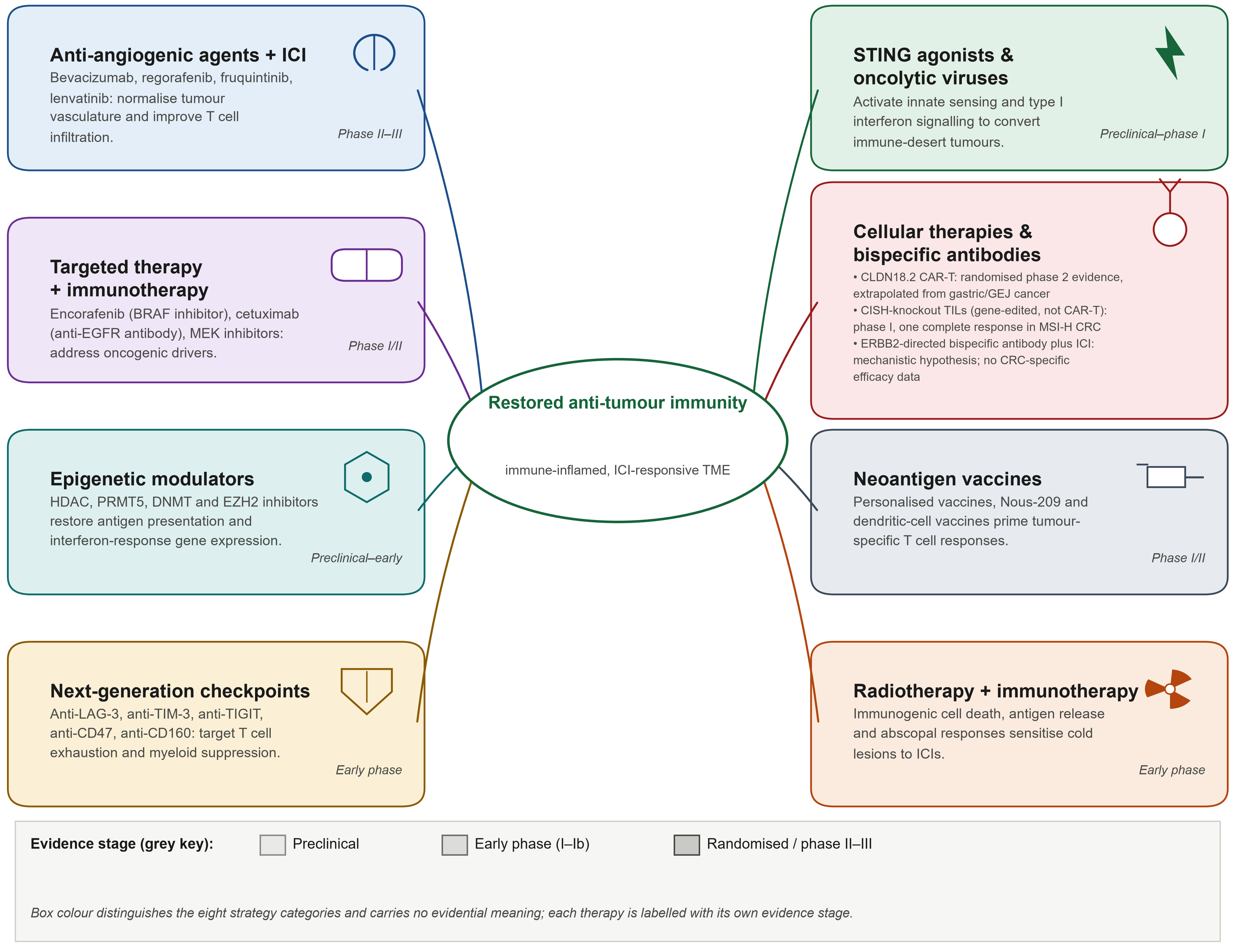
Figure 3. Eight combinatorial strategy categories aiming to restore productive anti-tumor immunity in pMMR/MSS CRC. Anti-angiogenic agents (bevacizumab, regorafenib, fruquintinib, lenvatinib) combined with ICIs normalize tumor vasculature and enhance immune infiltration; targeted therapy plus immunotherapy (the BRAF inhibitor encorafenib, the anti-EGFR antibody cetuximab, MEK inhibitors) addresses oncogenic drivers; epigenetic modulators (HDAC, PRMT5, DNMT, EZH2 inhibitors) restore antigen presentation and immune gene expression; novel checkpoint targets (LAG-3, TIM-3, TIGIT, CD47, CD160) address T cell exhaustion and myeloid suppression; STING agonists and oncolytic viruses activate innate immunity and type I interferon signaling; cellular therapies and bispecific antibodies, three distinct product classes that are listed separately because they should not be conflated: CLDN18.2-directed CAR-T cells, whose randomized phase 2 evidence is extrapolated from gastric/GEJ cancer; CISH-knockout tumor-infiltrating lymphocytes, a gene-edited TIL product and not a CAR-T product, reported in a phase I study with one complete response in MSI-H CRC; and ERBB2-directed bispecific antibody plus ICI, a mechanistic hypothesis with no CRC-specific efficacy data) enable targeted cellular immunotherapy; neoantigen vaccines (personalized vaccines, Nous-209, DC vaccines) prime tumor-specific T cell responses; and radiotherapy-ICI combinations exploit the abscopal effect and immunogenic cell death. Box color distinguishes the eight strategy categories and carries no evidential meaning; the grey evidence-stage key at the foot of the figure indicates the highest level of clinical evidence currently available, and where one category contains products of differing maturity, each product is labeled individually. All strategies aim to convert the immune-cold MSS CRC TME into an immune-inflamed, ICI-responsive phenotype, but none is yet an established standard of care in pMMR/MSS mCRC.