

fig2
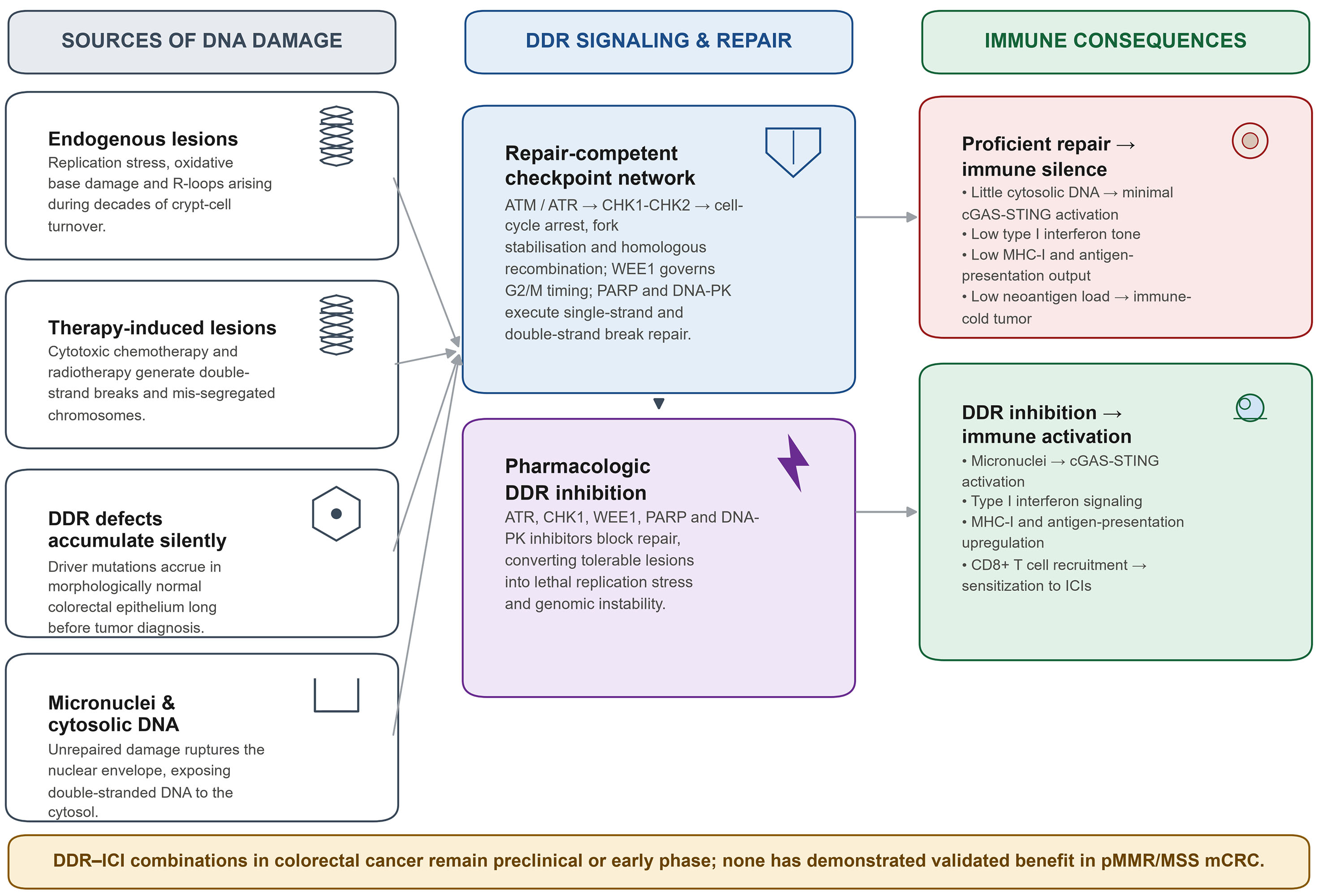
Figure 2. DNA damage, the DNA damage response (DDR) and anti-tumor immune resistance in pMMR/MSS colorectal cancer. Endogenous replication stress, therapy-induced lesions and DDR defects accumulated silently over decades of colorectal epithelial evolution converge on a repair-competent checkpoint network (ATM/ATR-CHK1/CHK2, WEE1, PARP and DNA-PK). When repair is proficient, cytosolic DNA release, cGAS-STING activation, type I interferon tone, MHC-I antigen presentation and neoantigen load all remain low, sustaining an immune-cold phenotype. Pharmacologic inhibition of DDR nodes converts tolerable lesions into lethal replication stress and micronuclei, activating the cGAS-STING-type I interferon axis, upregulating antigen-presentation machinery and recruiting CD8+ T cells, thereby sensitizing tumors to immune checkpoint blockade. DDR-directed-ICI combinations in colorectal cancer remain preclinical or early phase, and none has yet demonstrated validated benefit in pMMR/MSS metastatic disease.