

fig9
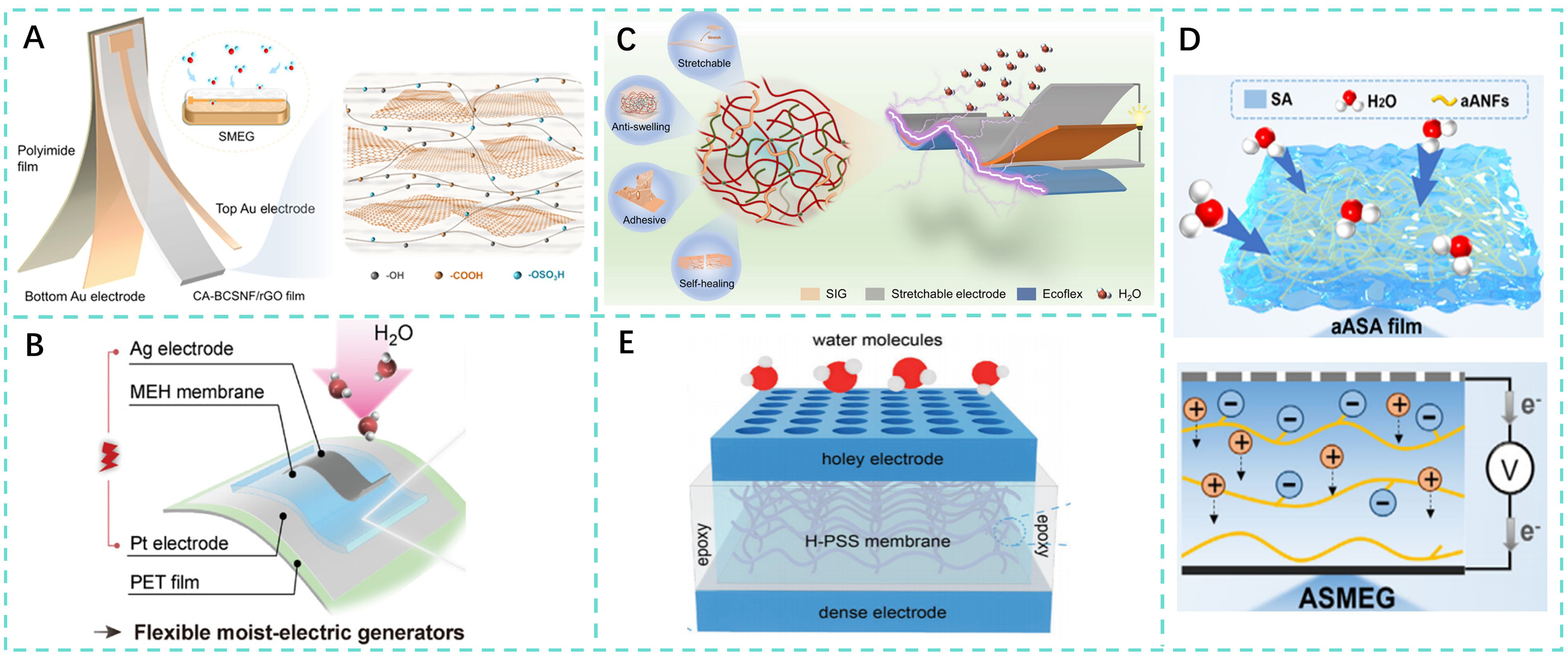
Figure 9. 2D structure of MEGT. (A) Structure diagram of flexible device composed of composite film[142]. Reproduced with permission. Copyright 2024, American Chemical Society; (B) Flexible MEG based on PAM/AMPS/LiCl molecular-engineered hydrogels[148]. Reproduced with permission. Copyright 2023, John Wiley & Sons; (C) s-MEG structure: SIG is used as power generation layer, and conductive textiles coated with Ag nanoparticles are used as electrodes[149]. Reproduced with permission. Copyright 2024, American Chemical Society; (D) The dual hydrogen bond network structure within hydrogels and the ion migration process[152]. Reproduced with permission. Copyright 2025, John Wiley & Sons; (E) Soft hydrophilic H-PSS film-based moisture electric generation device[153]. Reproduced with permission. Copyright 2023, John Wiley & Sons. 2D: Two-dimensional; MEGT: moisture-electric generation textile; MEG: moisture-electric generator; PAM: polyacrylamide; AMPS: 2-acrylamide-2-methyl propane sulfonic acid; s-MEG: stretchable moisture electric generator; SIG: stretchable ionic gel; H-PSS: poly(4-styrene sulfonic acid); CA-BCSNF: CA-crosslinked bacterial cellulose sulfate nanofiber; rGO: reduced graphene oxide; MEH: molecular-engineered hydrogel; PET: poly (ethylene terephthalate); SA: sodium alginate; aANFs: activated aramid nanofibers; aASA: activated aramid nanofiber; ASMEG: moisture-electric generator based on the activated aramid nanofiber film.