

fig1
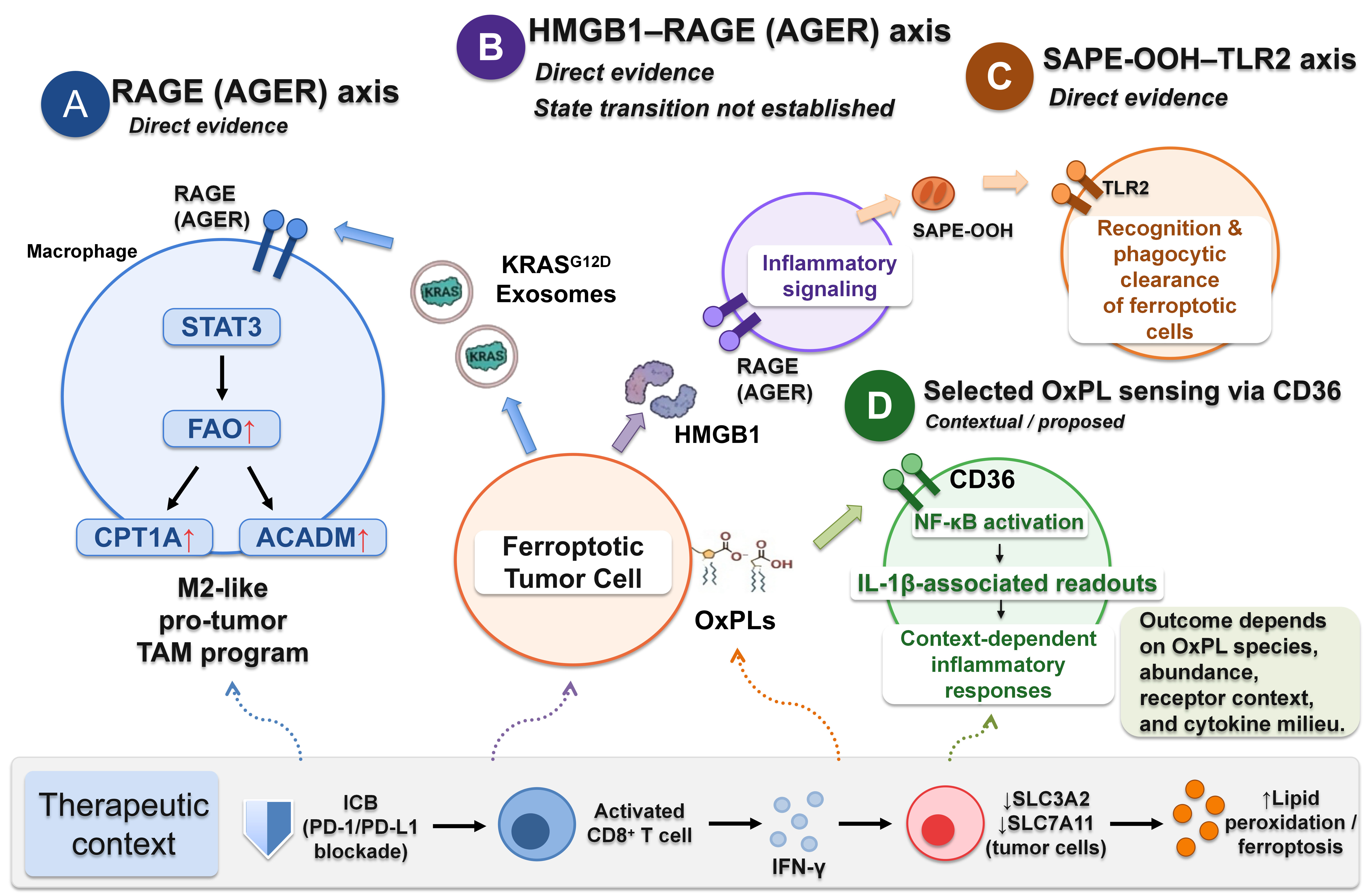
Figure 1. Context-dependent macrophage responses to signals released by ferroptotic tumor cells. Ferroptotic tumor cells release multiple classes of signals that can elicit distinct macrophage responses with different levels of experimental support. (A) In KRASG12D pancreatic ductal adenocarcinoma models, ferroptotic tumor cells release KRASG12D-containing exosomes that are taken up by macrophages in a RAGE/AGER-dependent manner, leading to STAT3 activation, increased FAO, upregulation of CPT1A and ACADM, and an M2-like pro-tumor TAM program; (B) Ferroptotic tumor cells can also release HMGB1, which engages RAGE (AGER) on macrophages and promotes inflammatory signaling; however, a defined macrophage-state transition has not been established; (C) SAPE-OOH exposed on the surface of ferroptotic cells is recognized by TLR2 on macrophages and functions as an “eat-me” signal that promotes recognition and phagocytic clearance of ferroptotic cells; (D) Other oxidized phospholipids (OxPLs) may be sensed through CD36 and are shown here as a contextual or proposed pathway associated with NF-κB activation, IL-1β-associated readouts, and context-dependent inflammatory responses. Importantly, this outcome is not uniform and may vary according to OxPL species, abundance, receptor context, and the surrounding cytokine milieu. FAO: Fatty acid oxidation; ACADM: acyl-CoA dehydrogenase medium chain; TAM: tumor-associated macrophage; SAPE-OOH: 1-stearoyl-2-(15-HpETE)-sn-glycero-3-phosphatidylethanolamine; TLR2: toll-like receptor 2; NF-κB: nuclear factor kappa-light-chain-enhancer of activated B cells; IL-1β: interleukin-1 beta; PD-1: programmed cell death protein 1; PD-1L: programmed cell death ligand 1; ICB: immune checkpoint blockade; RAGE (AGER): receptor for advanced glycation end products; STAT3: signal transducer and activator of transcription 3; CPT1A: carnitine palmitoyltransferase 1A; HMGB1: high mobility group box 1.