

fig1
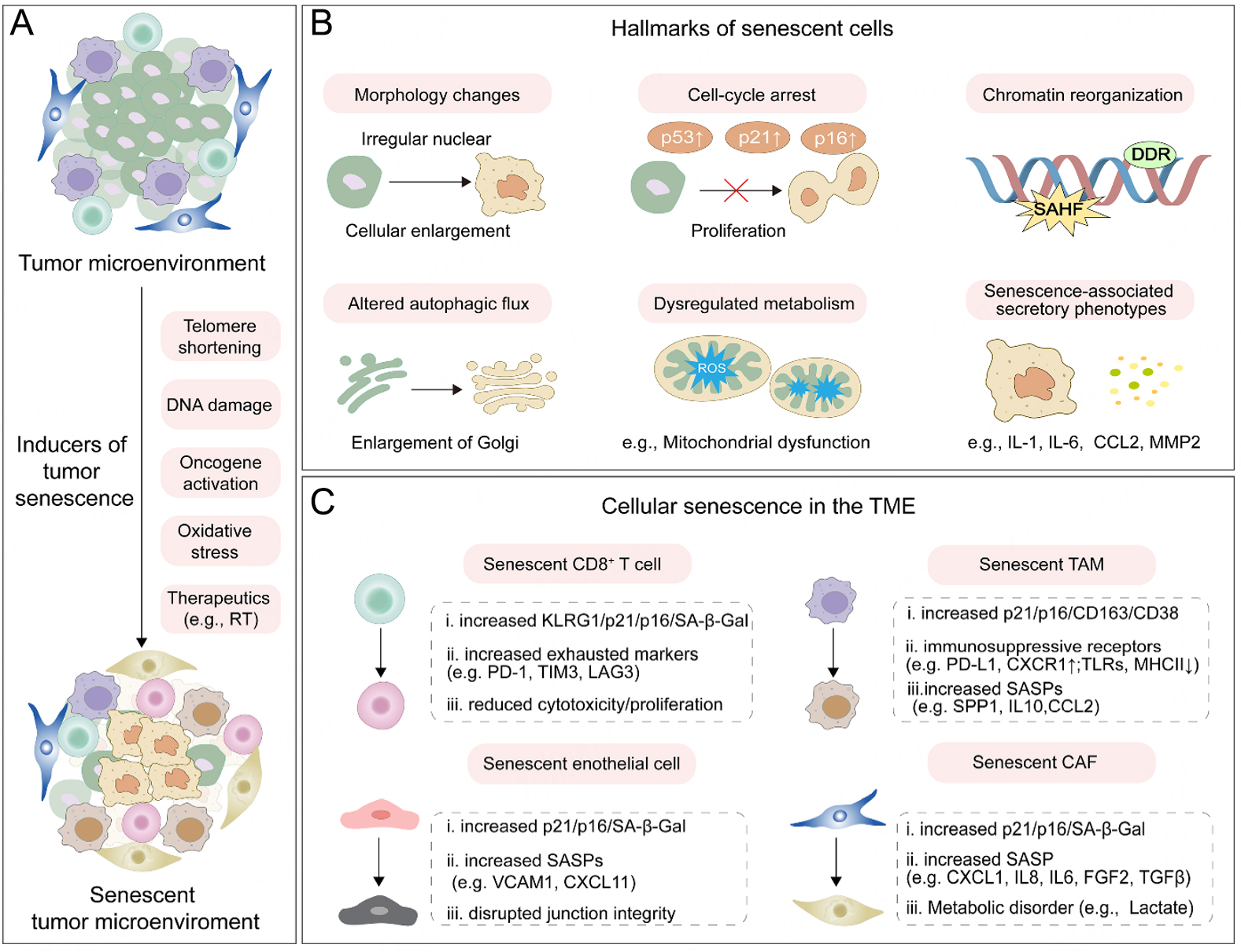
Figure 1. Inducers and hallmarks of senescence in the tumor microenvironment. (A) Intrinsic and extrinsic stressors, including telomere attrition, DNA damage, oncogene activation, oxidative stress, and anticancer therapy, induce cellular senescence across multiple tumor microenvironmental compartments. (B) Senescent features include morphological enlargement and nuclear abnormalities, cell-cycle arrest, persistent DNA damage responses and chromatin reorganization, altered autophagic flux and Golgi expansion, mitochondrial dysfunction, and development of the senescence-associated secretory phenotype. (C) Senescent or senescent-like CD8+ T cells, tumor-associated macrophages (TAMs), endothelial cells, and cancer-associated fibroblasts (CAFs) exhibit distinct combinations of molecular markers, secretory programs, and functional alterations that impair cytotoxic immunity, remodel the extracellular matrix and vasculature, and promote immune escape and metastasis.