

Leading Voices - Prof. Luigi Fortuna
On November 10, 2026, the Editorial Office of Intelligence & Robotics (IR, ISSN: 2770-3541) had the honor of interviewing Prof. Luigi Fortuna, a distinguished scholar in systems and control engineering at the University of Catania, Italy. With an extensive academic career spanning nonlinear science, robust control, complex systems, and robotics, Prof. Fortuna has made significant contributions to the development of system theory and intelligent control. The interview was conducted by Dr. He Yu from Shandong University, China, and a Junior Editorial Board Member of IR.
As part of the Leading Voices in Intelligence & Robotics interview series celebrating the fifth anniversary of IR, the conversation explored the role of nonlinear and robust control in advancing intelligent autonomous robotics, the integration of AI and learning-based approaches into robotic control systems, and the challenges of ensuring stability, adaptability, and reliability in increasingly complex and uncertain environments. Prof. Fortuna also shared his perspectives on emerging research directions and the future of intelligent control for next-generation robotic systems.
Below are the details of the interview:
Questions:
Q1. Nonlinear Dynamics and the Foundations of Intelligence
Nonlinear dynamics offers powerful tools for understanding complex behaviors in natural and engineered systems. Drawing on your research in nonlinear circuits and chaos theory, what makes nonlinear systems theory particularly valuable for understanding and developing intelligent systems? Which principles do you think could be further explored in AI and robotics?
Q2. Control Theory for Intelligent Robotics
As robots increasingly operate in uncertain and unstructured environments, achieving reliable and adaptive behavior remains a major challenge. From your perspective, how can classical and nonlinear control theory contribute to more robust autonomous robots? What opportunities and challenges do you see in integrating control-theoretic methods with modern learning-based approaches?
Q3. Balancing Model Complexity, Stability, and Performance
Your research on model order reduction and system stability addresses important challenges in complex engineering systems. When developing intelligent systems, how should researchers balance model accuracy, computational efficiency, and control performance? What lessons from your work could help make autonomous robotic systems more reliable in real-world environments?
Q4. Bridging Theory and Real-World Applications
Your research spans nonlinear systems, engineering control, and bio-inspired robotics, illustrating the connections between fundamental theory and practical applications. In your experience, what are the main challenges in translating theoretical advances into effective robotic systems? How can collaboration among mathematicians, control engineers, AI researchers, and roboticists help bridge this gap?
Q5. Future Directions and Advice for Young Researchers
Looking ahead five to ten years, which developments do you believe will have the greatest impact on intelligent robotics, particularly at the intersection of nonlinear systems, control theory, and AI? What advice would you give young researchers seeking to pursue fundamental scientific questions while developing solutions with practical relevance?
About Prof. Luigi Fortuna:

Prof. Luigi Fortuna is an IEEE Life Fellow and IEICE Fellow, and a distinguished scholar in systems and control engineering at the University of Catania, Italy. His research interests include nonlinear science and complex systems, robust control, chaos theory, cellular neural networks, intelligent control, and robotics. He has made significant contributions to nonlinear systems modeling, analysis, and control. Prof. Fortuna previously served as Dean of the Faculty of Engineering and Director of the Department of Electrical, Electronic and Systems Engineering at the University of Catania. He has authored more than 700 scientific publications, published numerous academic books, and holds several industrial patents. He has also served as an Associate Editor of IEEE Transactions on Circuits and Systems and held various leadership roles within the IEEE Circuits and Systems Society.
About Dr. He Yu:
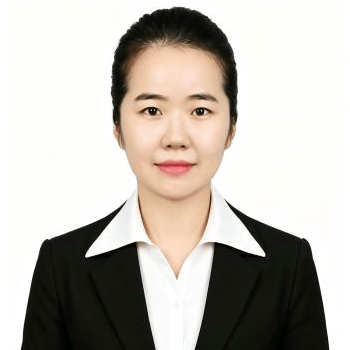
Dr. He Yu received her M.Eng. degree in Electronics and Communication Engineering and her Ph.D. degree in Information and Communication Engineering from Harbin Institute of Technology. During her doctoral studies, she conducted joint doctoral training at the Massachusetts Institute of Technology (MIT), USA. She has authored more than 20 SCI-indexed papers published in leading international journals, including Advanced Functional Materials, ACS Sensors, Carbon, and Sensors and Actuators B: Chemical. Three Chinese invention patents have been granted to her. She has participated in or led projects supported by the National Key Research and Development Program of China, the National Natural Science Foundation of China, General Equipment Pre-research Programs, and the Zhejiang Laboratory Program. She serves as a review expert for science and technology projects of the Beijing Municipal Science and Technology Commission and the Zhongguancun Science Park Management Committee, and as a young editorial board member of journals including Intelligence & Robotics and Biomimetic Intelligence and Robotics.
Editor: Jenny Wang
Production Editor: Xingyue Luo
Respectfully Submitted by the Editorial Office of Intelligence & Robotics