

Leading Voices - Prof. Marcelo H. Ang Jr.
On September 28, 2026, the Editorial Office of Intelligence & Robotics (IR, ISSN: 2770-3541), the Editorial Office had the honor of interviewing Prof. Marcelo H. Ang Jr., Professor at the National University of Singapore and an Editorial Board Member of IR, who is widely recognized for his contributions to robotics and intelligent systems. The interview was conducted by Assoc. Prof. Zhe Xu, Associate Professor at Wuhan University of Science and Technology and a Junior Editorial Board Member of IR.
As part of the Leading Voices in Intelligence & Robotics interview series celebrating the fifth anniversary of Intelligence & Robotics, the conversation explored the evolution toward general-purpose robotics, the role of foundation models and generalization, and the key challenges shaping the future of robot intelligence.
Below are the details of the interview:
Questions:
Q1. The changing landscape of robotics
Robotics is currently undergoing a major transition from task-specific automation toward more adaptive and general-purpose intelligence. From your perspective, what is the most significant change happening in robotics today, and what is driving this transformation?
Q2. Scaling models and general-purpose robots
There is an ongoing debate over whether scaling foundation models and vision-language-action (VLA) models will be sufficient to achieve general-purpose robots, or whether further advances in learning, planning, and control are needed. How far do you think scaling can take us, and what advances, if any, are needed beyond scaling?
Q3. Generalization across tasks, environments, and platforms
Your work spans learning-based motion planning, including deep reinforcement learning, as well as human-like compliance and interaction-aware robotics. Drawing on this experience, what do you see as the biggest remaining bottleneck in enabling robot intelligence to generalize across different tasks, environments, and robot platforms? Could you illustrate this with an example from your research?
Q4. General-purpose robotics and AGI
The distinction between task-level intelligence and artificial general intelligence (AGI) raises a broader question about what we should expect from a general-purpose robot. What capabilities would a robot need to demonstrate for you to regard it as genuinely general-purpose? Would meeting that standard require AGI, or could highly capable but more specialized forms of intelligence be sufficient?
Q5. Future breakthroughs and overlooked directions
Looking ahead five to ten years, which research problem do you believe could fundamentally reshape robotics if solved? Is there an emerging direction that you think the community may currently be overlooking or underestimating?
About Prof. Marcelo H. Ang Jr.:
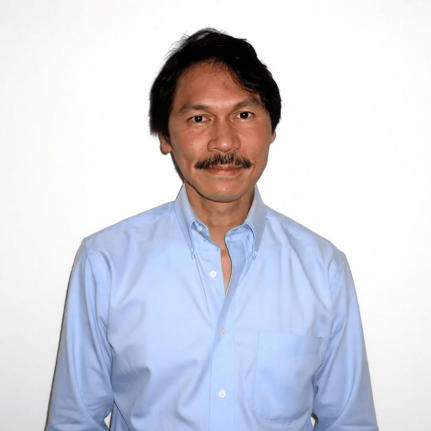
Prof. Marcelo H. Ang Jr. is a Professor in the Department of Mechanical Engineering at the National University of Singapore and Director of the Advanced Robotics Centre (ARC). He received his Ph.D. in Electrical Engineering from the University of Rochester, USA. His research spans robotics, automation, control, intelligent systems, autonomous vehicles, and human–robot interaction. He has served as General Chair of the IEEE Conference on Control, Robotics and Mechatronics (CIS-RAM), founding chairman of the Singapore Robotic Games, and a member of the Advisory Council of the World Robot Olympiad. He has also served on the Management Committee of the IEEE Robotics and Automation Society Singapore Chapter and held editorial and conference leadership roles in robotics and automation.
About Assco. Prof. Zhe Xu:
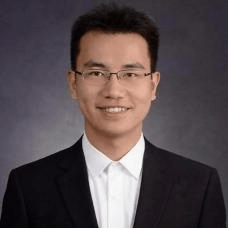
Assoc. Prof. Zhe Xu is a Associate Professor at the School of Artificial Intelligence and Automation, Wuhan University of Science and Technology, China. His research interests include multi-agent cooperative control, embodied intelligence, intelligent perception, and humanoid robotics, with a focus on intelligent perception in complex environments, cooperative control of unmanned systems, and humanoid robot motion control. He has published more than ten international research papers, including nine as first author, and serves as a reviewer for journals including IEEE Transactions on Cybernetics and IEEE Transactions on Industrial Informatics.
Editor: Shine Wei
Production Editor: Xingyue Luo
Respectfully Submitted by the Editorial Office of Intelligence & Robotics