fig1
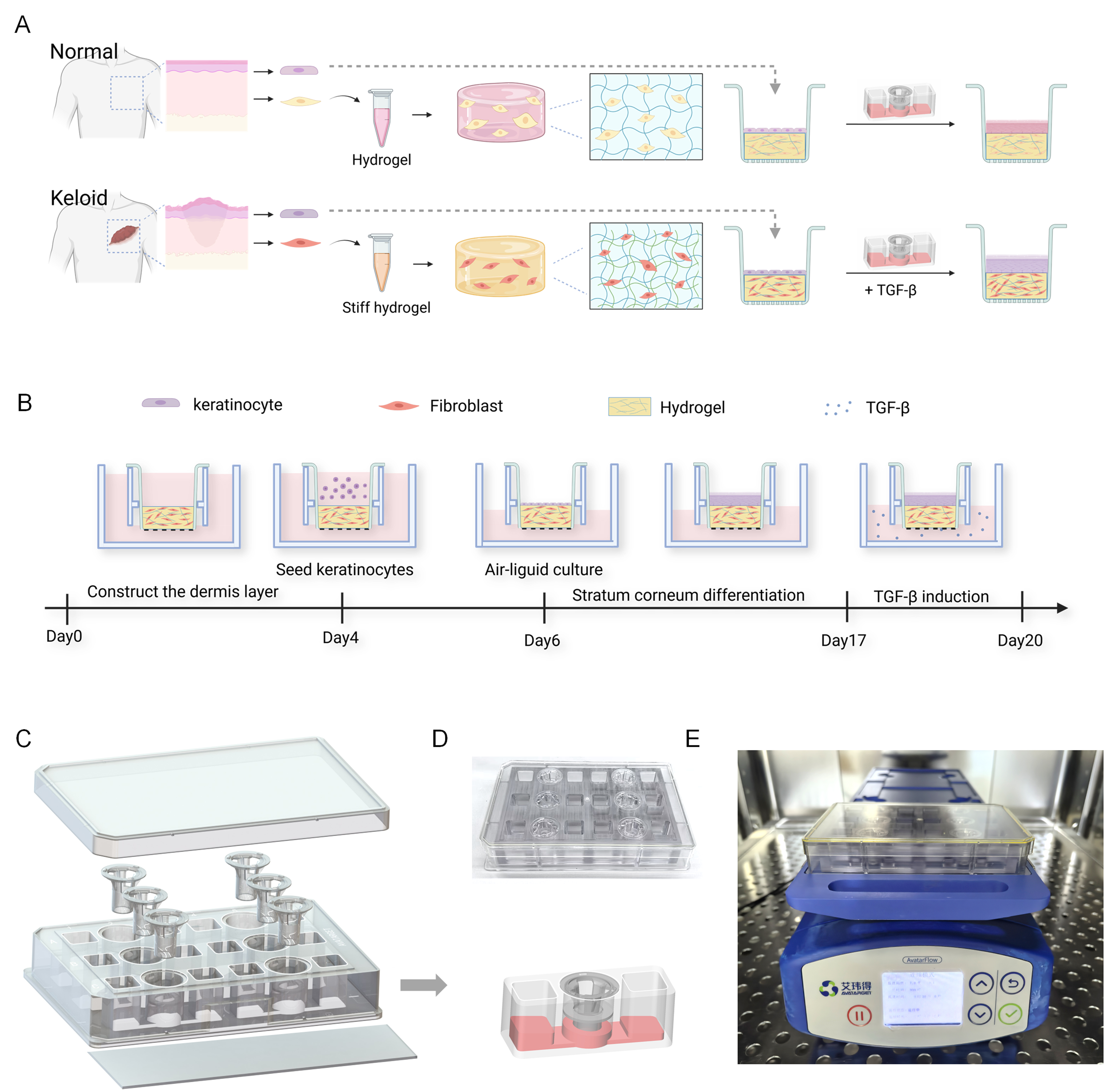
Figure 1. Design of a full-thickness SoC platform and tissue construction. (A) Schematic of experimental design. Primary keratinocytes and fibroblasts were isolated from normal and keloid donors. Fibroblasts were mixed with dermal hydrogels; stiffer gels were used for keloid-like models. After dermal maturation, keratinocytes were seeded. TGF-β induction generated full-thickness normal and keloid-like models; (B) Workflow of full-thickness model constructed in SoC. Keratinocytes were seeded on day 4. After 2 days of submerged culture, the air–liquid interface culture was continued. On day 17, the inducing factor was added to the SoC, and dynamic cultivation was continued for 72 h. Created with BioRender.com; (C) Exploded chip view. Box: single unit; arrows: 3D reconstruction of cultured model; (D) An actual photograph of the assembled chip; (E) Chip under dynamic culture on a shaking machine. (D) and (E), author’s original photographs. SoC: Skin-on-chip; TGF-β: transforming growth factor-beta.