

fig3
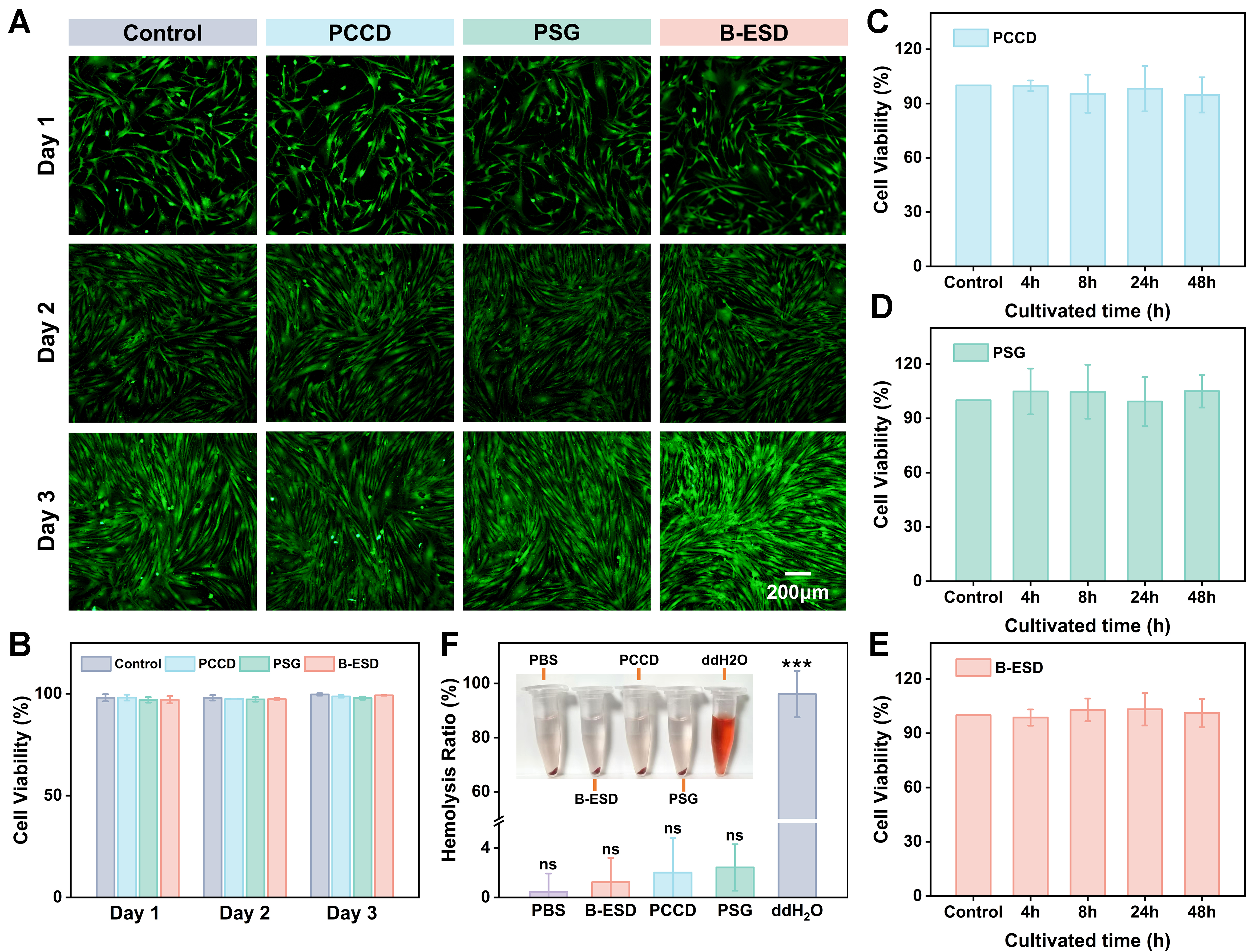
Figure 3. Biocompatibility and biosafety evaluations. (A) Live/dead fluorescence staining images of HFF cells co-cultured with different hydrogel extracts at day 1, 2, and 3; (B) Quantitative analysis of cell viability based on live/dead staining; (C-E) Cell viability of HFF cells evaluated by CCK-8 assay over 48 h of co-culture with extracts of (C) PCCD, (D) PSG, and (E) B-ESD; (F) Hemolysis assay of the hydrogel extracts. Data are expressed as mean ± standard deviation (n = 3, ***P < 0.001, ns: not significant). HFF: Human foreskin fibroblast; CCK-8: Cell Counting Kit-8; PCCD: polyacrylamide/sodium carboxymethyl cellulose/calcium chloride/dopamine; PSG: polyacrylamide/sodium alginate/reduced graphene oxide (PAM/SA/rGO); B-ESD: bilayer electrogenerative smart dressing; PBS: phosphate-buffered saline; ddH2O: double-distilled water.