
fig2
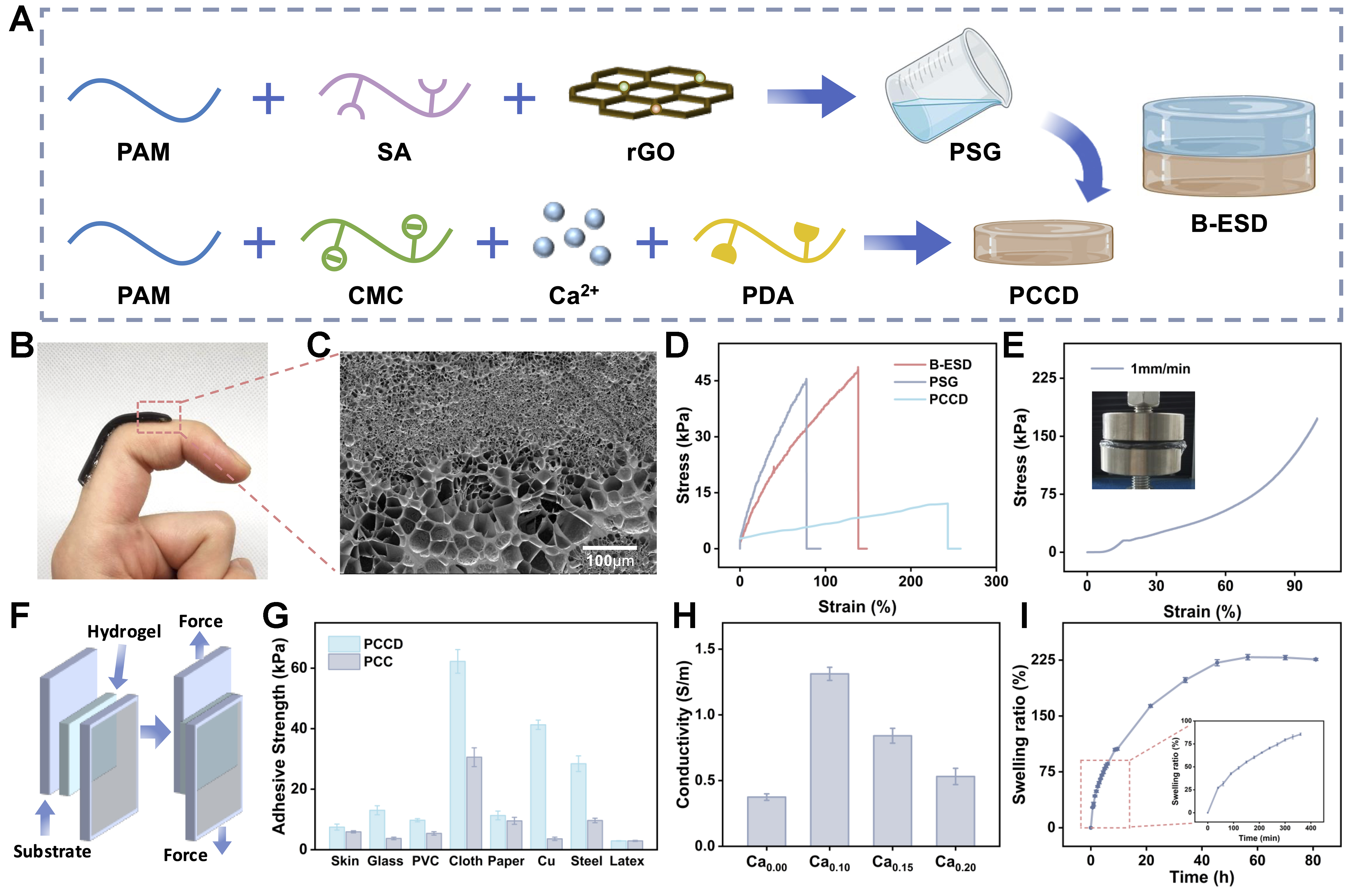
Figure 2. Fabrication and characterization of the B-ESD. (A) Schematic of the sequential casting strategy for fabricating the B-ESD; (B) Digital photograph of the B-ESD applied on the finger joint taken by the authors; (C) SEM image of the B-ESD cross-section showing a seamless interface and pore-size gradient; (D) Tensile stress-strain curves of PSG, PCCD, and B-ESD; (E) Compression stress-strain curve of B-ESD. The inset displays a photograph of the experimental setup during the compression test; (F) Schematic of lap shear test; (G) Adhesive strength of PCCD and PCC on various substrates; (H) Conductivity of the B-ESD at different Ca2+ concentrations (subscripts denote concentration in mol/L); (I) SR curve of B-ESD. Data are expressed as mean ± standard deviation (n = 3). B-ESD: Bilayer electrogenerative smart dressing; SEM: scanning electron microscopy; PSG: polyacrylamide/sodium alginate/reduced graphene oxide (PAM/SA/rGO); PCCD: polyacrylamide/sodium carboxymethyl cellulose/calcium chloride/dopamine; PCC: polyacrylamide/sodium carboxymethyl cellulose/calcium chloride; SR: swelling ratio; PAM: polyacrylamide; SA: sodium alginate; rGO: reduced graphene oxide; CMC: sodium carboxymethyl cellulose; PDA: polydopamine; PVC: polyvinyl chloride.