
fig7
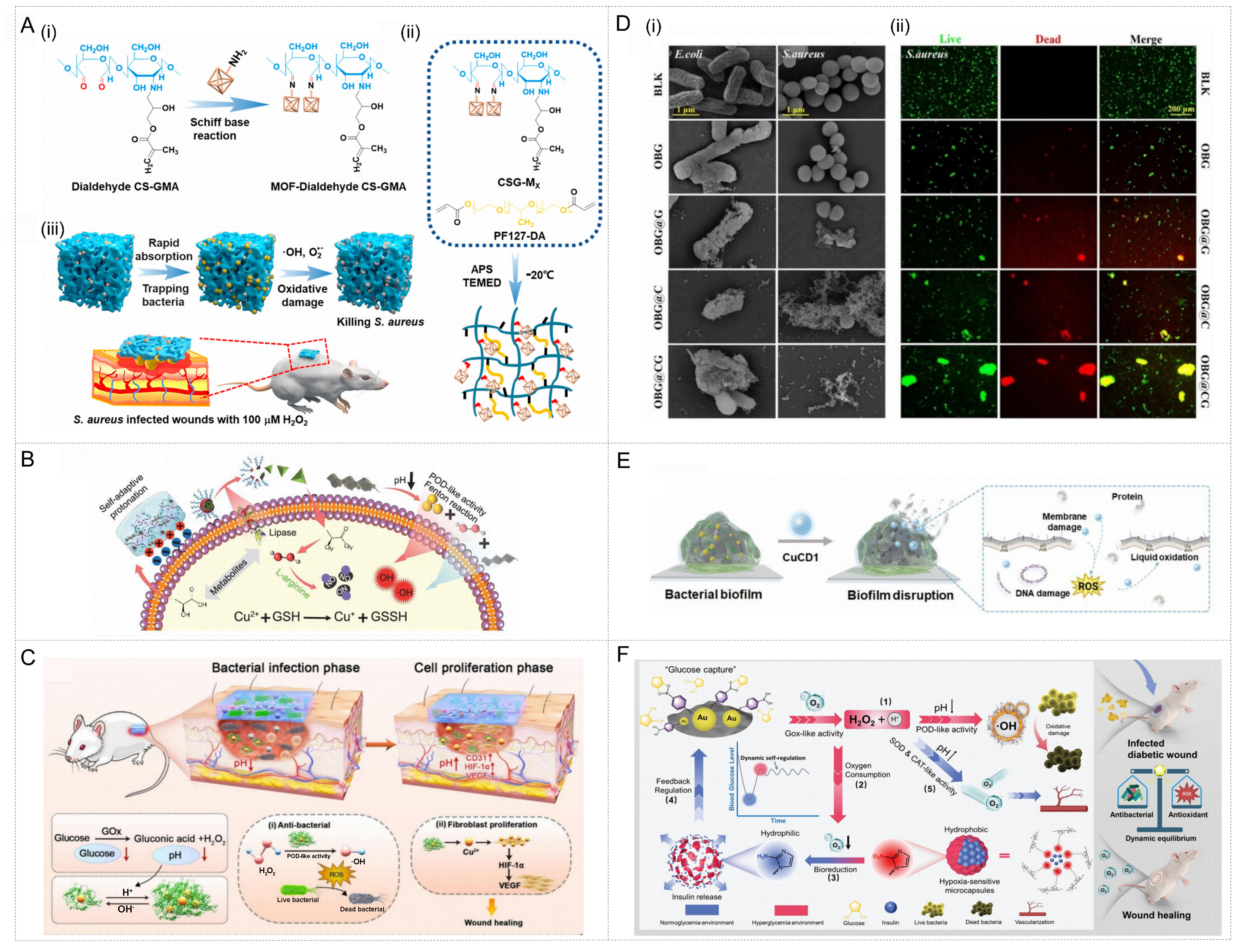
Figure 7. Internal microenvironment-triggered metal nanozyme-hydrogel systems for antibacterial therapy and infected wound repair. (A) Schematic Diagram of CSG-MX preparation and its subsequent applications. Reproduced with permission from Ref.[117]. Copyright 2021, American Chemical Society; (B) Schematic illustration of the underlying antibacterial mechanism. Reproduced with permission from Ref.[118]. Copyright 2024, Oxford University Press; (C) Proposed mechanisms through which OBG@CG facilitates diabetic wound repair. Reproduced with permission from Ref.[121]. Copyright 2024, Elsevier; (D) SEM images and live-dead images of bacteria after different treatments. Reproduced with permission from Ref.[121]. Copyright 2024, Elsevier; (E) Mechanism illustration of CuCD1-based microenvironment responsive disruption of bacterial biofilm. Reproduced with permission from Ref.[122]. Copyright 2025, Elsevier; (F) Tissue-regenerative effects of CPAN-AMP in infected diabetic wounds. Reproduced with permission from Ref.[120]. Copyright 2025, Wiley. CSG-MX: Chitosan-based cryogel - MOF nanozyme composite; MOF: metal-organic framework; OBG@CG: OHA/borax-gelatin hydrogel@Cu2-xSe-BSA-GOx; SEM: scanning electron microscopy; CPAN-AMP: conductive polyaniline-antimicrobial peptide composite hydrogel; POD: peroxidase; GSH: glutathione; HIF: hypoxia-inducible factor; VEGF: vascular endothelial growth factor; CS-GMA: chitosan-g-glycidyl methacrylate; APS: ammonium persulfate; TEMED: tetramethylethylenediamine; BLK: blank; Gox: glucose oxidase.