
fig1
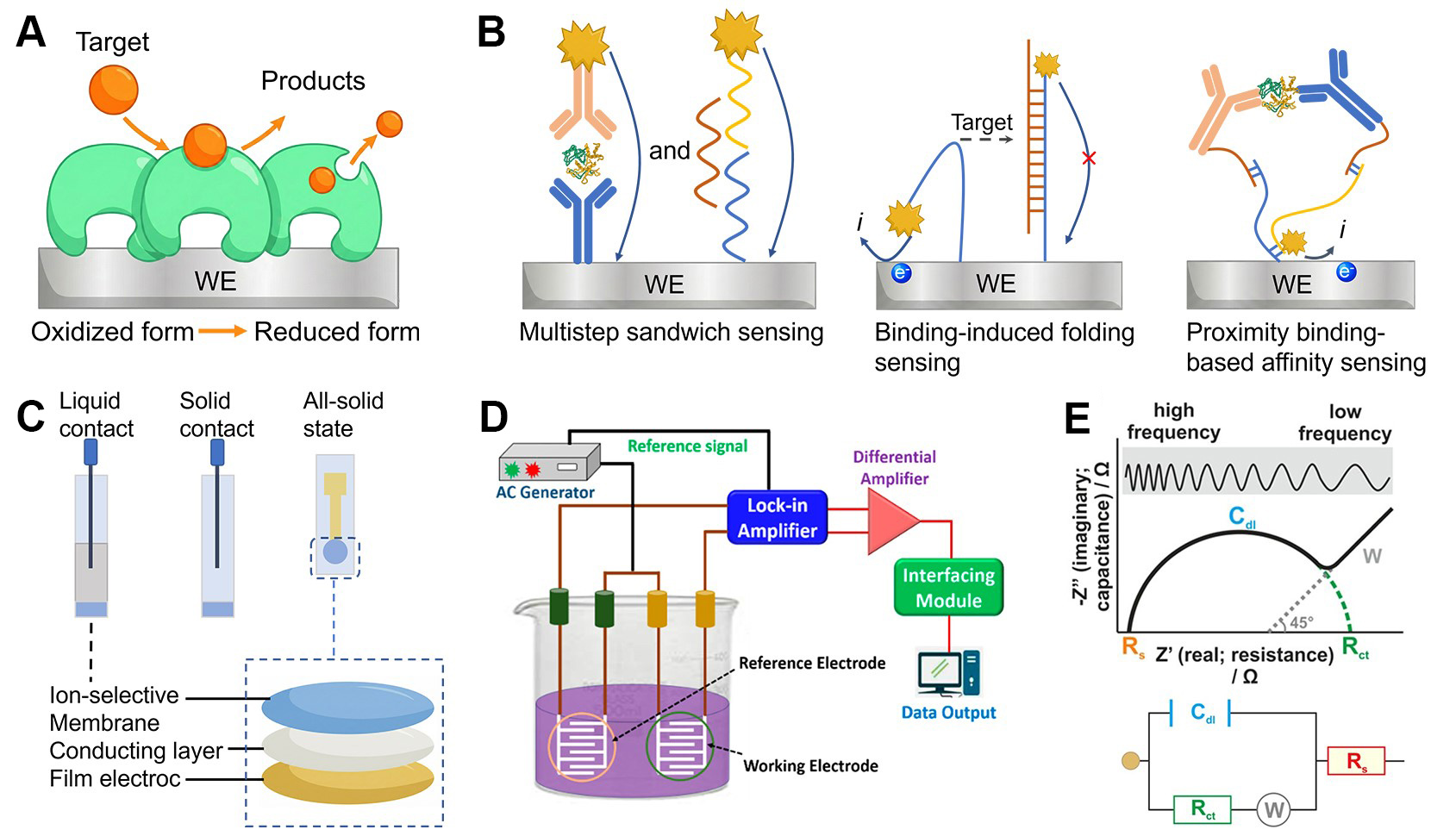
Figure 1. Electrochemical biosensor technologies based on different sensing principles. (A) Amperometric detection of metabolites using enzyme-functionalized electrodes; (B) Voltammetric sensing of proteins or nucleic acids via electrodes modified with antibodies or oligonucleotides. Detection strategies include multistep sandwich formats, binding-induced conformational switches, or proximity-based affinity recognition; (C) Representative architectures of ion-selective electrodes for potentiometric biosensing; (D) Conceptual illustration of conductometric sensing, where changes in electrical conductivity upon target interaction are used for analyte quantification. Reproduced with permission[44]. Copyright 2022, MDPI; (E) Impedimetric biosensing of analytes at varying concentrations, with Nyquist plots illustrating the system’s electrochemical behavior. The inset shows the randles equivalent circuit, comprising Rs, Rct, Cdl, and W. Reproduced with permission[45]. Copyright 2014, American Society for Microbiology. WE: Working electrode; AC: alternating current; Rs: solution resistance; Rct: charge-transfer resistance; Cdl: double-layer capacitance; W: Warburg impedance.