fig2
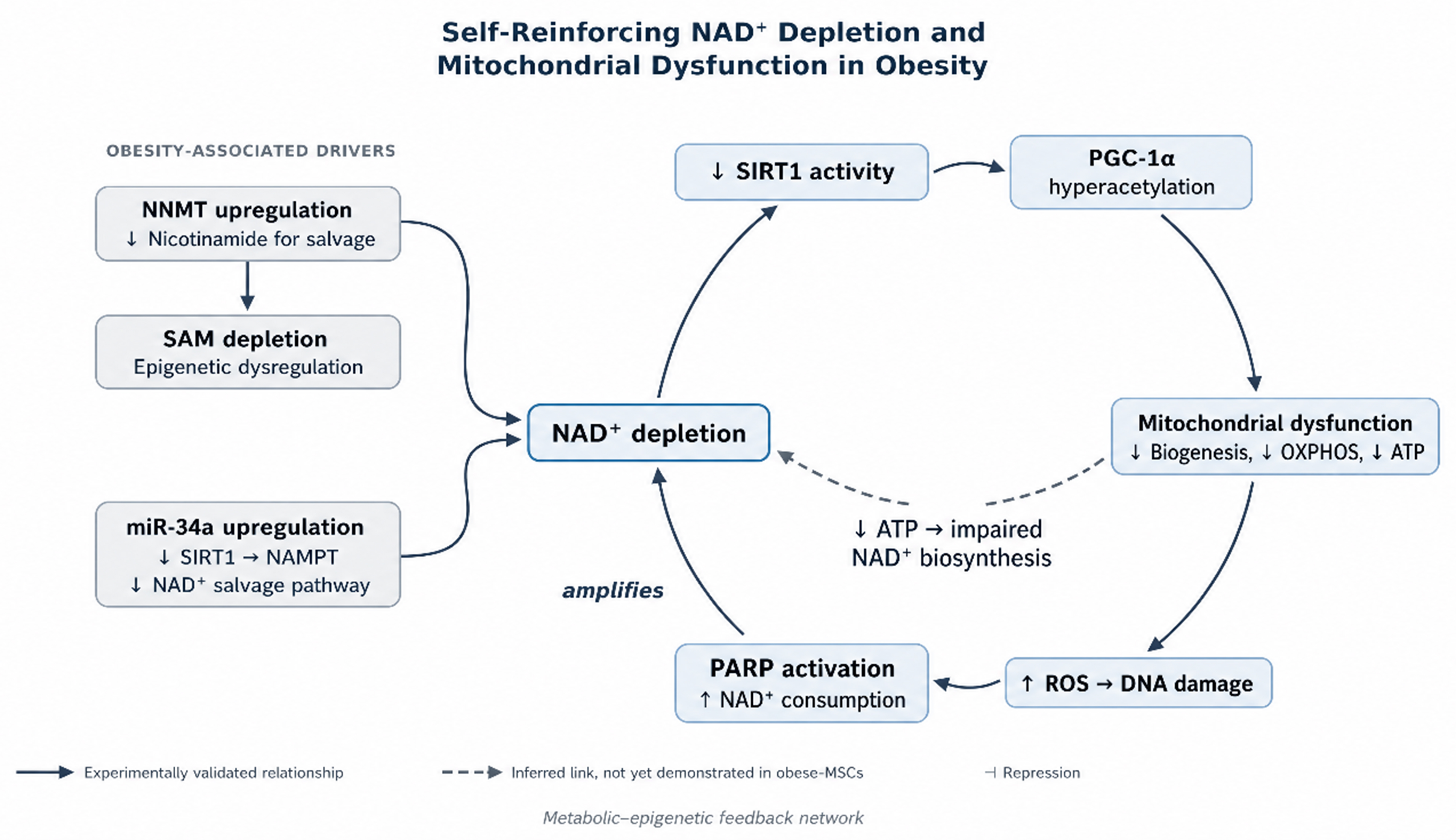
Figure 2. Self-reinforcing NAD+ depletion drives mitochondrial dysfunction in obesity. Obesity-associated drivers feed a self-amplifying cycle. Upregulated NNMT diverts nicotinamide from NAD+ salvage and consumes SAM, whose depletion impairs methylation and contributes to epigenetic dysregulation. In parallel, increased miR-34a represses SIRT1 and NAMPT, further impairing salvage. Within the cycle, reduced NAD+ diminishes SIRT1 activity, causing PGC-1α hyperacetylation and mitochondrial dysfunction, with impaired biogenesis, reduced OXPHOS, and ATP depletion. The resulting ROS production and DNA damage activate PARP, which consumes NAD+ and closes the loop. Solid arrows denote experimentally validated relationships, and the single dashed arrow denotes an inferred link (ATP depletion limiting NAD+ biosynthesis) not yet demonstrated in obese MSCs. The figure was created in BioRender [Elmaraezy, A. (2026) https://BioRender.com/sa8japm] and refined using AI-assisted image-refinement tools (Figurelabs and Nano Banana Pro). NAD+: Nicotinamide adenine dinucleotide; NNMT: nicotinamide N-methyltransferase; SAM: S-adenosylmethionine; miR: micro-RNA; SIRT1: sirtuin-1; NAMPT: nicotinamide phosphoribosyltransferase; PGC-1α: peroxisome proliferator-activated receptor-γ coactivator-1α; OXPHOS: oxidative phosphorylation; ATP: adenosine triphosphate; ROS: reactive oxygen species; PARP: poly(ADP-ribose) polymerase; MSCs: mesenchymal stem/stromal cells.