
fig5
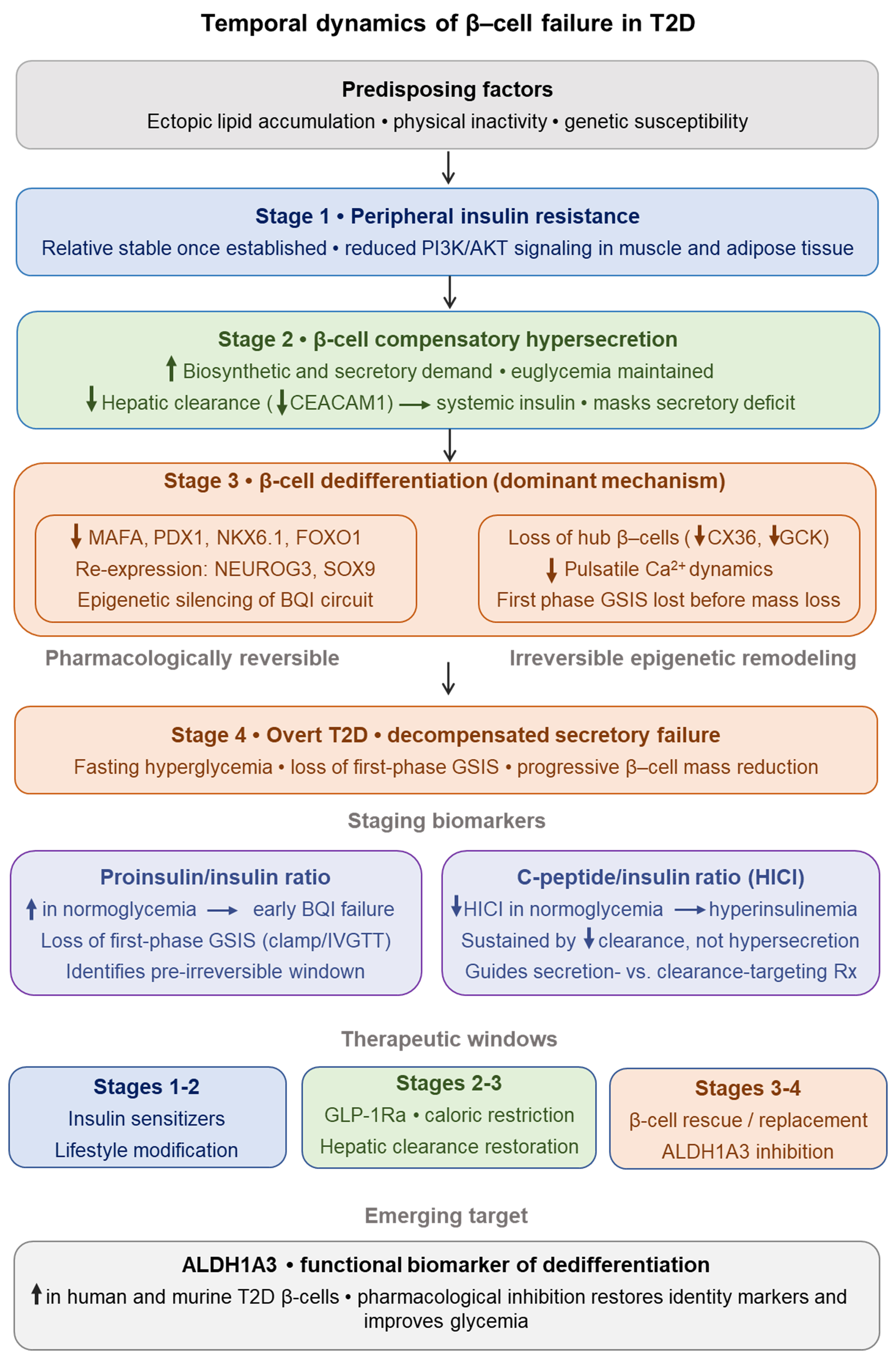
Figure 5. Temporal dynamics of β-cell failure in T2D. Predisposing factors (ectopic lipid, inactivity, genetic susceptibility) lead to peripheral insulin resistance (Stage 1) with reduced PI3K/AKT signaling in muscle and adipose tissue, driving compensatory β-cell hypersecretion (Stage 2) and reduced hepatic insulin clearance (CEACAM1), which raises systemic insulin and can mask secretory defects. Progressive β-cell stress causes loss of identity programs (MAFA, PDX-1, NKX6.1, FOXO1) and re-expression of progenitor/dedifferentiation markers (NEUROG3, SOX9) with disrupted hub β-cell signaling (CX36, GCK, first-phase GSIS lost), producing irreversible epigenetic remodeling and dedifferentiation (Stage 3) that precedes overt decompensated secretory failure and fasting hyperglycemia (Stage 4). Biomarkers (proinsulin/insulin and C-peptide/insulin ratios) and therapeutic windows (insulin sensitizers, GLP-1Ra, hepatic clearance restoration, β-cell rescue/replacement) are indicated. T2D: Type 2 diabetes; PI3K: phosphoinositide 3-kinase; AKT: protein kinase B; CEACAM1: carcinoembryonic antigen-related cell adhesion molecule 1; MAFA: MAF bZIP transcription factor A; PDX1: pancreatic and duodenal homeobox 1; NKX6.1: NK6 homeobox 1; FOXO1: forkhead box O1; NEUROG3: neurogenin 3; SOX9: SRY-box transcription factor 9; BQI: biosynthesis-quality-identity; CX36: connexin 36; GCK: glucokinase; Ca2+: calcium ion; GSIS: glucose-stimulated insulin secretion; HICI: hepatic insulin clearance index; IVGTT: intravenous glucose tolerance test; GLP-1Ra: glucagon-like peptide-1 receptor agonist; ALDH1A3: aldehyde dehydrogenase 1 family member A3; Rx: treatment.