

fig1
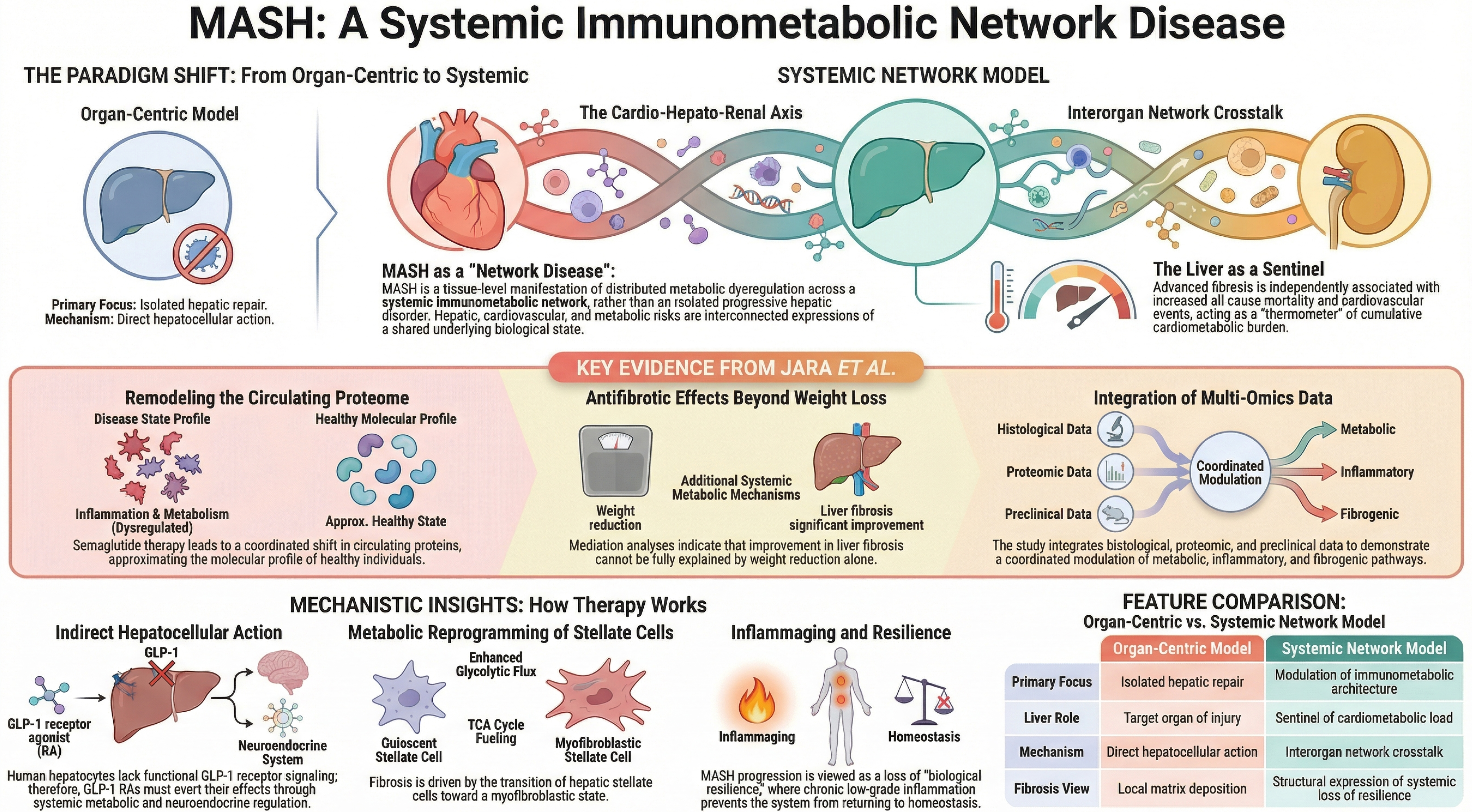
Figure 1. MASH as a systemic immunometabolic network disease. Schematic representation of the paradigm shift from an organ-centric model - focused on isolated hepatic repair and direct hepatocellular mechanisms - to a systemic network framework integrating the cardio-hepato-renal axis. Key evidence from Jara et al. demonstrates coordinated remodeling of the circulating proteome toward a non-disease molecular profile and antifibrotic effects not fully explained by weight reduction alone[1]. Mechanistically, GLP-1 receptor agonism acts indirectly through systemic metabolic and neuroendocrine pathways, modulates stellate cell metabolic reprogramming, and attenuates fibrogenic activation. Advanced fibrosis is conceptualized as a structural expression of systemic immunometabolic dysregulation and loss of biological resilience, positioning the liver as a sentinel of cumulative cardiometabolic burden rather than an isolated target organ. MASH: Metabolic dysfunction-associated steatohepatitis; GLP-1: glucagon-like peptide-1; GLP-1 RA: glucagon-like peptide-1 receptor agonist; TCA: tricarboxylic acid.