

fig1
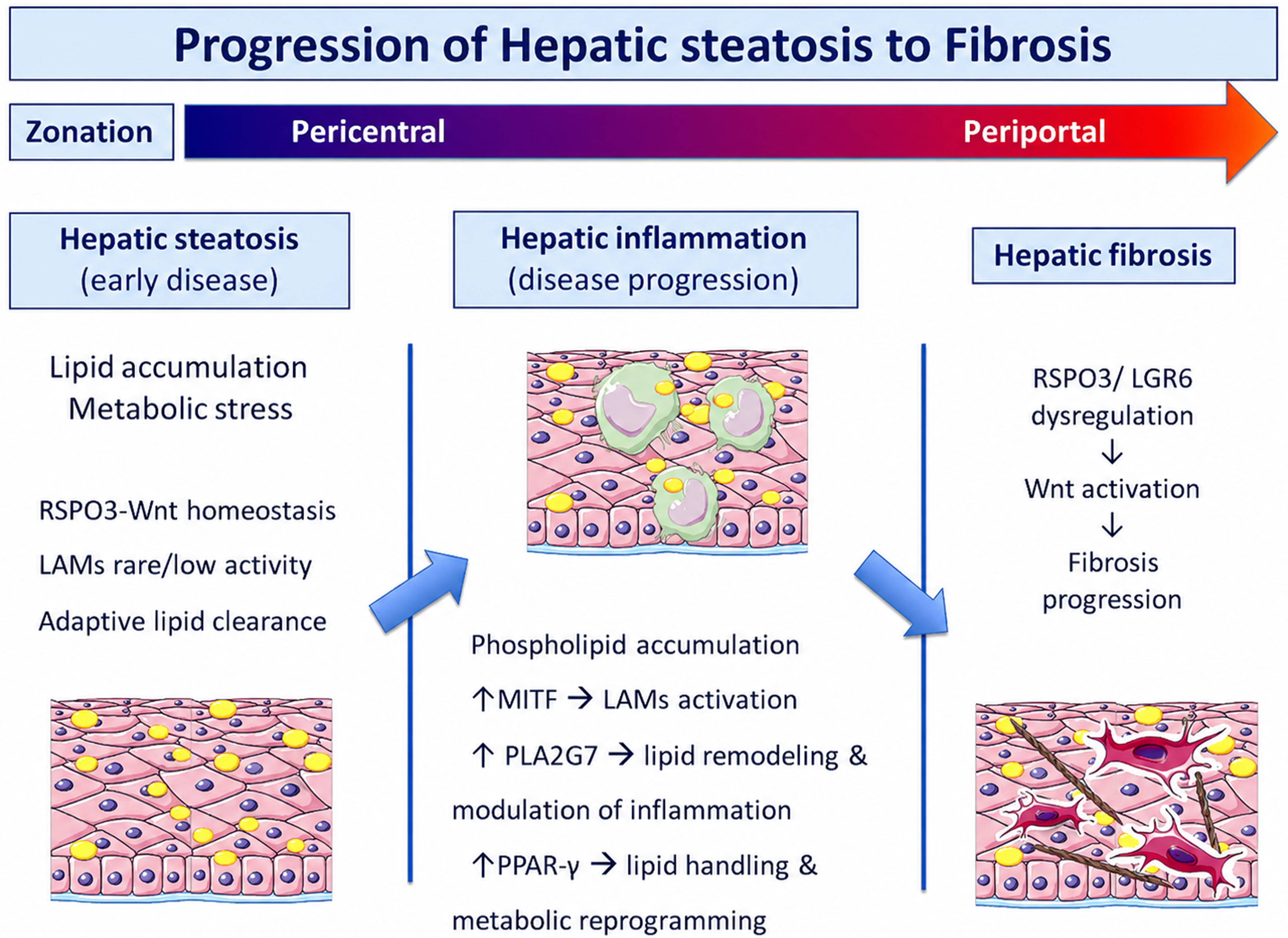
Figure 1. Spatial multi-omics model of MASLD progression from steatosis to fibrosis. In the early phase of MASLD (hepatic steatosis), lipids are accumulated in the hepatocytes. At this phase, inflammatory signaling is minimal and LAMs are present, but they are less abundant and less activated compared with later stages of disease, in which a marked expansion of LAMs is observed. The hepatic microenvironment is characterized primarily by metabolic stress without substantial immune activation. As lipid accumulation intensifies, lipotoxic signals and excess lipid release drive further recruitment and activation of LAMs, particularly within the pericentral (zone 3) region. These macrophages establish a localized inflammatory-metabolic microenvironment, characterized by phospholipid accumulation. LAM activation is associated with upregulation of lipid remodeling and inflammatory pathways, including PLA2G7, as well as transcriptional regulators such as MITF and PPAR-γ. Persistent inflammation and ongoing LAM activity drive stromal remodeling and lead to the development of fibrosis. Crosstalk between endothelial cells and HSCs drives HSC activation and their switch to fibroblasts, leading to extracellular matrix deposition and fibrosis. This process is mediated, in part, by RSPO3-LGR6 dysregulation, which activates Wnt pathways and supports fibrogenic progression. MASLD: Metabolic dysfunction-associated steatotic liver disease; RSPO3: R-spondin 3; Wnt: Wingless/Integrated signaling pathway; LAMs: lipid-associated macrophages; MITF: microphthalmia-associated transcription factor; PLA2G7: phospholipase A2 group VII; PPAR-γ: peroxisome proliferator-activated receptor gamma; LGR6: leucine-rich repeat-containing G protein-coupled receptor 6; HSC: hepatic stellate cell.