fig3
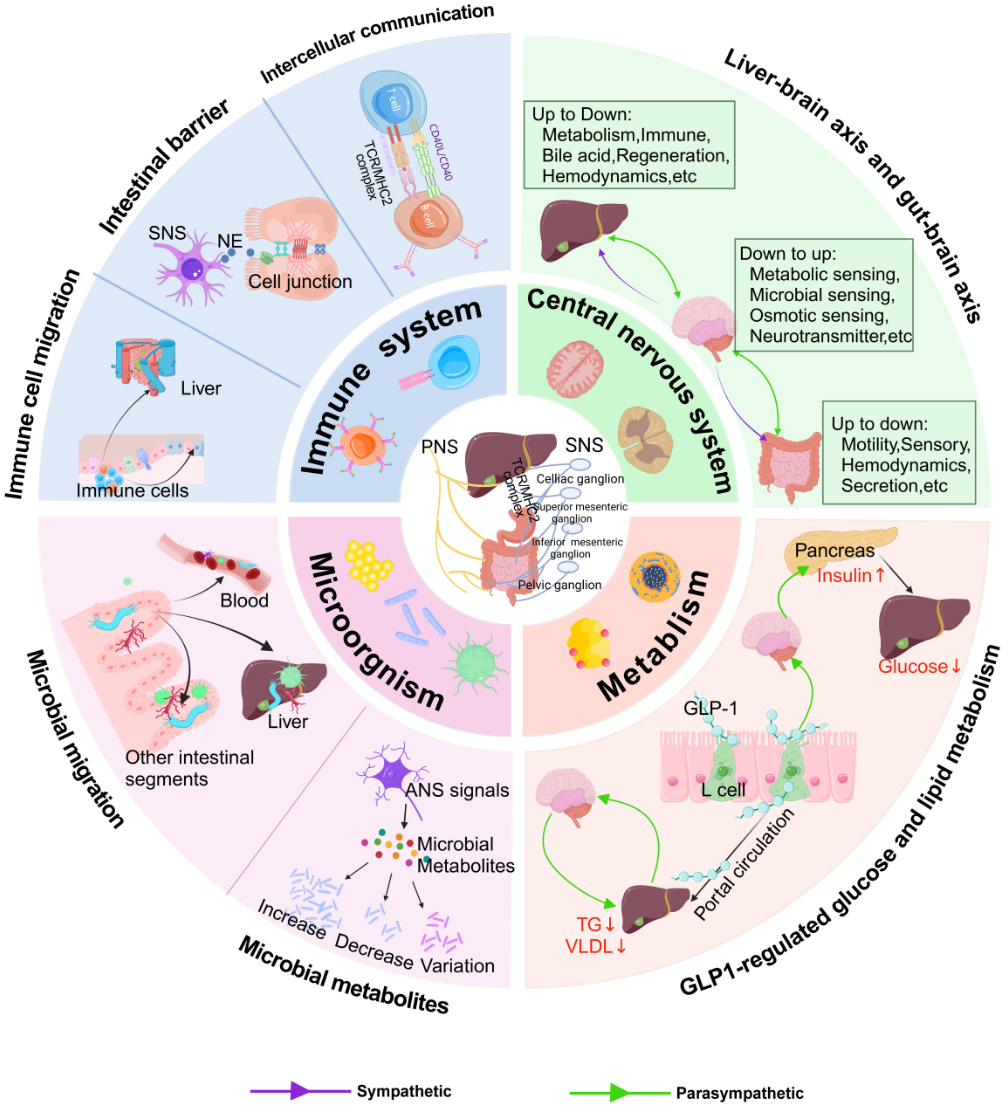
Figure 3. The ANS orchestrates gut-liver metabolic homeostasis through integrated neuro-metabolic pathways. The ANS modulates gut-liver metabolic communication via four interconnected routes: glucose and lipid metabolism, immunometabolism, microbial metabolism, and CNS metabolic integration. In metabolic regulation, the ANS controls hepatic and intestinal glucose/lipid metabolism via GLP-1 signaling and direct neural inputs, regulating gluconeogenesis, lipogenesis, and energy balance. In immunometabolism, the ANS shapes the metabolic microenvironment of gut and liver by modulating immune cell trafficking and barrier integrity, influencing insulin sensitivity and nutrient processing. Regarding microbial metabolism, autonomic innervation affects microbial metabolite production (SCFAs, bile acids), which subsequently regulate host metabolism, insulin secretion, and energy expenditure. Parasympathetic pathways convey ascending signals to the central nervous system, which integrates this information and coordinates sympathetic and parasympathetic efferent outputs to target organs. These neural circuits collectively regulate gut-liver metabolic homeostasis. Image created with cnsknowall.com. SNS: Sympathetic nervous system; ANS: autonomic nervous system; NE: norepinephrine; TG: triglyceride; VLDL: very low density lipoprotein; GLP-1: glucagon-like peptide-1; TCR: T cell receptor; MHC II: major histocompatibility complex class II.