fig1
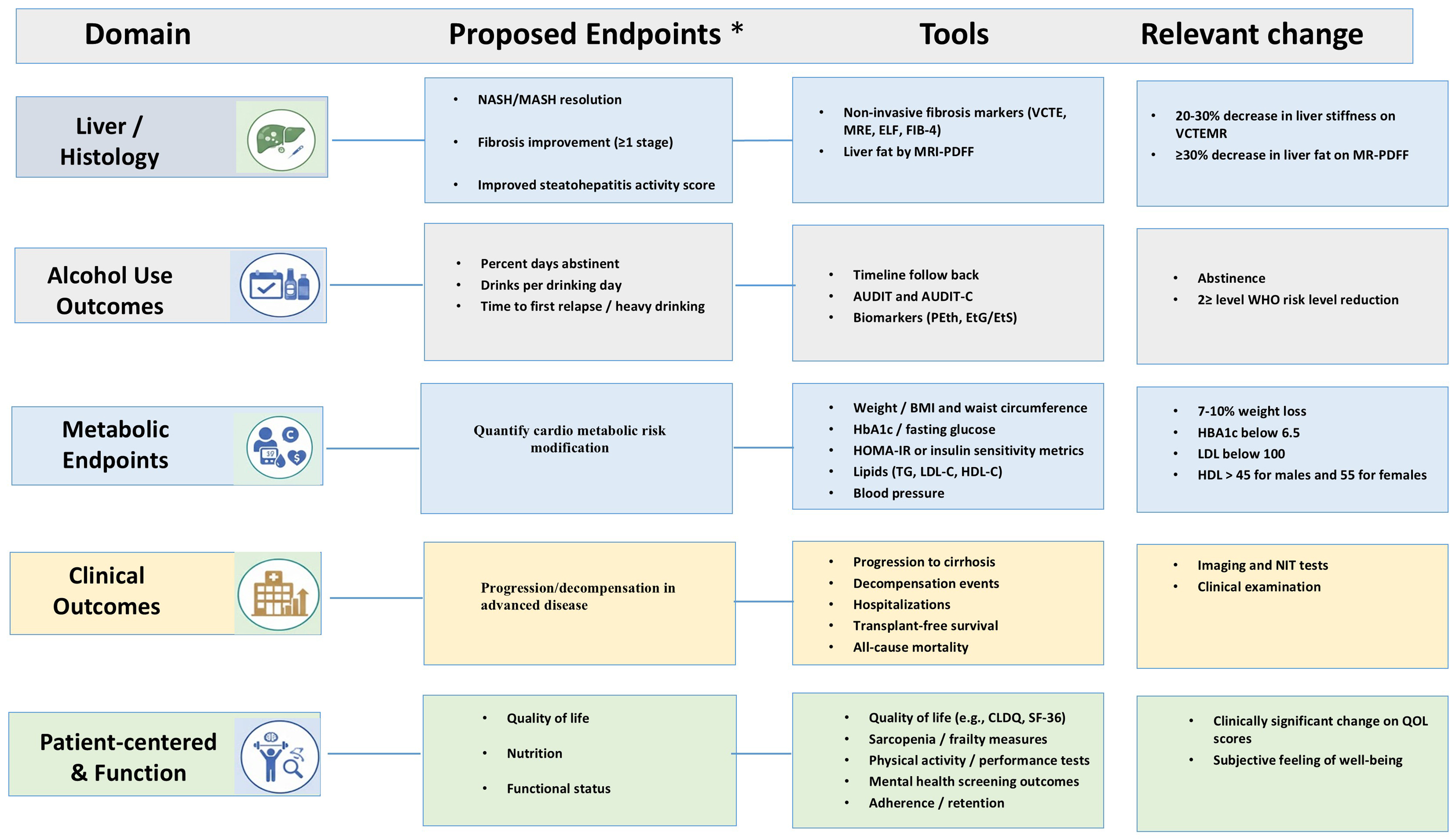
Figure 1. Proposed Endpoint Domains and Measures for MetALD Clinical Trials. *Integrated efficacy monitoring algorithm (month 12 and annually). Histologic response: MASH resolution without worsening of fibrosis, and/or fibrosis improvement ≥ 1 stage without worsening of steatohepatitis. NIT: ≥ 30% reduction in MRI-PDFF; LSM ↓ ≈ 20% from baseline and/or improvement in biomarker NIT from baseline (ELF, FIB-4) from baseline. Alcohol-use response: Abstinence and ≥ 2 WHO risk level reduction on alcohol use (abstinence is no alcohol use; low level is 1-20 g/d for women and 1-30 g/d for men; moderate level is 21-40 g/d for women and 31-60 g/d for men; high level is 41-60 g/d for women and 61-100 for men; and very high level is > 60 g/d for women and >100 g/d for men). Cardio metabolic response: weight ↓ ≥ 5%-10% or waist ↓; HbA1c ↓ ≥ 0.5% or improved fasting glucose; HOMA-IR ↓; TG/LDL-C ↓, HDL-C ↑; BP ↓ or controlled. Clinical outcomes: no progression to cirrhosis; absence of decompensation (ascites, variceal bleeding, encephalopathy); reduced hospitalizations; improved transplant-free survival; reduced mortality. Patient-centered outcomes: QoL ↑ (CLDQ/SF-36); sarcopenia/frailty ↓; physical performance ↑; mental health scores ↑; adherence/retention ↑. ↑ Increase; ↓ decrease. BMI: Body mass index; CLDQ: Chronic Liver Disease Questionnaire; ELF: Enhanced Liver Fibrosis test; EtG: ethyl glucuronide; EtS: ethyl sulfate; FIB-4: Fibrosis-4 index; HbA1c: hemoglobin A1c; HDL-C: high-density lipoprotein cholesterol; HOMA-IR: Homeostasis Model Assessment of Insulin Resistance; LDL-C: low-density lipoprotein cholesterol; MASH: metabolic dysfunction-associated steatohepatitis; MRE: magnetic resonance elastography; MRI-PDFF: magnetic resonance imaging-proton density fat fraction; NASH: nonalcoholic steatohepatitis; PACS: Penn Alcohol Craving Scale; PEth: phosphatidylethanol; SF-36: 36-Item Short Form Health Survey; TG: triglycerides; VCTE: vibration-controlled transient elastography.