fig2
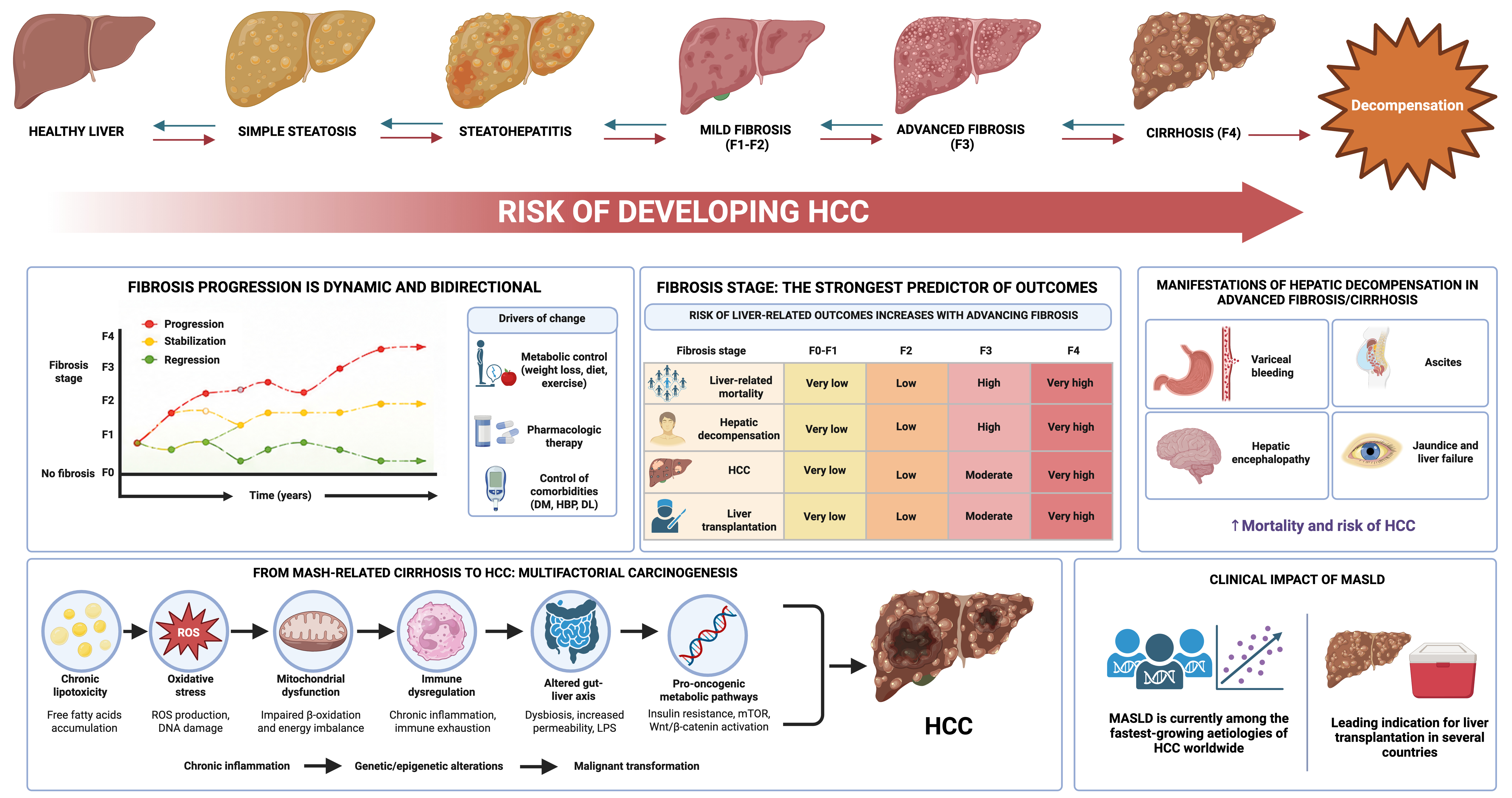
Figure 2. Natural history and clinical impact of MASLD. MASLD progresses from SS to steatohepatitis (MASH), where the coexistence of hepatocellular ballooning, lobular inflammation, and ECM deposition triggers the transdifferentiation of hepatic stellate cells into myofibroblasts that produce collagen types I and III. This establishes a profibrotic microenvironment that progresses to perisinusoidal and portal fibrosis (F1-F2), bridging fibrosis with nodular formation (F3) and cirrhosis (F4). Cirrhosis is characterized by architectural distortion, regenerative nodularity and sinusoidal capillarization. Ultimately, the disease can progress to stages of decompensation associated with portal hypertension. The progression of the disease is dynamic and bidirectional, modulated by metabolic control, pharmacological intervention and the management of comorbidities. The stage of fibrosis is the most robust independent predictor of liver-related mortality, decompensation, HCC, and the need for transplantation, with risk increasing progressively from F0-F1 to F4. It is important to note that the risk of HCC is present across the entire spectrum of the disease; up to 50% of HCC cases associated with MASLD develop without prior cirrhosis. The transition to HCC reflects the convergence of multiple mechanisms. Chronic lipotoxicity generates ROS, leading to oxidative damage to DNA and mitochondrial dysfunction with impaired β-oxidation; chronic inflammation and immune exhaustion promote genetic and epigenetic alterations; gut dysbiosis increases intestinal permeability and hepatic exposure to LPS via the gut-liver axis, amplifying inflammatory signaling; and pro-oncogenic pathways such as insulin resistance, mTOR activation, and Wnt/β-catenin signaling converge to drive malignant transformation. MASLD is currently one of the fastest-growing causes of HCC worldwide and a leading indication for liver transplantation in several countries. Created in BioRender. Ramírez, M. (2026) https://BioRender.com/wgvhgrt. MASLD: Metabolic dysfunction-associated steatotic liver disease; SS: simple steatosis; MASH: metabolic dysfunction-associated steatohepatitis; ECM: extracellular matrix; HCC: hepatocellular carcinoma; ROS: reactive oxygen species; LPS: lipopolysaccharide; mTOR: mechanistic target of rapamycin.