
fig1
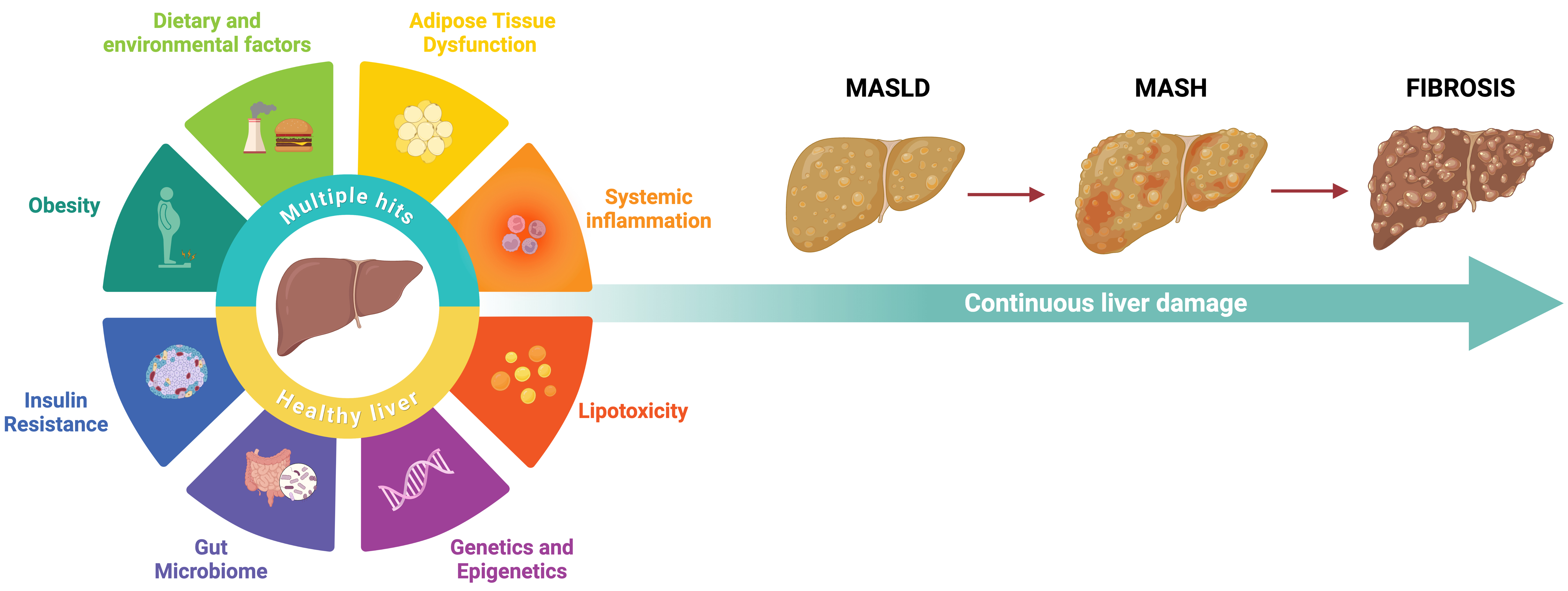
Figure 1. The multiple parallel hits model in progressive liver damage in MASLD. The pathogenesis of MASLD is best explained by the “multiple parallel hits” hypothesis, according to which simultaneous and synergistic insults converge on the liver rather than acting sequentially. These include insulin resistance, which drives de novo lipogenesis and disrupts fatty acid oxidation; obesity and adipose tissue dysfunction, which generate a profile of pro-inflammatory adipokines; lipotoxicity, mediated by the accumulation of free fatty acids and their derivatives; gut microbiota dysbiosis, which increases intestinal permeability and hepatic exposure to pathogen-associated molecular patterns; systemic inflammation, driven by activation of the innate immune system; and genetic and epigenetic susceptibility variants that modulate individual risk and disease severity; and dietary and environmental factors, including excessive consumption of ultra-processed foods, sedentary lifestyle, and chronic exposure to environmental pollutants such as fine particulate matter, bisphenol A, phthalates, and heavy metals. Created in BioRender. Ramírez, M. (2026) https://BioRender.com/2vcrroy. MASLD: Metabolic dysfunction-associated steatotic liver disease; MASH: metabolic dysfunction-associated steatohepatitis.