


CagriSema: a novel dual-pathway approach to target obesity and its complications
 0
0 
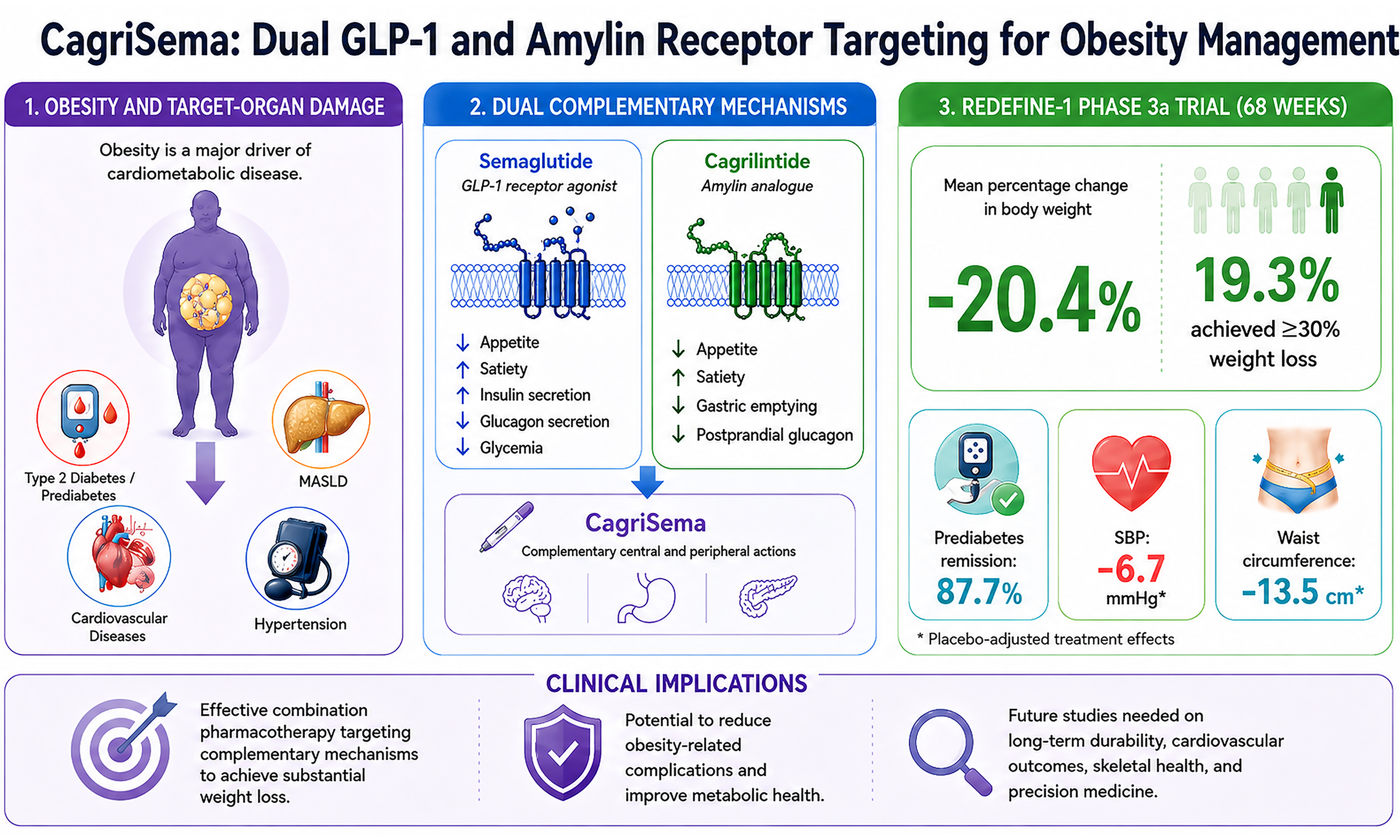
Overweight and obesity pose a major global health challenge, with prevalence increasing steadily worldwide over recent decades. Current projections suggest that, without effective intervention, nearly two-thirds of adults over 25 years of age could be affected by 2050, corresponding to approximately 3.8 billion individuals[1]. This trend is associated with substantial increases in morbidity and mortality, driven by complications including type 2 diabetes (T2D), metabolic dysfunction-associated steatotic liver disease (MASLD), and cardiovascular disease.
The scale and clinical impact of obesity have intensified efforts to develop more effective pharmacological therapies. Glucagon-like peptide-1 (GLP-1)-based therapies, such as semaglutide and tirzepatide, have transformed obesity management, producing weight loss that narrows the gap with metabolic surgery at the same time as reducing the risk of obesity-related complications[2]. Beyond inducing weight loss, these treatments have demonstrated benefits on obesity-related complications, including neuropsychiatric and substance use disorders, peripheral vascular disease, arthritis, MASLD, hypertension and renal disorders, positioning them as a central focus in current obesity research[3]. In this context, combination therapies targeting complementary biological pathways have emerged as a promising strategy. Cagrilintide, a long-acting human amylin analogue, exerts both central and peripheral effects by enhancing satiety, delaying gastric emptying, and modulating postprandial glucagon secretion, whereas semaglutide acts on GLP-1 receptors in the central nervous system and peripheral tissues to regulate appetite, glycemic control, and energy balance. Their complementary actions provide a biological rationale for combination therapy. Thus, the cagrilintide plus semaglutide combination known as CagriSema has the potential to act additively to improve weight control[4].
In the New England Journal of Medicine, Garvey and colleagues[5] report the results of the REDEFINE 1 trial, a 68-week, phase 3a double-blind, placebo-controlled and active-controlled trial evaluating the efficacy and safety of coadministered cagrilintide and semaglutide in adults with obesity [body mass index (BMI) ≥ 30 kg/m2] or overweight (BMI ≥ 27 kg/m2) with at least one weight-related comorbidity. Dyslipidemia and hypertension constituted the most frequent complications, with 32.1% of participants presenting with prediabetes at baseline. In this multicenter study conducted across 22 countries, participants (67.6% females and 72% White) received once-weekly subcutaneous administration of CagriSema (n = 2,108) with dose escalation from 0.25 mg to a maximum of 2.4 mg for each drug, in addition to lifestyle intervention, compared with placebo (n = 705). Dose escalation could be delayed or the dose reduced if adverse effects occurred, or if participants reached a BMI in the lower normal range and presented related health concerns.
CagriSema treatment resulted in substantially greater and clinically meaningful weight loss (-20.4%) than semaglutide alone (-14.9%), cagrilintide alone (-11.5%), or placebo (-3.0%), a finding consistent with at least partial additivity, although the study design does not permit a formal assessment of additive or synergistic effects. In the trial-product estimand, 19.3% of participants achieved a reduction of at least 30% in body weight; this proportion was lower under the treatment-policy estimand. This magnitude of weight loss narrows the gap with bariatric procedures, although it remains below the average 25%-35% weight loss typically reported after sleeve gastrectomy or Roux-en-Y gastric bypass[6], reinforcing the therapeutic potential of dual-pathway targeting. Approximately one third of the weight loss corresponded to lean mass reduction. Although this proportion is broadly consistent with that observed during substantial weight loss induced by lifestyle interventions or other obesity management therapies, it is not negligible and warrants careful consideration. The reductions in lean mass do not necessarily indicate pathological muscle loss, as improvements in body composition, physical function, and quality of life have been reported with semaglutide and tirzepatide in subanalyses of the STEP-1 and SURMOUNT-1 programs[7,8]. Nevertheless, understanding the long-term implications for muscle preservation and functional outcomes remains important, particularly in older adults, patients with chronic kidney disease, and populations at risk of sarcopenic obesity[9]. In this context, resistance exercise and adequate dietary protein intake should be considered important adjuncts to pharmacological obesity treatment to support muscle health during weight loss[9]. Weight loss was accompanied by improvements in cardiometabolic parameters, including a decrease in systolic blood pressure (-9.9 mmHg) and waist circumference (-17.5 cm) (placebo-adjusted: 6.7 mmHg and 13.5 cm, respectively). Among participants with prediabetes at baseline, 87.7% achieved normoglycemia, highlighting the potential of this combination therapy to modify the natural history of dysglycemia. Improvements in physical function and quality of life further reinforce the clinical relevance of this combination drug.
Gastrointestinal adverse events were common (79.6% vs. 39.9% with placebo), with nausea, vomiting, and diarrhea peaking during dose escalation and declining thereafter, whereas constipation remained relatively constant. These events were predominantly mild to moderate and transient, and only 5.9% of participants discontinued treatment, indicating an overall acceptable safety and tolerability profile. Nevertheless, the high frequency of gastrointestinal symptoms may influence long-term adherence in routine clinical practice. Additional adverse events, including fatigue, dizziness, alopecia, and gallbladder-related disorders, were more frequent with CagriSema. The safety profile of cagrilintide-semaglutide was broadly consistent with that reported for other incretin-based therapies, although gastrointestinal adverse events and treatment discontinuations occurred more frequently than with either semaglutide or cagrilintide alone, highlighting the importance of careful patient selection and long-term adherence. In addition, the applicability of these findings to older adults, patients with multimorbidity, or those with long-standing disease remains uncertain. Longer-term clinical studies and real-world evidence will be essential to better characterize the safety profile of cagrilintide-semaglutide, particularly regarding uncommon adverse events, treatment persistence, and its effects on body composition and bone health. Furthermore, important questions remain, including the long-term durability of weight loss and its maintenance after treatment discontinuation, as well as its impact on major cardiovascular outcomes. The bone effects of amylin analogues also deserve investigation, as these drugs not only bind the amylin receptors AMY1R, AMY2R, and AMY3R, but also the calcitonin receptor, raising the possibility of direct effects on bone metabolism[10]. Available evidence suggests that AMY2R and the calcitonin receptor are both expressed in osteoclasts[10-12], indicating that amylin and calcitonin receptor agonism may exert predominantly anti-resorptive effects. In this regard, the amylin analogue pramlintide has been demonstrated to reduce the bone resorption biomarker C-terminal telopeptide of type I collagen (CTX-1) during weight loss[10]. Due to concerns regarding potential bone loss accompanying substantial weight reduction, further research is needed to determine the long-term effects of cagrilintide-semaglutide on bone mineral density, bone turnover, and fracture risk. In addition, further research is needed to clarify potential sex-specific differences and to better understand the central and peripheral mechanisms of action of GLP-1 and amylin analogues, including whether their effects are additive, synergistic, or potentially divergent in different clinical contexts.
Notably, the lower weight loss (-13.7%) observed in REDEFINE 2 among individuals with T2D suggests that the magnitude of benefit achieved with combined GLP-1 and amylin receptor agonism may depend on the underlying metabolic status, highlighting the need for a more nuanced understanding of the mechanisms governing treatment response[13]. Noteworthy, lower efficacy of obesity management medications in patients with T2D is a well-documented and established finding. Proposed explanations for this difference include variations in residual β-cell function, glucagon regulation, and baseline body composition. Although cagrilintide-semaglutide produced greater weight loss than either monotherapy alone in REDEFINE 1, the study design does not permit a formal assessment of pharmacological additivity or synergy. Consequently, these findings raise important questions regarding the extent to which the effects of GLP-1 receptor agonism and amylin receptor activation may be additive or synergistic across different metabolic phenotypes. The findings of the REDEFINE 1 and REDEFINE 2 trials reinforce the pivotal role of combination pharmacotherapy by targeting diverse mechanisms of action that translate into improved weight loss achievements as well as an impact on complications. The weight loss achieved by CagriSema (-20.4% at 68 weeks) is comparable to that reported with the dual glucose-dependent insulinotropic polypeptide (GIP)/GLP-1 receptor agonist tirzepatide (-20.9% with the 15-mg dose at 72 weeks in SURMOUNT-1)[14]. Amylin receptor agonism thus emerges as an attractive therapeutic target, with the selective amylin receptor agonist eloralintide achieving -20% weight loss with the 9-mg dose after 48 weeks in a phase 2 trial[15]. Other candidates for dual and triple combination therapies have focused on glucagon receptor agonism with its potential specific added effects on the liver. These approaches have led to significant weight loss with the dual GLP-1/glucagon receptor agonist survodutide (-13.5% with the 6-mg dose at 76 weeks in a phase 3 SYNCHRONIZE-1 trial)[16], the dual GLP-1 receptor agonist and GIP antagonist Maridebart cafraglutide (known as MariTide) (-12.3% to -16.2% across different doses at 52 weeks in a phase 2 trial)[17] or the triple GLP-1/GIP/glucagon receptor agonist retatrutide (-24.2% with the 12-mg dose at 48 weeks in a phase 2 trial)[18]. In a recent phase 3 trial with patients with T2D and inadequate glycaemic control, the mean percentage change from baseline body weight with the 12-mg dose of retatrutide at 40 weeks was -15.3%[19]. However, direct comparisons across trials should be interpreted cautiously because of differences in study design, duration, and patient populations.
These developments are consistent with the evolving understanding of the gastrointestinal tract as a key endocrine organ that regulates appetite, glucose homeostasis, energy expenditure, and gastrointestinal motility through a complex network of hormonal signals[20]. Beyond GLP-1 and amylin pathways, modulation of the ghrelin axis [Figure 1] represents a promising avenue for future therapeutic development[21]. In particular, LEAP2 (liver-expressed antimicrobial peptide 2), an endogenous antagonist of the ghrelin receptor GHSR, has emerged as a potential target for mitigating the weight regain often observed after discontinuation of GLP-1-based therapies[22,23].
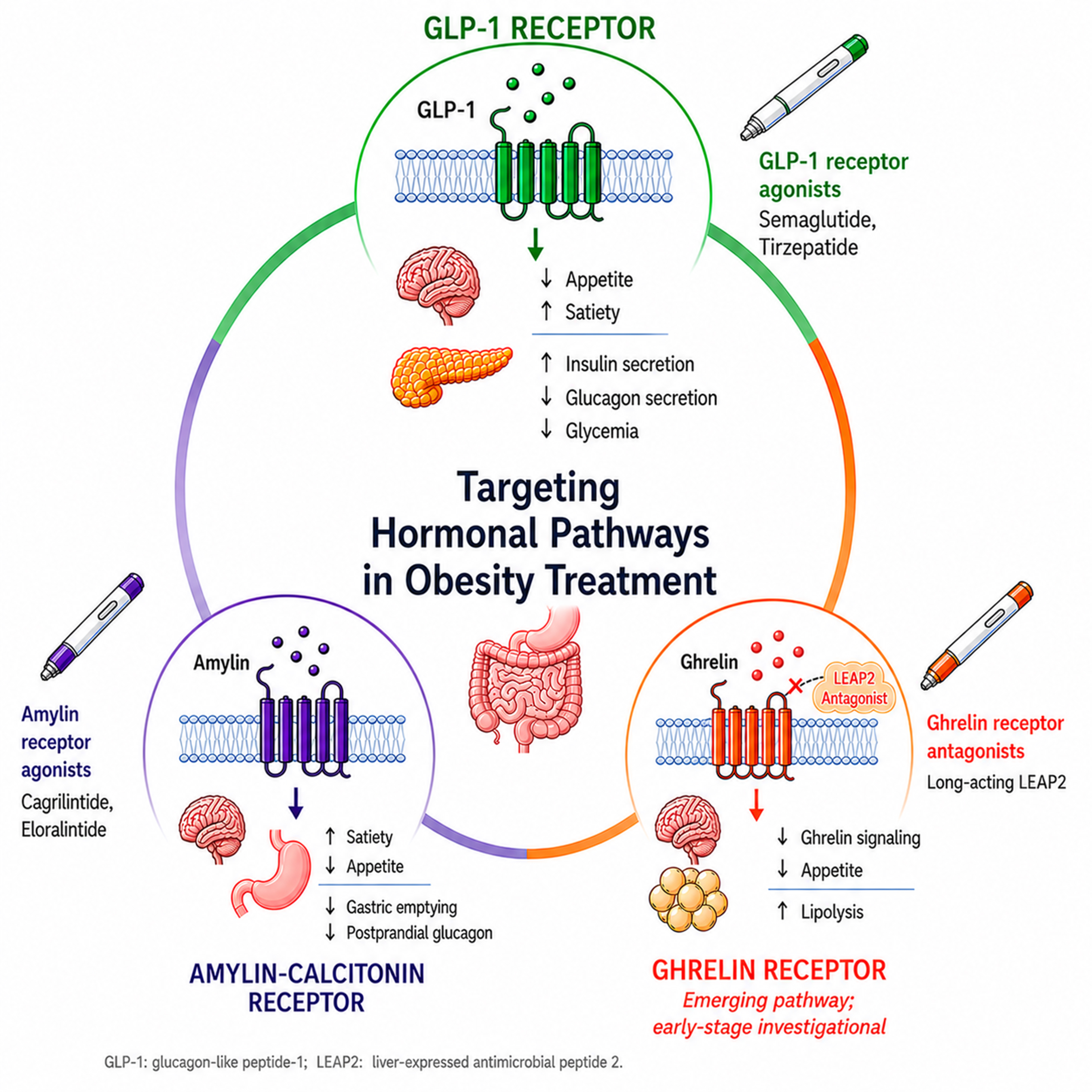
Figure 1. The future of combination therapies for obesity management. This scheme illustrates potential therapeutic targets in obesity management by modulating receptors of GLP-1, amylin-calcitonin, and ghrelin pathways. GLP-1 agonists, such as semaglutide or tirzepatide, act on the GLP-1 receptor to suppress appetite and to regulate glycemia. Amylin analogues such as cagrilintide and eloralintide target the amylin receptor to enhance satiety and slow gastric emptying. A potential future avenue includes long-acting analogues of LEAP2, a native antagonist of the ghrelin receptor, which may reduce food intake by attenuating ghrelin-mediated orexigenic and lipogenic signaling. The combination of GLP-1 receptor agonists with amylin analogues or future ghrelin receptor-targeting therapies may provide greater reductions in body weight and adiposity than monotherapy. Symbols: upward arrows indicate stimulation or increase; downward arrows indicate inhibition or decrease; the dashed line represents ligand-receptor interaction; and the red cross denotes receptor antagonism. GLP-1: Glucagon-like peptide-1; LEAP2: liver-expressed antimicrobial peptide 2.
These advances also align with the emerging paradigm of precision medicine in obesity, in which genetic predictors of response and adverse effects to GLP-1-based therapies may enable more individualized treatment strategies[24]. Taken together, these data reinforce the emerging paradigm of a multimodal and personalized therapeutic approach, which will likely form the foundation of future obesity management.
DECLARATIONS
Authors’ contributions
Drafted the manuscript: Valdés-Calero I
Revised the manuscript critically for important intellectual content: Rodríguez A, Frühbeck G
All authors participated in final approval of the version to be published.
Availability of data and materials
Not applicable.
AI and AI-assisted tools statement
During the preparation of this manuscript, the AI tool ChatGPT (GPT-5, released 2025-08-07) was used to generate Figure 1 and the Graphical Abstract and to improve the readability and language of the manuscript. The tool did not influence the study design, data collection, analysis, interpretation, or the scientific content of the work. All authors take full responsibility for the accuracy, integrity, and final content of the manuscript.
Financial support and sponsorship
This work was supported by Fondo de Investigación Sanitaria-FEDER (PI25/00528) and CIBEROBN from the Spanish Instituto de Salud Carlos III, and the Department of Health of the Gobierno de Navarra (GN2025/52).
Conflicts of interest
Frühbeck G received honoraria from Lilly, Novo Nordisk, Regeneron, AstraZeneca and Boehringer Ingelheim as a member of advisory boards, and honoraria for lectures as a member of the OPEN Spain Initiative. The other authors declare that there are no conflicts of interest.
Ethical approval and consent to participate
Not applicable.
Consent for publication
Not applicable.
Copyright
© The Author(s) 2026.
REFERENCES
1. GBD 2021 Adult BMI Collaborators. Global, regional, and national prevalence of adult overweight and obesity, 1990-2021, with forecasts to 2050: a forecasting study for the Global Burden of Disease Study 2021. Lancet. 2025;405:813-38.
3. Drucker DJ. GLP-1-based therapies for diabetes, obesity and beyond. Nat Rev Drug Discov. 2025;24:631-50.
4. Becerril S, Frühbeck G. Cagrilintide plus semaglutide for obesity management. Lancet. 2021;397:1687-9.
5. Garvey WT, Blüher M, Osorto Contreras CK, et al. ; REDEFINE 1 Study Group. Coadministered cagrilintide and semaglutide in adults with overweight or obesity. N Engl J Med. 2025;393:635-47.
6. Arterburn DE, Telem DA, Kushner RF, Courcoulas AP. Benefits and risks of bariatric surgery in adults: a review. JAMA. 2020;324:879-87.
7. Wilding JPH, Batterham RL, Calanna S, et al. ; STEP 1 Study Group. Once-weekly semaglutide in adults with overweight or obesity. N Engl J Med. 2021;384:989-1002.
8. Look M, Dunn JP, Kushner RF, et al. Body composition changes during weight reduction with tirzepatide in the SURMOUNT-1 study of adults with obesity or overweight. Diabetes Obes Metab. 2025;27:2720-9.
9. Neeland IJ, Linge J, Birkenfeld AL. Changes in lean body mass with glucagon-like peptide-1-based therapies and mitigation strategies. Diabetes Obes Metab. 2024;26:16-27.
10. Secher A, Lutz TA, Raun K. The story of amylin: from physiology to therapy. Nat Metab. 2026;8:299-312.
11. Dacquin R, Davey RA, Laplace C, et al. Amylin inhibits bone resorption while the calcitonin receptor controls bone formation in vivo. J Cell Biol. 2004;164:509-14.
12. Maleitzke T, Hildebrandt A, Dietrich T, et al. The calcitonin receptor protects against bone loss and excessive inflammation in collagen antibody-induced arthritis. iScience. 2022;25:103689.
13. Davies MJ, Bajaj HS, Broholm C, et al. ; REDEFINE 2 Study Group. Cagrilintide-semaglutide in adults with overweight or obesity and type 2 diabetes. N Engl J Med. 2025;393:648-59.
14. Jastreboff AM, Aronne LJ, Ahmad NN, et al. ; SURMOUNT-1 Investigators. Tirzepatide once weekly for the treatment of obesity. N Engl J Med. 2022;387:205-16.
15. Billings LK, Hsia S, Bays H, et al. Eloralintide, a selective amylin receptor agonist for the treatment of obesity: a 48-week phase 2, multicentre, double-blind, randomised, placebo-controlled trial. Lancet. 2025;406:2631-43.
16. le Roux CW, Wharton S, Startseva E, et al. ; SYNCHRONIZE-1 Investigators. Survodutide once weekly for the treatment of adults with obesity. N Engl J Med. 2026;Epub ahead of print.
17. Jastreboff AM, Ryan DH, Bays HE, et al. ; MariTide Phase 2 Obesity Trial Investigators. Once-monthly maridebart cafraglutide for the treatment of obesity - a phase 2 trial. N Engl J Med. 2025;393:843-57.
18. Jastreboff AM, Kaplan LM, Frías JP, et al. ; Retatrutide Phase 2 Obesity Trial Investigators. Triple-hormone-receptor agonist retatrutide for obesity - a phase 2 trial. N Engl J Med. 2023;389:514-26.
19. Bajaj HS, Welch M, Shah P, et al. Efficacy and safety of retatrutide, a GIP, GLP-1, and glucagon receptor agonist, in people with type 2 diabetes and inadequate glycaemic control with diet and exercise (TRANSCEND-T2D-1): a double-blind, randomised, phase 3 trial. Lancet. 2026;407:2402-13.
20. Tzeravini E, Simati S, Anastasiou IA, Dalamaga M, Kokkinos A. Gut peptide alterations in type 2 diabetes and obesity: a narrative review. Curr Obes Rep. 2026;15:8.
21. Holm SK, Johansen VBI, Clemmensen C. LEAP2 as a therapeutic target in obesity and cardiometabolic disorders. Rev Endocr Metab Disord. 2026;27:687-704.
22. Holm SK, Johansen VBI, Ranea-Robles P, et al. Sustained weight loss with combined LEAP2 and semaglutide treatment in mice. Diabetes. 2025;74:2089-100.
23. Englund A, Lange AH, Hagemann CA, et al. LEAP2 reduces ad libitum food intake and attenuates postprandial glucose excursions in men with obesity. Diabetes. 2026;75:925-37.
Cite This Article
 Open Access
How to Cite
Download Citation
Export Citation File:
Type of Import
Tips on Downloading Citation
Citation Manager File Format
Type of Import
Direct Import: When the Direct Import option is selected (the default state), a dialogue box will give you the option to Save or Open the downloaded citation data. Choosing Open will either launch your citation manager or give you a choice of applications with which to use the metadata. The Save option saves the file locally for later use.
Indirect Import: When the Indirect Import option is selected, the metadata is displayed and may be copied and pasted as needed.
About This Article
Copyright

Data & Comments
Data
0









Comments
Comments must be written in English. Spam, offensive content, impersonation, and private information will not be permitted. If any comment is reported and identified as inappropriate content by OAE staff, the comment will be removed without notice. If you have any queries or need any help, please contact us at [email protected].