fig1
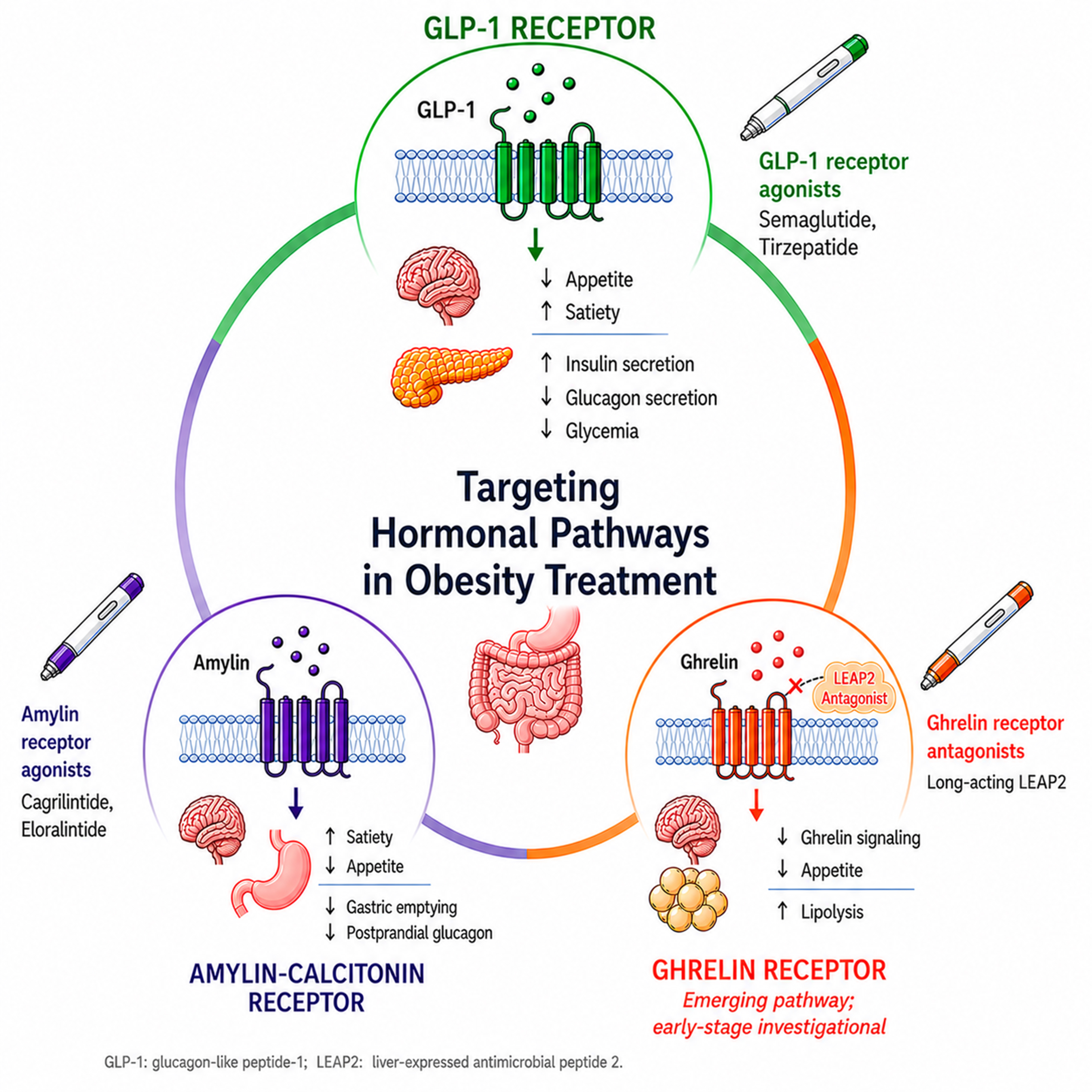
Figure 1. The future of combination therapies for obesity management. This scheme illustrates potential therapeutic targets in obesity management by modulating receptors of GLP-1, amylin-calcitonin, and ghrelin pathways. GLP-1 agonists, such as semaglutide or tirzepatide, act on the GLP-1 receptor to suppress appetite and to regulate glycemia. Amylin analogues such as cagrilintide and eloralintide target the amylin receptor to enhance satiety and slow gastric emptying. A potential future avenue includes long-acting analogues of LEAP2, a native antagonist of the ghrelin receptor, which may reduce food intake by attenuating ghrelin-mediated orexigenic and lipogenic signaling. The combination of GLP-1 receptor agonists with amylin analogues or future ghrelin receptor-targeting therapies may provide greater reductions in body weight and adiposity than monotherapy. Symbols: upward arrows indicate stimulation or increase; downward arrows indicate inhibition or decrease; the dashed line represents ligand-receptor interaction; and the red cross denotes receptor antagonism. GLP-1: Glucagon-like peptide-1; LEAP2: liver-expressed antimicrobial peptide 2.