
fig8
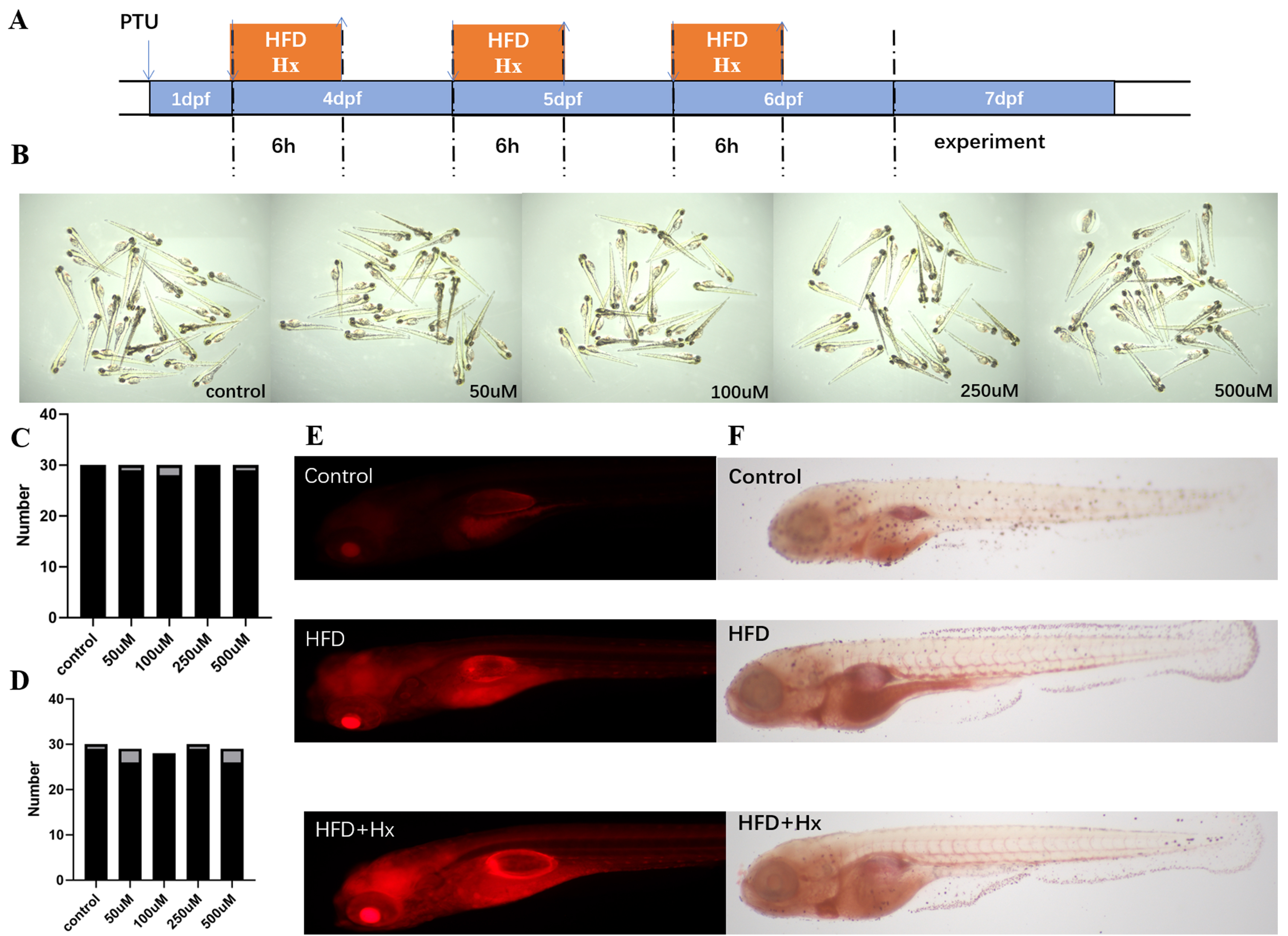
Figure 8. (A) Schematic representation of the protocol used for examination of the effect of Hx treatment against HFD effects. Control: zebrafish larvae were fed with a standard diet or HFD for 6 h each day from 4 to 6 dpf. Hx treatment: zebrafish larvae were treated with Hx during each control or HFD consumption period; (B) Zebrafish embryos were treated in each well with different concentrations of Hx (0, 50, 100, 250, and 500 μM Hx) for 3 days; (C) Dose-dependent toxicity of Hx in zebrafish embryos. The survival percentage of zebrafish embryos and larvae after embryonic exposure to various concentrations of Hx was not statistically significant; (D) Dose-dependent suppression of zebrafish embryo hatching by Hx. Bar graph quantifies hatched embryos at 72 hpf following exposure to increasing Hx concentrations (0, 50, 100, 250, and 500 μM). Values represent mean number of hatched embryos per experimental group (n = 40-50 embryos/concentration from 3 independent replicates); (E) Nile Red staining in 7 dpf zebrafish larvae. Brightfield images (4×) and representative fluorescent micrographs of head/yolk regions captured by immunofluorescence microscopy; (F) Brightfield images (4×) of 7 dpf larvae stained with Oil Red O (representative of n = 45/group). Quantification of lipid accumulation intensity (low/medium/high) in response to control vs. HFD with concurrent 200 μM Hx treatment. dpf: Days post fertilization; HFD: high-fat diet; hpf: hours post fertilization; Hx: hypoxanthine.