
fig6
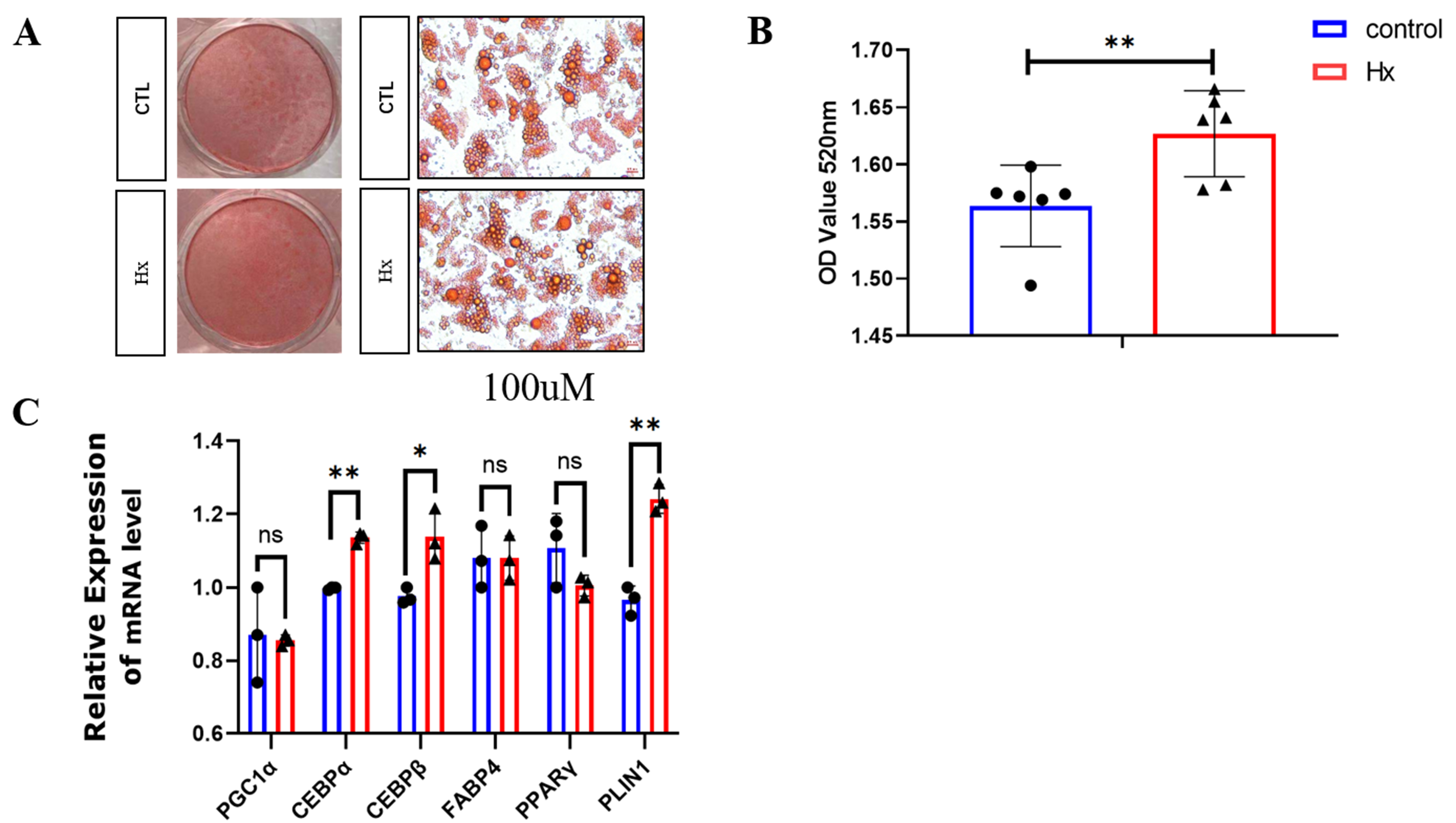
Figure 6. (A) Hypoxanthine (Hx) enhances adipogenic differentiation in precursor white adipocytes. Schematic representation of 100 μM Hx treatment during adipogenic induction in precursor white adipocytes; (B) Oil Red O staining quantification. OD520 values demonstrate significantly increased lipid accumulation in Hx-treated adipocytes (**P < 0.01 vs. control), with mean OD values of 1.65 ± 0.03 (Hx, n = 6) vs. 1.48 ± 0.02 (control, n = 6). Representative images show enhanced intracellular lipid droplet formation (red staining) under Hx stimulation; (C) Upregulation of adipogenic marker genes by Hx. Relative mRNA expression levels of key adipogenic regulators: CEBPα, CEBPβ, PLIN1, and PPARγ (*P < 0.05, **P < 0.01, n = 6). CEBP: CCAAT/enhancer-binding protein; Hx: hypoxanthine; OD: optical density; PLIN1: perilipin 1; PPARγ: peroxisome proliferator-activated receptor gamma.