
fig5
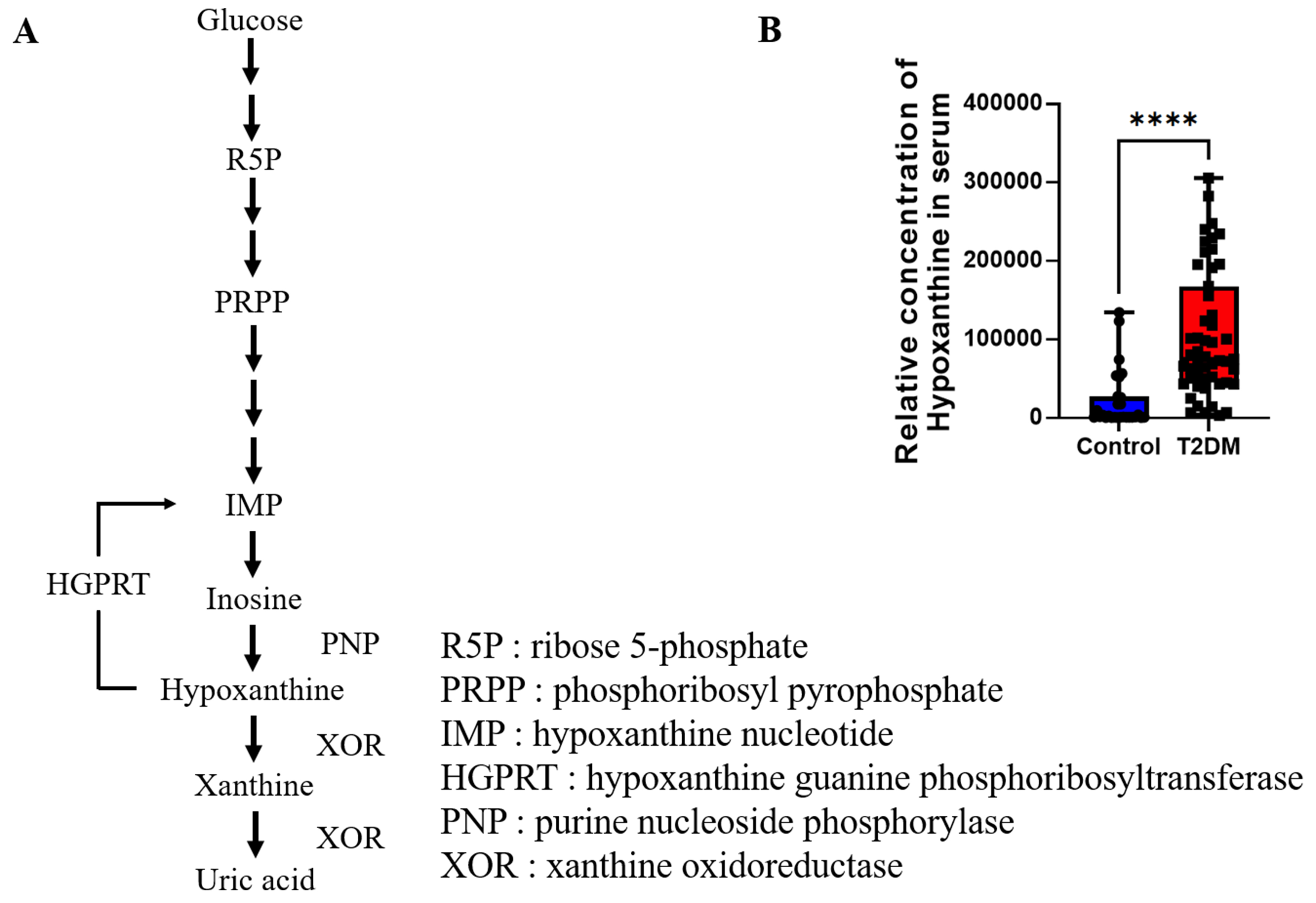
Figure 5. (A) Hypoxanthine metabolic pathway. The schematic illustrates the metabolic fate of hypoxanthine, a purine degradation product. Hypoxanthine is primarily salvaged by HGPRT to regenerate IMP, a critical step in the purine salvage pathway. Dysregulation of HGPRT activity or oxidative stress may lead to hypoxanthine accumulation, as observed in metabolic disorders; (B) Serum hypoxanthine levels in T2DM. The bar graph compares serum hypoxanthine concentrations between healthy controls and T2DM patients. Quantitative analysis reveals a statistically significant elevation (****P < 0.0001) of hypoxanthine in T2DM subjects, potentially reflecting impaired purine metabolism, increased xanthine oxidase activity, or systemic oxidative stress associated with diabetic pathophysiology. Error bars represent SEM (n = 15 per group). HGPRT: hypoxanthine-guanine phosphoribosyltransferase; IMP: inosine monophosphate; SEM: standard error of the mean; T2DM: type 2 diabetes mellitus; R5P: ribose 5-phosphate; PRPP: phosphoribosyl pyrophosphate; IMP: hypoxanthine nucleotide; HGPRT: hypoxanthine guanine phosphoribosyltransferase; PNP: purine nucleoside phosphorylase; XOR: xanthine oxidoreductase.