fig2
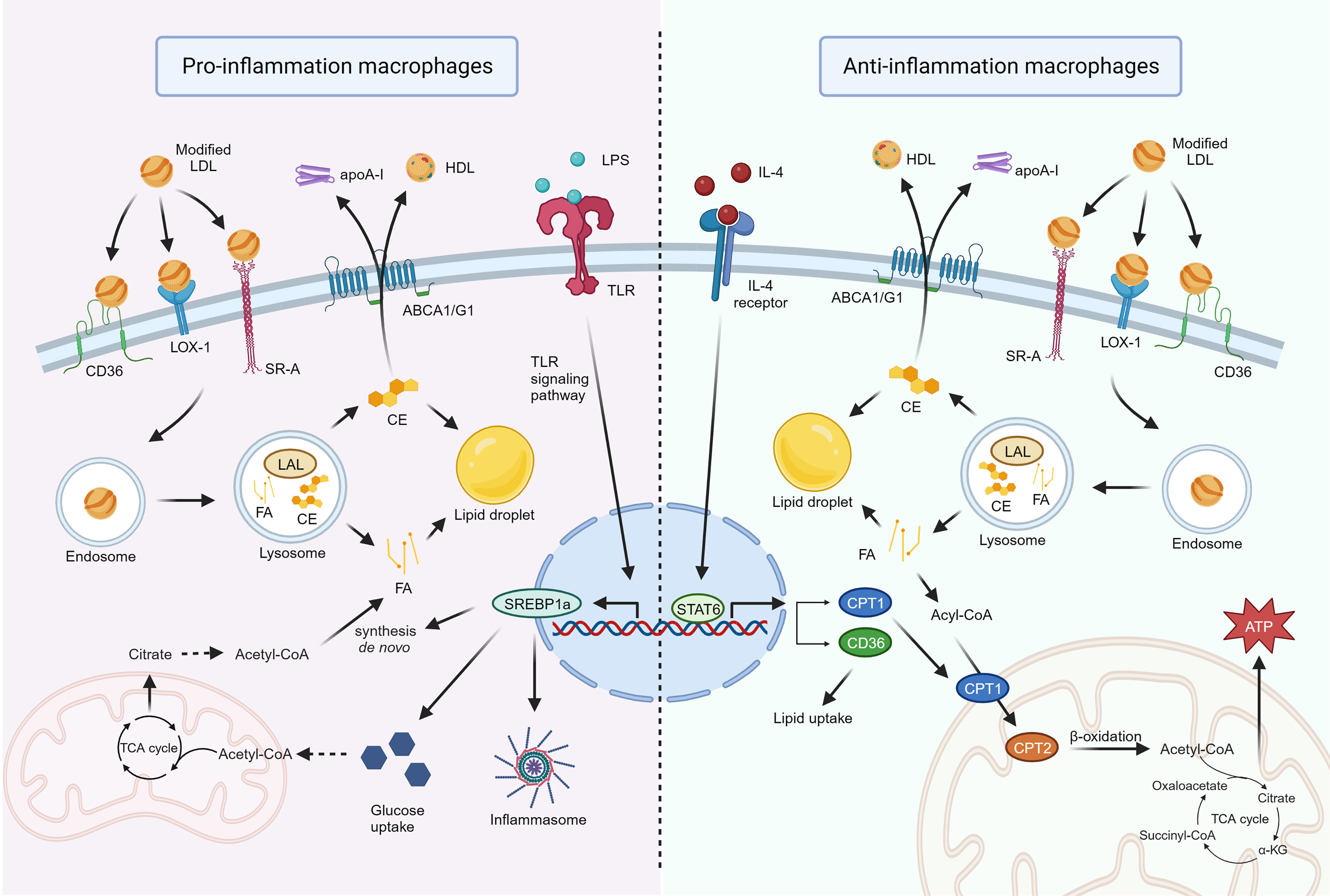
Figure 2. Inflammatory and anti-inflammatory types of macrophages in the regulation of lipid metabolism. The macrophages’ surface SR-A, LOX-1, and CD36 recognize and phagocytose modified LDL, which is converted to fatty acids and cholesterol in the presence of LAL. Surplus cholesterol is partly translocated to extracellular apoA-I and HDL via ABCA1/G1, and the remaining cholesterol and free fatty acids are stored in lipid droplets. In pro-inflammatory macrophages, lipopolysaccharide activation of the TLR signaling pathway promotes SREBP1a transcription, which facilitates glucose uptake and de novo fatty acid synthesis, as well as the release of inflammatory factors via inflammatory vesicles. In anti-inflammatory macrophages, the IL-4/STAT6 signaling pathway is activated, promoting the expression of FAO-related genes. Free fatty acids are activated to acyl-CoA and shuttled into the mitochondria by CPT1 and CPT2, where they are oxidized in the presence of β-oxidation to form acetyl-CoA and ultimately ATP via the tricarboxylic acid cycle. In addition, CD36 expression is elevated, increasing lipid uptake. Created in BioRender. Fan, F. (2026) https://BioRender.com/j64n485. SR-A: Scavenger receptors-A; LOX-1: lectin-like oxidized low-density lipoprotein receptor-1; LDL: low-density lipoprotein; LAL: lysosomal acid lipase; apoA-I: apolipoprotein A-I; HDL: high-density lipoprotein; ABCA1/G1: ATP-binding cassette transporter A1/G1; LPS: lipopolysaccharide; TLR: toll-like receptor; SREBP1a: sterol regulatory element binding transcription factor 1a; FAO: fatty acid oxidation; CPT: carnitine palmitoyl transferase; ATP: adenosine triphosphate; FA: fatty acids; CE: cholesterol; STAT6: signal transducer and activator of transcription 6; IL: interleukin; TCA: tricarboxylic acid cycle; CD36: cluster of differentiation 36; α-KG: alpha-ketoglutarate; acyl-CoA: acyl-coenzyme A; acetyl-CoA; acetyl-coenzyme A.