



Electrically tunable transmissive dielectric metamaterial based on SrTiO3 Mie resonators
 0
0 Abstract
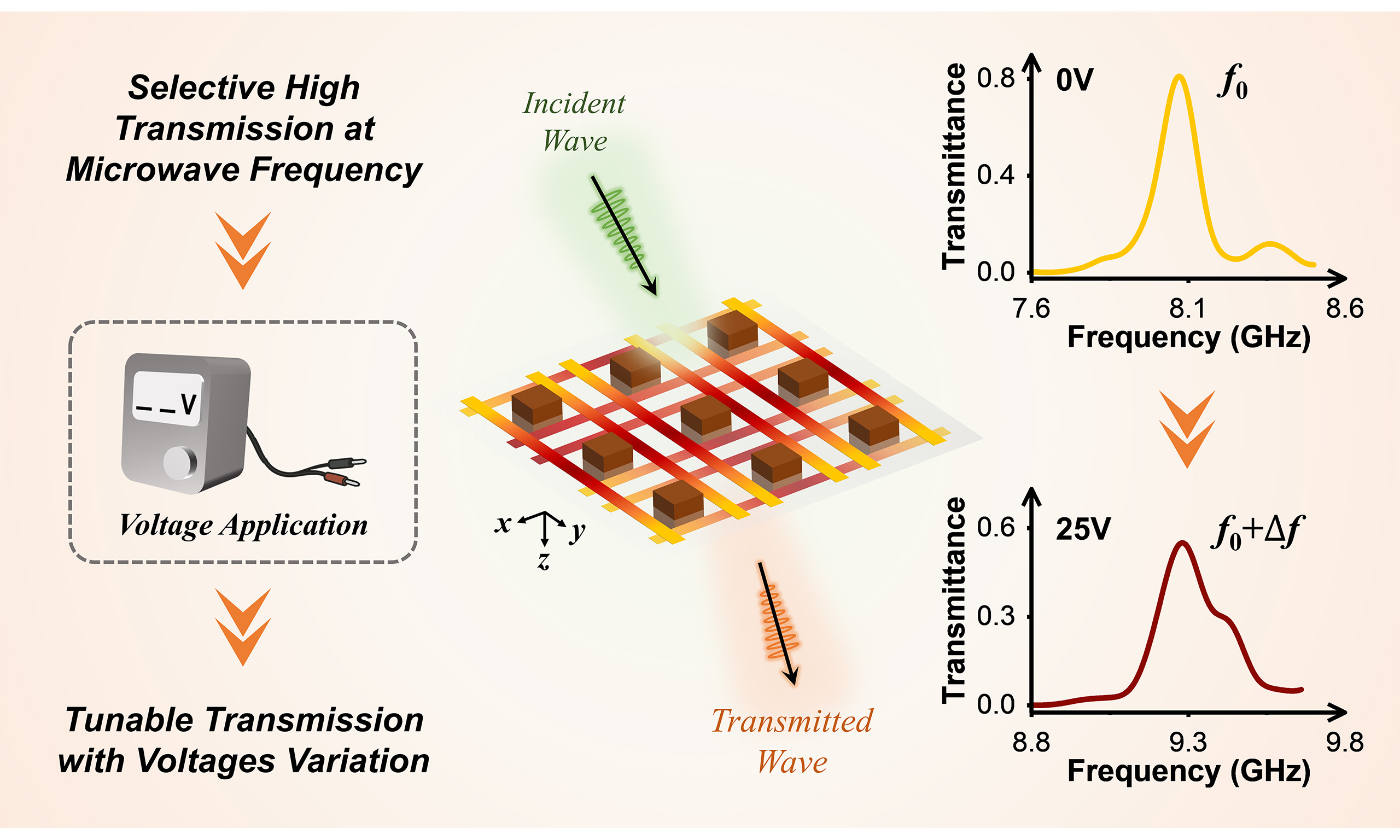
Metamaterials have become an important strategy for enhancing electromagnetic wave transmission, and the realization of transmission tunability has attracted considerable attention in current scientific research. In this study, we propose a transmissive metamaterial consisting of periodically arranged SrTiO3 ceramic particles array and metallic grid array. Taking advantage of the Mie resonance of the dielectric particle array, the dispersion characteristics at the interface are precisely tailored, resulting in high transmission in the microwave frequency range. Furthermore, the temperature-sensitive permittivity of SrTiO3 enables dynamic tuning of the transparency window toward higher frequencies through electrically induced thermal modulation. Both the selective high-transmissive performance and electrical tunability are validated through numerical simulations and experimental measurements. This work provides a convenient route to design tunable metamaterials, offering fascinating possibilities for the development of active microwave windows.
Keywords
INTRODUCTION
Electromagnetic wave transmission has found extensive applications across diverse domains, including wireless communications, radar systems, broadcasting technologies, and microwave remote sensing. The enhancement of transmission constitutes a critical research frontier in electromagnetic wave engineering. Conventional materials are inherently incapable of achieving selective transmission and dynamic modulation. Metamaterials, as an artificial material system capable of electromagnetic wave manipulation, have emerged as a promising solution for transmissive structures. They are artificially designed materials composed of subwavelength structures arranged in specific configurations. Due to the structural design flexibility, metamaterials can exhibit exotic electromagnetic properties unattainable in nature[1-4], and have therefore been applied to numerous novel applications including perfect absorption[5,6], electromagnetic cloaking[7,8], and polarization control[9]. Based on these extraordinary properties and applications, metamaterials are widely used to achieve high transmission, primarily realized through the customized interface dispersion enabled by the specific responses of resonant structures[10,11]. However, conventional metallic resonators exhibit limitations in dynamic modulation under external fields, which has motivated the exploration of tunable methods for dielectric alternatives. Dielectric properties of ceramics are sensitive to external fields, such as heat, static electric, and magnetic fields[12-14], making them promising candidates for constructing active metamaterials.
Methods for actively tuning dielectric metamaterials commonly include electrical and thermal ones. Electrical tunability offers obvious conveniences in practical applications, which can be achieved by integrating with ferroelectric ceramics[15]. By applying the external voltages, the microwave permittivity of the ferroelectric ceramics varies, leading to the shift of the resonant behavior of metamaterials[16,17]. However, such tunability usually requires a large electric field, and its extensions to high-frequency microwave signals are limited due to slow responses of the ferroelectric domain. Temperature field is also one of the external fields to realize tunable performance in metamaterials[18-20]. Based on temperature-dependent characteristics of dielectric materials, thermally tunable metamaterials overcome the limitations of low cutoff frequency, thus enabling their operation to higher frequencies. Nevertheless, achieving precise thermal control on dielectric materials in a compact manner remains challenging.
In this work, we propose a high-transmission metamaterial composed of a ceramic particle array and a metallic grid array, which can be electrically controlled. By applying the external electrical voltage, the metallic grids heated the ceramic particles, which further shifts the resonant behavior of the metamaterials. This results in evident modulations of microwave transmission and frequency selectivity. This method combines the advantages of electrical and thermal tunability, which enables operation in a wider frequency range for the metamaterial and enhances the application feasibility of external fields.
MATERIALS AND METHODS
Mie resonance of dielectric particles provides a practical mechanism for special electromagnetic response in high frequencies. As described by Mie Resonance Theory[21], the effective permittivity (εeff) and permeability (μeff) for high-permittivity spherical particles embedded in a low ε matrix are governed by:
where ε1, μ1, and r are the relative permittivity, relative permeability, and radius of the spherical dielectric particles, ε2 and μ2 are the relative permittivity and relative permeability of the surrounding medium, respectively. Ke = ε2/ε1, Km = μ2/μ1, θ = k0r
Figure 1A demonstrates the core elements of the metamaterial and the basic transmissive strategy. The metamaterial integrates a cubic SrTiO3 particle array with a metallic grid array, where the high transmission arises from tailoring interface dispersion through Mie resonance induced by the ceramic particles, coupled with the reflective properties of the metallic structure. Specifically, at the first-order Mie resonance frequency of SrTiO3 ceramics with a relative permittivity of about 300, the ceramic particle array generates a transmission dip. Concurrently, metallic components exhibit intrinsic reflectivity due to their skin depth being orders of magnitude smaller than the thickness. Thus, we strategically designed the phase of reflected fields produced by two types of components to satisfy the destructive interference condition, thereby achieving selective high transmission. The high-transmission mechanism will be detailed in the RESULTS AND DISCUSSION.
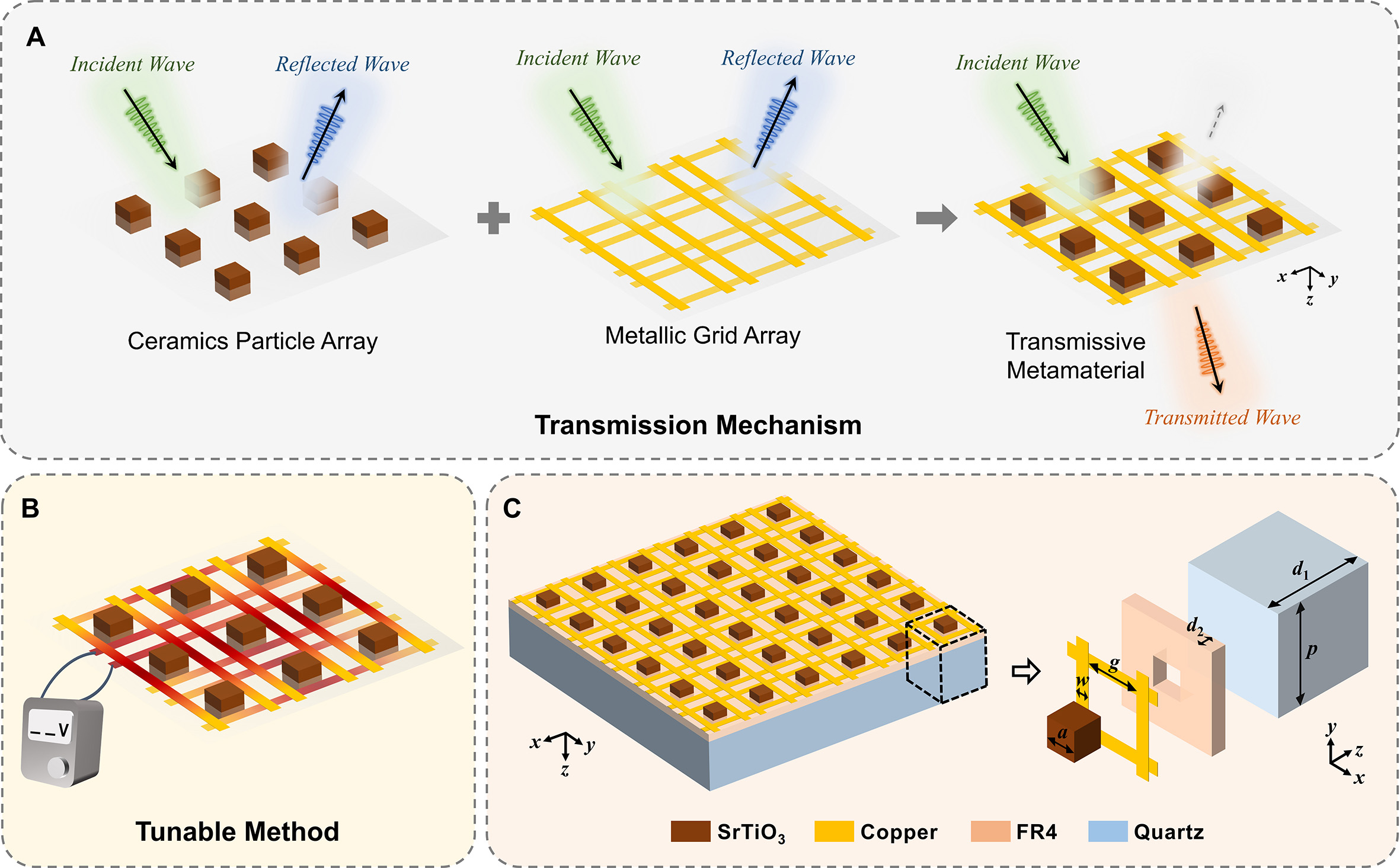
Figure 1. (A) Conceptual schematic diagram of the transmissive mechanism based on destructive interference of dual reflected waves. (B) Conceptual schematic diagram of the practical electrically tuning method. (C) Schematic diagram of the proposed selective high-transmissive metamaterial and dimension annotations of its unit cell.
The electrically tunable metamaterial is realized by using the temperature-dependent permittivity in ceramic materials. For SrTiO3, the relationship between temperature and its relative permittivity can be approximately expressed by the formula[22]:
where ε(T0) and ε(T) represent the relative permittivity of the material at the temperature T0 and T, respectively. Given the inversely correlated relationship between the first-order Mie resonance frequency and the relative permittivity of the ceramic material, this relationship depicts that as the temperature increases, the relative permittivity of SrTiO3 decreases, leading to an increase in the resonance frequency. The practical tuning method is applying a voltage to the metallic grid array [Figure 1B], utilizing the thermal effect of the current to heat the ceramic particles located at the center of the unit cell. By applying various voltages, different amounts of heat induced by the current are generated, resulting in different temperature increments. In addition, it should be noted that σ of metal also exhibits a temperature-dependent decrease. However, its absolute magnitude remains sufficiently high to ensure negligible impact on the electromagnetic response.
Based on the aforementioned principles of high transmittance and tunability, we propose a practically fabricable metamaterial structure, as illustrated in Figure 1C, which is composed of periodically arranged SrTiO3 ceramic cubic particles and a metallic grid array. Each cubic particle has a side length of
The fabrication of the metamaterial sample comprises three main parts. First, SrTiO3 bulk ceramic was processed into specific-sized particles through steps including slicing, grinding, and dicing. Subsequently, the FR4 dielectric plate was machined with 1.8 mm × 1.8 mm square holes for the placement of ceramic particles. The crisscrossing metal grids were patterned on both sides of the copper-clad PI film through photolithography and etching, and the square holes of the same size were then machined into the structure. FR4 dielectric plate, metal grids on PI film, and the SrTiO3 ceramic particles were all manually adhered to the quartz substrate with PI tape. The experimental measurement was carried out via a free-space transmission measurement system. Meanwhile, a vector network analyzer, a multi-channel thermocouple, an infrared thermal imager, and a stopwatch were also used to acquire transmittance spectra, temperature, and modulation time results, respectively.
RESULTS AND DISCUSSION
High-transmission mechanism
For the designed metamaterial, the electromagnetic response was numerically simulated in CST Microwave Studio. The propagation of the incident electromagnetic wave was along the z-axis, and the electric field and magnetic field were polarized along the y- and x-axes, respectively. As evidenced in Figure 2A, the metamaterial exhibits a selective high-transmission response at 8.37 GHz, with a transmittance
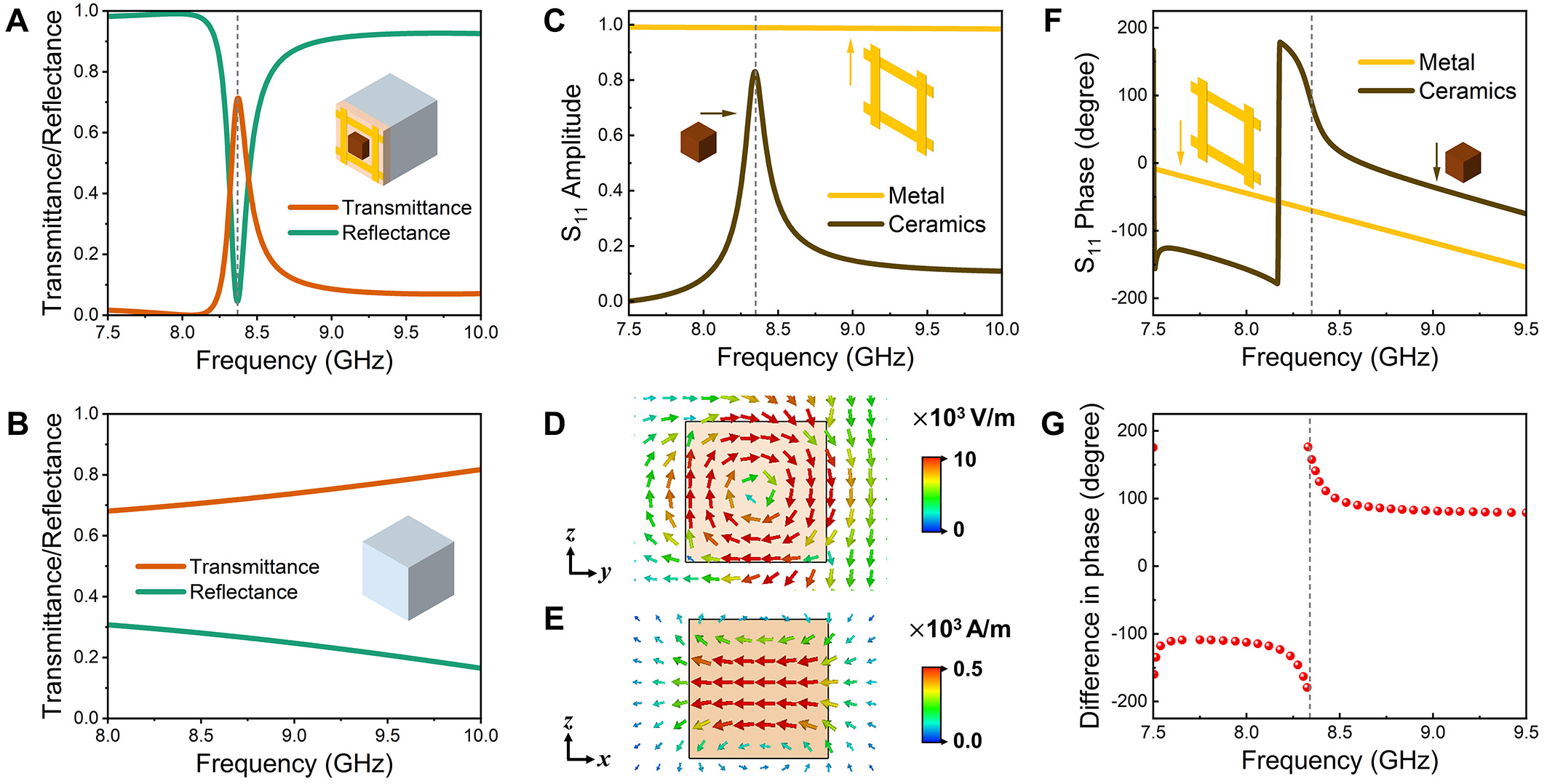
Figure 2. (A) Simulated transmittance and reflectance spectra of the metamaterial. (B) Simulated transmittance and reflectance spectra of the quartz substrate. (C) Simulated S11 amplitudes of the ceramic particle array and metallic grid array individually. (D) Electric field distribution of ceramic particle in the yOz plane. (E) Magnetic field distribution of ceramic particle in the xOz plane. (F) Simulated S11 phases of the ceramic particle array and metallic grid array individually. (G) Difference in the S11 phase between the ceramic particle array and the metallic grid array.
The comprehensive analysis demonstrates that the selective high transmittance arises from the dispersion tailoring of the incident field at the metamaterial interface, facilitated by the ceramic particle array and metallic grid structures. When analyzing these components separately under the identical periodic arrangement, both of them inherently behave as reflectors. As shown in Figure 2C, at 8.35 GHz, the S11 amplitudes for the ceramic particle array and the metallic grids are 0.83 and 0.99, respectively. The abrupt change in S11 of the ceramic particle array is attributed to Mie resonance. At 8.35 GHz, first-order Mie resonance occurs in the ceramic particle array, which behaves as a magnetic dipole (MD). Figure 2D and E illustrate this phenomenon through field distributions of the circular electric field in the yOz plane and the transverse magnetic field in the xOz plane. After combining the ceramic particle together with metallic grid, the overall structure exhibits high transparency, which is contributed to the destructive interference of two reflected waves. The S11 phases of the ceramic particle array and the metallic grid array are shown in
Electrically tunable mechanism
To verify the temperature-dependent characteristics of permittivity in Equation (4), we fabricated a SrTiO3 specimen and measured the variation of its permittivity with temperature, as shown in Figure 3A. At room temperature, the measured real part of the relative permittivity of this ceramic is 325. This value exhibited approximately linear degradation with increasing temperature, declining to 234 at 200 °C. Furthermore, to experimentally validate the aforementioned temperature-dependent Mie resonant frequency of the ceramic particle, we cut the above-mentioned ceramic into cuboid particles (2.4 mm × 2.4 mm × 2.9 mm), and fixed them to the center of the WR-90 waveguide with polyimide tape. The side with a length of 2.9 mm was placed along the direction of electromagnetic wave propagation, and the thermal tuning of resonant frequencies was measured. As demonstrated in Figure 3B, with temperature increasing, the ceramic particle resonated at higher frequencies. Due to technical limitations, the calibration of the measurement was completed at room temperature. However, the waveguide will deform at high temperatures, leading to calibration errors that cause the transmittance measured at 200 °C to be slightly higher than 1 at lower frequencies. Nevertheless, this figure is still persuasive for drawing qualitative conclusions about the dependent relationship between the resonant frequencies of ceramic particles and the temperatures.
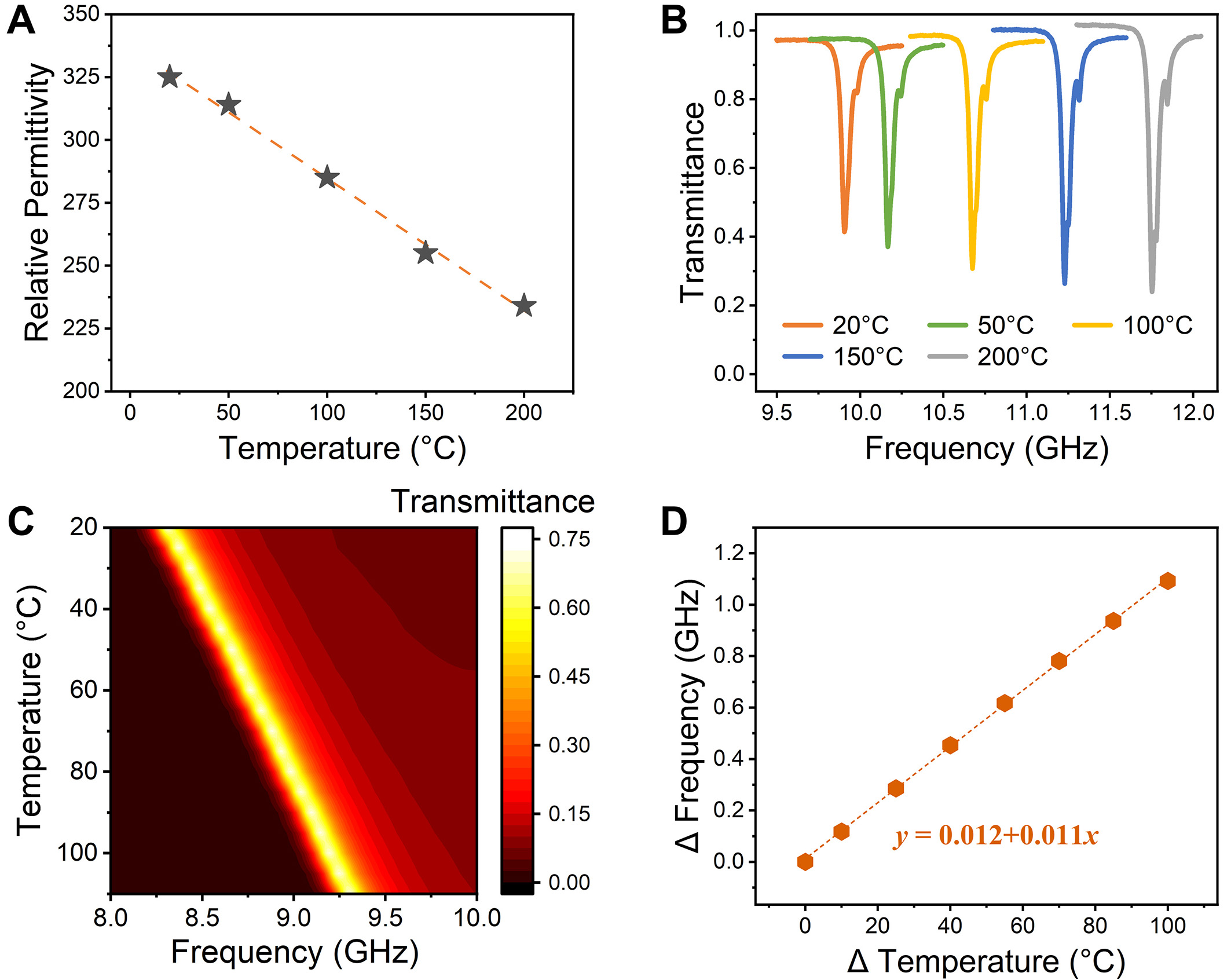
Figure 3. (A) Dependence of measured relative permittivity of SrTiO3 on different temperatures. (B) Measured transmittance spectra of the SrTiO3 particle array with the size of 2.4 mm × 2.4 mm × 2.9 mm. (C) Simulation transmittance of the metamaterial with temperature changing from 20 to 120 °C. (D) Simulation transmission peak frequency shift range (ΔFrequency) with the increment of temperature (ΔTemperature) and corresponding curve fitting results (dashed line).
Correspondingly, the transmission peak frequency of the metamaterial also varies with temperature. Using Equation (4) and taking the ceramic relative permittivity of 280 at room temperature (25 °C) as the baseline for simulation parameters, the relative permittivity at temperatures from 20 to 120 °C was calculated and the simulated transmittance spectra of the metamaterial were shown in Figure 3C. The temperature-sensitive transmission property of this metamaterial is verified. Furthermore, to evaluate the changing rate of transmission peak frequency with temperature increase, we derived the data from Figure 3C and plotted the frequency variation (ΔFrequency) as a function of temperature variation (ΔTemperature) in Figure 3D. Here, the ΔTemperature is defined as the difference between the stable temperature and the initial room temperature, while ΔFrequency represents the change in the transmittance peak frequency between these two temperatures. According to the curve fitting results, the shift of transmission peak frequency exhibits an approximately linear relationship with temperature elevation, demonstrating an average shift rate of
Dynamically tunable results
Figure 4A presents a photograph of the fabricated prototype, which has an overall size of
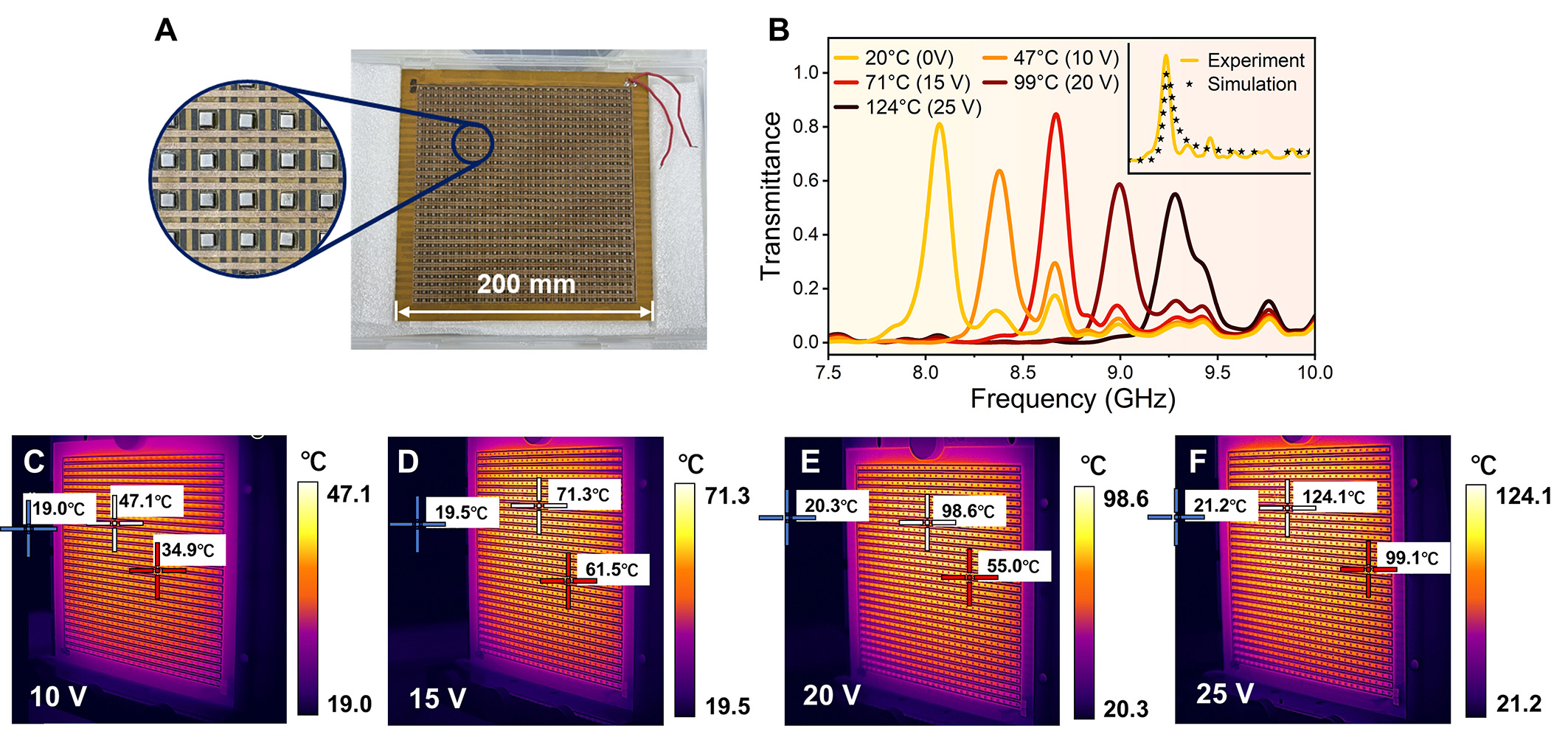
Figure 4. (A) Photograph of the metamaterial sample. (B) Demonstration of measured electrically tunable transmittance spectra at different temperatures (voltages). (Inset: consistent transmittance spectra of experimental results and simulation results at room temperature). Infrared thermography of the stabilized temperature field distribution under (C) 10 V, (D) 15 V, (E) 20 V, and (F) 25 V.
To achieve different temperature increments, voltages of 10, 15, 20, and 25 V were applied. We performed the temperature measurements when the data displayed on the vector network analyzer ceased to fluctuate. Since the metamaterial sample was in direct contact with the air, non-uniform heating was observed during the process of applying voltages [Supplementary Figure 1]. Therefore, the central area of the metamaterial sample, which was aligned with the lens antenna, was selected as the temperature measurement region. Future work could mitigate this non-uniform heating through structural optimization, such as reducing the spacing between metal grids and between metal grids and ceramic particles, and adopting substrates with higher thermal conductivity. Additionally, transferring the experimental measurement to a thermal insulation system would also minimize temperature differences between the metamaterial and surroundings. According to the infrared thermography results, the stable temperatures corresponding to the different voltages were 47, 71, 99, and 124 °C, as shown in Figure 4C-F. It can be observed from Figure 4B that an increase in temperature causes the transmission peak to shift toward higher frequencies. As the voltage increases from 10 to 25 V, the stable transmission peak shifts from 8.07 to 9.28 GHz, achieving a modulation frequency range of 1.21 GHz. Additionally, during the heating process, the metamaterial maintains stable high transmittance characteristics (~ 0.6), with the maximum transmittance
For a more accurate and systematic analysis of the transmittance modulation process, the concept of modulation depth P is introduced as follows. For the process where the transmittance increases from minimum to maximum:
and for the process where the transmittance decreases from maximum to minimum:
In both equations, Tmax and Tmin represent the maximum and the minimum transmittance achievable during the entire modulation process at the given frequency, and T represents the transmittance at the moment to be calculated. At 8.07 GHz, during the heating process at different voltages, transmittance decreases at varying speeds from its maximum to a lower level (as shown in the inset of Figure 5A). The modulation depth as a function of time is shown in Figure 5A, indicating that the higher the voltage, the faster the modulation rate. The fastest modulation depth for P = 90% can be achieved in 0.83 min at the voltage of
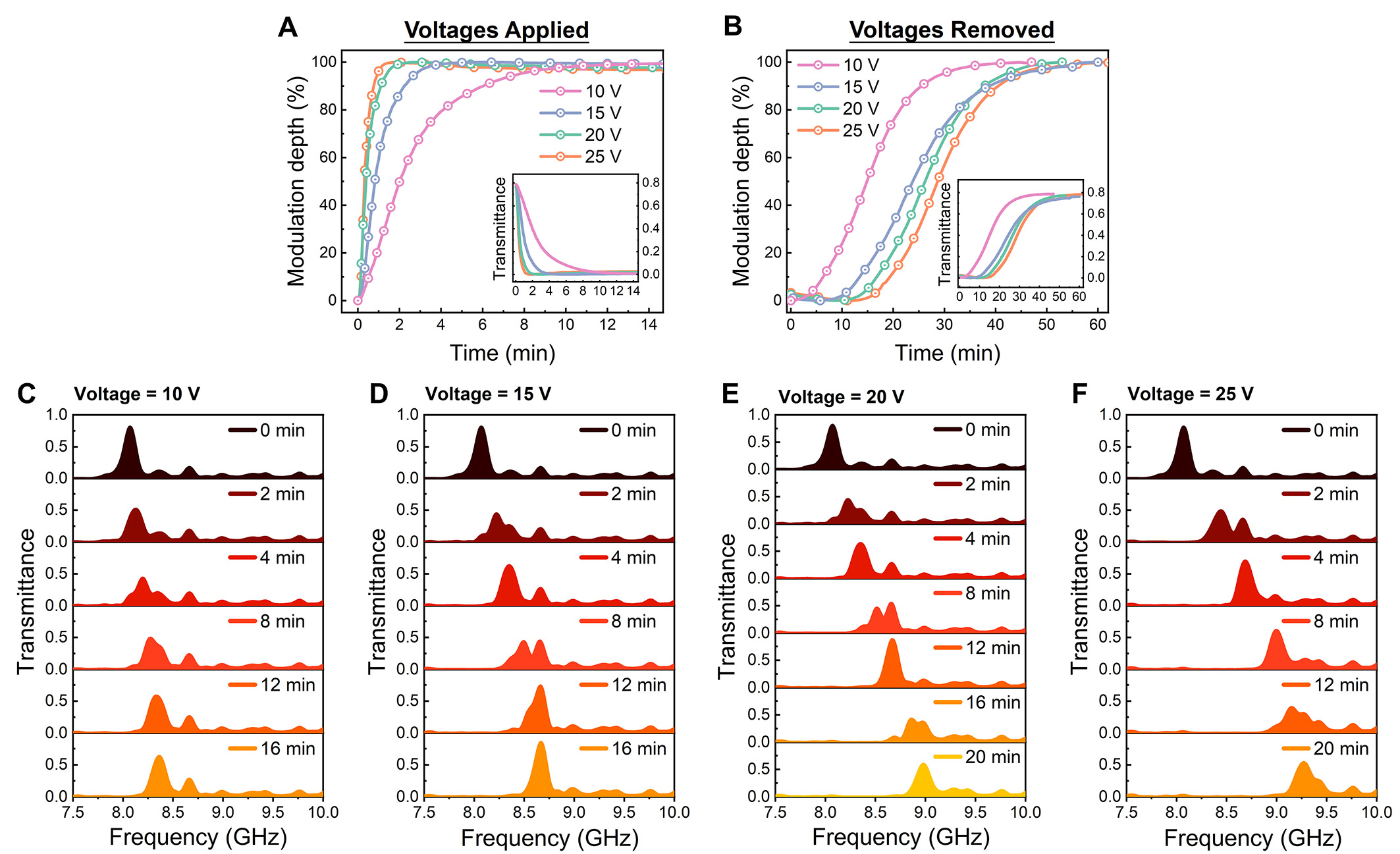
Figure 5. Modulation depth of 8.07 GHz during the process of (A) voltages applied and (B) voltages removed. (Inset: variation of transmittance with time). Demonstration of the dynamic modulation process with voltages of (C) 10 V, (D) 15 V, (E) 20 V, and (F) 25 V.
Figure 5C-F show the dynamic process of transmittance over time at different voltages. For analytical simplicity, the application of 10 V voltage is selected for discussion, and the modulation processes of other voltages are similar. During the process of applying voltage, the high-transmission property at room temperature becomes unstable. The transmittance at 8.07 GHz decreases, and there is a shift toward higher frequency. Eventually, the transmission peak stabilizes at 8.38 GHz, resulting in a frequency shift of
Moreover, we also focused on the oblique incidence characteristics. The simulated transmittance of TE-polarized waves under oblique incidence within 0-60° is shown in Figure 6A. Due to the impedance characteristics of TE mode, the transmittance decreases with increasing incident angle. Since the metamaterial sample is not large enough for the lens antenna, large-angle oblique incidence measurement is not suitable for this work. Therefore, the case of an oblique incidence angle θ = 15° is selected for the experiment, and the schematic diagram of the rotation of the sample holder is shown in Figure 6B. Similarly, voltages of 10, 15, 20, and 25 V are applied, and the different electrical modulation results are plotted in Figure 6C. When electromagnetic waves are incident obliquely, transmission peak frequencies at different voltages remain unchanged and the transmittance maximum decreases, which is consistent with the simulation results. However, the measured transmittance maximum exhibits more significant degradation with the increasing incident angle. This discrepancy arises from fabrication errors, where the precision cutting of cubic ceramic particles and the assembly process could both introduce structural deviations from theoretical models. These imperfections lead to enhanced anisotropy of the metamaterial sample, thereby amplifying the disparity in transmissive characteristics between normal and oblique incidence conditions. Future work will prioritize the fabrication of scaled-up metamaterial samples to enable wide-angle measurements under identical systems. This will enhance comparisons with simulation results at wider incidence angles (±60°) and facilitate systematic analysis of how oblique incidence angles affect the transmission performance of the metamaterial.
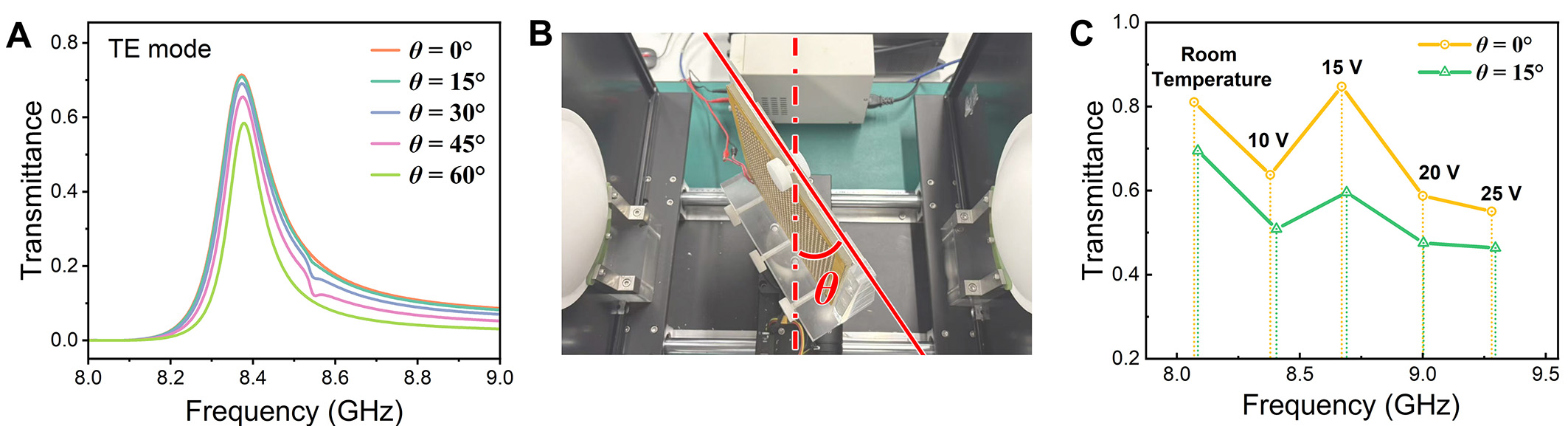
Figure 6. (A) Simulated transmittance spectra of TE-polarized wave under the oblique incidence of 0-60°. (B) Oblique incidence experimental setup. (C) Measured transmittance modulation results (containing maximum transmittance and transmission peak frequency) for normal and oblique incidence.
To demonstrate the exceptional tuning performance of the metamaterial, we compare it with four typical types of electrically tunable metamaterials: graphene-based, varactor diode-based, liquid crystal-based, and BST ceramic-based. Their maximum voltage application, frequency shift ranges, and basic tunable performance are summarized in Table 1.
Summary of several electrically tunable metamaterials
| Metamaterial types | Maximum voltage | Frequency/Wavelength shift range | Tunable performance (variation of reflectance/transmittance) |
| Graphene[24] | 80 V | ~ 1 μm | Reflectance: modulation depth* of 95% at 6 μm, with a variation of about 45% |
| Liquid Crystal[25] | 300 V | 0.7-1.1 THz | Transmittance: variation of 19% at 1 THz |
| Varactor Diode[26] | 12 V | 5.18-5.68 GHz | Reflectance: variation of 90.5% at 5.68 GHz |
| Varactor Diode[27] | 8 V | 3.11-3.27 GHz | Transmittance: variation of 57.5% at 3.11 GHz |
| BST ceramic[15] | ~ 300 V | 9.5-10.5 GHz | Phase manipulation |
| This work | 25 V | 8.07-9.28 GHz | Transmittance: variation of 78.3% (from 81% to 2.7%) at 8.07 GHz |
The graphene-based and liquid crystal-based metamaterials listed are applied in the THz band, so we focus on comparing voltage requirements and tunable performance. In our work, a transmittance variation of nearly 80% is achieved with an applied voltage of only 25 V, while the former ones exhibit relatively small changes in reflectance or transmittance. Varactor-diode-based tunability offers operational convenience with low voltage requirements. Due to the cutoff frequency limitation, this kind of metamaterial is mainly applied in the microwave band, which is comparable in range to our work. The frequency shift range reported in the listed studies does not exceed 0.5 GHz, whereas our design achieves a shift of up to
CONCLUSIONS
In conclusion, we have demonstrated a transmissive dielectric metamaterial composed of periodic SrTiO3 Mie resonators and metallic grid arrays, capable of electrically tunable electromagnetic responses in the microwave frequency range. By leveraging destructive interference between reflected waves from two scattering bodies, the metamaterial achieves selective high transmission. The temperature-dependent permittivity of the ceramic material enables voltage application to the metallic grid, where the thermal effect of the current heats the ceramic particles. This leads to a frequency shift of both the Mie resonance and the transmission peak, enabling dynamical electrical tunability of the metamaterial’s electromagnetic properties. Upon applying an external voltage of 25 V, the microwave transmission was modulated by 0.75 with a frequency shift of 1.21 GHz in less than one minute. This approach paves a promising path for the development of active microwave windows with exceptional performances and scalability, holding significant potential for applications in wireless communications, radar, and other microwave systems.
DECLARATIONS
Authors’ contributions
Conception and experimental design, data interpretation: Liu, L.; Wang, X.
Data acquisition and analysis: Liu, L.; Wang, X.; Wang, Y.; Zhao, R.; Jin, Y.
Manuscript writing and revision: Liu, L.; Wang, X.; Wen, Y.
Supervision: Li, B.; Wen, Y.; Zhou, J.
Availability of data and materials
The data that support the findings of this study are available from the corresponding author upon reasonable request.
Financial support and sponsorship
This work was supported by the National Key R&D Program of China (2022YFB3806000), the Basic Science Center Project of NSFC (52388201), National Natural Science Foundation of China (52332006), and Beijing Natural Science Foundation (Z240008).
Conflicts of interest
All authors declared that there are no conflicts of interest.
Ethical approval and consent to participate
Not applicable.
Consent for publication
Not applicable.
Copyright
© The Author(s) 2026.
Supplementary Materials
REFERENCES
1. Kim, J.; Kim, B.; Kim, B.; Jeon, H.; Kim, S. K. Magnetic-field controlled on-off switchable non-reciprocal negative refractive index in non-Hermitian photon-magnon hybrid systems. Nat. Commun. 2024, 15, 9014.
2. Liu, Y.; Dong, T.; Qin, X.; et al. High-permittivity ceramics enabled highly homogeneous zero-index metamaterials for high-directivity antennas and beyond. eLight 2024, 4, 59.
3. Wen, Y.; Zhou, J. Artificial nonlinearity generated from electromagnetic coupling metamolecule. Phys. Rev. Lett. 2017, 118, 167401.
4. Qin, H.; Su, Z.; Zhang, Z.; et al. Disorder-assisted real-momentum topological photonic crystal. Nature 2025, 639, 602-8.
5. Wang, J.; Weber, T.; Aigner, A.; Maier, S. A.; Tittl, A. Mirror-coupled plasmonic bound states in the continuum for tunable perfect absorption. Laser. Photon. Rev. 2023, 17, 2300294.
6. Landy, N. I.; Sajuyigbe, S.; Mock, J. J.; Smith, D. R.; Padilla, W. J. Perfect metamaterial absorber. Phys. Rev. Lett. 2008, 100, 207402.
7. Soric, J.; Ra'di, Y.; Farfan, D.; Alù, A. Radio-transparent dipole antenna based on a metasurface cloak. Nat. Commun. 2022, 13, 1114.
8. Xu, H. X.; Hu, G.; Wang, Y.; et al. Polarization-insensitive 3D conformal-skin metasurface cloak. Light. Sci. Appl. 2021, 10, 75.
9. Yue, Z.; Li, J.; Liu, J.; et al. Versatile polarization conversion and wavefront shaping based on fully phase-modulated metasurface with complex amplitude modulation. Adv. Opt. Mater. 2022, 10, 2200733.
10. Zhao, Q.; Du, B.; Kang, L.; et al. Tunable negative permeability in an isotropic dielectric composite. Appl. Phys. Lett. 2008, 92, 051106.
11. Wang, X.; Zhou, J. Fano resonance in a subwavelength Mie-based metamolecule with split ring resonator. Appl. Phys. Lett. 2017, 110, 254101.
12. Li, R.; Xu, D.; Avdeev, M.; et al. Ultralow loss and high tunability in a non-perovskite relaxor ferroelectric. Adv. Funct. Mater. 2023, 33, 2210709.
13. Sun, X.; Fu, Q.; Fan, Y.; et al. Thermally controllable Mie resonances in a water-based metamaterial. Sci. Rep. 2019, 9, 5417.
14. Wang, Q.; Zeng, L.; Lei, M.; Bi, K. Tunable metamaterial bandstop filter based on ferromagnetic resonance. AIP. Adv. 2015, 5, 077145.
15. Su, Z.; Zhao, Q.; Song, K.; Zhao, X.; Yin, J. Electrically tunable metasurface based on Mie-type dielectric resonators. Sci. Rep. 2017, 7, 43026.
16. Weigand, H. C.; Talts, ÜL.; Vieli, A. L.; Vogler-Neuling, V. V.; Nardi, A.; Grange, R. Nanoimprinting solution-derived barium titanate for electro-optic metasurfaces. Nano. Lett. 2024, 24, 5536-42.
17. Karvounis, A.; Vogler-Neuling, V. V.; Richter, F. U.; Dénervaud, E.; Timofeeva, M.; Grange, R. Electro-optic metasurfaces based on barium titanate nanoparticle films. Adv. Opt. Mater. 2020, 8, 2000623.
18. Liu, X.; Ren, Z.; Yang, T.; Chen, L.; Wang, Q.; Zhou, J. Tunable metamaterial absorber based on resonant strontium titanate artificial atoms. J. Mater. Sci. Technol. 2021, 62, 249-53.
19. Zhao, Y.; Li, B.; Lan, C.; Bi, K.; Qu, Z. Tunable silicon-based all-dielectric metamaterials with strontium titanate thin film in terahertz range. Opt. Express. 2017, 25, 22158-63.
20. He, X.; Lin, F.; Liu, F.; Shi, W. Tunable strontium titanate terahertz all-dielectric metamaterials. J. Phys. D. Appl. Phys. 2020, 53, 155105.
21. Lewin, L. The electrical constants of a material loaded with spherical particles. J. Inst. Electr. Eng. 1947, 94, 65-8.
22. Kell, R. C.; Greenham, A. C.; Olds, G. C. E. High-permittivity temperature-stable ceramic dielectrics with low microwave loss. J. Am. Ceram. Soc. 1973, 56, 352-4.
23. Rupprecht, G.; Bell, R. O. Microwave losses in strontium titanate above the phase transition. Phys. Rev. 1962, 125, 1915-20.
24. Yao, Y.; Shankar, R.; Kats, M. A.; et al. Electrically tunable metasurface perfect absorbers for ultrathin mid-infrared optical modulators. Nano. Lett. 2014, 14, 6526-32.
25. Kowerdziej, R.; Olifierczuk, M.; Parka, J.; Wróbel, J. Terahertz characterization of tunable metamaterial based on electrically controlled nematic liquid crystal. Appl. Phys. Lett. 2014, 105, 022908.
26. Zhu, J.; Li, D.; Yan, S.; Cai, Y.; Liu, Q. H.; Lin, T. Tunable microwave metamaterial absorbers using varactor-loaded split loops. Europhys. Lett. 2015, 112, 54002.
Cite This Article
 Open Access
How to Cite
Download Citation
Export Citation File:
Type of Import
Tips on Downloading Citation
Citation Manager File Format
Type of Import
Direct Import: When the Direct Import option is selected (the default state), a dialogue box will give you the option to Save or Open the downloaded citation data. Choosing Open will either launch your citation manager or give you a choice of applications with which to use the metadata. The Save option saves the file locally for later use.
Indirect Import: When the Indirect Import option is selected, the metadata is displayed and may be copied and pasted as needed.
About This Article
Special Topic
Copyright

Data & Comments
Data
0










Comments
Comments must be written in English. Spam, offensive content, impersonation, and private information will not be permitted. If any comment is reported and identified as inappropriate content by OAE staff, the comment will be removed without notice. If you have any queries or need any help, please contact us at [email protected].