


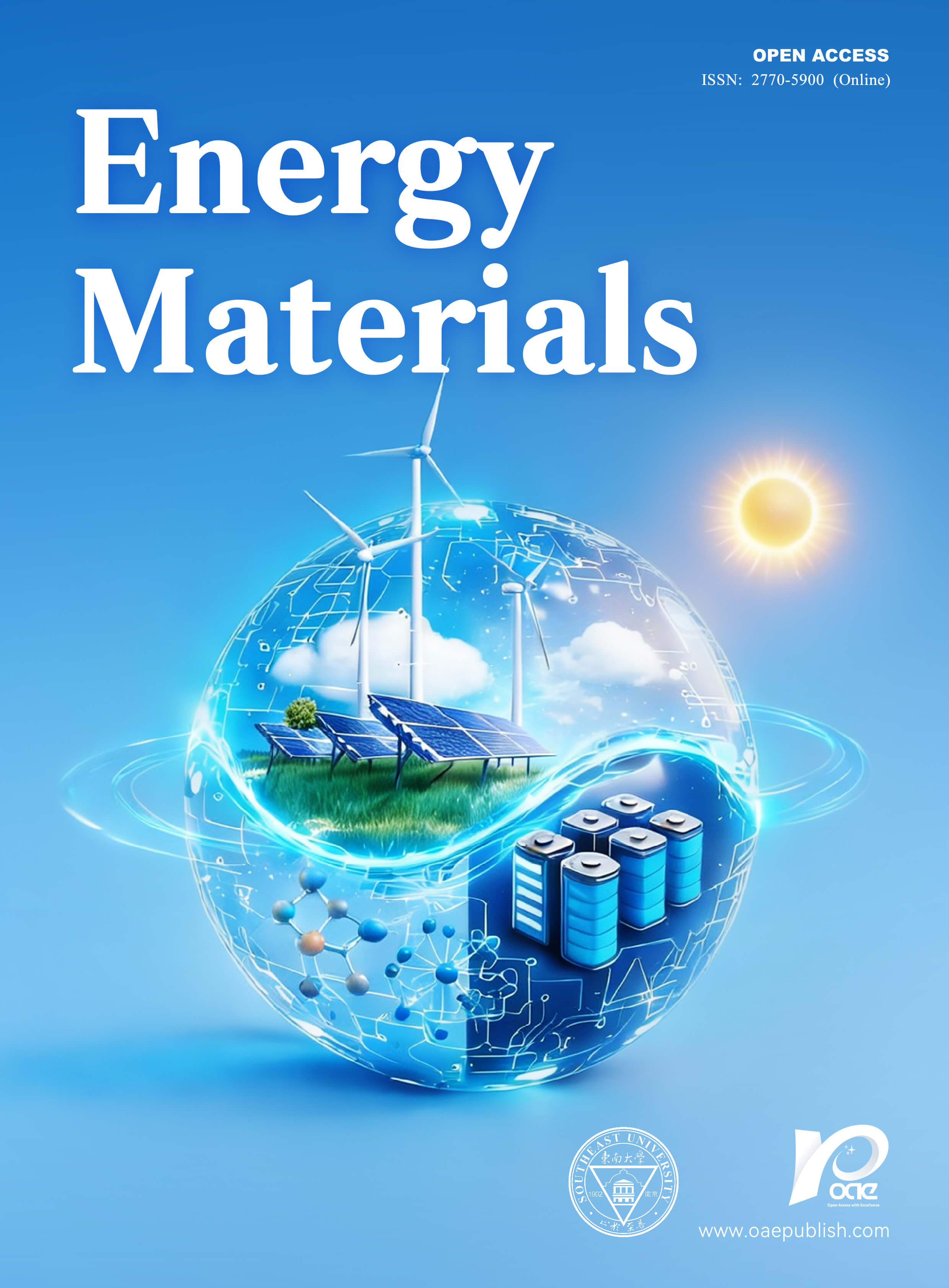
Integrating machine learning in catalyst design for sustainable hydrogen from plastic waste
 0
0 Abstract
The escalating plastic waste crisis has heightened the need for sustainable, scalable valorization strategies. Catalytic conversion of plastic waste into hydrogen offers dual benefits: waste mitigation and clean fuel generation. However, the variability of plastic feedstock and the complexity of reaction conditions pose significant challenges for designing efficient catalysts. Recent advances in artificial intelligence (AI) and machine learning (ML) are increasingly being employed to optimize process conditions for hydrogen production via electrolysis and traditional thermochemical pathways. ML models, such as neural networks and ensemble methods, have demonstrated high accuracy in predicting hydrogen yields and optimizing parameters for the gasification and pyrolysis of plastic waste. ML is also opening new avenues for accelerating catalyst discovery by enabling rapid prediction of catalyst performance, reaction pathways, and surface interactions. Computational tools and data-driven descriptors are being used to interpret complex catalytic systems and guide the design of more effective catalysts. However, their application to plastic-derived intermediates remains limited. Despite progress, significant gaps persist in applying ML to the unique challenges of plastic waste conversion, including catalyst discovery and the handling of heterogeneous feedstocks. Key limitations include the need for larger, high-quality datasets, improved model interpretability and the integration of domain-specific knowledge with advanced simulation techniques. In this review we critically summarized the current landscape of AI-driven catalyst design focusing on hydrogen production from plastic waste. It identified methodological and practical limitations and proposed a roadmap for integrating AI, domain-specific data, and catalysis simulations to unlock new catalysts for sustainable hydrogen production.
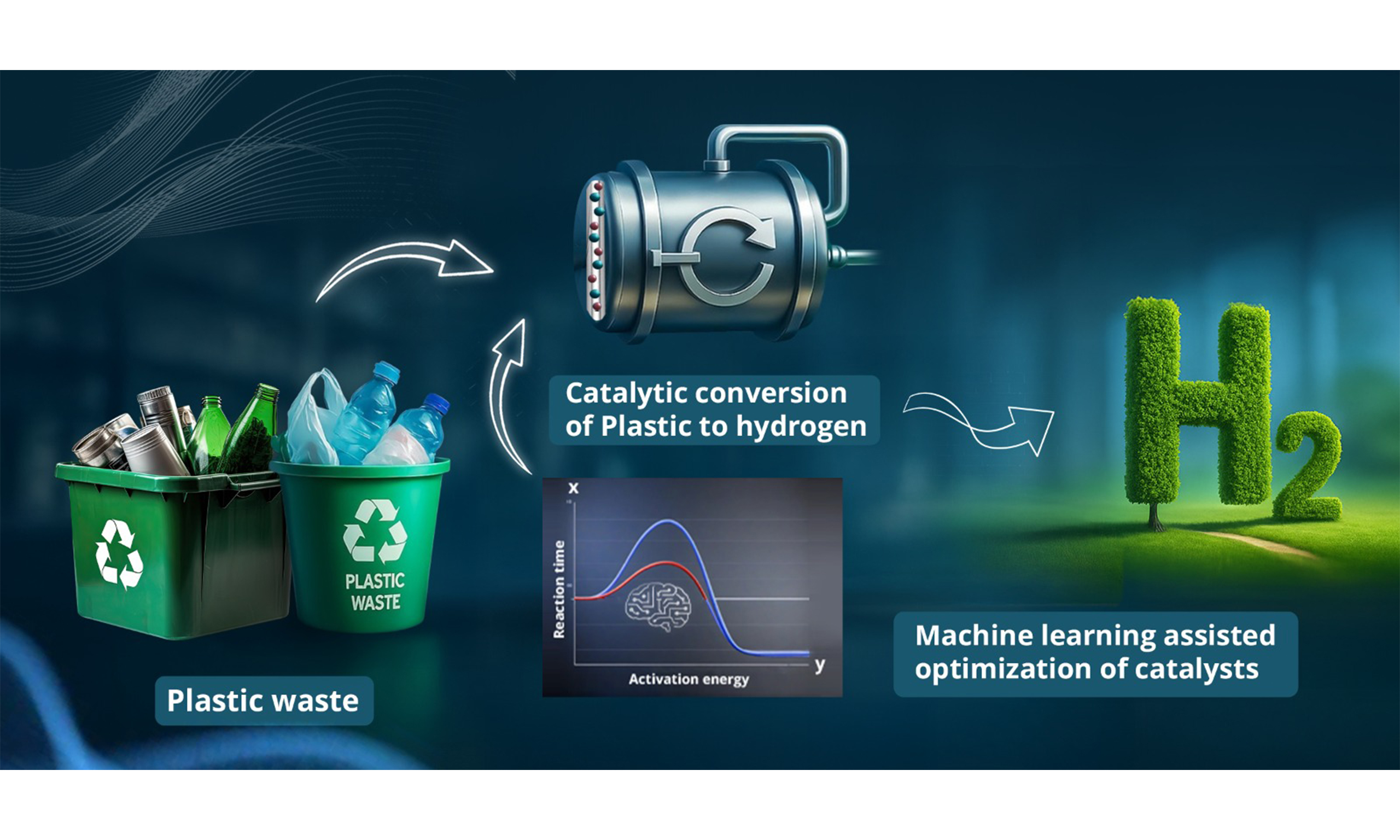
Keywords
INTRODUCTION
Plastic waste has emerged as a critical environmental challenge[1]. Between 2000 and 2019, global plastic production doubled reaching 460 Mt, while plastic waste generation rose to 353 Mt. However, only 9% of plastic waste was recycled globally, with the majority either incinerated, landfilled or released into the environment through uncontrolled disposal methods[2]. The packaging sector is the largest contributor to this volume, accounting for nearly 44% of plastic usage as of 2021[3]. Rapid industrialization and urbanization have further exacerbated plastic dependency, as plastics remain favored for their affordability, durability, and versatility in industrial, medical and consumer sectors[4,5]. The widespread presence of plastic waste is contributing to growing environmental and human health hazards[6-9]. Traditional disposal techniques of plastic waste have failed to provide a sustainable solution. Therefore, researchers have increasingly focused on upcycling strategies using various technologies, particularly thermochemical and catalytic conversion processes, to produce value-added products such as aromatic char, hydrogen, synthesis gas, and bio-crude oil[10-12].
Among these, hydrogen has emerged as a particularly promising output, which is a clean and sustainable fuel with the potential to meet global energy demands and address environmental challenges[13]. Hydrogen demand is projected to reach 73-158 Mt by 2030 and up to 568 Mt by 2050, depending on its adoption across key sectors[14]. Ongoing low-emission projects, driven by electrolysis, are expected to exceed 20 million metric tons annually by 2030[15,16]. Traditional grey H2 production generated via fossil fuels contributes significantly to global warming[17,18]. Therefore, there is an urgent need to develop environmentally friendly methodologies such as green and blue H2 generation routes[19].
Consequently, plastic-to-hydrogen processes, such as pyrolysis, gasification, reforming, or photoreforming are receiving growing research attention[19]. Emerging thermochemical and photoreforming techniques that utilize plastic waste as feedstock represent a low-carbon alternative with high theoretical hydrogen yields[20]. Catalysts play a central role in these processes by lowering activation energy and increasing selectivity toward hydrogen formation[21]. Nickel-based, ceria-supported, and high-entropy oxides have demonstrated significant potential as catalysts in improving the conversion efficiency of plastic-derived hydrocarbons into hydrogen[22]. Recently, single-atom catalysts (SACs) and metal-organic frameworks have emerged as next-generation materials, offering superior stability and activity in harsh reforming conditions[23]. In addition, photocatalytic strategies using high-entropy oxides (HEOs) and oxynitrides enable simultaneous plastic degradation and hydrogen generation under solar illumination[24]. Advanced schemes employing high-entropy oxynitride (HEON) catalysts further improve photoreforming efficiency via bandgap tuning and charge-carrier control[25].
Simultaneously, artificial intelligence (AI) and machine learning (ML) have transformed catalyst discovery by enabling predictive modeling of reaction pathways and material properties[26]. Advanced ML models such as random forests (RFs), deep neural networks, and Gaussian process regression are being trained on large materials datasets to identify promising catalytic structures[27]. Bayesian optimization has been effective in navigating high-dimensional catalyst composition spaces with minimal experimental trials[28]. Machine learning approaches have been employed to optimize catalyst performance and gasification conditions in plastic-biomass co-feed systems[29]. Process modeling in Aspen Plus shows that integrated gasification and steam methane reforming (SMR) yields higher hydrogen output, greater conversion efficiency, and lower carbon dioxide (CO2) emissions compared to base cases[30]. A state-of-the-art review highlights how ML models, built from reactor feed and product data, can predict key operating parameters and be used for design, real-time optimization, and control of reactors[31]. ML workflows combining large language model-driven literature mining and Bayesian optimization have recently accelerated catalyst discovery and synthesis protocols[32]. Ensemble learning models have achieved exceptional predictive accuracy (R2 ≈ 0.98) for electrocatalytic performance in hydrogen evolution reaction (HER)[33]. In this context, innovative technologies that convert plastic waste into hydrogen via catalytic processes present a dual advantage: mitigating environmental plastic pollution while contributing to sustainable energy production. Despite these advances, AI-guided catalyst design tailored specifically for plastic-derived hydrogen production remains fragmented and underexplored.
This review provides a comprehensive overview of catalyst development for sustainable hydrogen production from plastic waste, emphasizing the integration of waste-to-energy conversion with clean hydrogen generation. By utilizing carbon-rich plastics as feedstock, this emerging approach can not only address the plastic pollution crisis but also provide a new source of clean energy. The review systematically summarizes the synthesis and performance of various catalytic systems, with a particular focus on recent (2020-2025) advances in electrocatalysts and photocatalysts that enhance efficiency, cost-effectiveness, and environmental sustainability. Furthermore, it highlights the growing role of AI and ML in accelerating catalyst discovery, optimizing reaction conditions, and enabling predictive modeling of complex reaction networks. Through this integrated perspective, the review aims to establish a coherent understanding of ML-guided catalyst design for plastic-to-hydrogen conversion. It also outlines the key challenges, opportunities, and future directions toward scalable, data-driven, and environmentally benign hydrogen production technologies.
LITERATURE MAPPING METHODOLOGY
Bibliometric visualizations and insights
A systematic bibliometric analysis was conducted using the Scopus database[34] to explore the research landscape on catalyst optimization and hydrogen production from plastic waste integrated with AI and machine learning techniques. Searches were performed across the Title, Abstract, and Keywords fields using multiple Boolean combinations: (a) two-keyword queries (plastic waste AND hydrogen production), (b) three-keyword queries combining plastics, hydrogen production, and catalyst optimization, and (c) four-keyword queries integrating hydrogen production, plastic waste, catalysts/electrocatalysts, and AI/ML-related terms. Publications were filtered for the period 2000-2025, and bibliometric charts were generated to analyze publication trends and document types [Figure 1].
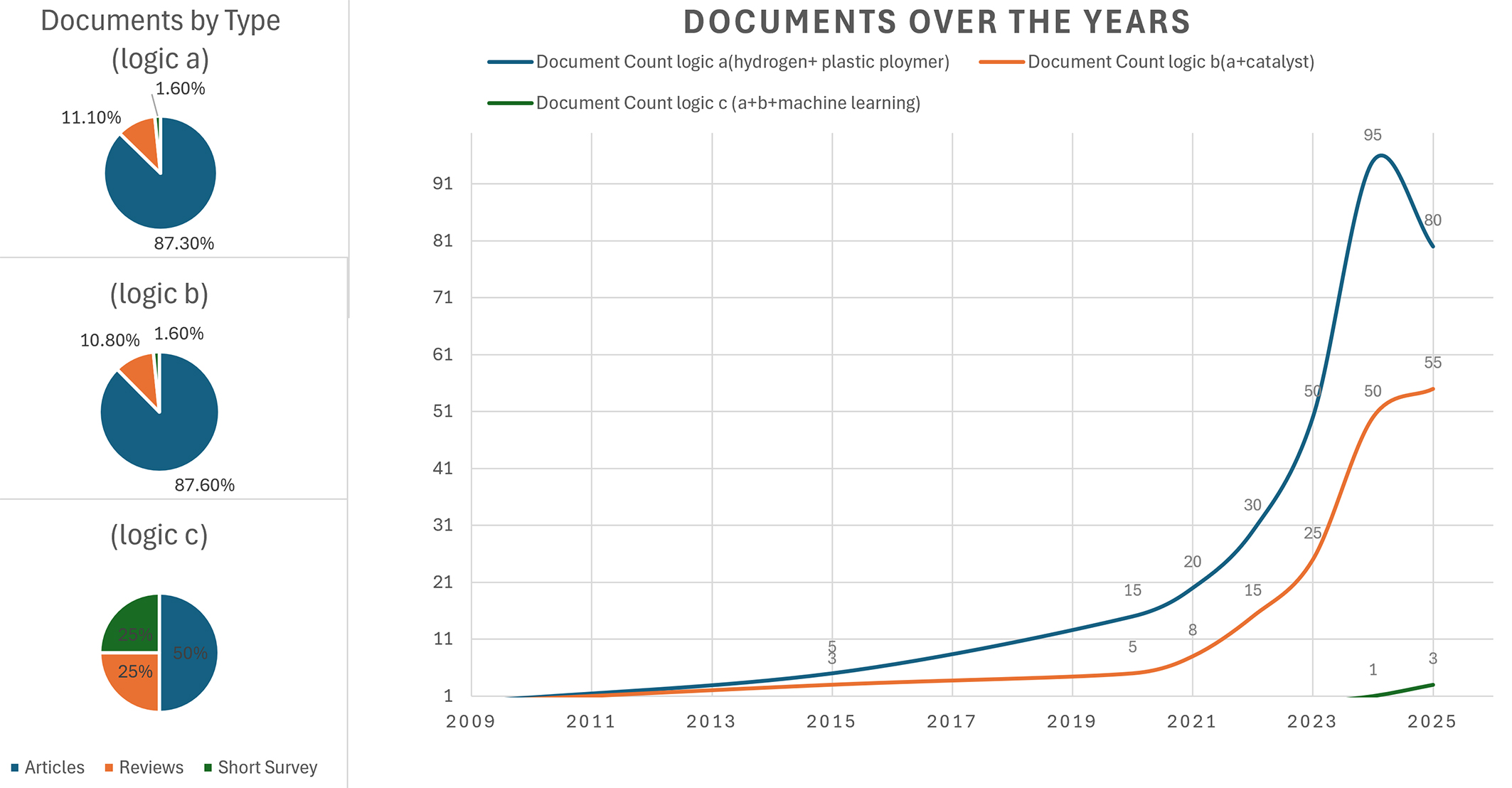
Figure 1. Bibliometric analysis of research scope with keyword logic using the Scopus database.
The results indicate a significant increase in publications after 2020, particularly for search logics (a) and (b), reflecting growing interest in thermocatalytic hydrogen production from plastic waste. In contrast, the most specific query (logic c), which integrates plastic waste, hydrogen production, catalyst optimization, and AI/ML, returned only a very limited number of publications. Notably, only one review article in Scopus fully satisfied these criteria[35]. Although it addresses catalytic hydrogen generation from plastic waste, the study primarily focuses on thermocatalytic process optimization and does not provide detailed coverage of AI models, catalyst descriptors, or predictive catalyst design frameworks. A supplementary search in Web of Science identified one additional 2025 review with a narrower focus on biochar-based catalysts for plastic-to-fuel conversion, with limited attention to hydrogen production and no discussion of AI-assisted catalyst optimization. These findings highlight a clear research gap that this review aims to address.
Current research status and contribution of this review
Based on an in-depth literature review, the most pertinent studies were identified, and the scope and contribution of our study are presented in Table 1.
Comparison of previous review articles
| Reference | Year | Focus area | Catalyst system covered | AI/ML methods used or AI/ML techniques | Hydrogen pathway (electrolysis, gasification, etc.) | Discussed plastic to hydrogen |
| [12] | 2024 | Reviews recent advances in plastic-to-hydrogen conversion via thermochemical, photocatalytic, and electrocatalytic routes are analyzed | Ni-based, Co-based, metal oxides, zeolite | x | Pyrolysis, gasification, photoreforming, and electrochemical reforming of plastic waste | ✓ |
| [36] | 2025 | Systematically examine the role of AI in optimizing hydrogen production processes, improving the safety and efficiency of storage systems, and enhancing transportation logistics through real-time monitoring and route optimization | x | Examine AI frameworks like predictive modeling, digital twins, robotics control strategies, and real-time system optimization | Electrolysis, Production Process Optimization, storage logistics, and transportation monitoring using AI/robotics | x |
| [37] | 2025 | Examines the progress in electrocatalytic hydrogen production technology | Noble metal electrocatalyst, Non-noble metal electrocatalyst | ML, DL, Bayesian optimization | Electrocatalytic water splitting (HER and OER) | x |
| [29] | 2024 | Examines the potential of gasifying plastic waste and biomass as innovative, sustainable sources for hydrogen production | Ni/CeO 2-ZrO 2, Ni/Al2O3 | Machine Learning, Gasification | Electrolysis, Steam Methane Reforming, Biomass Gasification | ✓ |
| [38] | 2024 | Use of hydrogen donor solvents, the economic efficiency of the liquefaction process | x | x | Liquefaction | x |
| [19] | 2024 | Research on thermochemical conversion of plastics and tires, providing key inferences regarding yield optimization, technical hurdles, and techno-economic viability | Ni, Fe and Ce-doped | x | Gasification and Pyrolysis | ✓ |
| [39] | 2025 | The integration of AI in plastic waste recycling and conversion, with a focus on identifying characterization, thermochemical conversion, and bioconversion technologies | x | Convolutional Neural Networks (CNN), Artificial intelligence, Artificial neural network | Thermochemical conversion, Biological conversion | * |
| [35] | 2025 | Plastic waste-to-hydrogen via thermocatalytic routes | General catalyst discussion in review context | * | Pyrolysis, gasification, microwave reforming, steam reforming (thermochemical) | ✓ |
| [40] | 2025 | Recent advances and concepts in electrocatalytic upcycling of plastic waste | electrocatalyst systems (e.g., noble metals, transitionmetal hydroxides/phosphides/oxides) discussed in a review context | x | Electrocatalysis / electrolysistype processes | ✓ |
| This work | 2026 | Integrating machine learning in catalyst design for sustainable hydrogen from plastic waste | All catalysts with focus on electrocatalysts | ✓ | ✓ | ✓ |
Based on the above literature analysis and to the best of our knowledge, no existing review provides a comprehensive synthesis that specifically integrates AI-guided catalyst design with plastic-to-hydrogen conversion systems. Therefore, this review presents a systematic survey of recent advances in AI-assisted catalyst development for hydrogen production from plastic waste. The following key contributions are made in this review:
• We reviewed and categorized existing literature on plastic-to-hydrogen conversion technologies, including thermochemical, photocatalytic, and electrocatalytic approaches.
• We presented a structured comparison of traditional, emerging, and novel catalytic systems, with emphasis on performance metrics and design mechanisms.
• We provided a detailed overview of AI and machine learning models (e.g., support vector machine (SVM), graph neural network (GNN), artificial neural network (ANN), Bayesian) applied to catalyst discovery, optimization, and descriptor learning.
• We discussed major challenges including catalyst deactivation, data scarcity, and scalability issues, while emphasizing the need for interpretable AI and domain-specific datasets.
• We integrated perspectives on sustainability and lifecycle analysis to bridge the gap between lab-scale research and industrial adoption.
• We outlined open research directions and advocate for cross-disciplinary collaboration to accelerate the development of scalable and eco-efficient hydrogen systems.
PLASTIC WASTE AND CONVERSION TECHNIQUES
Environmental burden of plastic waste
Plastics are widely used for their durability, light weight, ease of processing, and low production cost. However, their stable and non-biodegradable nature makes post-consumer plastic waste a major environmental concern. Most plastic products are used only once before disposal, resulting in rapidly increasing waste generation worldwide[41]. The most common polymers present in plastic waste streams include polyethylene terephthalate (PET), polyethylene (PE) [High-density polyethylene (HDPE) and low-density polyethylene (LDPE)], Polypropylene (PP), polyvinyl chloride (PVC), and Polystyrene (PS)[42]. These materials are extensively used in packaging, consumer goods, and industrial applications and therefore contribute significantly to global plastic waste accumulation[43]. The distribution and representative applications of major plastic polymers are illustrated in Figure 2.
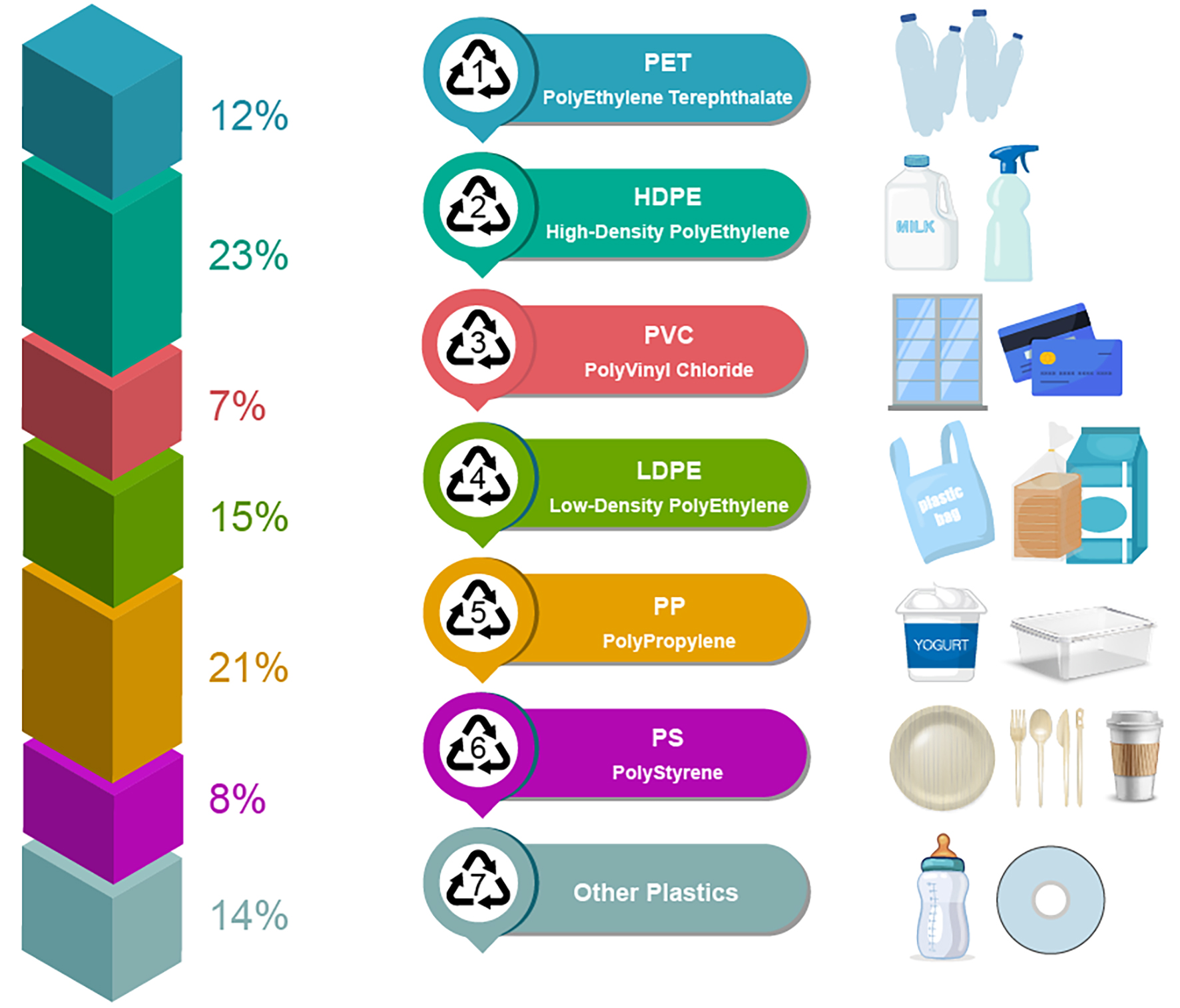
Figure 2. Percentage distribution of plastic polymers in mixed plastic waste (left) and representative types and applications of each polymer (right).
Globally, more than 300 million tons of plastic waste is generated annually, with a substantial portion accumulating in landfills or entering terrestrial and marine ecosystems[44]. Trends in global plastic production, waste generation, and management practices are summarized in Figure 3, highlighting the continuous growth in plastic production and the relatively small proportion recycled. Persistent plastics gradually fragment into micro and nanoplastics, contaminating air, water, and soil and posing risks to ecosystems and human health[47-49]. Despite growing awareness, global recycling rates remain below 10%, emphasizing the urgent need for improved waste management strategies and sustainable plastic conversion technologies[50-52]. Effective mitigation of the environmental and health burdens of plastic waste requires comprehensive policy, technological innovation, and global cooperation.
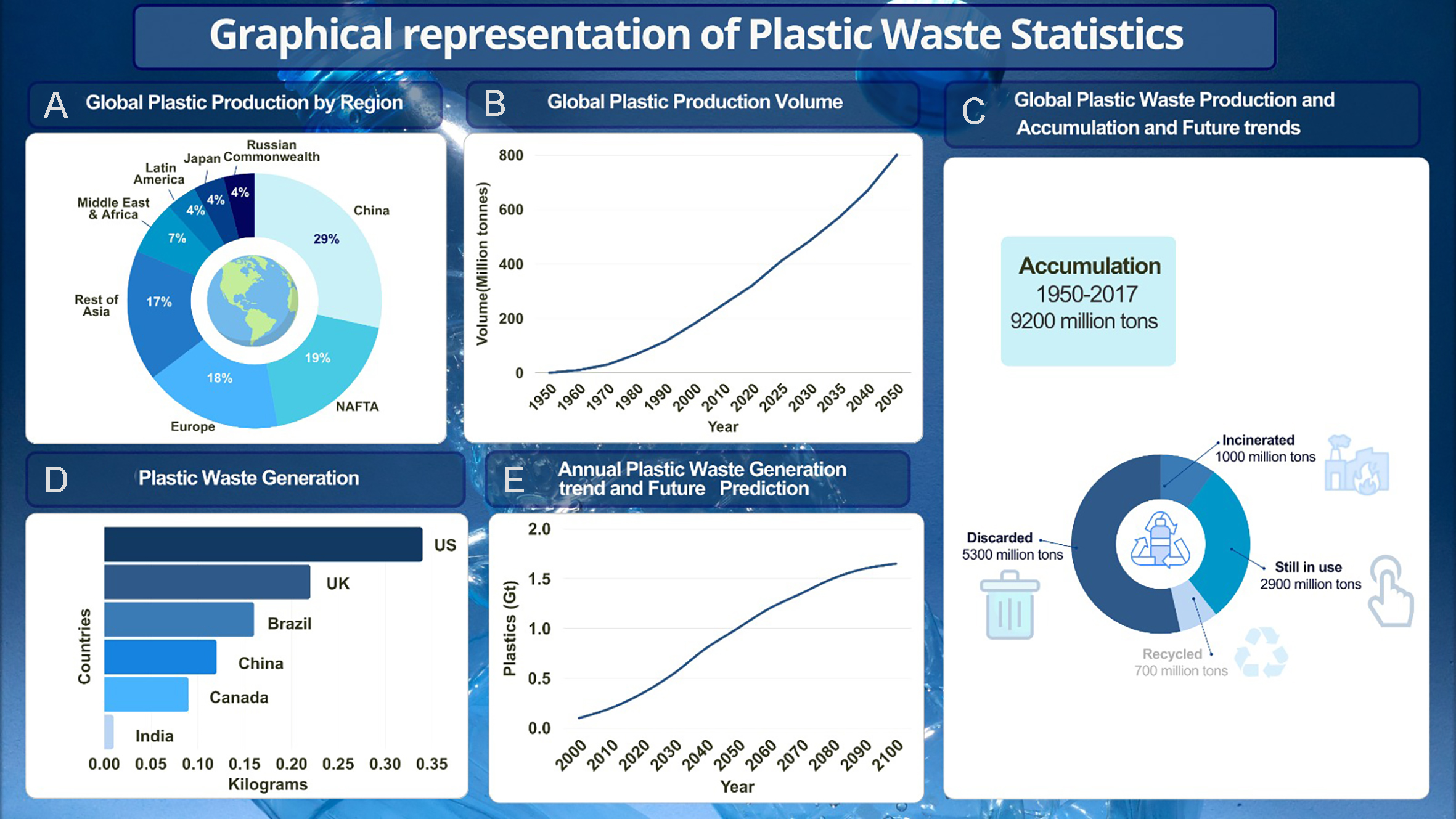
Figure 3. Global plastic waste generation and management trends (A) Plastic production by region: China leads with 29%, followed by NAFTA (19%) and Europe (18%). (B) Global plastic production (1950-2050): Steady growth projected to exceed 600 Mt by 2050. Data taken from[1]. (C) Plastic waste accumulation (1950-2017): Out of 9200 Mt, only 9% recycled, 11% incinerated, and 58% discarded data taken from[45]. (D) Country-wise waste generation: The US generates the highest per capita plastic waste (~0.34 kg/person), data taken from[1]. (E) Annual plastic waste prediction (2000-2100): Projected data to reach ~2 Gt/year by 2100, taken from[46].
Waste plastic management techniques
The management of plastic waste presents a dual challenge: mitigating environmental pollution while harnessing the untapped potential of carbon-rich resources embedded in discarded plastics. Traditional approaches, including incineration, open burning and landfilling, are still widely practised, which contribute to greenhouse gas emissions, soil and water contamination, and the loss of valuable materials[53,54]. For example, plastics in landfills can persist for up to 500 years, and open landfills are estimated to have an environmental impact 23 times greater than that of CO2 emissions from incineration[55]. Recycling remains a cornerstone of sustainable plastic waste management. Mechanical recycling, which involves reprocessing plastics into new products, is effective for single-polymer streams but is limited by contamination and polymer degradation[53,55]. Chemical recycling, including pyrolysis, gasification, and advanced catalytic processes, enables the conversion of mixed or contaminated plastics into fuels, monomers, or other high-value chemicals, supporting the principles of the circular economy[56]. Various preventive measures have also been applied in response to this challenge, which include reducing, reusing, and recycling plastics while minimizing their detrimental environmental impact, and are key components of sustainable practices that must be prioritized to meet this problem. Figure 4 illustrates plastic waste management processes in place. For a sustainable future, it will be necessary for countries to embrace a shared vision such that countries rationally share the burden to make the future planet secure[57-59].
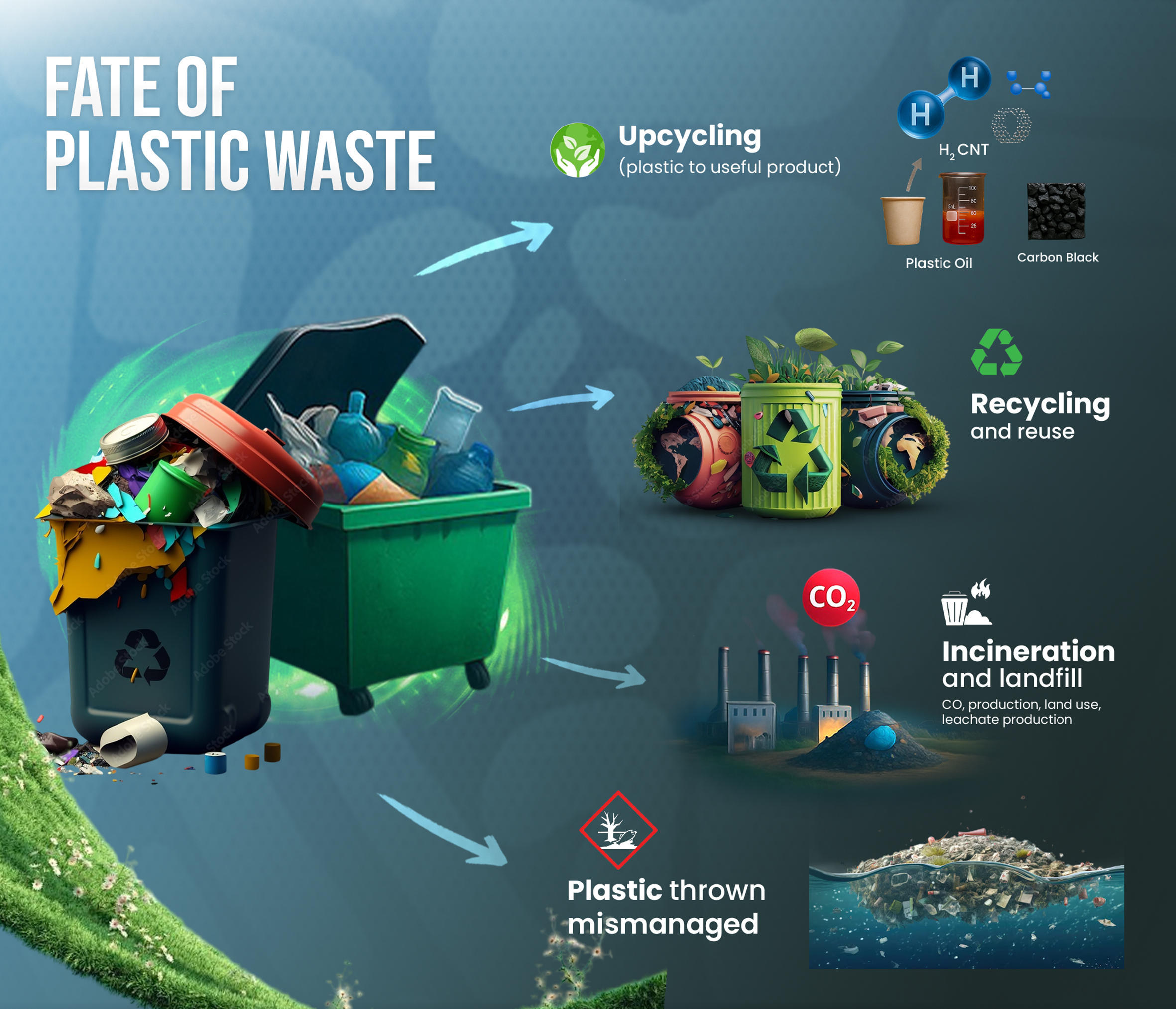
Figure 4. Illustration of end-of-life fate for all kinds of plastic waste; upcycling, recycling, burning, and polluting the environment.
Plastic-energy conversion
Plastic waste, predominantly composed of carbon and hydrogen, represents a promising feedstock for sustainable hydrogen production. Among conversion routes, pyrolysis has emerged as an efficient and eco-friendly approach due to its oxygen-free operation and reduced emission formation[60]. Emerging technologies such as microwave-assisted conversion, plasma processing, and photo/electrochemical upcycling are also attracting attention for enabling efficient plastic valorisation with lower energy input, particularly when coupled with renewable energy sources[53,61]. The design of catalyst plays a crucial role in improving hydrogen selectivity and yield, as demonstrated by hybrid systems such as Ni-CaO-Ca2SiO4, which enhance water-gas shift reactions during pyrolysis-gasification processes[62,63]. Although catalytic pyrolysis and gasification have been widely investigated, low-carbon hydrogen production from plastic waste remains relatively underexplored[64]. Continued advances in catalyst engineering, process optimisation, and integration with carbon capture and co-gasification strategies are therefore essential for enabling scalable and sustainable hydrogen production systems[65].
Key parameters affecting efficiency
The efficiency of plastic waste-to-hydrogen conversion depends on several interrelated parameters, including reaction temperature, catalyst composition, feedstock characteristics, residence time, and process atmosphere. Appropriate catalyst selection can reduce operating temperatures and improve product selectivity in polymer conversion systems[66]. Process optimization studies show that increasing reforming temperature from 500 to 1,000 °C can enhance hydrogen yield by up to 83.53%, although improvements beyond ~700 °C become marginal. Elevated pressures generally reduce hydrogen and CO yields, while an optimal steam-to-plastic ratio (~2) improves conversion efficiency[67].
Challenges of process
Despite these advances, several challenges limit industrial deployment. Thermochemical processes often generate tar and heavy hydrocarbons that cause equipment fouling and catalyst deactivation, particularly for oxygen-rich plastics such as PET[68]. High reaction temperatures (> 730 °C) increase energy demand and reduce economic feasibility[68]. In addition, heterogeneous mixed-plastic feedstocks containing additives or contaminants (e.g., chlorine, sulfur, metals) complicate process control, which may lead to harmful emissions and catalyst poisoning[69]. Economic constraints, including high capital costs and limited waste-processing infrastructure, further restrict large-scale adoption, while environmental compliance requirements add operational complexity[70].
ROLE OF CATALYSTS FOR PLASTIC TO HYDROGEN CONVERSION
Catalysts accelerate the breakdown of plastic polymers into smaller molecules, facilitating key reactions such as pyrolysis, steam reforming, and oxidation. Catalysts provide active sites that facilitate the cleavage of strong C-C and C-H bonds in plastic polymers, accelerating their decomposition into smaller molecules and intermediates[71,72]. By providing alternative reaction pathways, catalysts reduce the activation energy, such as pyrolysis, reforming, and dehydrogenation, enabling hydrogen production at lower temperatures[73]. In addition, catalysts direct the reaction toward hydrogen-rich products, suppressing the formation of unwanted byproducts (e.g., coke and heavy tars) and increasing overall hydrogen yield[69]. Thus, catalysts are integral to various conversion pathways, including thermochemical (pyrolysis, steam reforming, dry reforming), microwave-assisted, and photocatalytic/electrocatalytic processes, each benefiting from tailored catalyst design[74].
Types of catalysts used for plastic-hydrogen conversion
Plastic-to-hydrogen conversion leverages a diverse array of catalysts, which can be classified by their composition, dimensionality, and application/process. The interplay of these factors determines catalytic efficiency, selectivity, and process suitability. The conversion of plastic waste to hydrogen is a multifaceted challenge, where catalyst design encompassing composition, dimensionality, and process application plays a pivotal role in determining efficiency, selectivity, and sustainability.
Application: tailoring catalysts to process demands
The choice of catalysts is intimately linked to the specific conversion process: thermocatalysts play a central role in high-temperature processes such as pyrolysis, gasification, and steam reforming. Metal-based and zeolite-supported catalysts (e.g., Ni/Al2O3, Fe/SiO2, Ni-Fe/γ-Al2O3) are optimized for efficient polymer breakdown and hydrogen evolution[75,76]. In contrast, electrocatalysts drive electrochemical upcycling at lower temperatures, enabling selective hydrogen production from plastic-derived intermediates (e.g., ethylene glycol from PET) using materials like Ni-CoP or SACs like Ru[12,77,78]. Photocatalysts utilize solar energy for ambient-temperature hydrogen production and plastic degradation, with high-entropy oxides and two-dimensional transition metal carbides/nitrides (Mxene)-based composites showing prospects for simultaneous waste valorization and clean fuel generation[24,79]. A schematic summary of application-specific catalysts across different conversion pathways is shown in Figure 5A.
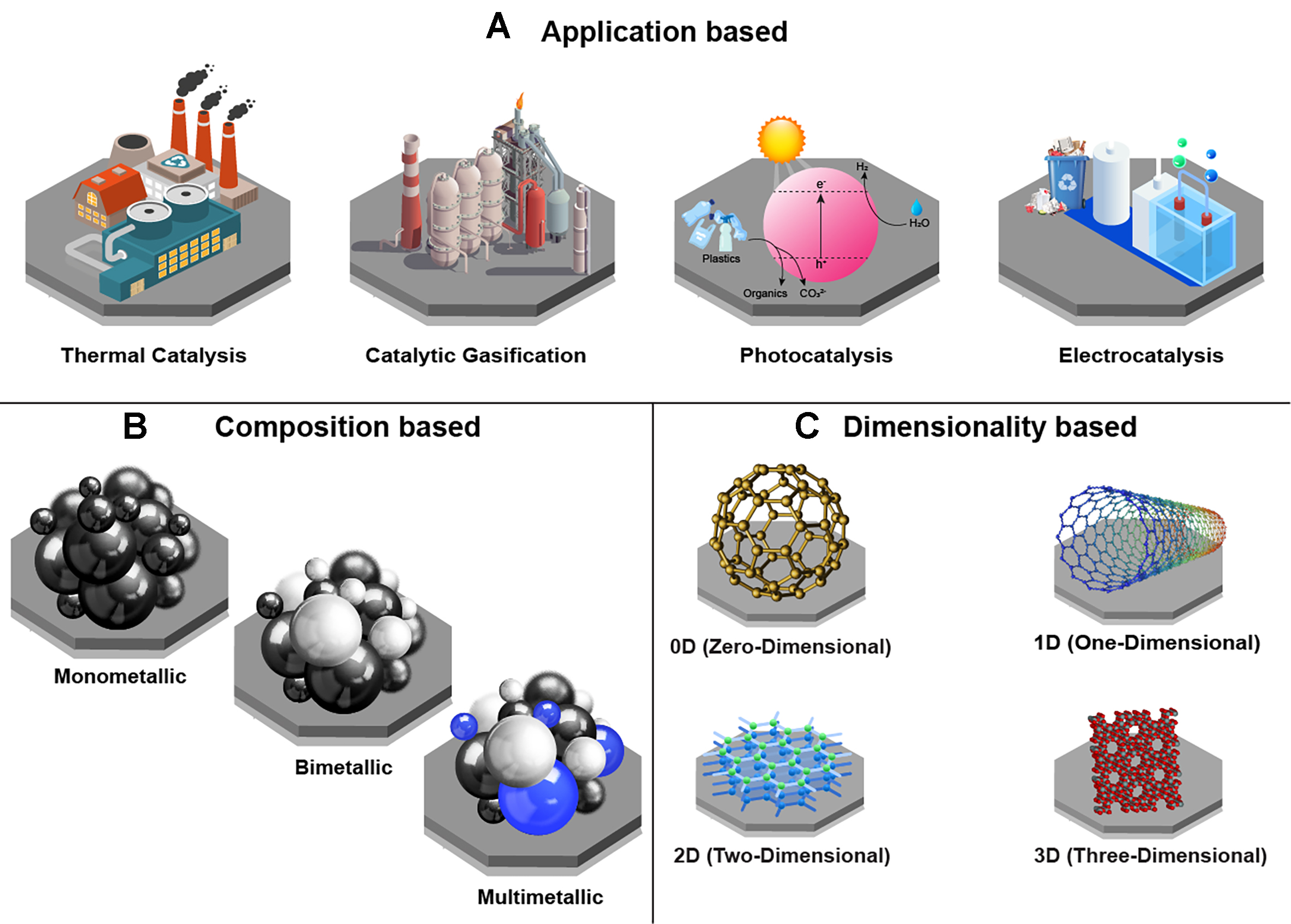
Figure 5. Illustration of catalyst types (A) Application-based classes: thermal catalysis, catalytic gasification, photocatalysis, and electrocatalysis (B) Composition-based classes: monometallic, bimetallic, and multimetallic catalysts. The coloured spheres represent different elemental species within the catalyst, where grey/black spheres denote primary metal atoms and differently coloured spheres (e.g., blue and white) indicate secondary metals or dopant elements. (C) Dimensionality-based nanomaterials: 0D, 1D, 2D, and 3D architectures. The spheres represent atomic positions within the nanostructures, while different colours are used to distinguish atomic arrangements or lattice coordination in various dimensional configurations (e.g., nanoparticles, nanotubes, nanosheets, and bulk structures).
Composition: from monometallic to multifunctional catalysts
Catalyst composition fundamentally governs the reaction pathway and determines the resulting product distribution. Monometallic catalysts such as Ni, Fe, and Co, often supported on oxides like SiO2 or Al2O3, are widely used for thermochemical processes[80]. The support not only disperses the active phase but also influences acid-base balance, redox properties, and carbon deposition resistance. For instance, Fe/SiO2 and Ni/SiO2 catalysts with larger particle sizes have been reported to enhance hydrogen yields and improve the quality of carbon nanotubes (CNTs) during gasification of polypropylene[75]. Bimetallic and multimetallic systems (e.g., Ni-Fe, Co-Fe, Ni-Co) further exploit synergistic effects, leading to higher hydrogen yields and superior carbon nanomaterial production, especially when supported on MgO or zeolites[81]. The synergistic effects between altered electronic configurations and intermetallic interfaces promote hydrogen release while inhibiting carbon deposition. At the mechanistic level, transition metals such as Ni, Fe, and Co provide active sites for C-C and C-H bond activation through adsorption-dehydrogenation pathways[82,83]. The generated hydrocarbon radicals and intermediates further undergo β-scission and steam reforming reactions to release H2, while oxygen vacancies or basic supports suppress coke formation. Composition of catalysts is also illustrated in Figure 5B.
Dimensionality: engineering active sites and mass transport
The dimensionality of catalysts ranging from 0D nanoparticles to 3D hierarchical structures directly influences active site exposure, electron transport, and resistance to deactivation. Zero-dimensional catalysts (nanoparticles, quantum dots, single-atom sites) maximize surface area and active site density, which is advantageous for rapid hydrogen evolution and high-value carbon formation in thermocatalytic and microwave-assisted processes[75,78]. Two-dimensional materials (nanosheets, layered zeolites, MXenes) offer large, accessible surfaces and improved metal dispersion, enhancing selectivity and charge transfer in hydrocracking, steam reforming, and photocatalysis[24,84,85]. Three-dimensional architectures (mesoporous supports, composite ferrites, biochar) provide hierarchical porosity and robust frameworks, supporting mass transfer and catalyst stability in high-throughput processes[76,80]. Hybrid and multidimensional catalysts combine these features, leveraging synergistic effects for optimal performance in complex reaction environments. Figure 5C shows types of catalysts based on dimensional architecture.
Reaction mechanisms and catalyst pathways in catalytic plastic-waste conversion
The conversion of plastic waste into valuable chemicals and fuels depends on understanding the underlying reaction mechanisms and developing efficient catalytic pathways. Kumar et al.[86] proposed a one-pot process for converting plastic waste into hydrogen. This catalytic process operates at low temperature and converts PET-based plastics into high-purity hydrogen along with valuable chemical products in a single step. Electrocatalytic upcycling of PET involves alkaline hydrolysis to produce monomers such as ethylene glycol (EG). It is usually followed by anodic electro-oxidation coupled with cathodic hydrogen evolution, enabling the simultaneous production of value-added chemicals and clean energy[87]. In a recent study, Cu-modified Ni foam electrocatalysts showed improved formate selectivity and terephthalic acid recovery due to reduced activation barriers, as illustrated in Figure 6A[88]. Paired electro-reforming strategies using Pd-modified Ni foam have also demonstrated efficient depolymerization and hydrogen production[89].
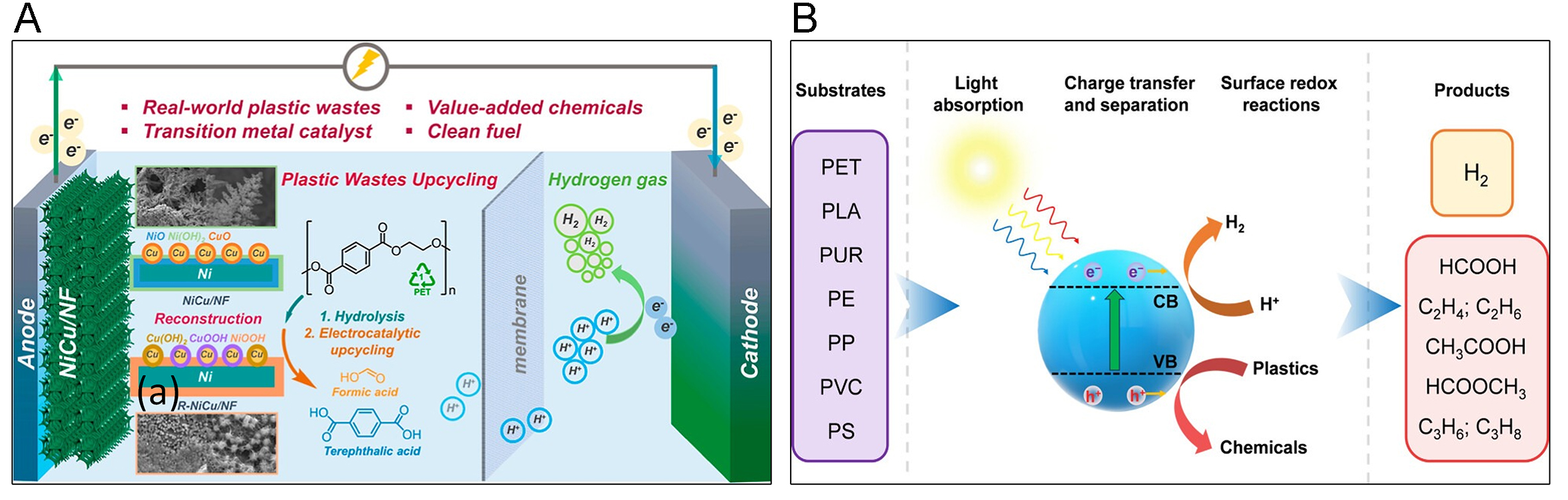
Furthermore, photocatalytic plastic valorisation has also been explored using HEON catalysts, where narrowed band gaps and improved charge separation promote hydrogen generation from plastic-derived intermediates[90]. A study linked plastic pollution cleanup to the photocatalytic production of fuels and chemicals, highlighting a potentially scalable and environmentally compatible route for plastic upcycling. Specifically, ocean plastic can be converted into useful organic chemicals under sunlight in actual seawater through the engineering of sulphur vacancies and a GeS/ZnIn2S4 heterostructure to facilitate charge separation[91]. The mechanism of photoreforming of plastic into hydrogen and other products is illustrated in Figure 6B[92]. Such technologies align with the principles of a circular economy, aiming to transform plastic waste management into a sustainable and energy-generating process.
Thermocatalysis is widely explored for hydrogen production from plastic waste. A two-stage reforming strategy using Ni/Al-SBA-15 and Ni-Cu/CaO-SiO2 catalysts enabled efficient depolymerization of polyolefins, yielding hydrogen-rich gases and CNTs[93]. Hydrogen evolution during microwave-assisted catalytic pyrolysis can significantly enhance the conversion of polymers into light hydrocarbons, particularly over Fe-, Ni-, or Co-based catalysts. Composite Fe/Ni-CeO2@CNT catalysts also demonstrated high-purity hydrogen production (~91.5 vol%) from HDPE via synergistic reforming mechanisms[94]. Plasma-assisted pre-cracking combined with modified zeolite catalysts could improve pore accessibility, suppress coke formation, and enhance catalyst stability and hydrogen selectivity[85]. Advanced microwave-responsive systems, such as Co-doped Fe-Al catalysts could achieve hydrogen yields up to 61.39 mmol g-1 due to FeCo alloy formation and improved carbon diffusion pathways[95] .
Electrocatalyst
Electrocatalysts are materials that facilitate electrochemical reactions by accelerating oxidation and reduction processes at electrode surfaces. Electrocatalysts facilitate electron transfer between electrodes and reactants while promoting the associated chemical transformations[96]. Beyond conventional applications such as water splitting and CO2 reduction, electrocatalysis has recently emerged as a promising strategy for plastic waste valorization. In particular, the electrocatalytic conversion of plastic waste, especially PET, to hydrogen offers a sustainable and efficient alternative to traditional thermal and photocatalytic methods. This section discusses the underlying reaction mechanisms, key pathways, and intermediates involved in electrocatalytic processes, while highlighting the advantages of this approach in terms of selectivity, energy efficiency, and mild operating conditions.
Comparative advantages over thermal and photocatalytic methods
Electrocatalysis operates under mild conditions, typically at lower temperatures and ambient pressures, thereby reducing energy input and minimizing byproduct formation. In contrast, thermocatalytic processes generally require elevated temperatures (400-900 °C) and often yield mixed, less-selective products[97]. Electrocatalysts achieve high Faradaic efficiencies (up to 96%) and enable precise control over reaction pathways, with the potential to enhance hydrogen yield and product purity compared with thermocatalytic and photocatalytic systems[98]. Moreover, electrocatalytic systems can be powered by renewable electricity, further enhancing their environmental sustainability compared with fossil-fuel-dependent thermal processes. In contrast, photocatalysis, despite being solar-driven, often exhibits low quantum efficiencies and slow reaction kinetics[12].
The rational design of electrocatalysts (e.g., dual-atom, nanostructured, heteroatom-doped) enables the tuning of activity and stability, thereby enhancing overall performance and scalability[99]. At a fundamental level, electrocatalysts reduce the overpotential required to drive electrochemical reactions, improving energy efficiency. For instance, in water splitting, efficient catalysts for the HER and oxygen evolution reaction (OER) enable operation closer to thermodynamic potentials, thereby lowering electricity consumption[100]. In addition, electrocatalysts accelerate reaction kinetics by facilitating interfacial electron transfer at the electrode-electrolyte interface.
Nanostructure engineering further enhances catalytic performance. For example, WS2 nanosheets with edge-rich structures exhibit significantly improved hydrogen evolution activity at low overpotentials[101], primarily due to the high density of exposed active sites and defects that promote charge transfer and catalytic turnover[102]. Beyond activity, electrocatalysts also offer superior selectivity by directing reaction pathways toward desired products while suppressing competing reactions. In CO2 reduction, for instance, well-designed catalysts can achieve CO selectivity of up to ~95% while maintaining stable current densities[94]. Despite these advantages, several challenges remain for the practical implementation of electrocatalytic plastic upcycling. Catalyst stability and durability under prolonged operation, together with the cost of advanced catalyst architectures, continue to limit large-scale deployment. In addition, maintaining high selectivity in complex, real-world feed systems—particularly those involving heterogeneous plastic-derived intermediates—remains nontrivial. Importantly, the underlying reaction mechanisms and structure-activity relationships are not yet fully understood, which hinders the rational design and optimization of electrocatalysts. Addressing these challenges will be essential for translating laboratory-scale demonstrations into practical applications.
Mechanistic pathways and catalyst functions
This section outlines the mechanistic pathway, key reactions, and intermediates involved in electrocatalysis, while highlighting how this approach surpasses other catalytic routes in selectivity, efficiency, and operational conditions. Figure 7 illustrates the reaction mechanism of electrocatalysis for the conversion of plastic to hydrogen.
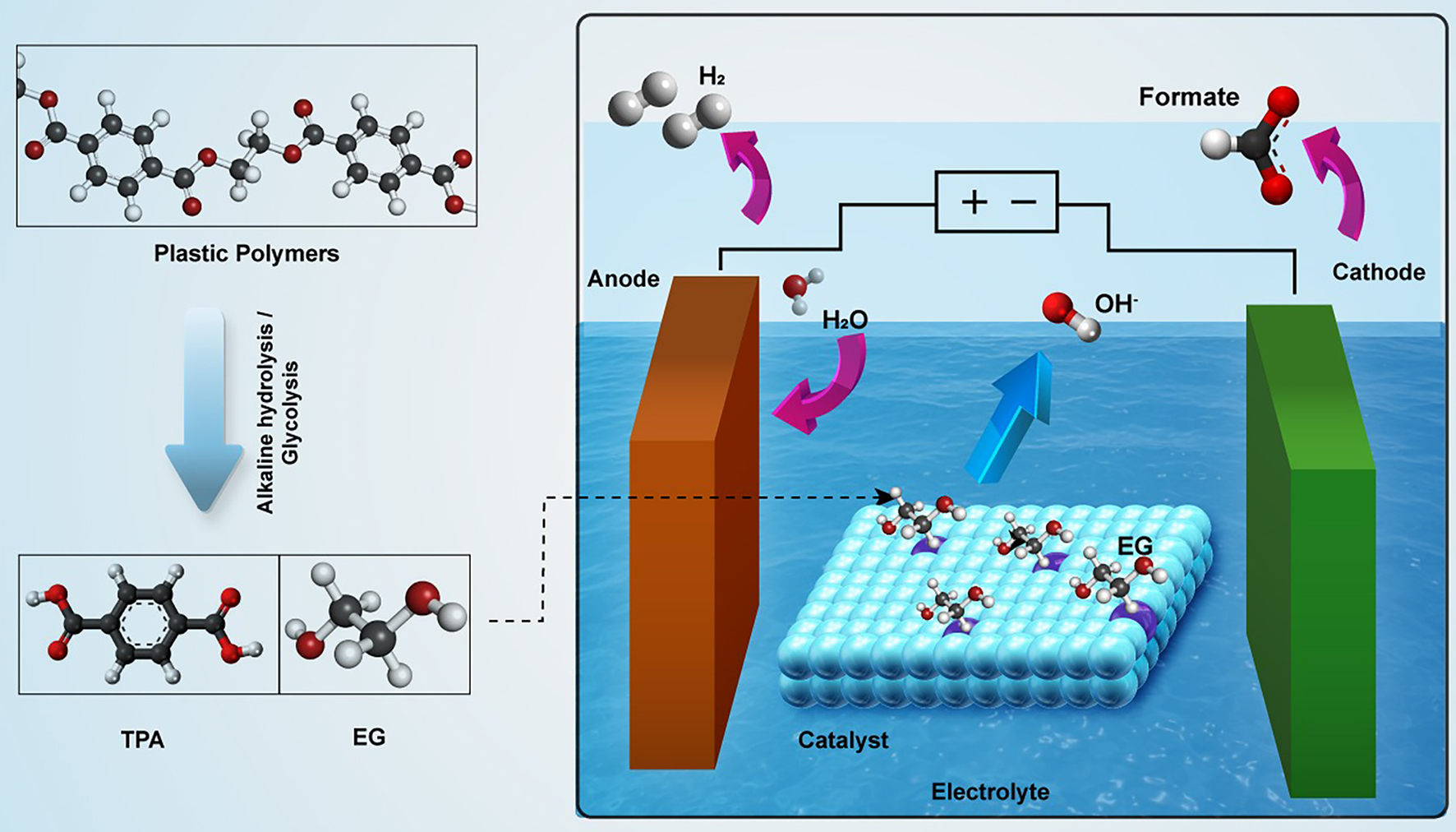
Figure 7. Schematic representation of electrocatalytic plastic-to-hydrogen conversion, illustrating polymer depolymerization into intermediates (TPA and EG), adsorption on the catalyst surface, and coupled anodic and cathodic reactions. The coloured spheres indicate atomic species: grey (C), red (O), white (H), and blue representing catalyst metal atoms.
1. Depolymerization and pretreatment
Plastic waste such as PET is first depolymerized via alkaline hydrolysis into monomers including ethylene glycol (EG) and terephthalic acid. This step is essential for enabling subsequent electrochemical transformations, as the monomers are more readily oxidized than the parent polymer[103,104]. Equation 1 shows the example reaction derived from the original study of[105].
2. Anodic oxidation of monomers
At the anode, EG undergoes electrooxidation on advanced catalysts (e.g., Au/Ni(OH)2, dual-doped NiS nanosheets). The process proceeds through several key steps:
• Adsorption: EG adsorbs onto the catalyst surface, facilitated by adjacent hydroxyl groups[106,107].
• Dehydrogenation and C-C bond cleavage: Sequential oxidation leads to the formation of intermediates such as glycolaldehyde, glyoxal, and ultimately glycolic acid or formate[108]. Representative reactions are shown in Equations 2 and 3[109].
• In situ surface evolution. The catalyst undergoes dynamic structural reconstruction which enhances catalytic activity and selectivity[12].
Through surface engineering (such as Au/Ni(OH)2 and dual-doped NiS), catalysts provide high surface area, abundant active sites, and favorable electronic structures for efficient EG adsorption and oxidation[108]. Meanwhile, in situ reconstruction during operation leads to the formation of oxyhydroxide or vacancy-rich phases that facilitate C-C bond cleavage and improve product selectivity[110].
Feedstock heterogeneity and catalyst deactivation challenges
Feedstock heterogeneity has a significant impact on process performance. Plastic waste typically contains mixed polymer types together with a wide range of additives and contaminants. These variations lead to complex reaction environments and unstable product distributions. During thermal conversion processes such as pyrolysis, diverse volatile species are generated. These species can accelerate catalyst deactivation, mainly through coke deposition and sintering. Both processes block active sites and reduce hydrogen yield[111,112]. Catalyst deactivation is a fundamental challenge in heterogeneous catalysis and results in a gradual loss of activity over time[113]. Heterogeneous catalyst deactivation can proceed through multiple pathways. For example, Catalysts may be poisoned by trace contaminants present in the feed, while their surfaces, pores, and internal structures can be fouled by carbonaceous deposits formed during cracking and condensation of reactants, intermediates, or products. Deactivation mechanisms can be broadly classified into chemical, thermal, and mechanical processes. More specifically, there are five intrinsic mechanisms including (a) poisoning, (b) fouling, (c) thermal degradation, (d) chemical degradation, and (e) mechanical failure, each differing in kinetics and reversibility. Poisoning and thermal degradation are generally slow, irreversible processes, whereas coke deposition is often rapid but can be partially reversed through the regeneration with O2 or H2[113]. These deactivation processes are further intensified in pyrolysis-reforming systems, where mixed biomass-plastic feedstocks generate highly variable tar precursors that accelerate catalyst deactivation[114,115].
AI AND ML-DRIVEN CATALYST DEVELOPMENT
Catalysis, particularly heterogeneous catalysis, plays a vital role in industrial processes such as hydrotreating and fluid catalytic cracking. Traditionally, catalyst development has relied on trial-and-error experimentation guided by knowledge[116]. However, catalytic reactions often involve complex surface processes and extensive reaction networks with numerous intermediates[117]. To improve activity and stability, researchers commonly design bi- or tri-metallic catalysts by combining noble and non-noble metals, although challenges such as coke formation and sintering still lead to catalyst deactivation[118]. Recently, ML has emerged as a powerful approach to accelerate catalyst discovery, enabling data-driven prediction and optimization while reducing experimental time and cost[116,117]. In plastic waste conversion, catalyst design remains crucial for producing high-value fuels and chemicals, with zeolite-based catalysts being among the most extensively studied systems.
Machine learning types and implementation
There are three core types of machine learning: supervised learning; unsupervised learning and reinforcement learning. As illustrated in Figure 8, these methods are essential for AI-driven catalyst design and process optimization in plastic-to-hydrogen conversion.
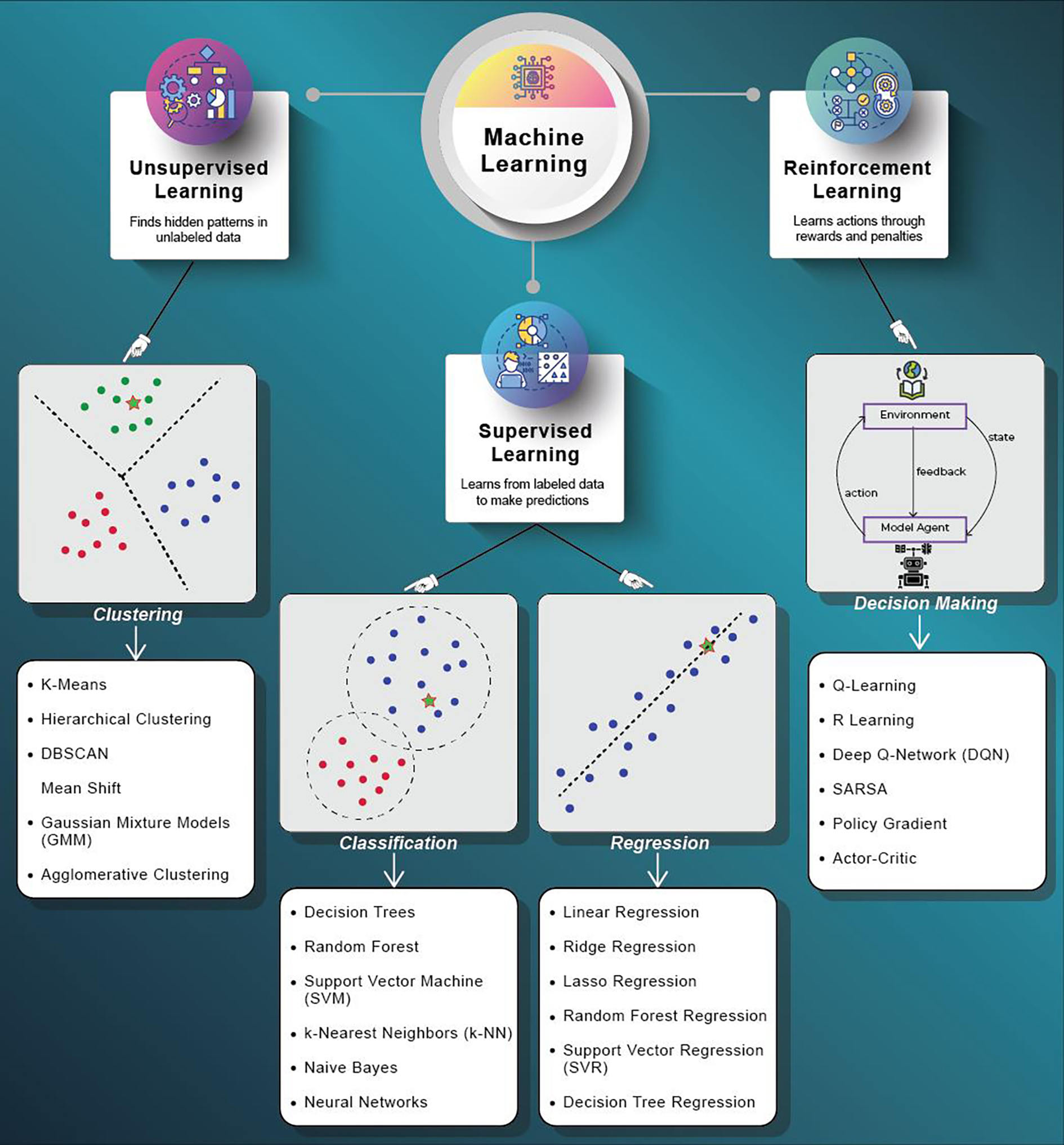
Figure 8. Types of machine learning and associated models.
ML workflows for catalyst discovery
ML has significantly expanded the possibilities for catalyst discovery and material design by enabling the analysis of large datasets and complex structure-property relationships[119]. Beyond algorithm development, the practical implementation of ML in catalysis follows a systematic workflow involving data preparation, model development, and experimental validation. Figure 9 illustrates this workflow for ML-driven catalyst design, highlighting key stages including data collection, preprocessing, model training, hyperparameter optimization, feature importance analysis, and catalyst screening. Through iterative refinement and validation, this workflow enables the efficient identification of promising catalyst candidates and optimization of reaction conditions for hydrogen production from plastic waste.
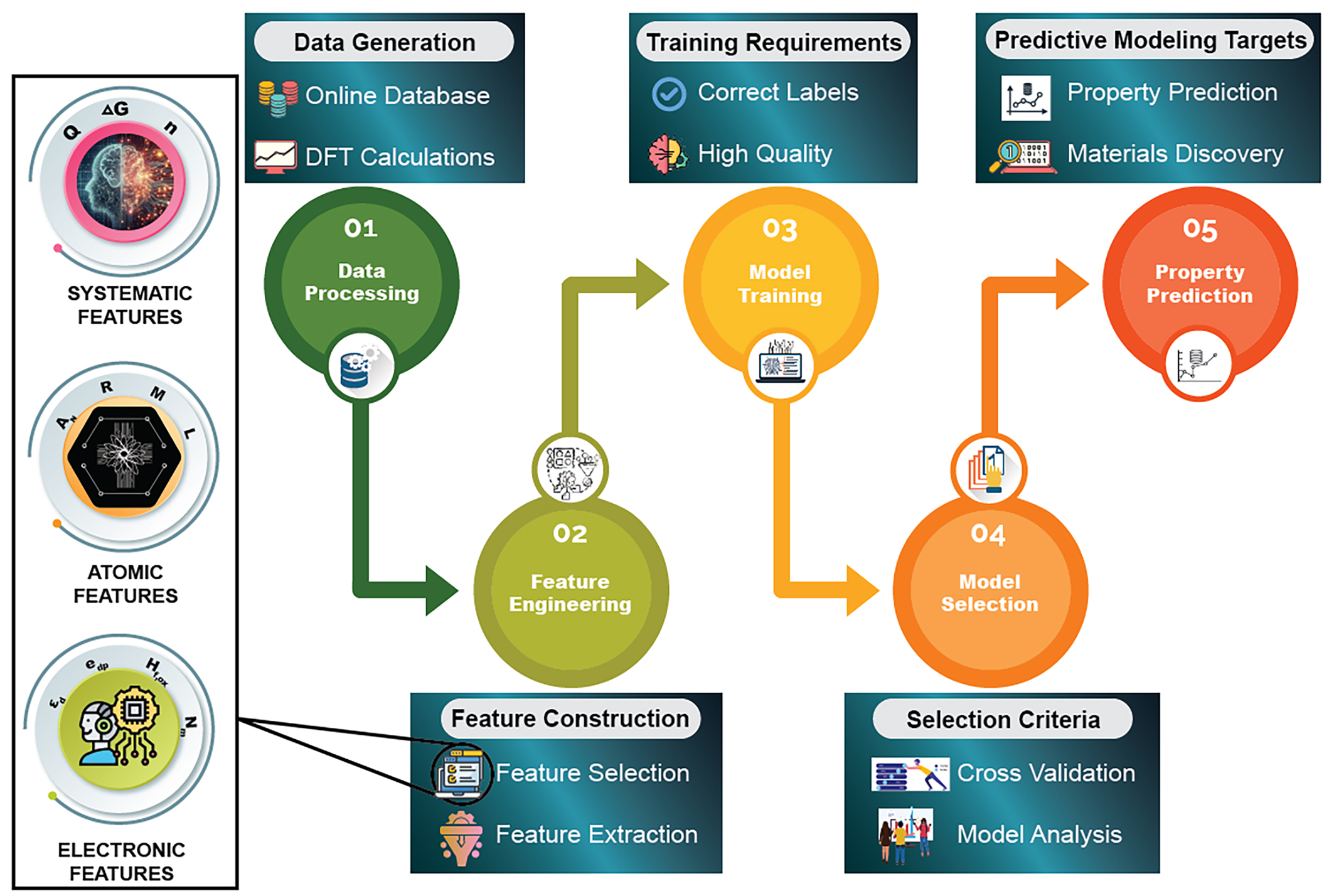
Figure 9. Systematic diagram with detailed steps of machine learning model development for prediction, interpretation, and optimization of catalytic activity.
Machine learning applications in catalyst design and hydrogen production
Machine learning has emerged as a transformative tool in designing and optimizing electrocatalysts for hydrogen production. Its ability to analyze large datasets and capture complex structure-property relationships enable rapid prediction of electrocatalytic performance, thereby improving design efficiency and overcoming the limitations of traditional trial-and-error approaches[120]. Despite these advantages, economic and sustainability challenges remain important. While ML has the potential to optimize material usage and reduce waste, it also introduces challenges[121]. In this context, developing reliable predictive models from limited yet growing datasets has become a key priority in materials research[122]. Recent studies have begun to integrate computational and experimental approaches to further enhance catalyst performance. For example, electrochemical models incorporating efficient hydrogen adsorption energy calculations have been developed to guide catalyst design and improve catalytic efficiency[123].
A recent review highlights the application of ML techniques—ranging from decision trees and RFs to SVMs and deep neural networks—for mapping complex relationships between density functional theory (DFT)-derived descriptors and catalytic performance in reactions such as HER, OER, HOR, and ORR[32]. More broadly, ML has been successfully applied across multiple aspects of electrocatalysis[124]. These include the prediction of catalytic activity[125], performance evaluation[126], and the discovery of new materials[127]. Collectively, these approaches span interpretable models, such as ensemble methods and support vector regression, as well as advanced strategies including Bayesian optimization and physics-informed workflows. These developments highlight the growing role of ML in enabling high-throughput and predictive catalyst discovery, particularly for HERs. Figure 10 shows the potential of ML in catalyst design.
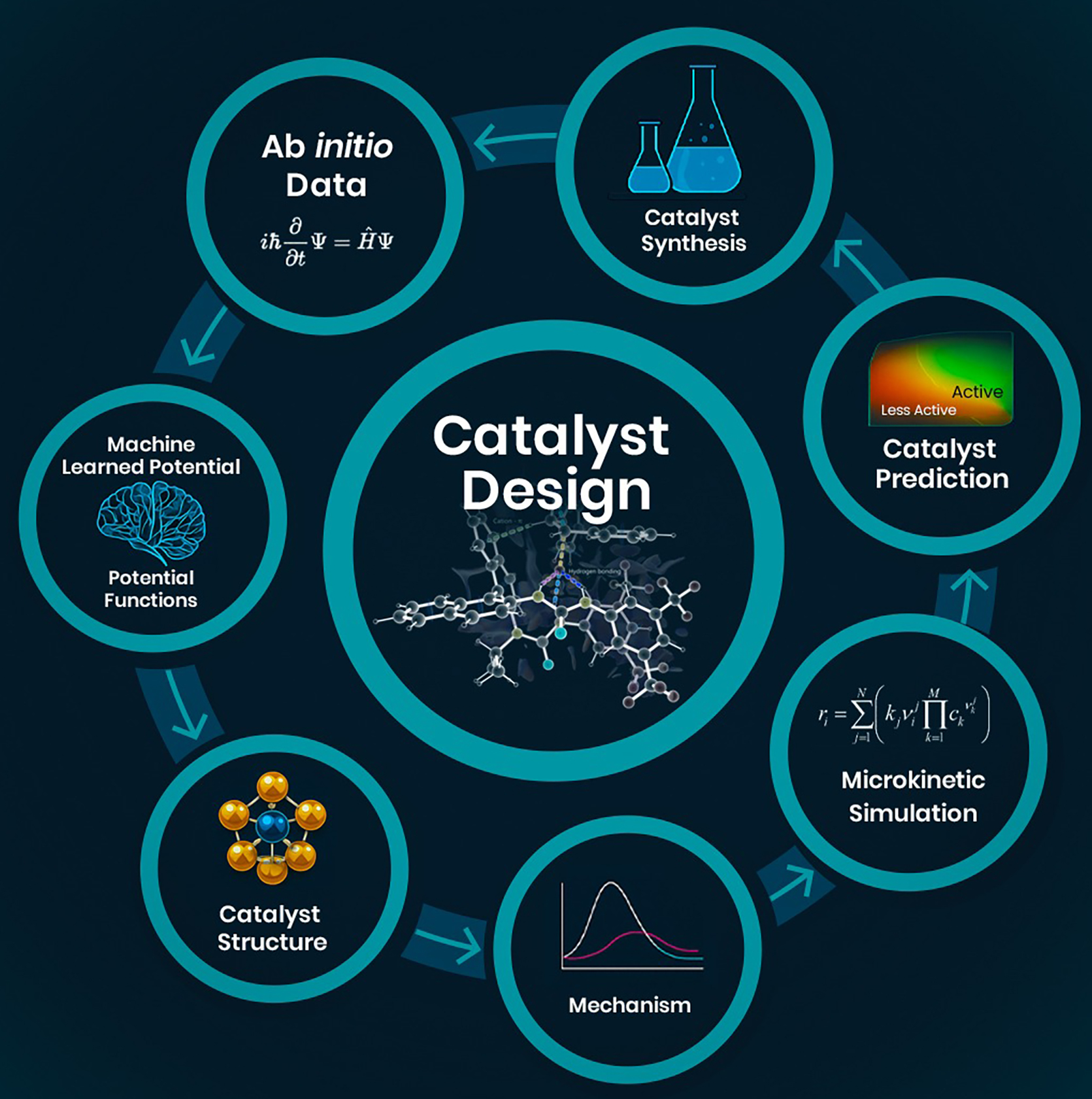
Figure 10. Overview of the key components in machine learning-assisted catalyst design, including ab initio data, learned potentials, catalyst structure, predictive modeling, microkinetic simulation, and mechanistic insights.
ML for catalyst prediction and hydrogen production modeling
Accurate identification of catalytic active sites is crucial for developing efficient catalysts[128]. Since Taylor introduced the concept of active sites in 1925[129], researchers have been dedicated to identifying and characterizing the active sites of catalysts to better understand catalytic reaction mechanisms[130]. These sites represent specific regions on the catalyst surface where reactions occur and thus directly determine catalytic activity and efficiency. Recently, ML has emerged as a powerful approach for identifying and characterizing catalytic active sites with improved accuracy[120]. In parallel, C, N, and non-noble metals have gained increasing attention as sustainable alternatives to traditional noble metal catalysts[131]. ML offers distinct advantages in addressing the complexity of catalyst design and synthesis. It enables the theoretical design of catalyst composition and structure, optimization of synthesis conditions, and automated high-throughput screening[132]. As a result, ML-driven approaches allow more precise prediction of catalytic performance and significantly accelerate the rational design of advanced electrocatalysts for hydrogen production, thereby streamlining research workflows.
In this domain, recent research[133] innovatively combined ML with in-situ X-ray absorption spectroscopy to identify the active sites of TMNCs. The results revealed that isolated Ni sites act as the active species for CO2RR, exhibiting dynamic and heterogeneous behavior that adapts to reaction conditions. While alloy catalysts offer diverse surface-active sites due to their complex composition and atomic arrangement, this structural diversity also complicates the precise identification and optimization of active sites. To address this challenge, ML-assisted simulations have been increasingly applied. For example, neural network potential-based molecular dynamics simulations were used to investigate oxide-derived Cu catalysts for CO2RR, identifying three square-shaped active sites that are critical for C-C coupling reactions[134]. Similarly, large-scale analysis of 40,000 active sites on amorphous alloy surfaces enabled the determination of an optimal atomic composition (Pd:Cu:P:Ni = 0.51:0.33:0.09:0.07), with Pd d-electrons identified as the key contributors to catalytic performance. In addition, they employed the SOAP-ML model to reveal the underlying mechanism of catalyst durability, linking it to Ni dealloying behavior. The close consistency with experimental observations demonstrates the accuracy and reliability of the model and highlights its potential for guiding the design of advanced amorphous alloy catalysts[135].
In addition to catalyst structure prediction, ML has been increasingly applied to predict product distributions and hydrogen yields in thermochemical plastic conversion systems. ML applications in plastic thermochemical conversion focus on predicting aggregate outputs such as oil and gas yields, activation energies, or monoaromatic production rather than explicitly resolving elementary catalytic reaction networks[136,137]. Nevertheless, these approaches effectively capture the complex relationships among feedstock properties, catalyst characteristics, and operating conditions, and can be extended to hydrogen evolution in catalytic plastic pyrolysis. Tree-based ensemble models, particularly RFs, are widely used due to their ability to handle nonlinear systems with limited mechanistic information. For example, RF models have been used to predict hydrogen yield and process performance indices in plastic-waste gasification using variables such as temperature, pressure, and gasifying-agent flow rate, achieving prediction accuracies above R2 > 0.99 and revealing strong nonlinear effects of temperature and steam-to-plastic ratios on hydrogen production efficiency[37]. Similar RF-based approaches have been applied to pyrolysis systems, where models predict liquid yields and hydrogen content in pyrolysis oils using feedstock composition and operating conditions as inputs[138], while feature-importance and partial-dependence analyses reveal how temperature and feed characteristics influence gas yields and hydrogen-containing species[139]. Although these studies were originally developed for biomass systems, the same RF-based interpretation frameworks are increasingly applied to plastic pyrolysis and co-pyrolysis systems[140]. Beyond RF, gradient-boosted models such as XGBoost have been employed in catalyst-driven plastic conversion. These models are trained on multi-source datasets to predict oil yields and gasoline-range hydrocarbons from plastic composition and zeolite catalyst properties, enabling inverse catalyst design and optimization of operating conditions[136]. Ensemble approaches have also been used to predict monoaromatic-rich oil yields, where variables such as temperature, catalyst-to-feed ratio, plastic fraction, and zeolite Si/Al ratio are identified as dominant factors[137]. In addition, boosted regression tree models have been applied to catalytic HDPE pyrolysis to predict activation energy as a function of conversion and heating rate, effectively learning reduced representations of degradation kinetics[141]. Across these studies, ML models typically combine feed descriptors (polymer fractions, ultimate analysis, or biomass presence), catalyst descriptors (surface area, Si/Al ratio, catalyst loading), and operating parameters (temperature, residence time, pressure, and heating rate) to predict outputs such as oil yield, gas composition, or hydrogen fraction[142]. Tree-ensemble methods are particularly attractive because they can approximate high-dimensional catalytic reaction networks without explicitly defining individual reaction pathways while simultaneously providing interpretable insights through feature-importance, partial-dependence, and SHAP analyses[143]. Hydrogen-focused ML studies in related thermo-catalytic systems further demonstrate the applicability of these approaches. For example, tree-based ensemble models have been used to predict hydrogen fractions in syngas during biomass-plastic co-gasification based on particle size, blend ratio, and temperature[144], while ensemble models combining RF, LightGBM, and bagging regressors have successfully predicted photocatalytic hydrogen evolution rates from catalyst loading, pH, and oxidant concentration[145]. Although these studies demonstrate the strong capability of RF models for predicting hydrogen-related outputs in thermochemical systems, most existing applications focus on overall product yields or syngas composition rather than explicitly modeling hydrogen evolution within detailed catalytic plastic pyrolysis reaction networks.
Another important challenge in plastic waste conversion is the heterogeneity of real feedstocks, which typically contain mixtures of polymers, along with additives and contaminants. Such variability can strongly influence hydrogen yield, product distribution, and catalyst stability. Recent studies suggest that machine learning models can address this challenge by incorporating physics-informed feed descriptors, such as elemental composition, polymer mass fractions, and contaminant indicators, rather than relying solely on nominal plastic-type labels. For example, ML models using ultimate analysis descriptors have shown strong predictive capability for pyrolysis product yields across mixed plastic feeds[142], while hydrogen production studies have used feed composition variables together with operating conditions to predict syngas composition from mixed plastics[146-148]. Furthermore, catalyst stability can also be incorporated into ML frameworks by including catalyst descriptors (metal type, support properties, acidity, surface area) and by using deactivation indicators such as coke formation or activity loss as prediction targets. Experimental studies demonstrate that different polymers generate distinct carbon deposition behaviour on the same catalyst, highlighting the importance of feed composition in catalyst lifetime prediction[149]. To build reliable ML models for such heterogeneous systems, multi-fidelity datasets combining experimental measurements with simulation-generated data from process models (Aspen-based pyrolysis or gasification simulations) can be employed to explore wide feed-composition and operating-condition spaces[147,150,151]. Such frameworks can support multi-objective optimization of catalyst design and operating conditions for hydrogen yield, catalyst stability, and environmental performance under realistic mixed-plastic feed conditions.
ML descriptor engineering and feature selection
The selection of appropriate input features (descriptors) plays a decisive role in improving the predictive accuracy of ML models and uncovering the key factors that influence catalytic activity and selectivity[152]. Effective descriptor engineering and feature selection are essential for high-performance ML models in data-driven catalyst discovery. Recent studies employ physically interpretable descriptors, including adsorption energy distributions and d-band center properties. For instance, the ARSC framework decouples atomic, interaction, synergistic, and coordination effects via a PFESS-based feature selection strategy, enabling efficient catalyst discovery while avoiding over 50,000 DFT calculations[121]. The descriptors show that a good description of catalyst performance can be achieved by quantifying the intrinsic properties of the catalyst and atoms. These descriptors serve as inputs under various machine learning methods, among which GBR has proven effective in predicting and classifying SAC performance. The ML strategies presented in this study can significantly reduce computation time while providing valuable insights for high-throughput screening of SACs[153]. Integrating domain-specific feature engineering with robust selection techniques can significantly speed up catalyst development while preserving physical relevance and reducing computational overhead. For plastic-to-hydrogen systems, it is important to identify which catalyst and process descriptors best predict hydrogen evolution from plastic-derived feedstocks. It is equally important to understand the limitations and failure modes of ML models to ensure robust catalyst design and process optimization.
Key predictive descriptors for plastic-originated hydrogen evolution
Recent ML-driven catalysis studies consistently identify electronic/structural, textural, and feedstock/process descriptors as dominant predictors of hydrogen yield and selectivity in plastic waste reforming and pyrolysis processes[154]. Electronic and structural descriptors are particularly influential because they directly govern adsorption strength, reaction energetics, and catalytic behavior[155,156]. In particular, the adsorption energies of key intermediates (e.g., H*, CO*, and OH*) are widely regarded as central descriptors in both HER and related electrochemical and thermochemical reactions[157]. However, the d-band center and related mean d-band descriptors strongly correlate with adsorption energies and catalytic activity[158], often following volcano-type relationships in metals and alloys. Additional features such as charge-transfer energy, e.g- electron occupancy, and metal-oxygen bond length further refine this understanding through their effects on adsorption-energy trends. Oxygen-vacancy concentration and catalyst redox state regulate adsorbate binding, spillover, and activation barriers. Meanwhile, metal dispersion and particle size control the density and nature of active sites, thereby influencing both catalytic performance and deactivation[159,160]. Among compositional variables, transition metal loading (e.g., Ni, Fe, Co) and bimetallic synergy effects emerge as highly influential descriptors governing C-C bond cleavage efficiency and hydrogen evolution pathways. In addition, textural descriptors such as surface area, pore volume, pore hierarchy, and support acidity/basicity influence active-site accessibility and mass transport, thereby affecting catalyst performance[161]. Process-level descriptors, including temperature, heating rate, residence time, and steam-to-carbon ratio, often exhibit the highest SHAP feature importance values in interpretable ML frameworks, indicating their dominant role in reaction kinetics and thermodynamic equilibrium[162]. Furthermore, plastic feedstock composition, particularly polymer chain length, degree of branching, and heteroatom content, strongly influences hydrogen production efficiency, highlighting the need for chemically meaningful polymer descriptors in ML datasets[163]. Interpretable ML methods such as SHapley Additive exPlanations (SHAP) and partial dependence analysis have revealed that oversimplified descriptors, such as elemental weight percentages alone, fail to capture the complex interplay between catalyst structure and activity. Instead, physically grounded descriptors, including metal-support interaction strength, oxygen vacancy concentration, reducibility index, and acidity distribution, provide superior predictive power and mechanistic interpretability[26]. These findings highlight the importance of incorporating structure-sensitive and physics-informed descriptors to avoid spurious correlations and enhance model interpretability in catalyst design. To further contextualize the datasets and validation strategies used in ML-driven catalyst design, Table 2 summarizes representative studies, highlighting their dataset sources, machine learning models, validation approaches, and key contributions toward sustainable hydrogen production from plastic waste.
Summary of ML datasets and validation routes for catalyst design in sustainable hydrogen production from plastic waste
| Ref. | Research focus | ML dataset source | dataset type | ML models | Validation route | Key contribution |
| [164] | ML-assisted prediction of catalytic activity for plastic waste reforming | Published experimental datasets of polymer reforming reactions | Experimental | RF, ANN | 5-fold cross-validation, independent test set | Accurate prediction of H₂ yield and catalyst activity using experimental data |
| [154] | Data-driven catalyst screening for hydrogen production | Curated literature datasets on plastic pyrolysis catalysts | Experimental | XGBoost, SVR | 10-fold cross-validation | Accelerated catalyst performance ranking based on ML models |
| [165] | ML-based prediction of hydrogen yield from plastic waste gasification | Industrial process datasets | Process data | ANN, Deep Neural Networks | Train-test split (80/20), Monte Carlo cross-validation | Robust prediction of hydrogen production under varying operating conditions |
| [166] | ML-assisted optimization of catalytic pyrolysis process | Pilot-scale reactor experimental data | Experimental | ANN, Gaussian Process Regression | k-fold cross-validation | Improved process optimization using data-driven modeling |
| [167] | ML modeling of plastic waste catalytic reforming kinetics | Time-series experimental kinetic datasets | Experimental | LSTM, Deep Learning | Rolling-window validation | Captured reaction kinetics and hydrogen evolution trends |
| [168] | Reaction outcome prediction for polymer conversion | Open-source reaction databases (USPTO, Reaxys) | Experimental reaction data | GNN | Scaffold split, external validation | Enabled reaction pathway prediction for catalyst-driven plastic conversion |
Integration of ML with DFT and advanced AI methods
In recent years, the integration of ML and DFT has shown tremendous potential in catalyst research[121]. DFT allows researchers to explore materials at the atomic scale by revealing detailed insights into their electronic structures, thereby facilitating the discovery of novel material properties and underlying reaction pathways[169]. It can accurately predict the key catalyst properties including active sites, electronic structure, surface adsorption energies, reaction pathways, etc., providing a solid theoretical foundation for understanding catalyst processes[170]. The synergy between ML and DFT offers a powerful approach to reducing both experimental and computational costs, particularly for screening complex catalytic systems and large material datasets. This integration not only deepens our understanding of surface interactions and catalytic mechanisms but also accelerates the identification and development of novel catalysts[120]. A recent research publication[171] provides an extensive study that detailed the use of ML models for the reconstruction of catalysts for ORR. This study can also be translated to plastic-to-hydrogen workflow. A framework for an integrated catalyst discovery workflow combining ML, DFT, synthesis, characterization, and testing for hydrogen and formate production from plastic-derived intermediates can be developed using this study as a good supporting baseline. Further innovation is exemplified in a study, which presents a holistic framework combining GNNs, reinforcement learning, physics-informed neural networks (PINNs), and generative models (VAEs) to accelerate optimization of nanomaterials for photocatalysis and hydrogen generation, achieving 15%-20% yield improvements and a 40% reduction in experimentation cycles[172]. Recent advancements demonstrate the transformative role of AI in accelerating catalyst discovery and optimizing hydrogen production. Vipin and Padhan[33] presented a comprehensive study of ML applications in electrocatalyst design for HER, OER, HOR, and ORR, using models like RFs, SVR, and XGBoost to bridge DFT-derived descriptors with catalytic performance, enabling high-throughput screening beyond traditional trial-and-error methods. Another major leap involves the use of GNNs for catalyst screening. A recent review article outlines how GNN-based frameworks can model catalyst-adsorbate interactions, enable accurate predictions of active sites and reaction mechanisms, and capture nuances in atomic structure and symmetry[173]. Recent studies highlight the transformative impact of combining ML with DFT tools such as VASP and Materials Studio to accelerate catalyst design and mechanistic modeling[37,174]. For instance, one study investigated a high-entropy, graphene-supported single-atom catalyst (FeCoNiRu-HESAC) using DFT to compute overpotentials for HER, OER, and CO2RR. ML was then applied to identify the most predictive electronic descriptors of catalytic performance, leading to the rational design of catalyst compositions with theoretically substantiated stability and reactivity[174]. In another study, it is demonstrated how DFT-calculated Gibbs free energy of hydrogen adsorption (ΔGH*) on transition-metaldoped transitionmetal dichalcogenides (TM@MX2) could be efficiently predicted using ML models such as support vector regression (SVR), achieving an R2 value of 0.92. Here, DFT via VASP generated training data, enabled rapid screening of promising HER catalysts without exhaustive QM simulation[37]. Wang et al.[175] utilised ML to predict the adsorption free energies of reaction intermediates OH*, O*, and OOH* on transition metal AB alloy catalysts. They identified the adsorption sites using Pymatgen software and calculated intermediate free energies at different sites with DFT, and trained ML models that were subsequently validated against DFT results. The study demonstrated that ML could accurately predict the active sites and reaction intermediate free energy for OER/ORR reactions with much higher efficiency than DFT calculations (> 150,000 times), significantly accelerating the design of bifunctional oxygen electrocatalysts. These workflows combining DFT-level accuracy for training data generation and ML for rapid prediction, significantly reduce the experimental and computational burden[176]. They also enabled high-throughput candidate screening, and scalable exploration of complex catalyst spaces, making them particularly useful in the development of catalysts tailored for plastic waste-derived hydrogen generation.
ML-life cycle assessment (LCA) integration for sustainable catalyst design
Recent studies suggest that machine learning can also be integrated with life cycle assessment (LCA) frameworks to support sustainability-oriented catalyst design. In ML-LCA workflows, supervised learning models such as RFs, ANNs, and gradient boosting can be trained to predict environmental impact indicators derived from life-cycle inventory datasets, including greenhouse gas emissions, energy consumption, and material usage[177-179]. Such approaches have already been applied in bioenergy and chemical process systems, where ML models predict life-cycle inventory parameters and environmental indicators directly from process variables and feedstock properties, significantly reducing the computational effort associated with traditional LCA calculations[178,180].
Extending this concept to catalyst discovery, ML models could be trained to simultaneously predict catalytic performance and sustainability-related metrics associated with catalyst synthesis and deployment. Input features may include catalyst composition, synthesis temperature, solvent use, and processing steps, while output targets could include cradle-to-gate carbon footprint, cumulative energy demand, or process mass intensity derived from LCA studies[181-183]. Integrating ML with LCA therefore provides a pathway toward multi-objective catalyst optimization, enabling the identification of catalyst systems that simultaneously maximize hydrogen production performance while minimizing environmental impacts.
DISCUSSION AND FUTURE PROSPECTS
The intersection of plastic waste valorization and hydrogen production via catalysis has emerged as a critical domain for sustainable energy and environmental remediation. While thermochemical and electrochemical pathways have shown potential, integrating ML into catalyst discovery and process optimization remains an evolving frontier. Recent studies underscore the benefits of ML in predicting catalyst properties, reducing experimental cycles, and identifying optimal compositions for complex reactions such as pyrolysis, gasification, and photoreforming of plastics[184]. For instance, Guo et al.[184] proposed high-dimensional neural networks and MLPs (machine learning potentials) to simulate potential energy surfaces, enabling accurate modelling of electrocatalytic hydrogen evolution. Similarly, Nguyen et al.[185] demonstrated that sulfur-vacancy engineered CdS exhibited 23-folds higher hydrogen yield than pristine catalysts under visible light, with ML models guiding the structural design. Studies also highlighted the utility of geometric, electronic, and thermodynamic descriptors in training ML models with near-DFT accuracy[186]. Models such as GNNs and kernel ridge regression have been used to predict adsorption energy (ΔGH*) across catalyst families. Despite this progress, several critical research gaps remain, which are described below and highlighted in Figure 11 and the following sections.
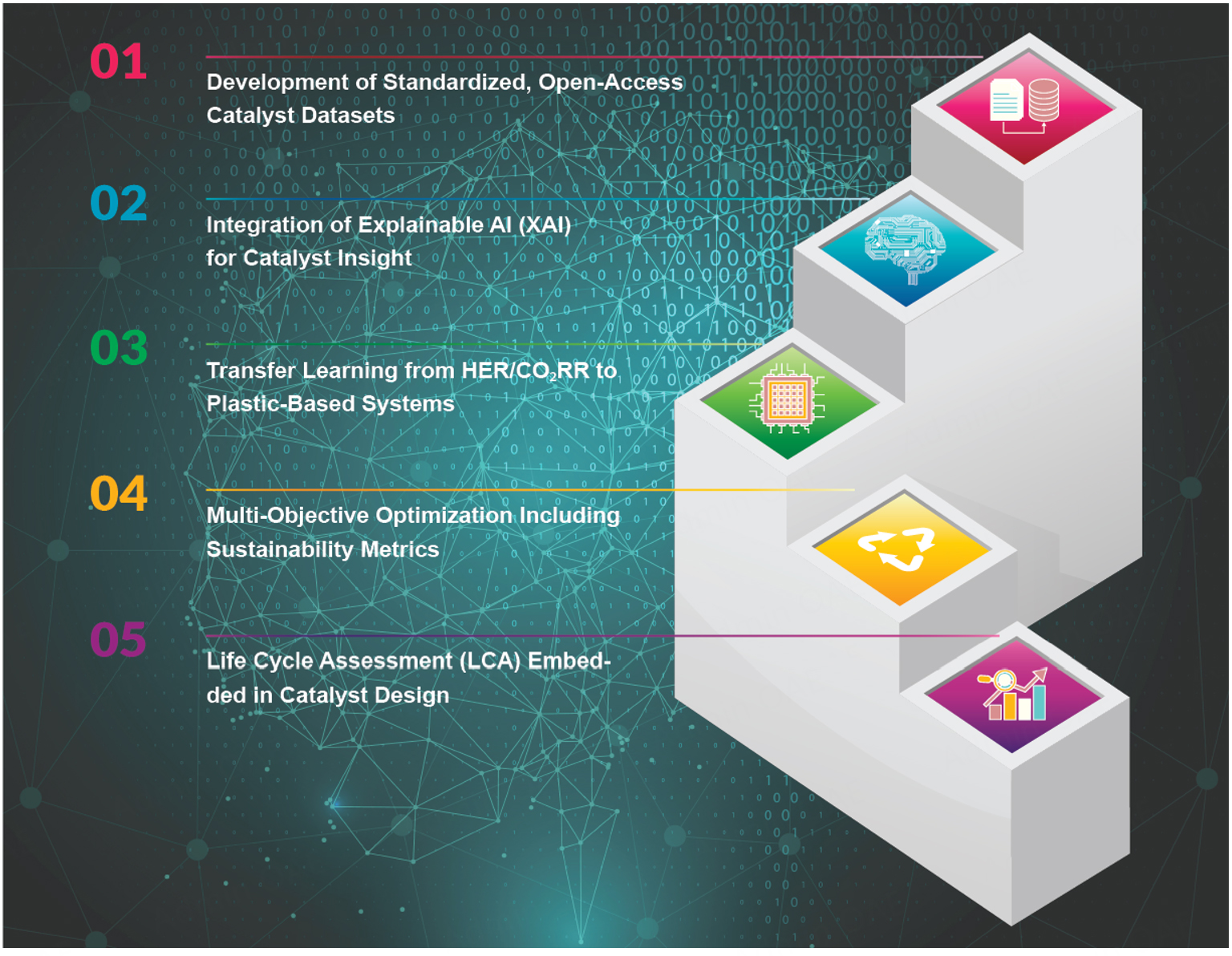
Figure 11. Proposed future research directions for AI-guided catalyst optimization in plastic-to-hydrogen conversion.
Limited and fragmented datasets
Most catalyst-ML models are trained on small-scale, proprietary datasets. These often lack plastic-specific features such as polymer type, pyrolysis intermediates, and reaction byproducts. The absence of open, standardized data sets impedes reproducibility and benchmarking[187]. Future research should be focused on the establishment of open-access datasets (including composition, surface structure, intermediates, and reaction kinetics) for plastic-derived hydrogen reactions[188].
Lack of mechanistic ML models and industrial optimization of plastic-to-hydrogen systems
Current ML applications often focus primarily on output metrics such as hydrogen yield or conversion efficiency, with limited emphasis on mechanistic interpretability. XAI methods like SHAP or LIME are underused in this domain[189]. Developing dedicated models for common plastics (PET, LDPE, PS), with pyrolysis and reforming behavior incorporated as additional input features[189]. Another important direction is the development of ML models capable of handling heterogeneous mixed-plastic feedstocks that better represent real industrial waste streams. Instead of treating plastics as single-component feeds, ML frameworks should incorporate descriptors such as polymer mass fractions, elemental composition, and contaminant indicators. Building specialized models for common plastics (PET, LDPE, PS) and integrating pyrolysis and reforming behaviors as additional input features could significantly improve prediction reliability.
Advanced pyrolysis-reforming frameworks have been developed to maximize hydrogen yield from mixed plastic waste. By integrating water-gas shift reactors and pressure swing adsorption units, hydrogen production rates of up to 64.21 kg/h have been achieved from 300 kg/h of mixed plastic waste[67]. Future research should focus on refining these processes to enhance efficiency, reduce energy consumption, and minimize environmental impacts. Nonthermal atmospheric plasma reactors offer a low-temperature alternative for hydrogen production from plastic waste, such as LDPE. These systems can achieve hydrogen yields of up to 0.42 mmol/g of LDPE, with performance strongly influenced by operating parameters such as applied voltage and electrode spacing[187]. Further investigation into plasma reactor designs and optimization of operational conditions is expected to enhance hydrogen production rates and energy efficiency. Microwave-assisted catalytic deconstruction of plastics using composite magnetic ferrite catalysts has demonstrated potential in converting plastic waste into nanostructured carbon and hydrogen fuel. This approach offers rapid heating and uniform energy distribution, leading to efficient breakdown of polymer chains[188]. Future studies should aim to scale up this technology and assess its applicability to various types of plastic waste.
Future research should integrate ML-driven catalyst discovery with process-level optimization. Incorporating multi-fidelity datasets and physics-informed descriptors for heterogeneous mixed-plastic feedstocks will enable multi-objective design strategies that balance hydrogen yield, catalyst stability, energy efficiency, and environmental impact under realistic industrial conditions.
Sparse cross-domain transfer learning
Many models developed for CO2RR or HER show limited transferability to plastic waste conversion systems due to differences in key intermediates and reaction pathways. To date, only a few studies[190] have attempted to adapt pretrained catalyst models to new chemical domains. To address this gap, interpretable ML techniques such as SHAP, LIME, and symbolic regression should be incorporated to elucidate the catalytic significance of key descriptors, including d-band center, surface energy, and defect density[28,191]. These approaches can improve model interpretability and facilitate knowledge transfer across reaction systems.
Lack of LCA integration
While technological advancements are crucial, understanding the environmental implications of plastic-to-hydrogen conversion processes is equally important. Comprehensive LCAs are required to evaluate the overall sustainability of these technologies, considering factors such as greenhouse gas emissions, cumulative energy demand, and potential environmental pollutants. Incorporating LCAs into future research will ensure that developed methods align with environmental and sustainability goals[192]. Despite the rapid development of machine learning in catalyst design and process optimization, the integration of ML-driven frameworks with life-cycle sustainability assessment remains limited. Most current ML applications focus primarily on predicting catalytic activity, hydrogen yield, and reaction performance, while cradle-to-gate environmental impacts associated with catalyst synthesis and process operation are rarely considered[69]. Recent studies have shown that ML models can be coupled with LCA datasets to estimate environmental indicators such as greenhouse gas emissions and energy consumption directly from process variables and material descriptors[177-179]. Such approaches demonstrate the potential for ML models that not only optimize catalyst performance but also integrate sustainability indicators, including GHG emissions, cumulative energy demand, and energy payback time[67]. In addition, integrating carbon capture, utilization, and storage (CCUS) technologies with plastic waste gasification and reforming processes offers a promising pathway to further reduce lifecycle emissions. By capturing CO2 generated during thermochemical conversion, the overall carbon footprint of hydrogen production can be significantly reduced, supporting global decarbonization targets. Future research should therefore focus on developing integrated ML-LCA frameworks and cost-effective CCUS technologies tailored for plastic waste conversion systems[69].
Beyond catalyst discovery, artificial intelligence methods can also support system-level optimization of plastic-to-hydrogen processes. Techniques such as multi-objective optimization and reinforcement learning could be integrated with process simulators and digital twins to optimize reactor configurations, operating parameters, and real-time control strategies. Such AI-driven frameworks could identify optimal trade-offs between hydrogen yield, system cost, and environmental impact, enabling the design of economically viable and environmentally sustainable plastic-to-hydrogen conversion systems at an industrial scale.
Underutilization of reinforcement learning and active learning
While supervised learning currently dominates the field, reinforcement learning (RL) offers significant potential to accelerate catalyst discovery by navigating large design spaces through feedback-driven optimization—an opportunity highlighted in recent studies[193,194]. Active learning, when combined with RL, can further enhance efficiency by iteratively selecting the most informative data points for model refinement[193,195].
Integrating these approaches with platforms such as DP-GEN or LASP would enable real-time experiment planning and adaptive feedback correction, thereby reducing data redundancy and experimental cost. Moreover, such closed-loop frameworks can facilitate autonomous catalyst optimization by continuously updating models based on newly acquired data. This capability is particularly valuable for complex systems such as plastic-to-hydrogen conversion, where large design spaces and nonlinear interactions demand adaptive and data-efficient exploration strategies.
Comparative potential of electrocatalysts for plastic-to-hydrogen systems
A rapidly growing area of interest is the role of electrocatalysts in converting plastic waste to hydrogen. Compared to thermocatalysts, which require high operating temperatures, and photocatalysts, which are limited by light utilization and charge recombination, electrocatalysts enable low-temperature operation and offer scalable, electrically tunable reaction pathways. High-entropy oxides (HEOs), metal-nitrogen-carbon (M-N-C) frameworks, and SACs have shown promising performance for plastic-derived electrocatalytic reactions[196,197]. In parallel, ML models like GNNs and deep neural networks are increasingly used to predict optimal compositions and improve catalyst selectivity for HER under plastic-rich feed conditions[77]. Future efforts should be focused on the development of stable, low-cost, and earth-abundant electrocatalysts. Integration with efficient pretreatment strategies for plastic depolymerization will also be critical. In addition, ML-assisted control of voltage-driven reaction pathways may help suppress side reactions and improve hydrogen purity.
Development of advanced catalysts
The efficiency of plastic waste conversion heavily depends on the catalysts employed. Recent studies highlight the potential of HEOs and sulfur vacancy-engineered cadmium sulfide (CdS) catalysts for enhancing hydrogen production rates. Further research is needed to optimize these catalysts for large-scale applications, focusing on improving their stability, selectivity, and resistance to deactivation. High-entropy materials, particularly HEONs, have shown superior performance in the photoreforming of plastic waste[185]. The incorporation of nitrogen into HEOs leads to atomic-scale structural distortions, resulting in narrower band gaps and reduced electron-hole recombination. These properties enhance the photocatalytic conversion of PET into hydrogen and valuable chemicals. In addition, recent studies on high-entropy amorphous catalysts (HEACs) report improved catalytic activity and durability compared with their crystalline counterparts[69]. Despite these advances, further work is required to optimize catalyst composition and structure, with a focus on enhancing stability, selectivity, and resistance to deactivation for large-scale applications.
CONCLUSION
The convergence of artificial intelligence and catalysis research offers transformative potential for addressing two of the most pressing global challenges: plastic waste accumulation and the demand for clean hydrogen energy. Electrocatalytic and photocatalytic pathways emerge as promising routes for converting complex plastic feedstocks into hydrogen under relatively mild conditions. However, significant challenges remain, including feedstock heterogeneity, catalyst deactivation, scalability and energy efficiency. This review highlights the growing role of machine learning and deep learning techniques in enabling data-driven catalyst design through insights into electronic, geometric, and chemical descriptors. These approaches substantially reduce the time and cost associated with conventional experimental screening and computational modeling. Nevertheless, key limitations persist, including the scarcity of domain-specific datasets tailored to plastic-derived intermediates, limited mechanistic interpretability, and poor cross-domain generalization of existing models. Addressing these challenges will require the development of standardized datasets, tighter integration with first-principles methods such as DFT, and the adoption of interpretable ML frameworks alongside experimental validation. Ultimately, the integration of AI-driven modeling, advanced catalyst design, and sustainable process engineering provides a viable pathway toward efficient plastic-to-hydrogen conversion. Continued interdisciplinary collaboration will be essential to accelerate the development of scalable and environmentally sustainable technologies. By bridging data-driven intelligence with catalytic science, this field is poised to redefine how waste resources are transformed into sustainable energy carriers.
DECLARATIONS
Acknowledgement
Hao, D. acknowledges the support of RMIT University’s Vice Chancellor's Research Fellowship. Wang, Y. acknowledges the support of the Australian Research Council (ARC) through Future Fellowship (FT230100065) and Discovery Project (DP220102729).
Authors' contributions
Conceptualization and study design: Obaid, A.; Wang, Y.; Hao, D.
Literature review and data analysis: Obaid, A.; Sun, T.; Babarao, R.; Gao, L.
Draft manuscript preparation: Obaid, A.
Assistance in manuscript preparation and technical input: Sun, T.; Babarao, R.; Wang, L.; Gao, L.
Manuscript review and revision before submission: Wang, Y.; Wang, L.; Hao, D.
All authors read and approved of the final manuscript.
Availability of data and materials
Not applicable.
AI and AI-assisted tools statement
During the preparation of this manuscript, ChatGPT(version 5.5, released on 2026-04) and Grammarly were used solely for language editing. These tools did not influence the study design, data collection, analysis, interpretation, or the scientific content of the work. All authors take full responsibility for the accuracy, integrity, and final content of the manuscript.
Financial support and sponsorship
The authors acknowledge financial support from RMIT University for this research.
Conflicts of interest
All authors declared that there are no conflicts of interest.
Ethical approval and consent to participate
Not applicable.
Consent for publication
Not applicable.
Copyright
© The Author(s) 2026.
REFERENCES
1. Nayanathara Thathsarani Pilapitiya, P. G. C.; Ratnayake, A. S. The world of plastic waste: a review. Clean. Mater. 2024, 11, 100220.
2. Global plastics outlook: economic drivers, environmental impacts and policy options. OECD Publishing; 2022.
3. Real, L. E. P. Plastics statistics: production, recycling, and market data. In: Recycled materials for construction applications. Cham: Springer International Publishing; 2022. pp. 103-13.
4. Mohamadi, M. Plastic types and applications. In: Hasanzadeh R, Mojaver P, editors. Plastic waste treatment and management. Cham: Springer Nature Switzerland; 2023. pp. 1-19.
5. Björkner, B.; Frick-Engfeldt, M.; Pontén, A.; Zimerson, E. Plastic materials. In: Contact dermatitis, fifth edition; 2011, pp. 695-728.
6. Manzoor, J.; Sharma, M.; Sofi, I. R.; Dar, A. A. Plastic waste environmental and human health impacts. In: Handbook of research on environmental and human health impacts of plastic pollution. IGI Global Scientific Publishing; 2020, pp. 29-37.
7. Samiul Islam, F. A. The impact of plastic waste on ecosystems and human health and strategies for managing it for a sustainable environment. Int. J. Latest. Technol. Eng. Manag. Appl. Sci. 2025, 14, 706-23.
8. Vethaak, A. D.; Leslie, H. A. Plastic debris is a human health issue. Environ. Sci. Technol. 2016, 50, 6825-6.
9. Proshad, R.; Kormoker, T.; Islam, M. S.; Haque, M. A.; Rahman, M. M.; Mithu, M. M. R. Toxic effects of plastic on human health and environment: a consequences of health risk assessment in Bangladesh. Int. J. Health. 2017, 6, 1-5.
10. Zhao, X.; Korey, M.; Li, K.; et al. Plastic waste upcycling toward a circular economy. Chem. Eng. J. 2022, 428, 131928.
11. Zhang, F.; Zeng, M.; Yappert, R. D.; et al. Polyethylene upcycling to long-chain alkylaromatics by tandem hydrogenolysis/aromatization. Science 2020, 370, 437-41.
12. Chen, Z.; Wei, W.; Chen, X.; Liu, Y.; Shen, Y.; Ni, B. Upcycling of plastic wastes for hydrogen production: advances and perspectives. Renew. Sustain. Energy. Rev. 2024, 195, 114333.
13. Niu, F.; Wu, Z.; Chen, D.; et al. State-of-the-art and perspectives of hydrogen generation from waste plastics. Chem. Soc. Rev. 2025, 54, 4948-72.
14. Yusaf, T.; Laimon, M.; Alrefae, W.; et al. Hydrogen energy demand growth prediction and assessment (2021-2050) using a system thinking and system dynamics approach. Appl. Sci. 2022, 12, 781.
15. Baykara, S. Z. Hydrogen: a brief overview on its sources, production and environmental impact. Int. J. Hydrogen. Energy. 2018, 43, 10605-14.
16. Farias, C. B. B.; Barreiros, R. C. S.; da Silva, M. F.; Casazza, A. A.; Converti, A.; Sarubbo, L. A. Use of hydrogen as fuel: a trend of the 21st century. Energies 2022, 15, 311.
17. Ball, M.; Wietschel, M. The hydrogen economy opportunities and challenges. Cambridge University Press; 2009, pp. 277-308.
18. Da Silva Sousa, P.; Neto, F. S.; De França Serpa, J.; et al. Trends and challenges in hydrogen production for a sustainable energy future. Biofuels. Bioprod. Bioref. 2024, 18, 2196-210.
19. Al-Qadri, A. A.; Ahmed, U.; Ahmad, N.; Abdul Jameel, A. G.; Zahid, U.; Naqvi, S. R. A review of hydrogen generation through gasification and pyrolysis of waste plastic and tires: opportunities and challenges. Int. J. Hydrogen. Energy. 2024, 77, 1185-204.
20. Alshareef, R.; Nahil, M. A.; Williams, P. T. Hydrogen production by three-stage (i) pyrolysis, (ii) catalytic steam reforming, and (iii) water gas shift processing of waste plastic. Energy. Fuels. 2023, 37, 3894-907.
21. Hu, K.; Yang, Y.; Wang, Y.; Duan, X.; Wang, S. Catalytic carbon and hydrogen cycles in plastics chemistry. Chem. Catal. 2022, 2, 724-61.
22. Mustapha, S. I.; Anekwe, I. M. S.; Akpasi, S. O.; et al. Biomass conversion for sustainable hydrogen generation: a comprehensive review. Fuel. Process. Technol. 2025, 272, 108210.
23. Cui, M.; Xu, B.; Shi, X.; et al. Metal-organic framework-derived single-atom catalysts for electrocatalytic energy conversion applications. J. Mater. Chem. A. 2024, 12, 18921-47.
24. Nguyen, T. T.; Edalati, K. Efficient photoreforming of plastic waste using a high-entropy oxide catalyst. J. Catal. 2024, 440, 115808.
25. Paiu, M.; Lutic, D.; Favier, L.; Gavrilescu, M. Heterogeneous photocatalysis for advanced water treatment: materials, mechanisms, reactor configurations, and emerging applications. Appl. Sci. 2025, 15, 5681.
26. Butler, K. T.; Davies, D. W.; Cartwright, H.; Isayev, O.; Walsh, A. Machine learning for molecular and materials science. Nature 2018, 559, 547-55.
27. Nyangiwe, N. N. Applications of density functional theory and machine learning in nanomaterials: a review. Next. Mater. 2025, 8, 100683.
28. Wang, K.; Dowling, A. W. Bayesian optimization for chemical products and functional materials. Curr. Opin. Chem. Eng. 2022, 36, 100728.
29. Bin Abu Sofian, A. D. A.; Lim, H. R.; Chew, K. W.; et al. Hydrogen production and pollution mitigation: Enhanced gasification of plastic waste and biomass with machine learning & storage for a sustainable future. Environ. Pollut. 2024, 342, 123024.
30. Obaid, A.; Parvez Mahmud, M. A.; Tabraiz, S. Life cycle impact assessment of hydrogen production from plastic waste polymers. Clean. Technol. Environ. Policy. 2025, 27, 6809-25.
31. Bishnu, S. K.; Alnouri, S. Y.; Al-Mohannadi, D. M. Computational applications using data driven modeling in process systems: a review. Digit. Chem. Eng. 2023, 8, 100111.
32. Lai, N. S.; Tew, Y. S.; Zhong, X. Artificial intelligence (AI) workflow for catalyst design and optimization. Ind. Eng. Chem. Res. 2023, 62, 17835-48.
33. Vipin, K. E.; Prahallad, P. Data-driven catalyst design: a machine learning approach to predicting electrocatalytic performance in hydrogen evolution and oxygen evolution reactions. 2024. Available from: https://arxiv.org/pdf/2412.12846 [Last accessed on 13 May 2026].
34. Available from: https://www.scopus.com/home.uri [Last accessed on 13 May 2026].
35. Faizan, M.; Siddiqui, M. N. Plastic waste to hydrogen fuel: cutting-edge catalytic technologies for sustainable energy transition. Int. J. Hydrogen. Energy. 2025, 127, 678-701.
36. Quintanilla, P.; Elhalwagy, A.; Duan, L.; et al. Artificial intelligence and robotics in the hydrogen lifecycle: a systematic review. Int. J. Hydrogen. Energy. 2025, 113, 801-17.
37. Jin, Z.; Gu, D.; Li, P.; et al. Artificial intelligence-driven catalyst design for electrocatalytic hydrogen production: paradigm innovation and challenges in material discovery. Sustain. Chem. Energy. Mater. 2025, 2, 100010.
38. Azman, D. Q.; Wan Daud, W. M. A.; Abdul Patah, M. F.; Amir, Z.; Saw, P. A. Plastic waste management through liquefaction in hydrogen donating solvents: A review. J. Environ. Manag. 2024, 359, 120961.
39. Fang, Y.; Wen, Y.; Dai, L.; Wang, C.; You, S.; Li, W. Artificial intelligence in plastic recycling and conversion: a review. Resour. Conserv. Recycl. 2025, 215, 108090.
40. Ji, Y.; Liu, C.; Zheng, T.; Xia, C. Plastic waste upcycling through electrocatalysis. Curr. Opin. Electrochem. 2025, 52, 101712.
41. Chen, Y.; Awasthi, A. K.; Wei, F.; Tan, Q.; Li, J. Single-use plastics: production, usage, disposal, and adverse impacts. Sci. Total. Environ. 2021, 752, 141772.
42. Desidery, L.; Lanotte, M. Polymers and plastics: types, properties, and manufacturing. plastic waste for sustainable asphalt roads. Elsevier; 2022. pp. 3-28.
43. Muringayil Joseph, T.; Azat, S.; Ahmadi, Z.; et al. Polyethylene terephthalate (PET) recycling: a review. Case. Stud. Chem. Environ. Eng. 2024, 9, 100673.
44. Adeniran, A. A.; Ayesu-Koranteng, E.; Shakantu, W. A review of the literature on the environmental and health impact of plastic waste pollutants in sub-Saharan Africa. Pollutants 2022, 2, 531-45.
45. Geyer, R. Production, use, and fate of synthetic polymers. In: Plastic Waste and Recycling. Elsevier; 2020. pp. 13-32.
46. Stegmann, P.; Daioglou, V.; Londo, M.; Van Vuuren, D. P.; Junginger, M. Plastic futures and their CO2 emissions. Nature 2022, 612, 272-6.
47. Ilyas, M.; Ahmad, W.; Khan, H.; Yousaf, S.; Khan, K.; Nazir, S. Plastic waste as a significant threat to environment - a systematic literature review. Rev. Environ. Health. 2018, 33, 383-406.
48. Ragusa, A.; Svelato, A.; Santacroce, C.; et al. Plasticenta: first evidence of microplastics in human placenta. Environ. Int. 2021, 146, 106274.
49. Leslie, H. A.; Van Velzen, M. J.; Brandsma, S. H.; Vethaak, A. D.; Garcia-Vallejo, J. J.; Lamoree, M. H. Discovery and quantification of plastic particle pollution in human blood. Environ. Int. 2022, 163, 107199.
50. Vuppaladadiyam, S. S. V.; Vuppaladadiyam, A. K.; Sahoo, A.; et al. Waste to energy: trending key challenges and current technologies in waste plastic management. Sci. Total. Environ. 2024, 913, 169436.
51. Fan, Y. V.; Jiang, P.; Tan, R. R.; et al. Forecasting plastic waste generation and interventions for environmental hazard mitigation. J. Hazard. Mater. 2022, 424, 127330.
52. Chawla, S.; Varghese, B. S.; A, C.; Hussain, C. G.; Keçili, R.; Hussain, C. M. Environmental impacts of post-consumer plastic wastes: Treatment technologies towards eco-sustainability and circular economy. Chemosphere 2022, 308, 135867.
53. Maitlo, G.; Ali, I.; Maitlo, H. A.; et al. Plastic waste recycling, applications, and future prospects for a sustainable environment. Sustainability 2022, 14, 11637.
54. Huang, Z.; Shanmugam, M.; Liu, Z.; et al. Chemical recycling of polystyrene to valuable chemicals via selective acid-catalyzed aerobic oxidation under visible light. J. Am. Chem. Soc. 2022, 144, 6532-42.
55. Babaremu, K.; Okoya, S.; Hughes, E.; et al. Sustainable plastic waste management in a circular economy. Heliyon 2022, 8, e09984.
56. Huang, J.; Veksha, A.; Chan, W. P.; Giannis, A.; Lisak, G. Chemical recycling of plastic waste for sustainable material management: a prospective review on catalysts and processes. Renew. Sustain. Energy. Rev. 2022, 154, 111866.
57. Biririza, E. Prospects and challenges of sustainable energy future: policy and technology perspectives. Int. J. Econ. Energy. Environ. 2025, 10, 7-16.
58. Masson-Delmotte, V.; Zhai, P.; Pörtner, H. O.; et al. Global warming of 1.5 °C. An IPCC Special Report on the impacts of global warming of 2018. Available from: https://www.ipcc.ch/sr15/ [Last accessed on 19 May 2026].
59. Mastellone, M. L. Technical description and performance evaluation of different packaging plastic waste management's systems in a circular economy perspective. Sci. Total. Environ. 2020, 718, 137233.
60. Arshad, H.; Sulaiman, S. A.; Hussain, Z.; Naz, Y.; Basrawi, F. Microwave assisted pyrolysis of plastic waste for production of fuels: a review. MATEC. Web. Conf. 2017, 131, 02005.
61. Sajwan, D.; Sharma, A.; Sharma, M.; Krishnan, V. Upcycling of plastic waste using photo-, electro-, and photoelectrocatalytic approaches: a way toward circular economy. ACS. Catal. 2024, 14, 4865-926.
62. Qin, T. H.; Ji, G.; Qu, B.; et al. Pyrolysis-catalytic gasification of plastic waste for hydrogen-rich syngas production with hybrid-functional Ni-CaO Ca2SiO4 catalyst. Carbon. Capture. Sci. Technol. 2025, 14, 100382.
63. Zhao, Y.; Yao, J.; Chen, G.; et al. Energy, efficiency, and environmental analysis of hydrogen generation via plasma co-gasification of biomass and plastics based on parameter simulation using Aspen plus. Energy. Convers. Manag. 2023, 295, 117623.
64. Mishra, R.; Shu, C.; Gollakota, A. R.; Pan, S. Unveiling the potential of pyrolysis-gasification for hydrogen-rich syngas production from biomass and plastic waste. Energy. Convers. Manag. 2024, 321, 118997.
65. Ganza, P. E.; Lee, B. A novel method for industrial production of clean hydrogen (H2) from mixed plastic waste. Int. J. Hydrogen. Energy. 2023, 48, 15037-52.
66. Sabbir, M. H. R.; Azad, M. S.; Zahan, T. Review on plastic waste pyrolysis: a promising pathway of fuel generation and renewable energy. 2024.
67. Medaiyese, F. J.; Nasriani, H. R.; Khan, K.; Khajenoori, L. Sustainable hydrogen production from plastic waste: optimizing pyrolysis for a circular economy. Hydrogen 2025, 6, 15.
68. Dharmaraj, S.; Ashokkumar, V.; Chew, K. W.; Chia, S. R.; Show, P. L.; Ngamcharussrivichai, C. Novel strategy in biohydrogen energy production from COVID - 19 plastic waste: a critical review. Int. J. Hydrogen. Energy. 2022, 47, 42051-74.
69. Bashir, M. A.; Ji, T.; Weidman, J.; et al. Plastic waste gasification for low-carbon hydrogen production: a comprehensive review. Energy. Adv. 2025, 4, 330-63.
70. Mitta, H.; Li, L.; Havaei, M.; et al. Challenges and opportunities in catalytic hydrogenolysis of oxygenated plastics waste: polyesters, polycarbonates, and epoxy resins. Green. Chem. 2025, 27, 10-40.
71. Seitz, M.; Schröter, S. Catalytic depolymerization of polyolefinic plastic waste. Chem. Ing. Technol. 2022, 94, 720-6.
73. Venkataraghavan, R.; Bhure, A.; Khan, T. S.; Shikare, D.; Devi, R. N.; Dhepe, P. L. Exploring thermocatalytic pyrolysis to derive sustainable chemical intermediates from plastic waste; Role of temperature, catalyst, and reactor conditions. J. Indian. Inst. Sci. 2024, 104, 383-94.
74. Martín, A. J.; Mondelli, C.; Jaydev, S. D.; Pérez-Ramírez, J. Catalytic processing of plastic waste on the rise. Chem 2021, 7, 1487-533.
75. Liu, X.; Zhang, Y.; Nahil, M. A.; Williams, P. T.; Wu, C. Development of Ni- and Fe- based catalysts with different metal particle sizes for the production of carbon nanotubes and hydrogen from thermo-chemical conversion of waste plastics. J. Anal. Appl. Pyrolysis. 2017, 125, 32-9.
76. Nabgan, W.; Nabgan, B.; Tuan, Abdullah. T. A.; et al. Ni-Pt/Al nano-sized catalyst supported on TNPs for hydrogen and valuable fuel production from the steam reforming of plastic waste dissolved in phenol. Int. J. Hydrogen. Energy. 2020, 45, 22817-32.
77. Zhang, Z.; Wang, J.; Ge, X.; et al. Mixed plastics wastes upcycling with high-stability single-atom Ru catalyst. J. Am. Chem. Soc. 2023, 145, 22836-44.
78. Li, R.; Zhang, Z.; Liang, X.; et al. Polystyrene waste thermochemical hydrogenation to ethylbenzene by a N-bridged Co, Ni dual-atom catalyst. J. Am. Chem. Soc. 2023, 145, 16218-27.
79. Huang, K.; Lv, C.; Li, C.; Bai, H.; Meng, X. Ti3C2 MXene supporting platinum nanoparticles as rapid electrons transfer channel and active sites for boosted photocatalytic water splitting over g-C3N4. J. Colloid. Interface. Sci. 2023, 636, 21-32.
80. Yao, D.; Li, H.; Mohan, B. C.; Prabhakar, A. K.; Dai, Y.; Wang, C. Conversion of waste plastic packings to carbon nanomaterials: investigation into catalyst material, waste type, and product applications. ACS. Sustain. Chem. Eng. 2022, 10, 1125-36.
81. Yao, D.; Wu, C.; Yang, H.; et al. Co-production of hydrogen and carbon nanotubes from catalytic pyrolysis of waste plastics on Ni-Fe bimetallic catalyst. Energy. Convers. Manag. 2017, 148, 692-700.
82. Docherty, J. H.; Lister, T. M.; Mcarthur, G.; et al. Transition-metal-catalyzed C-H bond activation for the formation of C-C bonds in complex molecules. Chem. Rev. 2023, 123, 7692-760.
83. Gandeepan, P.; Müller, T.; Zell, D.; Cera, G.; Warratz, S.; Ackermann, L. 3d transition metals for C-H activation. Chem. Rev. 2018, 119, 2192-452.
84. Lakiss, L.; Hamoud, H. I.; Cruchade, H.; et al. Zeolite catalysts for hydrogen harvesting from polyethylene: a sustainable approach to plastic waste upgrading. ChemCatChem 2025, 17, e202500592.
85. Munir, D.; Amer, H.; Aslam, R.; Bououdina, M.; Usman, M. R. Composite zeolite beta catalysts for catalytic hydrocracking of plastic waste to liquid fuels. Mater. Renew. Sustain. Energy. 2020, 9, 9.
86. Kumar, A.; Awasthi, M. K.; Sheet, N.; Kharde, T. A.; Singh, S. K. One-pot upcycling of waste plastics for selective hydrogen production at low-temperature. ChemCatChem 2023, 15, e202300574.
87. Zhou, H.; Ren, Y.; Li, Z.; et al. Electrocatalytic upcycling of polyethylene terephthalate to commodity chemicals and H2 fuel. Nat. Commun. 2021, 12, 4679.
88. Kang, H.; He, D.; Yan, X.; et al. Cu promoted the dynamic evolution of Ni-based catalysts for polyethylene terephthalate plastic upcycling. ACS. Catal. 2024, 14, 5314-25.
89. Shi, R.; Liu, K.; Liu, F.; Yang, X.; Hou, C.; Chen, Y. Electrocatalytic reforming of waste plastics into high value-added chemicals and hydrogen fuel. Chem. Commun. 2021, 57, 12595-8.
90. Hai, H. T. N.; Nguyen, T. T.; Nishibori, M.; Ishihara, T.; Edalati, K. Photoreforming of plastic waste into valuable products and hydrogen using a high-entropy oxynitride with distorted atomic-scale structure. Appl. Catal. B. Environ. Energy. 2025, 365, 124968.
91. Talebian-Kiakalaieh, A.; Li, H.; Guo, M.; et al. Photocatalytic reforming raw plastic in seawater by atomically-engineered GeS/ZnIn2S4. Adv. Energy. Mater. 2025, 15, 2404963.
92. Yue, S.; Zhao, Z.; Zhang, T.; Li, F.; Wang, P.; Zhan, S. Photoreforming of plastic waste to sustainable fuels and chemicals: waste to energy. Environ. Sci. Technol. 2024, 58, 22865-79.
93. Yang, R. X.; Wu, S. L.; Chuang, K. H.; Wey, M. Y. Co-production of carbon nanotubes and hydrogen from waste plastic gasification in a two-stage fluidized catalytic bed. Renew. Energy. 2020, 159, 10-22.
94. Wang, J.; Pan, Y.; Song, J.; Huang, Q. A high-quality hydrogen production strategy from waste plastics through microwave-assisted reactions with heterogeneous bimetallic iron/nickel/cerium catalysts. J. Anal. Appl. Pyrolysis. 2022, 166, 105612.
95. Li, W.; Qian, K.; Yang, Z.; Ding, X.; Tian, W.; Chen, D. Promotion effect of cobalt doping on microwave-initiated plastic deconstruction for hydrogen production over iron catalysts. Appl. Catal. B. Environ. 2023, 327, 122451.
96. Seh, Z. W.; Kibsgaard, J.; Dickens, C. F.; Chorkendorff, I.; Nørskov, J. K.; Jaramillo, T. F. Combining theory and experiment in electrocatalysis: Insights into materials design. Science 2017, 355, eaad4998.
97. Wang, N.; Li, X.; Hu, M.; et al. Ordered macroporous superstructure of bifunctional cobalt phosphide with heteroatomic modification for paired hydrogen production and polyethylene terephthalate plastic recycling. Appl. Catal. B. Environ. 2022, 316, 121667.
98. Li, Y.; Liu, L.; Wang, X.; et al. Electrochemical upgrading of PET plastic wastes for hydrogen production using porous Fe-Ni2P nanosheets. Int. J. Hydrogen. Energy. 2024, 96, 794-802.
99. Jiao, Y.; Zheng, Y.; Jaroniec, M.; Qiao, S. Z. Design of electrocatalysts for oxygen- and hydrogen-involving energy conversion reactions. Chem. Soc. Rev. 2015, 44, 2060-86.
100. Banoth, P.; Kandula, C.; Kollu, P. Introduction to electrocatalysts. In: Noble metal-free electrocatalysts: new trends in electrocatalysts for energy applications. 2022, pp. 1-37.
101. Voiry, D.; Yamaguchi, H.; Li, J.; et al. Enhanced catalytic activity in strained chemically exfoliated WS2 nanosheets for hydrogen evolution. Nat. Mater. 2013, 12, 850-5.
102. Hu, D.; Sun, C.; Wang, Y.; et al. Growth of two-dimensional edge-rich screwed WS2 with high active site density for accelerated hydrogen evolution. Catalysts 2025, 15, 496.
103. Yan, Y.; Zhou, H.; Xu, S.; et al. Electrocatalytic upcycling of biomass and plastic wastes to biodegradable polymer monomers and hydrogen fuel at high current densities. J. Am. Chem. Soc. 2023, 145, 6144-55.
104. Wang, H.; Smith, R. L.; Qi, X. Upcycling of monomers derived from waste polyester plastics via electrocatalysis. J. Energy. Chem. 2025, 101, 535-61.
105. Oku, A.; Hu, L. C.; Yamada, E. Alkali decomposition of poly(ethylene terephthalate) with sodium hydroxide in nonaqueous ethylene glycol: A study on recycling of terephthalic acid and ethylene glycol. J. Appl. Polym. Sci. 1997, 63, 595-601.
106. Wang, G.; Chen, Z.; Wei, W.; Ni, B. J. Electrocatalysis-driven sustainable plastic waste upcycling. Electron 2024, 2, e34.
107. Zubair, M.; Kumar, P.; Klingenhof, M.; et al. Vacancy promotion in layered double hydroxide electrocatalysts for improved oxygen evolution reaction performance. ACS. Catal. 2023, 13, 4799-810.
108. Chen, Z.; Zheng, R.; Bao, T.; et al. Dual-doped nickel sulfide for electro-upgrading polyethylene terephthalate into valuable chemicals and hydrogen fuel. Nano-Micro. Lett. 2023, 15, 210.
109. Hauffe, W.; Heitbaum, J. The electrooxidation of ethylene glycol at platinum in potassium hydroxide. Electrochim. Acta. 1978, 23, 299-304.
110. Wang, B.; Zhao, K.; Yu, Z.; et al. In situ structural evolution of the multi-site alloy electrocatalyst to manipulate the intermediate for enhanced water oxidation reaction. Energy. Environ. Sci. 2020, 13, 2200-8.
111. Fernandez, E.; Cortazar, M.; Santamaria, L.; et al. Tuning pyrolysis temperature to improve the in-line steam reforming catalyst activity and stability. Process. Saf. Environ. Prot. 2022, 166, 440-50.
112. Ochoa, A.; Arregi, A.; Amutio, M.; et al. Coking and sintering progress of a Ni supported catalyst in the steam reforming of biomass pyrolysis volatiles. Appl. Catal. B. Environ. 2018, 233, 289-300.
113. Argyle, M.; Bartholomew, C. Heterogeneous catalyst deactivation and regeneration: a review. Catalysts 2015, 5, 145-269.
114. Ren, J.; Cao, J.; Yang, F.; Liu, Y.; Tang, W.; Zhao, X. Understandings of catalyst deactivation and regeneration during biomass tar reforming: a crucial review. ACS. Sustain. Chem. Eng. 2021, 9, 17186-206.
115. Ochoa, A.; Bilbao, J.; Gayubo, A. G.; Castaño, P. Coke formation and deactivation during catalytic reforming of biomass and waste pyrolysis products: a review. Renew. Sustain. Energy. Rev. 2020, 119, 109600.
116. Yin, G.; Zhu, H.; Chen, S.; et al. Machine learning-assisted high-throughput screening for electrocatalytic hydrogen evolution reaction. Molecules 2025, 30, 759.
117. Xu, Y.; Wang, H.; Zhang, W.; et al. AI-empowered catalyst discovery: a survey from classical machine learning approaches to large language models. arXiv 2025.
118. Aramouni, N. A. K.; Touma, J. G.; Tarboush, B. A.; Zeaiter, J.; Ahmad, M. N. Catalyst design for dry reforming of methane: analysis review. Renew. Sustain. Energy. Rev. 2018, 82, 2570-85.
119. Wang, N.; Yuan, B.; Zheng, F.; et al. Machine-learning assisted screening proton conducting Co/Fe based oxide for the air electrode of protonic solid oxide cell. Adv. Funct. Mater. 2024, 34, 2309855.
120. Gu, Y.; Zhang, H.; Xu, Z.; et al. Design and application of electrocatalyst based on machine learning. Interdiscip. Mater. 2025, 4, 456-79.
121. Ding, R.; Chen, J.; Chen, Y.; Liu, J.; Bando, Y.; Wang, X. Unlocking the potential: machine learning applications in electrocatalyst design for electrochemical hydrogen energy transformation. Chem. Soc. Rev. 2024, 53, 11390-461.
122. Xu, S.; Chen, Z.; Qin, M.; et al. Developing new electrocatalysts for oxygen evolution reaction via high throughput experiments and artificial intelligence. NPJ. Comput. Mater. 2024, 10, 194.
123. Yang, T. T.; Saidi, W. A. Reconciling the volcano trend with the Butler-Volmer model for the hydrogen evolution reaction. J. Phys. Chem. Lett. 2022, 13, 5310-5.
124. Steinmann, S. N.; Wang, Q.;
125. Smith, A.; Keane, A.; Dumesic, J. A.; Huber, G. W.; Zavala, V. M. A machine learning framework for the analysis and prediction of catalytic activity from experimental data. Appl. Catal. B. 2020, 263, 118257.
126. Terry, J.; Lau, M. L.; Jiateng, Sun. J.; et al. Analysis of extended X-ray absorption fine structure (EXAFS) data using artificial intelligence techniques. Appl. Surf. Sci. 2021, 547, 149059.
127. Kim, J.; Kang, D.; Kim, S.; Jang, H. W. Catalyze materials science with machine learning. ACS. Mater. Lett. 2021, 3, 1151-71.
128. Zhang, H.; Chen, L.; Dong, F.; et al. Dynamic transformation of active sites in energy and environmental catalysis. Energy. Environ. Sci. 2024, 17, 6435-81.
129. Taylor, H. S. A theory of the catalytic surface. In: Proceedings of the Royal Society A: Mathematical, Physical and Engineering Sciences; 1925, pp. 105-11.
130. Vojvodic, A.; Nørskov, J. K. New design paradigm for heterogeneous catalysts. Natl. Sci. Rev. 2015, 2, 140-3.
131. Varela, A. S.; Ju, W.; Strasser, P. Molecular nitrogen-carbon catalysts, solid metal organic framework catalysts, and solid metal/nitrogen-doped carbon (MNC) catalysts for the electrochemical CO2 reduction. Adv. Energy. Mater. 2018, 8, 1703614.
132. Zhang, L.; Bing, Q.; Qin, H.; Yu, L.; Li, H.; Deng, D. Artificial intelligence for catalyst design and synthesis. Matter 2025, 8, 102138.
133. Martini, A.; Hursán, D.; Timoshenko, J.; et al. Tracking the evolution of single-atom catalysts for the CO2 electrocatalytic reduction using operando X-ray absorption spectroscopy and machine learning. J.Am. Chem. Soc. 2023, 145, 17351-66.
134. Fan, X.; Chen, L.; Huang, D.; et al. From single metals to high-entropy alloys: how machine learning accelerates the development of metal electrocatalysts. Adv. Funct. Mater. 2024, 34, 2401887.
135. Cheng, D.; Zhao, Z. J.; Zhang, G.; et al. The nature of active sites for carbon dioxide electroreduction over oxide-derived copper catalysts. Nat. Commun. 2021, 12, 395.
136. Li, J.; Liu, T.; Palansooriya, K. N.; et al. Zeolite-catalytic pyrolysis of waste plastics: machine learning prediction, interpretation, and optimization. Appl. Energy. 2025, 382, 125258.
137. Xu, D.; Zhang, Z.; He, Z.; Wang, S. Machine learning-driven prediction and optimization of monoaromatic oil production from catalytic co-pyrolysis of biomass and plastic wastes. Fuel 2023, 350, 128819.
138. Taşar, Ş. Estimation of pyrolysis liquid product yield and its hydrogen content for biomass resources by combined evaluation of pyrolysis conditions with proximate-ultimate analysis data: A machine learning application. J. Anal. Appl. Pyrolysis. 2022, 165, 105546.
139. Tang, Q.; Chen, Y.; Yang, H.; et al. Machine learning prediction of pyrolytic gas yield and compositions with feature reduction methods: Effects of pyrolysis conditions and biomass characteristics. Bioresour. Technol. 2021, 339, 125581.
140. Potnuri, R.; Rao, C. S.; Surya, D. V.; Kumar, A.; Basak, T. Utilizing support vector regression modeling to predict pyro product yields from microwave-assisted catalytic co-pyrolysis of biomass and waste plastics. Energy. Convers. Manag. 2023, 292, 117387.
141. Riaz, S.; Ahmad, N.; Farooq, W.; Ali, I.; Sajid, M.; Akhtar, M. N. Catalytic pyrolysis of HDPE for enhanced hydrocarbon yield: a boosted regression tree assisted kinetics study for effective recycling of waste plastic. Dig. Chem. Eng. 2025, 14, 100213.
142. Cheng, Y.; Ekici, E.; Yildiz, G.; Yang, Y.; Coward, B.; Wang, J. Applied machine learning for prediction of waste plastic pyrolysis towards valuable fuel and chemicals production. J. Anal. Appl. Pyrolysis. 2023, 169, 105857.
143. Bu, Q.; Bai, J.; Wang, B.; Dai, L.; Long, H. Machine learning-assisted prediction of gas production during co-pyrolysis of biomass and waste plastics. Waste. Manag. 2025, 200, 114748.
144. Devasahayam, S.; Albijanic, B. Predicting hydrogen production from co-gasification of biomass and plastics using tree based machine learning algorithms. Renew. Energy. 2024, 222, 119883.
145. Bakır, R.; Orak, C.; Yüksel, A. Optimizing hydrogen evolution prediction: A unified approach using random forests, lightGBM, and Bagging Regressor ensemble model. Int. J. Hydrogen. Energy. 2024, 67, 101-10.
146. Yi, C. Q.; Bojeng, M. N. B. H. B. H.; Kamis, S. K. B. H.; Mubarak, N. M.; Karri, R. R.; Azri, H. Production of hydrogen using plastic waste via Aspen Hysys simulation. Sci. Rep. 2024, 14, 4934.
147. Lahafdoozian, M.; Khoshkroudmansouri, H.; Zein, S. H.; Jalil, A. A. Hydrogen production from plastic waste: a comprehensive simulation and machine learning study. Int. J. Hydrogen. Energy. 2024, 59, 465-79.
148. Aminu, I.; Nahil, M.; Williams, P. T. Pyrolysis-plasma/catalytic reforming of post-consumer waste plastics for hydrogen production. Catal. Today. 2023, 420, 114084.
149. Cai, N.; Li, X.; Xia, S.; et al. Pyrolysis-catalysis of different waste plastics over Fe/Al2O3 catalyst: high-value hydrogen, liquid fuels, carbon nanotubes and possible reaction mechanisms. Energy. Convers. Manag. 2021, 229, 113794.
150. Zhou, X.; Zhang, J.; Zhang, Z.; et al. Boosting the optimization strategy for the waste plastics pyrolysis engineering application: a machine learning multi-dimensional evaluation framework. Chen. J. . Clean. Prod. 2025, 492, 144891.
151. Peng, Y.; Wang, Y.; Ke, L. et al. A review on catalytic pyrolysis of plastic wastes to high-value products. Energy. Convers. Manag. 2022, 254, 115243.
152. Mou, L. H.; Han, T.; Smith, P. E. S.; Sharman, E.; Jiang, J. Machine learning descriptors for data-driven catalysis study. Adv. Sci. 2023, 10, 2301020.
153. Zhao, Y.; Li, Q.; Chi, C.; Gao, S.; Tang, S.; Chen, X. Design and screening of a NORR electrocatalyst with co-coordinating active centers of the support and coordination atoms: a machine learning descriptor for quantifying eigen properties. J. Mater. Chem. A. 2024, 12, 8226-35.
154. Srour, H.; Devers, E.; Mekki-Berrada, A.; et al. Regeneration of an aged hydrodesulfurization catalyst: conventional thermal vs non-thermal plasma technology. Fuel 2021, 306, 121674.
155. Wang, B.; Zhang, F. Main descriptors to correlate structures with the performances of electrocatalysts. Angew. Chem. Int. Ed. 2021, 61, e202111026.
156. González-Poggini, S. Hydrogen evolution descriptors: a review for electrocatalyst development and optimization. Int. J. Hydrogen. Energy. 2024, 59, 30-42.
157. Zhang, J.; Yang, H. B.; Zhou, D.; Liu, B. Adsorption energy in oxygen electrocatalysis. Chem. Rev. 2022, 122, 17028-72.
158. Jiao, S.; Fu, X.; Huang, H. Descriptors for the evaluation of electrocatalytic reactions: d-band theory and beyond. Adv. Funct. Mater. 2021, 32, 2107651.
159. Zhang, Y.; Zhang, Y.; Guo, Z.; et al. Establishing theoretical landscapes for identifying basal plane active sites in MBene toward multifunctional HER, OER, and ORR catalysts. J. Colloid. Interface. Sci. 2023, 652, 1954-64.
160. Liao, X.; Lu, R.; Xia, L.; et al. Density functional theory for electrocatalysis. Energy. Environ. Mater. 2021, 5, 157-85.
161. Niederer, K. A.; Gilmartin, P. H.; Kozlowski, M. C. Oxidative photocatalytic homo- and cross-coupling of phenols: nonenzymatic, catalytic method for coupling tyrosine. ACS. Catal. 2020, 10, 14615-23.
162. Hu, L.; Zhong, Y.; Wu, S.; et al. Biocompatible and biodegradable super-toughness regenerated cellulose via water molecule-assisted molding. Chem. Eng. J. 2021, 417, 129229.
163. Singla, R. K.; Das, R. Corrigendum to “Application of decomposition method and inverse prediction of parameters in a moving fin” [Energy Convers. Manage. 84 (2014) 268-281]. Energy. Convers. Manag. 2015, 93, 458-9.
164. Bagheri, S.; Muhd, Julkapli. N. Nano-diamond based photocatalysis for solar hydrogen production. Int. J. Hydrogen. Energy. 2020, 45, 31538-54.
165. Pandelidis, D. Numerical study and performance evaluation of the Maisotsenko cycle cooling tower. Energy. Convers. Manag. 2020, 210, 112735.
166. Wu, H.; Wang, L.; Ji, G.; et al. Renewable production of nitrogen-containing compounds and hydrocarbons from catalytic microwave-assisted pyrolysis of chlorella over metal-doped HZSM-5 catalysts. J. Anal. Appl. Pyrolysis. 2020, 151, 104902.
167. Fang, A.; Feng, K.; Mei, X.; et al. The simultaneous recruitment of anammox granules and biofilm by a sequential immobilization and granulation approach. Chem. Eng. J. 2021, 417, 128041.
168. Schwaller, P.; Laino, T.; Gaudin, T.; et al. Molecular transformer: a model for uncertainty-calibrated chemical reaction prediction. ACS. Cent. Sci. 2019, 5, 1572-83.
169. Mortazavi, B. Recent advances in machine learning-assisted multiscale design of energy materials. Adv. Energy. Mater. 2025, 15, 2403876.
170. Deshmukh, M. A.; Bakandritsos, A.; Zbořil, R. Bimetallic single-atom catalysts for water splitting. Nanomicro. Lett. 2025, 17, 1.
171. Xia, C.; Li, F.; He, C.; Zaman, S.; Guo, W.; Xia, B. Y. Structural reconstruction of electrocatalysts. Fundam. Res. 2025, 5, 2537-52.
172. Belkhode, P. N.; Awatade, S. M.; Prakash, C.; et al. An integrated AI-driven framework for maximizing the efficiency of heterostructured nanomaterials in photocatalytic hydrogen production. Sci. Rep. 2025, 15, 24936.
173. Wang, Z.; Li, W.; Wang, S.; Wang, X. The future of catalysis: applying graph neural networks for intelligent catalyst design. WIREs. Comput. Mol. Sci. 2025, 15, e70010.
174. Tamtaji, M.; Kazemeini, M.; Abdi, J. DFT and machine learning studies on a multi-functional single-atom catalyst for enhanced oxygen and hydrogen evolution as well as CO2 reduction reactions. Int. J. Hydrogen. Energy. 2024, 80, 1075-83.
175. Wang, C.; Wang, B.; Wang, C.; Chang, Z.; Yang, M.; Wang, R. Efficient machine learning model focusing on active sites for the discovery of bifunctional oxygen electrocatalysts in binary alloys. ACS. Appl. Mater. Interfaces. 2024, 16, 16050-61.
176. Lee, J.; Lee, J.; Shin, S.; Son, Y.; Han, Y. Machine learning for the expedited screening of hydrogen evolution catalysts for transition metal-doped transition metal dichalcogenides. Int. J. Energy. Res. 2023, 2023, 1-11.
177. Ghoroghi, A.; Rezgui, Y.; Petri, I.; Beach, T. Advances in application of machine learning to life cycle assessment: a literature review. Int. J. Life. Cycle. Assess. 2022, 27, 433-56.
178. Long, F.; Long, H. An integration of machine learning models and life cycle assessment for lignocellulosic bioethanol platforms. Energy. Convers. Manag. 2023, 292, 117379.
179. Romeiko, X. X.; Zhang, X.; Pang, Y.; et al. A review of machine learning applications in life cycle assessment studies. Sci. Total. Environ. 2024, 912, 168969.
180. Karka, P.; Papadokonstantakis, S.; Kokossis, A. Digitizing sustainable process development: from ex-post to ex-ante LCA using machine-learning to evaluate bio-based process technologies ahead of detailed design. Chem. Eng. Sci. 2022, 250, 117339.
181. Xin, H.; Mou, T.; Pillai, H. S.; Wang, S.; Huang, Y. Interpretable machine learning for catalytic materials design toward sustainability. Acc. Mater. Res. 2023, 5, 22-34.
182. Abraham, B. M.; Jyothirmai, M. V.; Sinha, P.; Viñes, F.; Singh, J. K.; Illas, F. Catalysis in the digital age: unlocking the power of data with machine learning. WIREs. Comput. Mol. Sci. 2024, 14, e1730.
183. Srivastava, S.; Kumar, S.; Malarvizhi, A.; Kumar, M. V.; Balakarthikeyan, M.; Portia, R. A research based on eco-friendly catalysis: environmental sustainability using AI. Int. J. Environ. Sci. 2025, 11, 5244-51.
184. Guo, K.; Fan, X.; Chen, L.; Zhang, X.; Zhou, Z. Machine learning-based design of electrocatalysts and catalytic mechanism research. Sci. Sin. Chim. 2025, 55, 1660-73.
185. Nguyen, T. T.; Hidalgo-Jiménez, J.; Sauvage, X.; Saito, K.; Guo, Q.; Edalati, K. Phase and sulfur vacancy engineering in cadmium sulfide for boosting hydrogen production from catalytic plastic waste photoconversion. Chem. Eng. J. 2025, 504, 158730.
186. Li, J.; Li, L.; Ma, X.; et al. Selective ethylene glycol oxidation to formate on nickel selenide with simultaneous evolution of hydrogen. Adv. Sci. 2023, 10, 2300841.
187. Tabu, B.; Akers, K.; Yu, P.; et al. Nonthermal atmospheric plasma reactors for hydrogen production from low-density polyethylene. Int. J. Hydrogen. Energy. 2022, 47, 39743-57.
188. Shoukat, B.; Hussain, H.; Naz, M. Y.; et al. Microwave-assisted catalytic deconstruction of plastics waste into nanostructured carbon and hydrogen fuel using composite magnetic ferrite catalysts. Scientifica 2024, 2024, 3318047.
189. Dmitrieva, A. P.; Fomkina, A. S.; Tracey, C. T.; et al. AI and ML for selecting viable electrocatalysts: progress and perspectives. J. Mater. Chem. A. 2024, 12, 31074-102.
190. Kronberg, R.; Lappalainen, H.; Laasonen, K. Hydrogen adsorption on defective nitrogen-doped carbon nanotubes explained via machine learning augmented DFT calculations and game-theoretic feature attributions. J. Phys. Chem. C. 2021, 125, 15918-33.
191. Hu, Y.; Chen, J.; Wei, Z.; He, Q.; Zhao, Y. Recent advances and applications of machine learning in electrocatalysis. J. Mater. Inf. 2023, 3, 18.
192. Kek, H. Y.; Wong, S. J.; Tan, H.; et al. Plastic-to-hydrogen through pyrolysis and gasification: Life-cycle implications, techno-economic, and digital optimisation. J. Anal. Appl. Pyrolysis. 2026, 193, 107440.
193. Sun, Y.; Xue, Z.; Liu, Q.; et al. Modulating electronic structure of metal-organic frameworks by introducing atomically dispersed Ru for efficient hydrogen evolution. Nat. Commun. 2021, 12, 1369.
194. Jäger, M. O. J.; Ranawat, Y. S.; Canova, F. F.; Morooka, E. V.; Foster, A. S. Efficient machine-learning-aided screening of hydrogen adsorption on bimetallic nanoclusters. ACS. Comb. Sci. 2020, 22, 768-81.
195. Korovin, A. N.; Humonen, I. S.; Samtsevich, A. I.; et al. Boosting heterogeneous catalyst discovery by structurally constrained deep learning models. Mater. Today. Chem. 2023, 30, 101541.
196. Li, J.; Ma, H. P.; Zhao, G.; Huang, G.; Sun, W.; Peng, C. Plastic waste conversion by leveraging renewable photo/electro-catalytic technologies. ChemSusChem 2024, 17, e202301352.
Cite This Article
 Open Access
How to Cite
Download Citation
Export Citation File:
Type of Import
Tips on Downloading Citation
Citation Manager File Format
Type of Import
Direct Import: When the Direct Import option is selected (the default state), a dialogue box will give you the option to Save or Open the downloaded citation data. Choosing Open will either launch your citation manager or give you a choice of applications with which to use the metadata. The Save option saves the file locally for later use.
Indirect Import: When the Indirect Import option is selected, the metadata is displayed and may be copied and pasted as needed.
About This Article
Special Topic
Copyright

Data & Comments
Data
0










Comments
Comments must be written in English. Spam, offensive content, impersonation, and private information will not be permitted. If any comment is reported and identified as inappropriate content by OAE staff, the comment will be removed without notice. If you have any queries or need any help, please contact us at [email protected].