

fig1
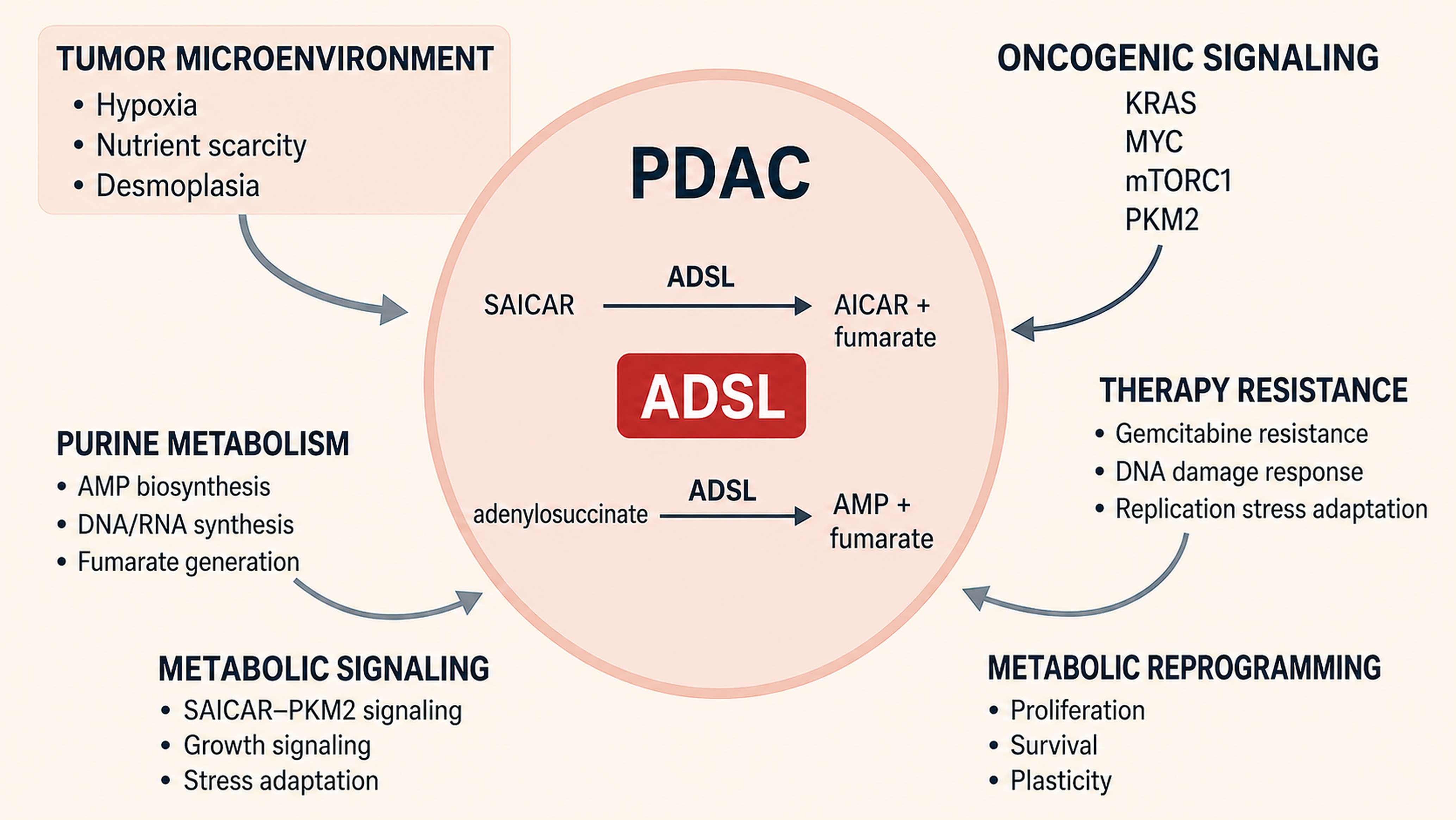
Figure 1. ADSL links oncogenic signaling to metabolic rewiring and chemoresistance in PDAC. This schematic illustrates how oncogenic and stress-adaptive pathways, including KRAS, MYC, mTORC1, and PKM2 signaling, may converge on ADSL-associated purine metabolism to support PDAC progression. ADSL-related metabolic activity contributes to nucleotide-pool maintenance, metabolic plasticity, redox adaptation, and DNA damage tolerance, thereby promoting tumor-cell survival under nutrient limitation and chemotherapeutic stress. ADSL: Adenylosuccinate lyase; PDAC: pancreatic ductal adenocarcinoma; KRAS: KRAS proto-oncogene, GTPase; MYC: MYC proto-oncogene, bHLH transcription factor; mTORC1: mammalian target of rapamycin complex 1; PKM2: pyruvate kinase M2; SAICAR: succinylaminoimidazole carboxamide ribotide; AICAR: aminoimidazole carboxamide ribotide; AMP: adenosine monophosphate.