

fig1
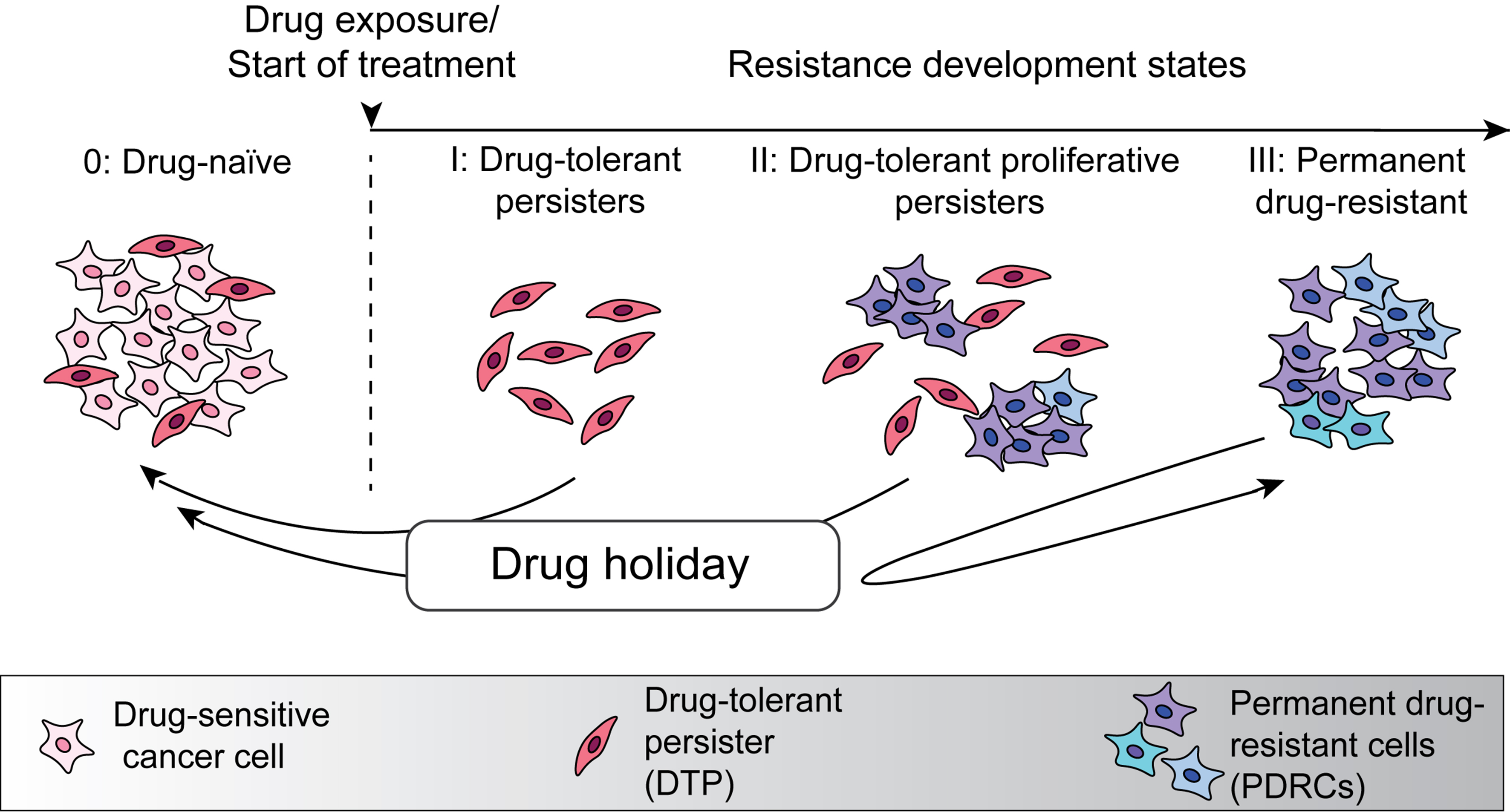
Figure 1. Development of permanent drug resistance to targeted therapy in (cancer) melanoma cells. Illustration depicting the progression of adaptive resistance to targeted therapy. Initially, dynamic phenotypic switching occurs between proliferative, drug-sensitive cells and slow-cycling subpopulations. DTPs can originate from pre-existing slow-cycling cells and from proliferating cells upon drug exposure. The transition into a persister state is through epigenetic reprogramming supported by metabolic adaptation and stress-response signalling. Some DTPs reinitiate proliferation (DTPPs) and permanent drug-resistant clones (PDRCs) emerge, maintaining resistance irrespective of drug withdrawal. Reproduced without modification from Benfield et al.[16] with permission. © 2024 The Authors. DTPs: Drug-tolerant persisters; DTPPs: drug-tolerant proliferative persisters; PDRCs: permanent drug-resistant cells.