
fig6
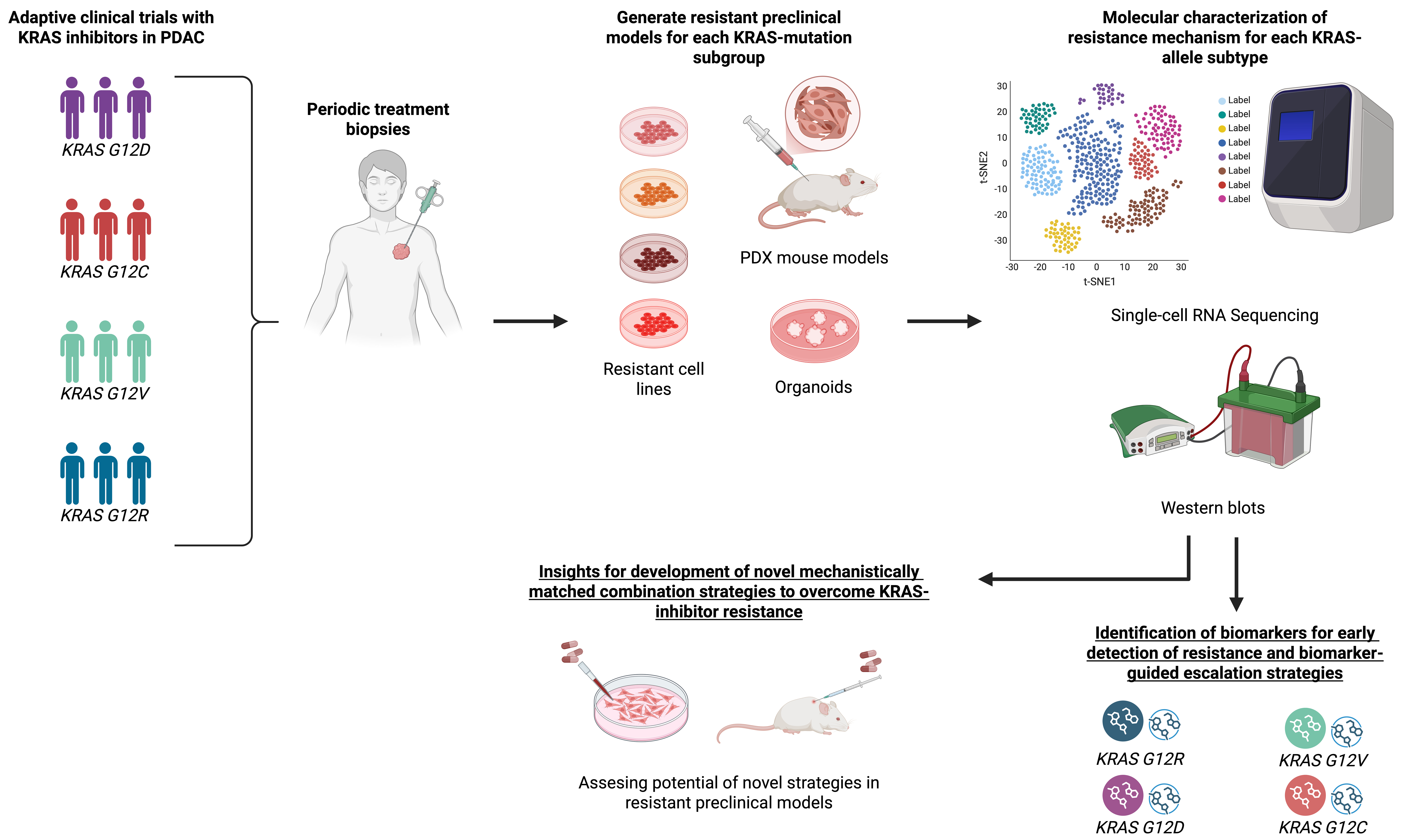
Figure 6. Schematic overview of a workflow that can be applied to establish PDAC-specific models, which are essential for extensive molecular characterization of resistance mechanisms to KRAS inhibitors. Adaptive clinical trials with longitudinal monitoring allow frequent treatment biopsies at several stages of disease progression. These biopsies can be used to develop a variety of resistant preclinical models. Subsequently, scRNA sequencing and western blots can be applied to uncover key drivers of resistance to KRAS inhibition therapies. This approach could ultimately provide crucial insights into vulnerabilities for developing novel therapeutic strategies. Moreover, this workflow could unveil biomarkers for resistance monitoring and biomarker-guided escalation strategies when an escape state is detected. Created in BioRender. Giovannetti, E. (2026) https://BioRender.com/m0pgua5. PDAC: Pancreatic ductal adenocarcinoma; scRNA: single-cell RNA; PDX: patient-derived xenograft; t-SNE: t-distributed stochastic neighbor embedding.