

fig7
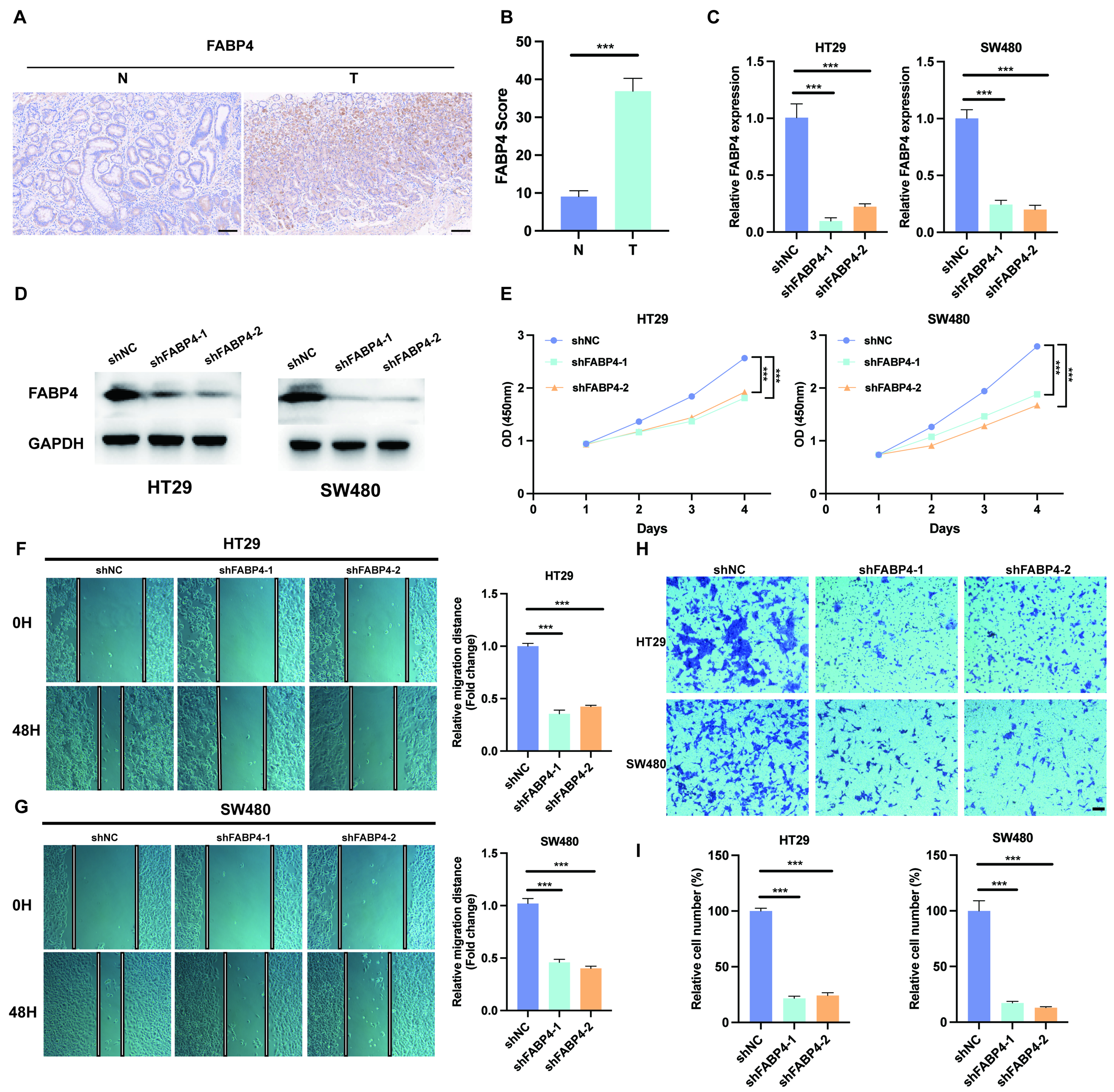
Figure 7. The role of FABP4 in promoting CRC was validated in vitro. (A and B) Tissue samples collected from CRC patients were examined to assess the expression status of FABP4 (Scale bar = 0.1 mm); (C and D) The FABP4 knockdown efficiency was validated by RT-qPCR and western blotting; (E) CCK-8 assay showed that FABP4 knockdown suppressed CRC growth; (F and G) FABP4 knockdown attenuated tumor cell migration in wound healing assays; (H and I) Transwell assay indicated that FABP4 knockdown suppressed tumor cell migration ability (Scale bar = 0.2 mm). Data are presented as mean ± SD from three independent biological replicates. Comparisons between two groups were performed using unpaired Student’s t-test, whereas comparisons among three groups were performed using one-way ANOVA followed by Tukey’s post-hoc test. *** indicates P < 0.001. CRC: Colorectal cancer; RT-qPCR: reverse transcription quantitative polymerase chain reaction; SD: standard deviation; ANOVA: analysis of variance.