
fig1
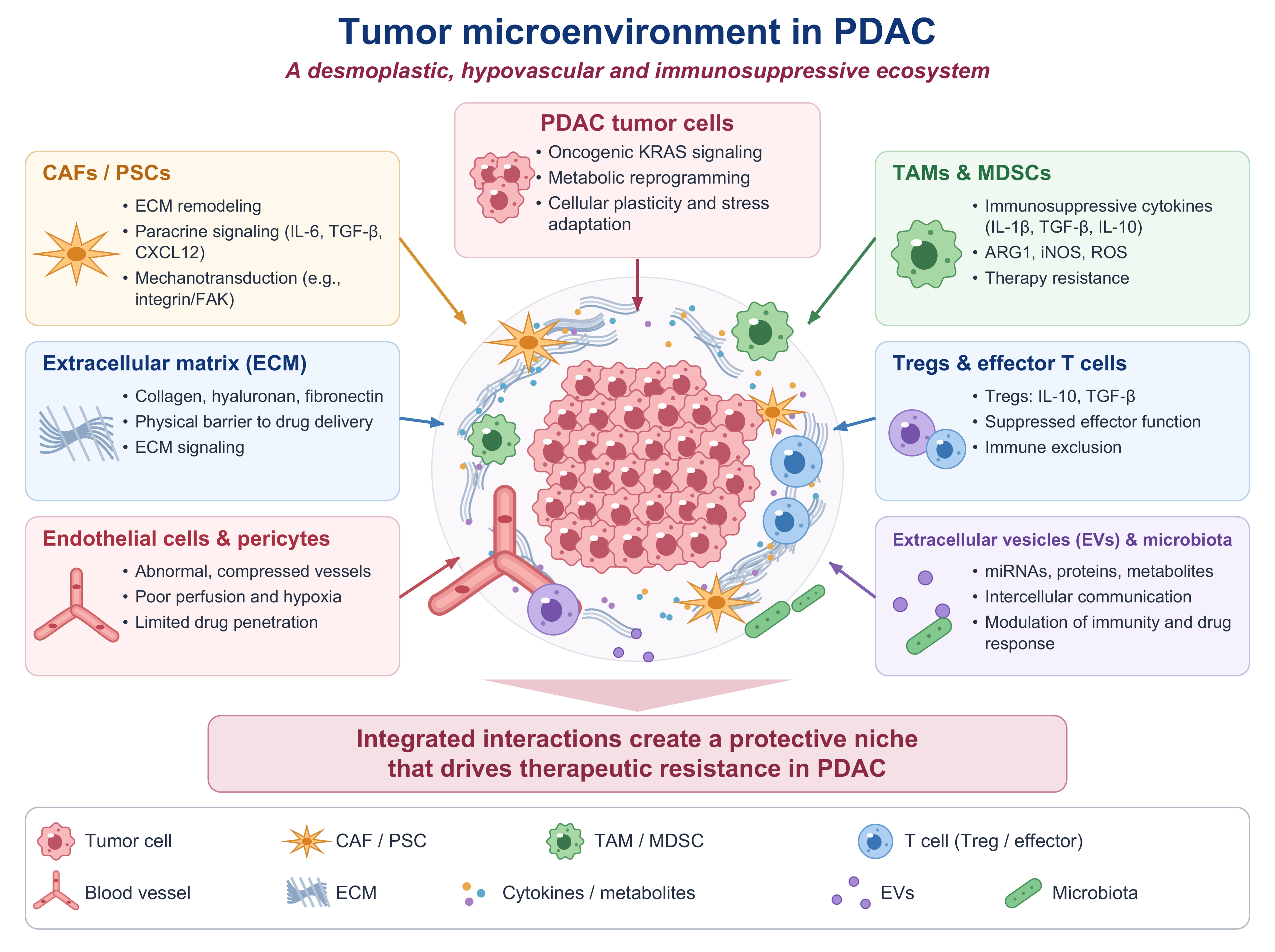
Figure 1. TME in PDAC and its contribution to therapeutic resistance. The PDAC TME comprises malignant cells embedded within a dense and dynamically interacting stromal, immune, vascular, and ECM network. CAFs and PSCs remodel the ECM and provide paracrine and mechanotransductive signals, whereas excessive ECM deposition and abnormal, compressed vasculature impair tumor perfusion and drug penetration. TAMs, MDSCs, and Tregs contribute to an immunosuppressive milieu that limits effective antitumor immunity. EVs, microbiota, cytokines, and metabolites further mediate intercellular communication and modulate therapeutic response. Together with oncogenic signaling, metabolic reprogramming, and cellular plasticity in PDAC cells, these interconnected components establish a protective niche that promotes therapeutic resistance. TME: Tumor microenvironment; PDAC: pancreatic ductal adenocarcinoma; ECM: extracellular matrix; CAFs: cancer-associated fibroblasts; PSCs: pancreatic stellate cells; TAMs: tumor-associated macrophages; MDSCs: myeloid-derived suppressor cells; Tergs: regulatory T cells; EVs: extracellular vesicles; IL-6: interleukin-6; TGF-β: transforming growth factor-β; CXCL12: C-X-C motif chemokine ligand 12; FAK: focal adhesion kinase; KRAS: Kirsten rat sarcoma viral oncogene homolog; IL-1β: interleukin-1 beta; IL-10: interleukin-10; ARG1: arginase 1; iNOS: inducible nitric oxide synthase; ROS: reactive oxygen species; miRNAs: microRNAs.