

AI agents for MOFs and COFs discovery
 0
0 
Abstract
Metal-organic frameworks (MOFs) and covalent organic frameworks (COFs) are highly tunable in pore structure and chemical environment, yet their discovery remains slow and fragmented. Synthesis reports are often difficult to compare, characterization data are laborious to interpret, and computational predictions rarely guide experiments directly. Recent advances in large language models (LLM) have enabled the development of artificial intelligence (AI) agents that can interpret research goals, search the literature and databases, call external tools, and adapt workflows based on intermediate results. In this review, we distinguish three stages of AI-agent development in MOFs and COFs research: LLM-native, human-mediated systems; database-grounded, tool-using agents; and experiment-integrated, feedback-driven platforms. This progression reflects increasing scientific grounding and experimental agency. In our view, further progress will depend less on scaling language models alone than on developing traceable machine-actionable data, chemistry-aware validation, persistent experimental memory, and robust interfaces between AI agents and laboratory automation.
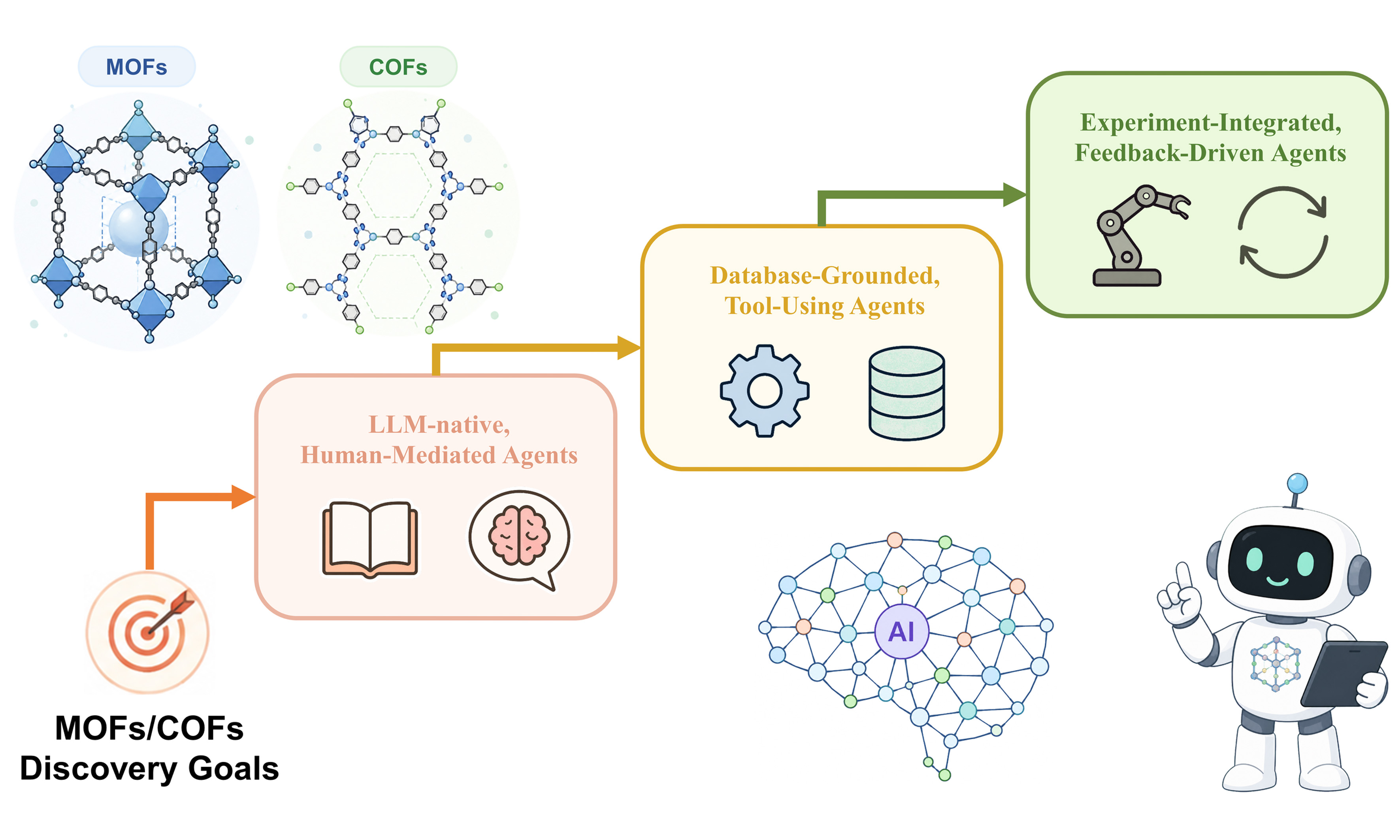
Keywords
INTRODUCTION
Metal-organic frameworks (MOFs) and covalent organic frameworks (COFs) are important functional materials for energy, environmental, and sustainability-related applications[1,2]. Their ordered pores, high surface areas, and tunable structures make them attractive for applications such as gas separation[3], catalysis[4], sensing[5], and resource recovery[1].
Unlike many conventional porous solids, MOFs and COFs can be assembled from molecular or coordination building units, allowing their pore size, shape, functionality, and host-guest interactions to be tailored with precision[6,7]. This programmability, however, also creates a highly complex discovery space governed by coupled structural, synthetic, and performance-related variables[1,8]. MOF and COF discovery is a multifactorial challenge that requires balancing synthesis, crystallinity, porosity, stability, and performance, all of which are tightly coupled and sensitive to building-unit selection and experimental protocols[1,9].
To cope with the growing complexity of crystalline porous-materials research, researchers have increasingly relied on data-driven approaches, particularly machine learning and high-throughput computation[8,9]. These methods have accelerated property prediction and virtual screening, but they generally address individual steps of the discovery workflow rather than the workflow as an integrated process. Most models map a fixed representation to a predefined property and require a curated dataset prepared in advance. They generally do not determine what information is missing, choose which computational or experimental tool to use, reconcile contradictory evidence, revise a failed strategy, or coordinate simulation with experimentation[10-12].
Artificial intelligence (AI) agents offer a different paradigm. They are goal-directed systems that can reason about tasks, use tools, maintain context, and learn from feedback[10]. Although an large language model (LLM) can provide the reasoning and communication layer, a scientific agent also requires connections to external resources, such as databases, predictive models, simulators, robotic platforms, and characterization instruments. Thus, an LLM alone is not necessarily an AI agent; what defines an agent is its ability to act and adapt within a workflow[10,12].
In this review, we use the term agent in a practical sense to describe goal-directed AI systems that can interpret scientific tasks, use relevant information or tools, act within a workflow, and adjust subsequent steps based on intermediate results. To organize this review, we classify AI agents for MOFs and COFs along two practical dimensions: scientific grounding and experimental agency. Scientific grounding refers to the extent to which an agent’s decisions are informed and constrained by external evidence, such as literature, databases, knowledge graphs, simulations, or domain-specific tools. Experimental agency refers to its participation in experimental execution and its use of experimental outcomes to guide subsequent actions. Based on these dimensions, we divide the field into three stages, as shown in Figure 1.
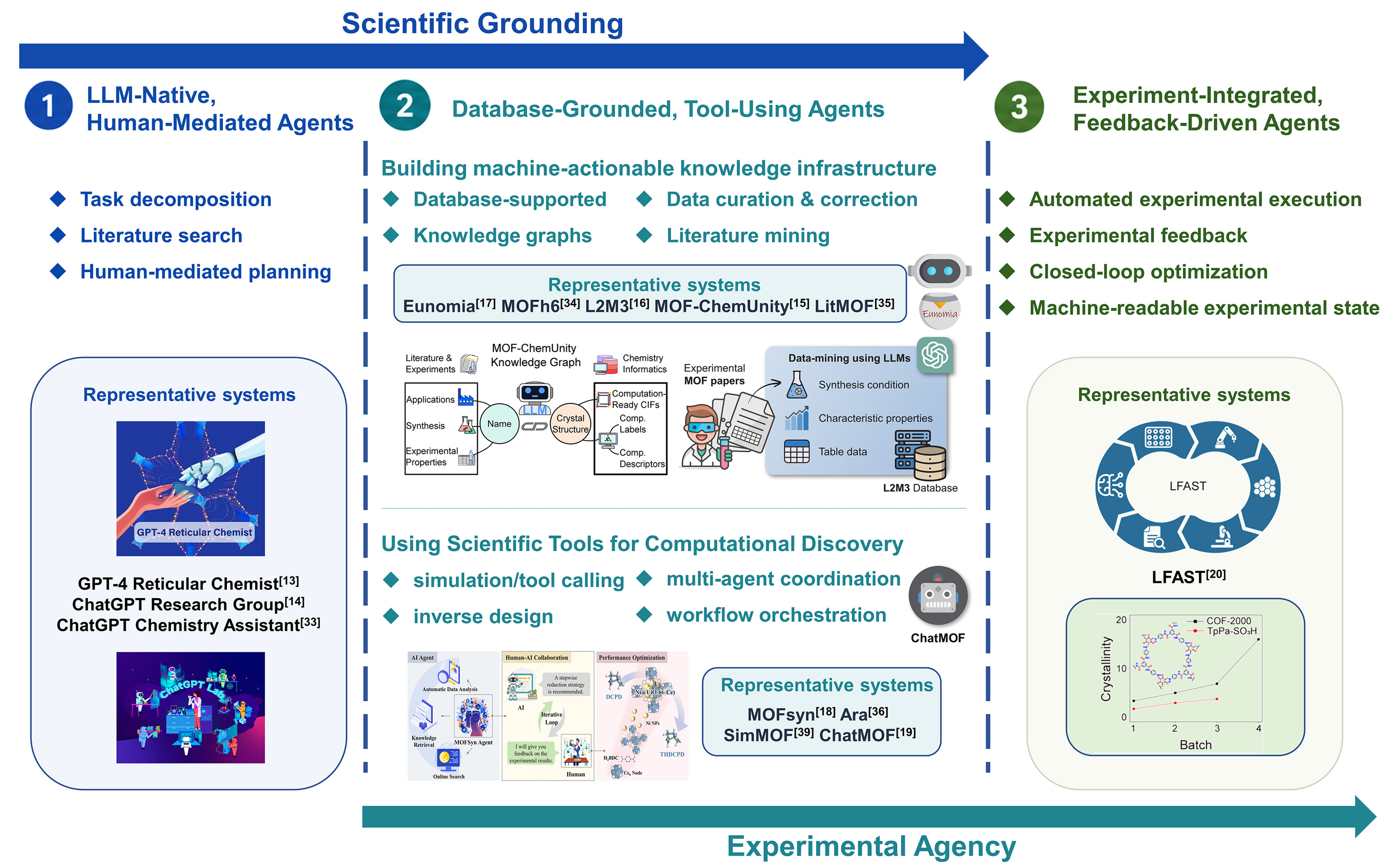
Figure 1. Developmental stages of AI agents for MOFs and COFs, progressing from LLM-native assistance to database-grounded tool use and experiment-integrated feedback-driven discovery. Insets show representative workflows and systems discussed in this review. In Stage 1, the upper panel is reprinted with permission from reference[13]. Copyright © 2023 Wiley-VCH GmbH. The lower panel is reproduced from reference[14], under the CC BY 4.0 license. In Stage 2, the upper-left panel is reprinted from reference[15], under the CC BY 4.0 license, and the upper-right panel is reprinted with permission from reference[16]. Copyright © 2025 American Chemical Society. The Eunomia robot illustration is adapted from reference[17], under the CC BY 4.0 Unported license. In the lower half of Stage 2, the left image in the representative systems section is reprinted with permission from reference[18]. Copyright © 2025 American Chemical Society. The ChatMOF robot illustration on the right is adapted from reference[19], licensed under CC BY 4.0. In Stage 3, the illustration is adapted with permission from reference[20]. Copyright © 2026 American Chemical Society. MOFs: Metal-organic frameworks; COFs: covalent organic frameworks; AI: artificial intelligence; LLM: large language model.
Stage 1 comprises LLM-native, human-mediated systems in which researchers select external resources, coordinate specialized tools, and carry out experiments. Stage 2 comprises database-grounded, tool-using agents that can access external knowledge and coordinate digital resources and computational workflows, while physical experiments remain human-mediated and outside the automated decision loop. Stage 3 comprises experiment-integrated, feedback-driven platforms in which agent-generated experimental instructions are executed through robotic or laboratory automation systems, and experimental outcomes are returned directly to the decision-making system to guide subsequent actions. The transition from Stage 1 to Stage 2 primarily reflects greater scientific grounding through access to external data and digital tools, whereas the transition from Stage 2 to Stage 3 primarily reflects greater experimental agency through the integration of automated experimental execution and feedback into the decision loop. Representative examples of each stage are shown in Figure 1 and discussed in the following sections.
TECHNICAL FOUNDATIONS OF SCIENTIFIC AI AGENTS
Scientific AI agents are better viewed as orchestration layers than as standalone chatbots. Relevant studies in adjacent materials domains further illustrate the architectural requirements for scientific agents in porous-materials research. In practice, they connect databases, predictive models, simulators, experimental equipment, and human experts[11,12,21,22]. Their capabilities can still be grouped under perception, reasoning, action, and learning, but the more useful question in science is whether they can obtain dependable information, choose suitable tools, retain relevant context and update decisions from the evidence those tools return.
The first requirement is therefore a reliable information foundation. Databases sit at the center of this architecture for materials research. They need to connect material identity, experimental conditions, structures, properties, metadata, and provenance so that results from different studies can actually be compared[23-25]. For porous materials, that means linking crystal structures, synthesis and activation protocols, sample history, stability, performance, computed descriptors, uncertainty, and provenance to persistent material identities.
A reliable information foundation alone, however, is not sufficient. Reliable agents also need scientific tools, multimodal perception, and action traces that can be audited. Thermodynamic, electrochemical, density functional theory (DFT), and microkinetic calculations can check or narrow language-model proposals[21,26]. Many important records in materials science appear in figures, diffraction and spectroscopic data, tabulated metadata, and provenance-rich experimental records rather than in prose alone[27,28]. Reproducibility also depends on clear records of data versions, prompts, tool calls, failures, and human intervention[29]. Together, these data, tool, perception, and provenance layers provide the technical foundation on which reliable MOF and COF agents can be built.
Across these layers, agent memory provides the mechanism by which information, tool outputs, and experimental states are retained and reused across successive reasoning and action steps. Here, memory refers to information maintained within the active context or stored externally for subsequent retrieval and use[30]. Stage 1 systems have limited explicit memory and rely mainly on the model’s parametric knowledge, the immediate context window, and information supplied by researchers. Such information is often
LLM-NATIVE, HUMAN-MEDIATED AGENTS
In this review, Stage 1 denotes LLM-native, human-mediated systems in which the model supports task decomposition, literature interpretation, data organization, and planning. Tool and experimental actions remain human-defined and human-supervised, although automation may be used. Human feedback may revise later prompts, but it does not constitute an autonomous, machine-readable loop that selects the next experimental action.
Zheng et al. developed the GPT-4 Reticular Chemist as a three-phase LLM-guided workflow for reticular chemistry[13]. GPT-4 generated project blueprints and experimental steps, and a researcher returned successful and failed outcomes to later prompts. The workflow guided the discovery of an isoreticular MOF series, showing how an LLM can support project planning and iterative experimental decisions under human supervision[13] as shown in Figure 2.

Figure 2. Representative workflow of a stage-1 AI agent system for reticular chemistry, illustrating how literature knowledge, GPT-4 reasoning, and human execution are combined to decompose research tasks, summarize intermediate outcomes, and iteratively propose subsequent actions across multiple project stages. Reprinted with permission from reference[13] Copyright © 2023 Wiley-VCH GmbH.
The same group later built the ChatGPT Research Group around role-specific LLM assistants, Bayesian optimization, and researcher-coordinated robotic operation[14]. The workflow iteratively proposed and evaluated crystallization conditions for MOFs and COFs. This study extends LLM-assisted planning to a more structured optimization workflow while retaining researcher oversight. In this workflow, experimental crystallinity measurements, including powder X-ray diffraction (PXRD) analysis, were communicated through researcher-LLM interactions to support successive optimization rounds[14], as shown in Figure 3. However, an autonomous experimental feedback loop was not established.
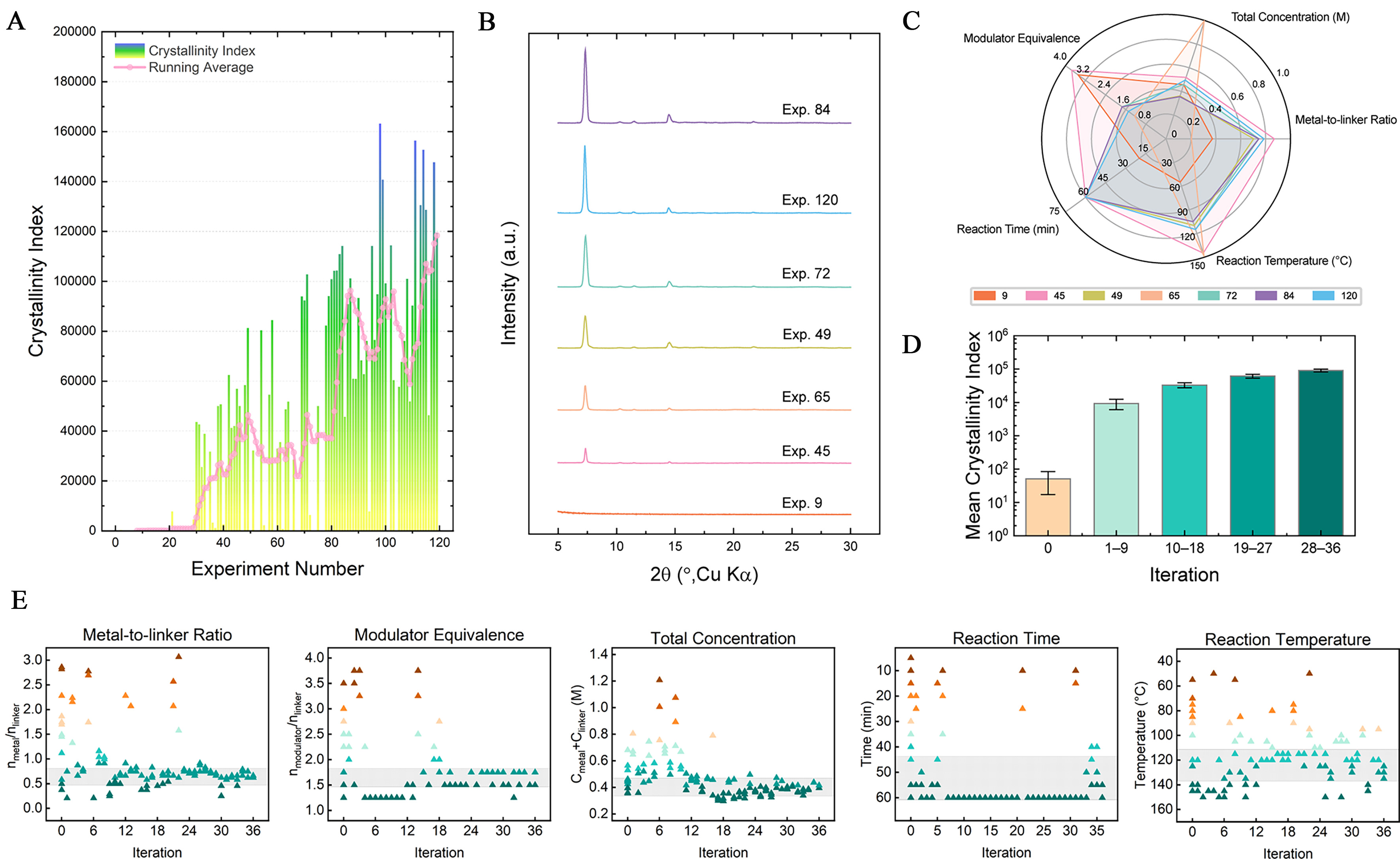
Figure 3. Representative optimization outcomes from the ChatGPT Research Group workflow for crystalline porous materials, illustrated here with MOF-321 synthesis. (A) Crystallinity achieved in each experiment across 120 reactions, together with the running average; (B) Representative PXRD patterns from selected experiments; (C) Radar-plot distribution of synthesis parameters for the selected experiments; (D) Mean crystallinity index for the initial random experiments and later optimization iterations grouped into quartiles; (E) Evolution of the synthesis parameters proposed by the Bayesian optimization algorithm as a function of iteration number. Adapted with permission from reference[14], under CC BY 4.0 license. MOF: Metal-organic framework; PXRD: powder X-ray diffraction.
The focus then shifted from coordinating individual research projects to producing reusable synthesis data from the literature. In a further data-oriented extension, Zheng et al. used the ChatGPT Chemistry Assistant to process literature reports into structured MOF synthesis data[33]. The system extracted synthesis information from published studies and organized it into a form that can be reused by later workflows. It therefore contributed to the data infrastructure needed for more evidence-based agent reasoning, while remaining human-mediated[33].
Taken together, these studies show that LLM-native agents can decompose research tasks, assign roles across modules, organize literature-derived data, incorporate human feedback, and support optimization or robotic operation. Despite the increasing complexity of workflows, researchers remained the essential interface between the LLM, external tools, experimental equipment, and measured outcomes. The next stage adds persistent external knowledge and specialized computational tools to make agent decisions more scientifically grounded.
DATABASE-GROUNDED, TOOL-USING AGENTS
LLM-native agents become limited when scientific tasks require evidence beyond the model’s parametric knowledge or the information supplied in the prompt. Stage 2 addresses this limitation by enabling agents to retrieve external knowledge, invoke specialized digital tools, and use the returned outputs to guide subsequent reasoning and decisions. These resources may include literature databases, knowledge graphs, machine-learning models, genetic algorithms, molecular simulations, process models, and deterministic validation tools.
For MOFs and COFs, Stage 2 comprises two closely connected functions. The first is to build machine-actionable knowledge infrastructure that is traceable, updateable, and suitable for reuse. The second is to apply external data and computational tools to material retrieval, property prediction, inverse design, and multi-objective decision-making. The former provides a reliable evidence base, whereas the latter uses that evidence for computational discovery.
Building machine-actionable knowledge infrastructure
For MOFs and COFs, database-grounded agency begins with organized, machine-actionable scientific knowledge. Building this infrastructure involves three related tasks: extracting information from dispersed literature, resolving material identities across sources, and verifying the resulting records for downstream computation and design. This need is especially acute because relevant information is dispersed across article text, supporting information, crystallographic databases, computational repositories, and laboratory records[16,23]. The same material may also be reported under different names or under synthesis conditions that are described inconsistently. A useful agent therefore converts dispersed information into structured records, connects those records to persistent material identities, and ensures that the resulting data are sufficiently reliable for downstream design.
Ansari and Moosavi developed Eunomia to address literature extraction[17]. Its strategy couples zero-shot extraction with a document-search tool and a chain-of-verification step, thereby improving the reliability and yield of extracted structured records. The zero-shot agent converts materials information from individual sentences to full articles into machine-readable records; in the water-stability benchmark, verification increased ternary accuracy from 0.86 to 0.91 and extraction yield from 82.7% to 86.2%[17], as shown in Figure 4. Lin et al. developed MOFh6 as a task-specific synthesis-mining workflow[34]. Its strategy preserves cross-sentence and cross-paragraph semantic context, resolves ligand abbreviations, and converts the recovered information into standardized synthesis records. The system identifies dispersed synthesis descriptions before organizing them into reusable synthesis records[34].
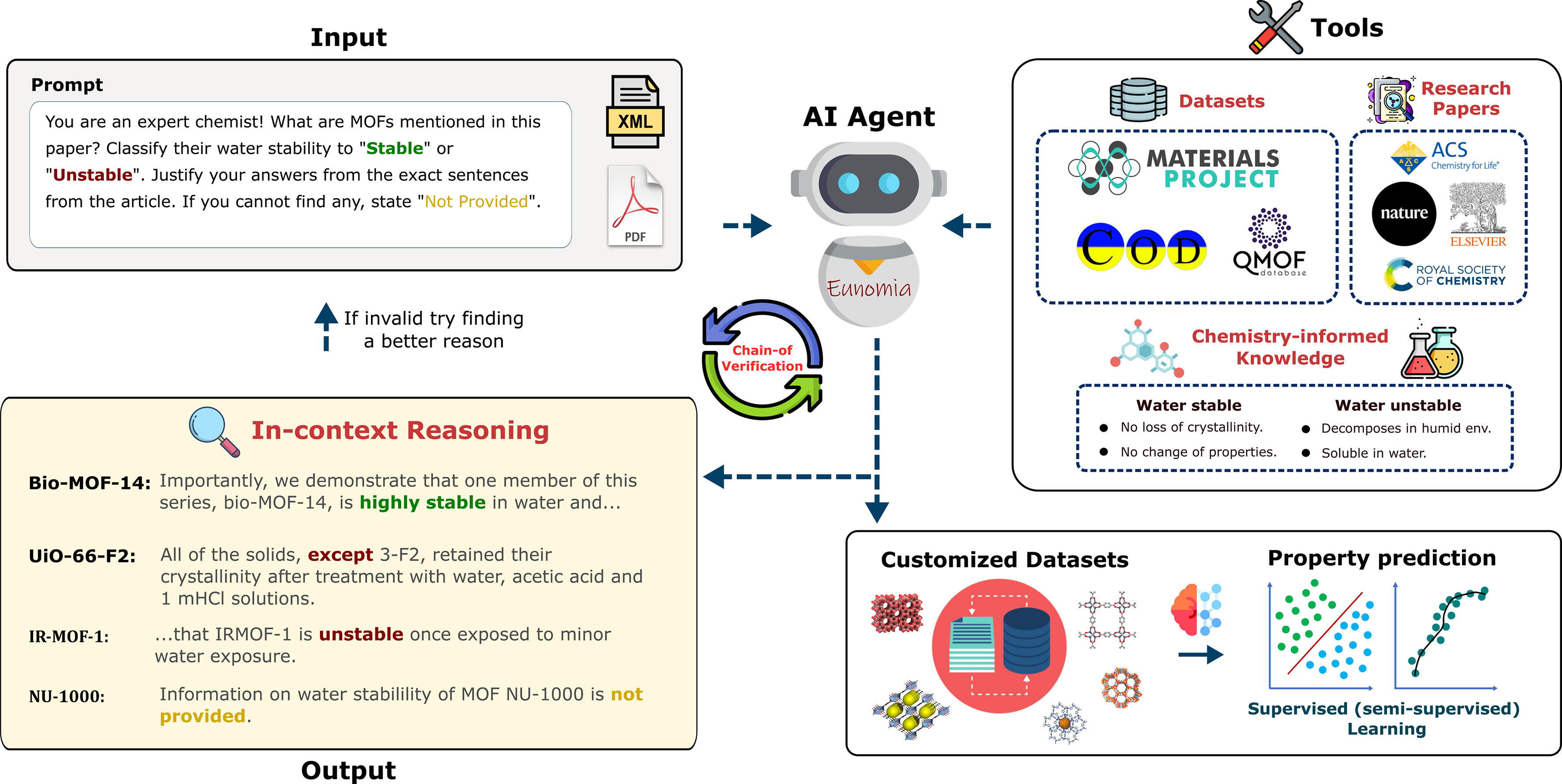
Figure 4. Agent-based literature extraction workflow. The AI agent uses tools such as online dataset search and document retrieval to identify MOFs in a research article and infer related properties, such as water stability. Its predictions are supported by in-context textual evidence from the paper and checked through a chain-of-verification step to reduce hallucinations. The resulting structured dataset can then support downstream supervised or unsupervised machine-learning analyses. Reprinted from reference[17], under the CC BY 4.0 Unported license. MOFs: Metal-organic frameworks; AI: artificial intelligence; COD: Crystallography Open Database; QMOF: quantum MOF; XML: Extensible Markup Language; HCl: hydrochloric acid.
Kang et al. used L2M3, a multi-agent literature-mining framework that assigns table, synthesis-condition, and property extraction to specialized LLM agents, then uses a matching agent to standardize material names and consolidate the outputs into unified metadata[16]. By mining both tables and text from more than 40,000 MOF papers, L2M3 assembled organized synthesis-condition and experimental-property records, as shown in Figure 5.
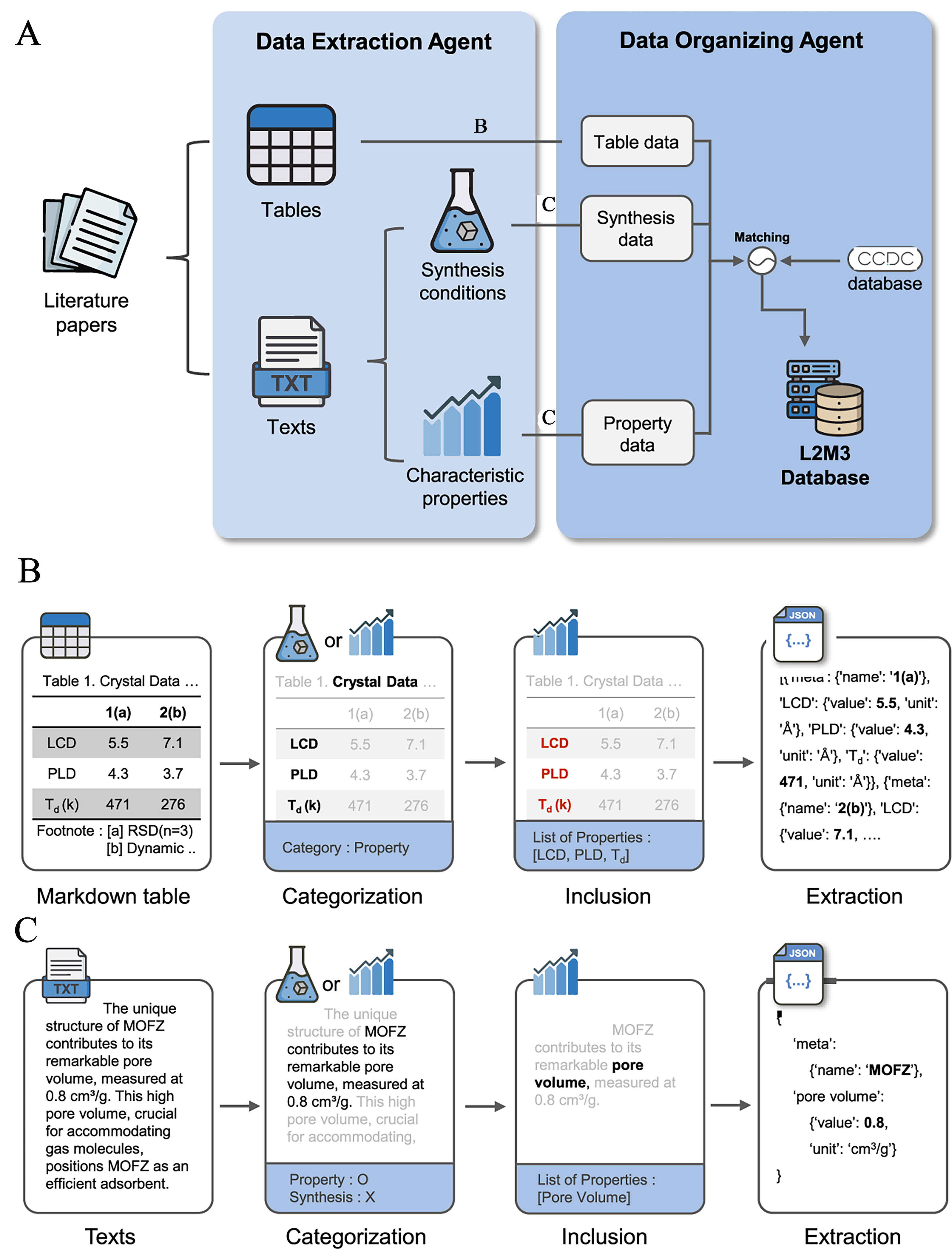
Figure 5. (A) Overall schematic of the L2M3 model; (B) Overall process of table mining; (C) Overall process of text mining. Reprinted with permission from reference[16] Copyright © 2025 American Chemical Society. CCDC: Cambridge Crystallographic Data Centre; LCD: largest cavity diameter; PLD: pore-limiting diameter; RSD: relative standard deviation; Td: decomposition temperature; JSON: JavaScript Object Notation.
Extracted records must then be linked to persistent material identities. Pruyn et al. developed MOF-ChemUnity to connect names and coreferences from approximately 10,000 publications with more than
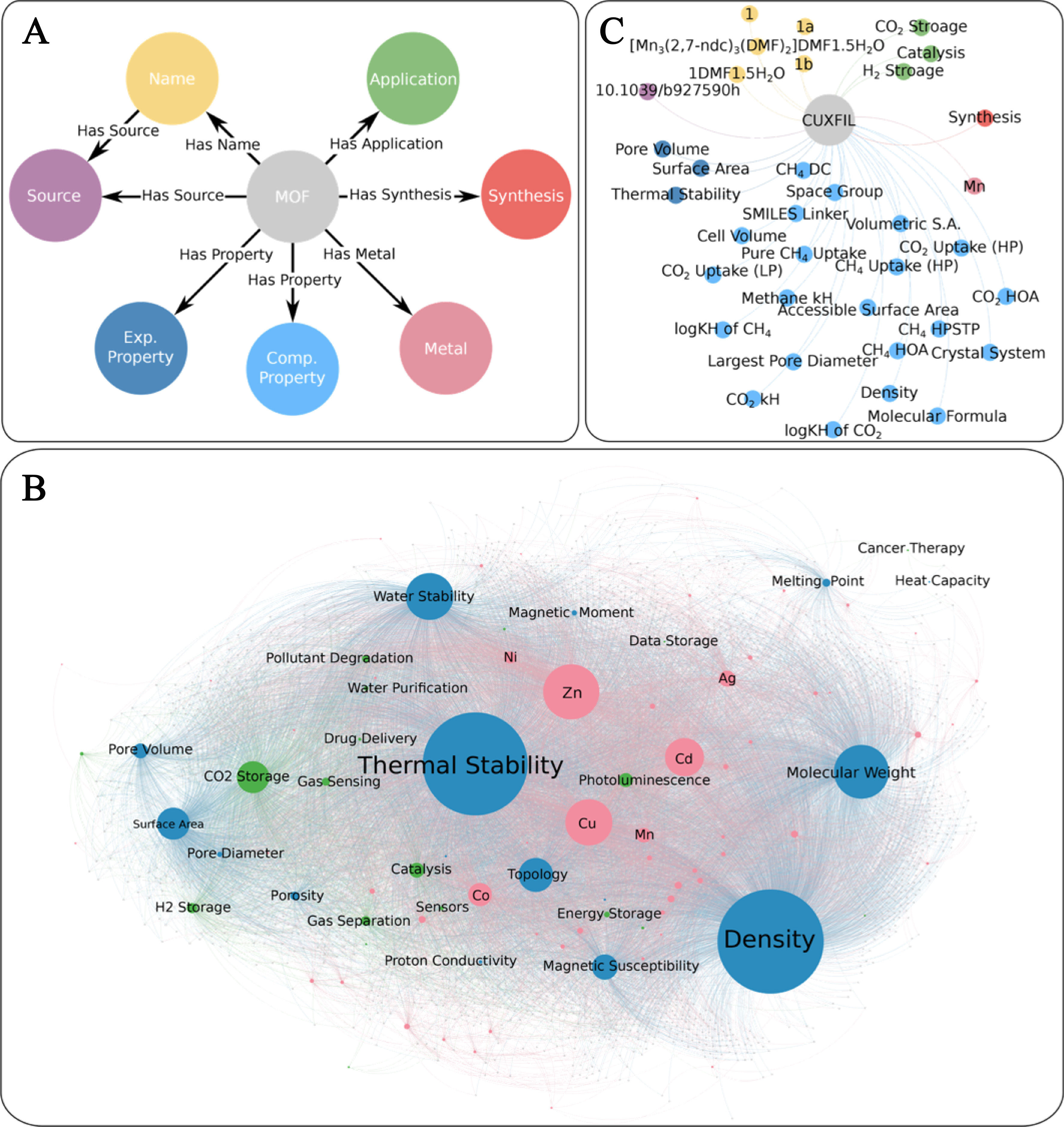
Figure 6. Knowledge-graph-based integration in MOF-ChemUnity. (A) MOF-ChemUnity schema showing node and relationship types centered on the MOF entity; (B) Visualization of the full knowledge graph, where larger nodes have more connections and closely positioned nodes are more strongly interconnected; (C) Example subgraph for an individual MOF, illustrating links among names, sources, synthesis information, metals, applications, and properties. Reprinted from reference[15], under the CC BY 4.0 license. MOF: Metal-organic framework.
Data verification is the next requirement. Kim et al. introduced LitMOF, a multi-agent system whose verification strategy reconciles primary literature, CSD and CoRE MOF records, and crystallographic files to correct structural errors, recover missing entries, and produce computation-ready MOF records[35], as shown in Figure 7. The resulting LitMOF-DB contains 186,773 computation-ready structures. Its main contribution is therefore not the direct generation of new materials, but the consolidation of reliable records on which subsequent screening, prediction, and design can depend[35].
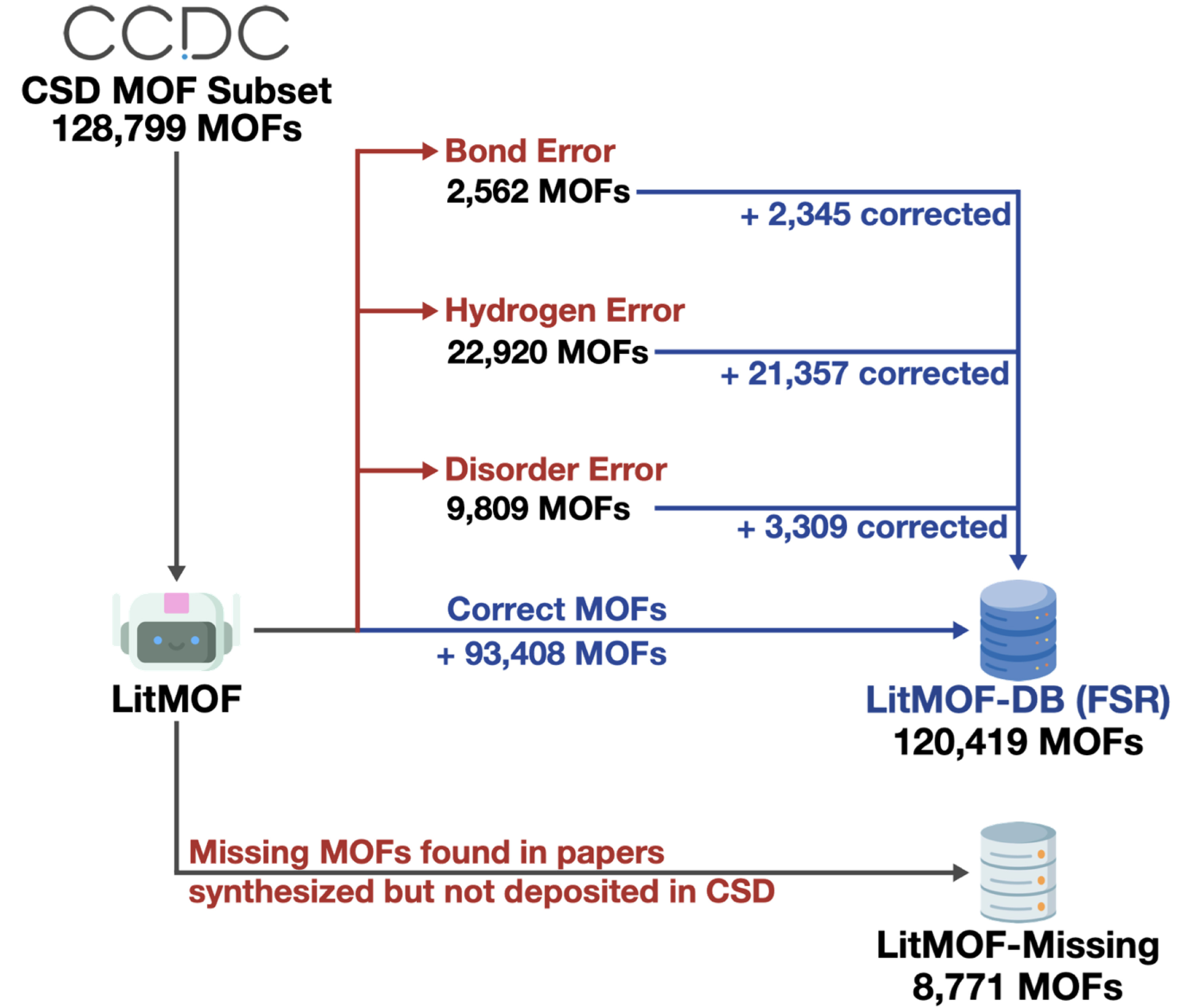
Figure 7. LitMOF-enabled construction of a computation-ready MOF database through correction of CSD-derived structural errors and recovery of missing MOF entries. Adapted from reference[35] Copyright © 2025 the authors. MOF: Metal-organic framework; CSD: Cambridge Structural Database; DB: database; FSR: free solvent removed.
Together, these task-specific agentic workflows provide the structured and reliable evidence base needed for subsequent screening, prediction, and materials design. With records extracted, linked, and verified, Stage 2 agents can begin to use external data and computational tools for discovery.
Using scientific tools for computational discovery
Building on the machine-actionable knowledge infrastructure described above, Stage 2 agents can use external models and computational tools for mechanistic reasoning, multi-objective decision-making, and workflow orchestration.
Lin et al. developed MOFsyn, which combines automated data analysis, material-mechanism analysis, and experimental-protocol navigation for MOF catalysis[18]. For Ni@UiO-66(Ce)-catalyzed olefin hydrogenation, the system linked synthesis conditions to nickel electronic structure and catalytic performance, identified the importance of the Ni0 fraction, and proposed a stepwise reduction strategy that was later validated experimentally[18], as shown in Figure 8A.
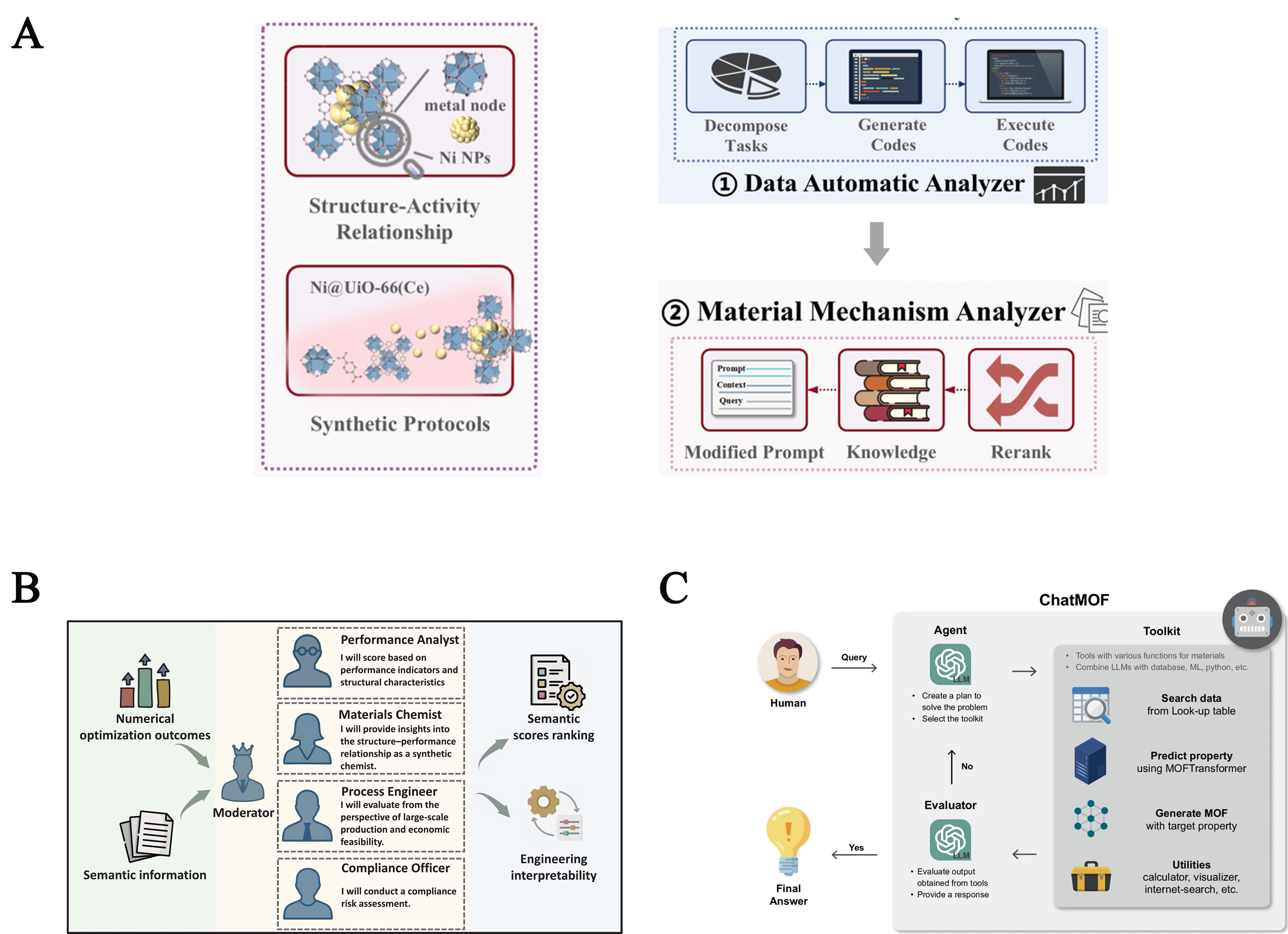
Figure 8. Representative agent workflows for computationally grounded materials reasoning and discovery in stage 2. (A) Mechanism-oriented agent architecture for MOF synthesis analysis, highlighting the coupling of automated data analysis, material mechanism analysis, and structure-activity/synthetic-protocol guidance. Adapted with permission from reference[18] Copyright © 2025 American Chemical Society; (B) Multi-agent decision framework for integrating numerical optimization outcomes and semantic information into interpretable expert-style ranking and evaluation. Reprinted with permission from reference[38], under CC BY 4.0 license; (C) Tool-using LLM agent workflow for planning, tool selection, prediction, and generation in MOF discovery. Adapted with permission from reference[19], under CC BY 4.0 license. MOF: Metal-organic frameworks; LLM: large language model.
Other systems address problems involving competing objectives. Peivaste et al. introduced Ara, which combines donor-acceptor theory, conjugation effects, and hydrolytic-linkage stability with a GFN1-xTB evaluator to search across band-gap, band-edge, and durability objectives[36]. Bai et al. used management and technical agents to decompose a coupled CO2 capture and conversion problem and screen 12,703 MOFs[37]. Li et al. integrated molecular simulation, process metrics, Pareto optimization, and specialized roles such as materials chemist, process engineer, and compliance officer to identify MOFs that balance adsorption performance with practical constraints[38], as shown in Figures 8B and 9.
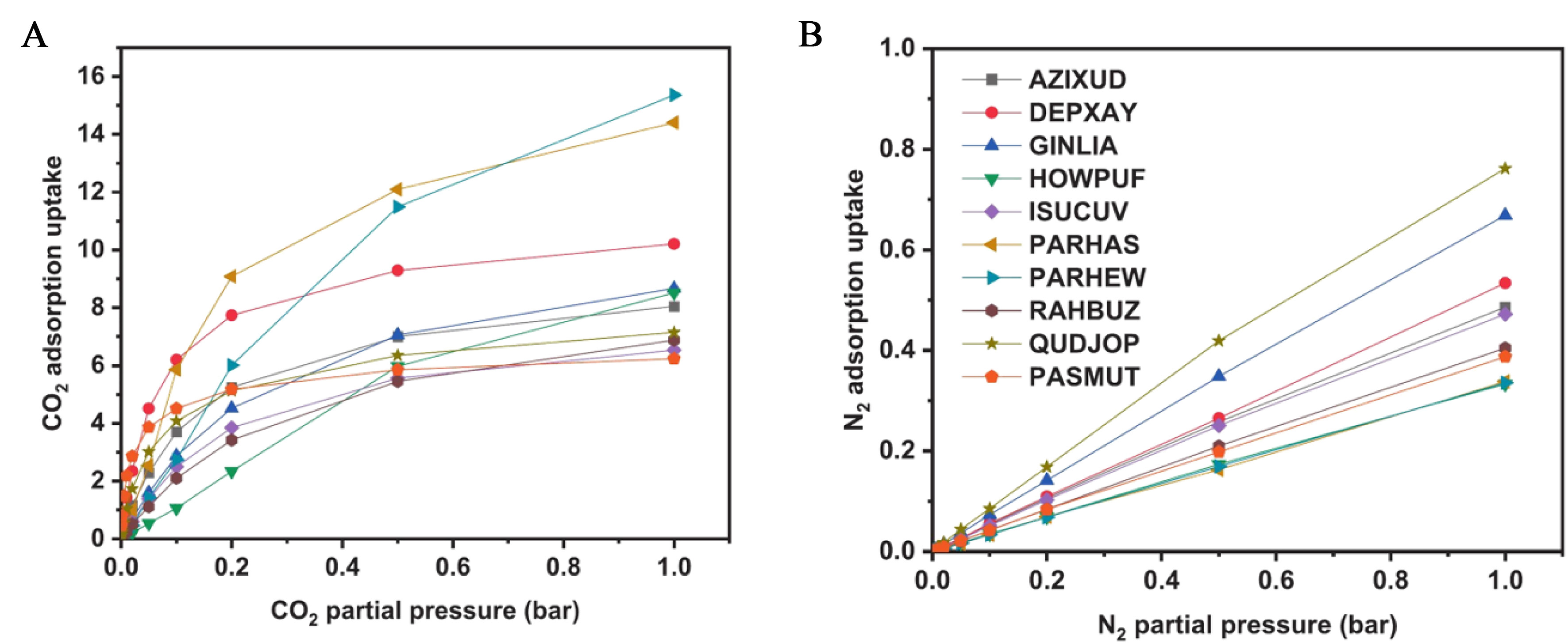
Figure 9. Adsorption isotherms of the top-ranked candidate MOFs identified by the multi-agent screening framework. (A) CO2 equilibrium adsorption isotherms at 298 K; (B) N2 equilibrium adsorption isotherms at 298 K for the same set of candidate MOFs. Adapted with permission from reference[38], under CC BY 4.0 license. MOFs: Metal-organic frameworks.
Agents are also beginning to coordinate multi-step computational workflows and, in some cases, generative discovery. Lee et al. developed SimMOF to translate natural-language questions into dependency-aware plans to invoke Zeo++, RASPA, VASP, and LAMMPS to prepare inputs, execute simulations, recover from errors, and generate analyses aligned with the research question[39]. Kang and Kim reported ChatMOF as an early attempt to ground porous-materials agents in external databases, as shown in Figure 8C. In its reported evaluation with GPT-4, ChatMOF reached 96.9% accuracy for search tasks and 95.7% for property-prediction tasks across 100 sample questions, and 87.5% for generation tasks across 10 sample questions[19]. Inizan et al. extended this approach from candidate screening to generative materials discovery by linking an LLM composition generator, a diffusion structure model, quantum-mechanical optimization and filtering modules, and synthetic-feasibility agents. The workflow led to the experimental realization of five “AI-dreamt” MOFs through high-throughput synthesis[40].
Taken together, these studies show how Stage 2 agents use external evidence and computational tools for mechanistic interpretation, prediction, design, and workflow coordination. Although physical experiments may be used to validate their outputs, experimental execution and feedback remain outside the autonomous decision loop. Stage 3 begins when automated experimentation, characterization, and machine-readable feedback are integrated into that loop.
EXPERIMENT-INTEGRATED, FEEDBACK-DRIVEN AGENTS
Stage 3 begins when automated experimental execution, characterization, and feedback are integrated into the agent’s decision loop. Agent-generated conditions are executed through robotic or laboratory automation systems, and measured outcomes are returned in a machine-readable form to guide subsequent experiments. Human oversight may remain necessary for goal setting, safety, exception handling, and scientific validation, but researchers should not be required to manually interpret and transfer every result between experimental rounds. Full laboratory autonomy and continual retraining of the underlying language model are therefore not prerequisites.
Examples from adjacent materials for MOFs and COFs domains illustrate this architecture. Shi et al. developed the knowledge-driven multi-agent and robotic system MARS as an integrated platform for autonomous materials research[41]. MARS combines 19 specialized LLM agents, 16 domain-specific tools, hybrid retrieval-augmented generation, and a robotic platform within a hierarchical architecture coordinating literature retrieval, materials design, protocol translation, experimental execution, and data analysis. In optimizing perovskite nanocrystals, MARS used experimental emission data, historical results, and a target wavelength to iteratively update synthesis conditions, tuning the emission wavelength from 523 to 460 nm within ten experimental iterations. The system was also applied to the design and synthesis of water-stable perovskite nanocomposites[41]. Song et al. developed ChemAgents, a hierarchical multi-agent robotic platform that combines literature analysis, experimental design, predictive modeling, Bayesian optimization, and robotic operation. For metal-organic high-entropy oxygen-evolution catalysts, data from 100 randomly selected and robotically tested compositions were used to update a predictive model and guide Bayesian optimization within a space of 553,401 candidates, yielding a catalyst with an overpotential of 266.1 mV at 10 mA·cm-2. The workflow established a task-bounded experimental feedback loop and was also transferred to a second robotic laboratory for photocatalytic reactions[42]. Together, MARS and ChemAgents illustrate experiment-integrated agency in adjacent materials domains, although their reported applications concern perovskites, composites, catalysts, and chemical reactions rather than MOF or COF discovery.
In MOF/COF research, the LLM for Accelerated Synthesis Technique (LFAST) provides a representative example of literature-guided planning, robotic synthesis, automated characterization, and iterative feedback for COF crystallization. A GPT-4o deep-research agent was used to mine, correlate, and validate literature-derived synthesis parameters, thereby defining a screening space under laboratory constraints. Candidate conditions were then executed on a robotic platform, and high-throughput PXRD returned a crystallinity index (CI) that informed subsequent experimental batches[20], as shown in Figure 10. Using TpPa-SO3H as a benchmark, the study reported an approximately 350% increase in CI relative to previous reports and also enabled the synthesis of the previously unreported COF-2000[20], as shown in Figure 11. The accompanying PXRD Information File (.pxrdif) further links diffraction data to synthesis metadata, making the results reusable across optimization rounds.
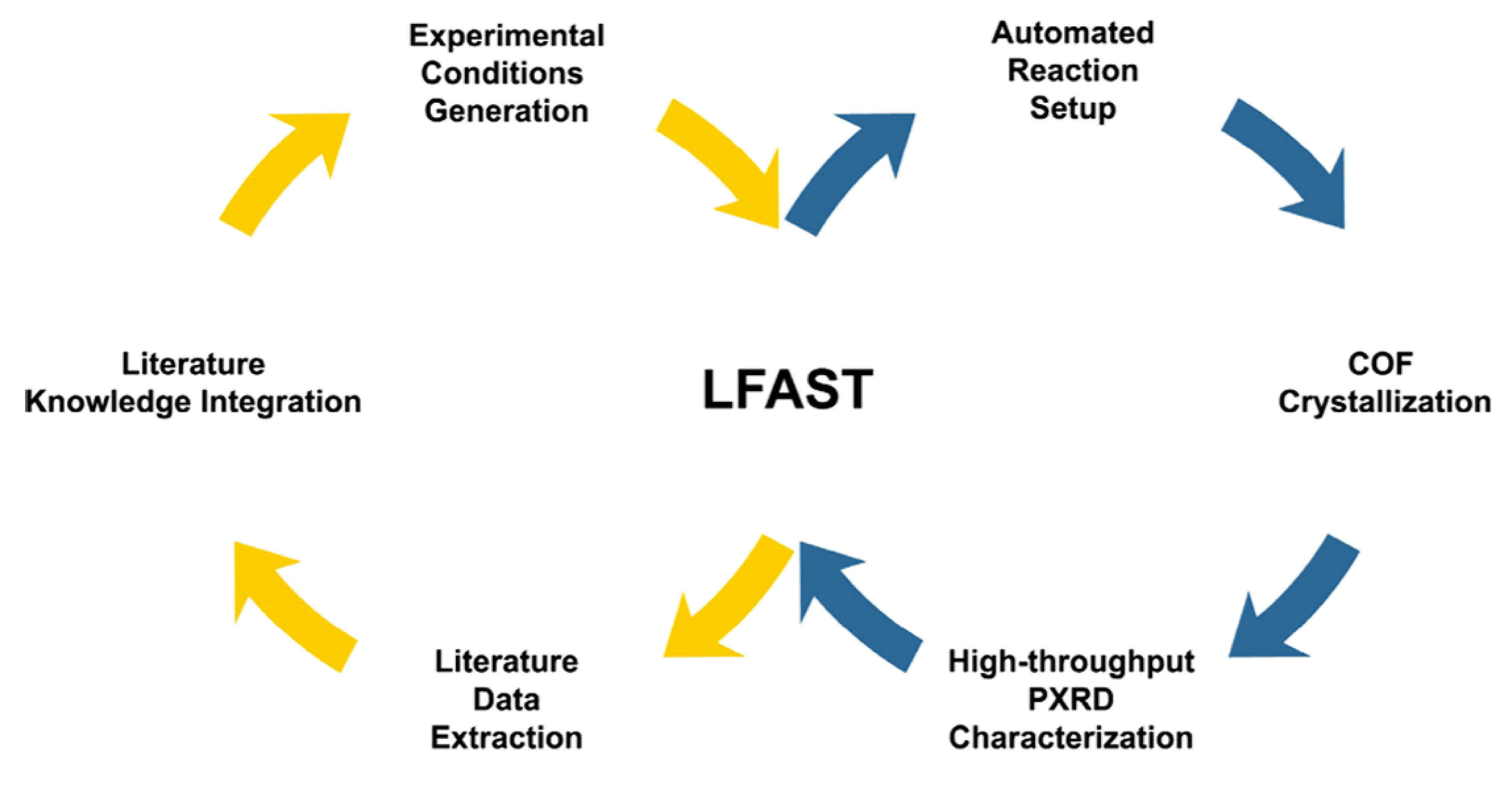
Figure 10. Representative stage-3 closed-loop experimental workflow for AI-agent-driven materials discovery. The framework integrates literature knowledge extraction, experimental-condition generation, automated reaction setup, crystallization, and high-throughput characterization into an iterative feedback loop that continuously updates subsequent decisions. Reprinted with permission from reference[20] Copyright © 2026 American Chemical Society. LFAST: LLM for Accelerated Synthesis Technique; COF: covalent organic framework; PXRD: powder X-ray diffraction.
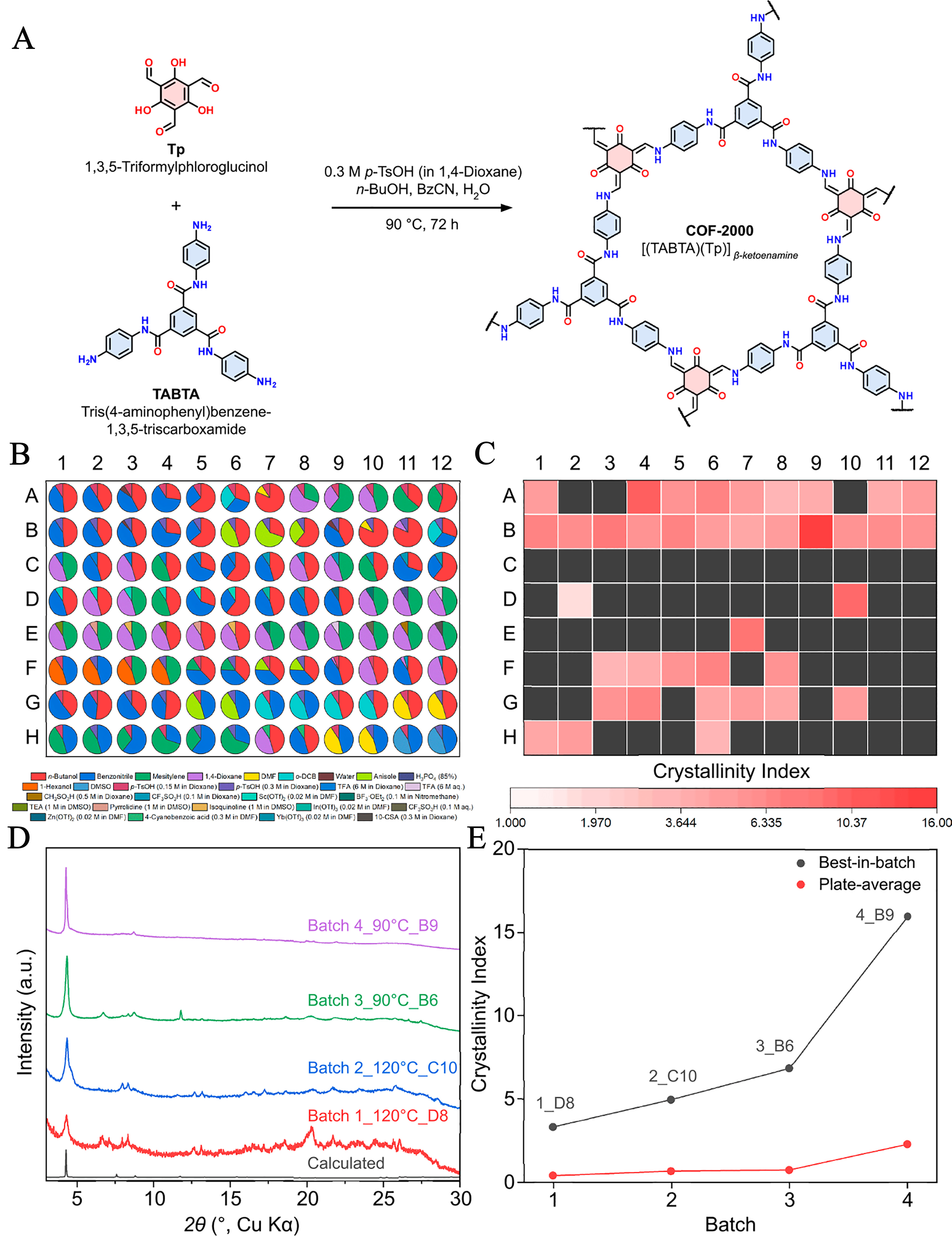
Figure 11. LFAST for the de novo discovery of COF-2000. (A) The synthesis scheme of COF-2000 with the optimized crystallization condition; (B) 96-condition screening of solvent and catalyst compositions displayed as pie charts in a well plate layout (A1-H12), where slice areas indicate the volumetric fraction; (C) Heat map of the CI for the fourth-batch screening; deeper red indicates higher crystallinity, and black squares indicate noncrystalline products; (D) Calculated and representative experimental PXRD patterns from the best condition in each screening batch; (E) Best-in-batch and plate-average CI values from the first to fourth screening batches. Adapted with permission from reference[20] Copyright © 2026 American Chemical Society. LFAST: LLM for Accelerated Synthesis Technique; COF: covalent organic framework; PXRD: powder X-ray diffraction; CI: crystallinity index; Tp: 1,3,5-triformylphloroglucinol; TABTA: tris(4-aminophenyl)benzene-1,3,5-tricarboxamide; p-TsOH: p-toluenesulfonic acid; n-BuOH: n-butanol; BzCN: benzonitrile; Cu Kα: copper K-alpha radiation.
In this workflow, the LLM supported literature-based parameter selection, the robotic platform performed synthesis, PXRD provided the experimental feedback, and CI values were used to inform the selection or refinement of conditions for subsequent screening rounds. However, the precise optimization rule connecting CI to the next round was not fully detailed in the reported study[20]. More broadly, experiment-integrated Stage 3 agents remain at an early stage in MOF and COF research, with current demonstrations largely focused on well-defined optimization objectives.
LFAST nevertheless represents a supervised and task-bounded form of experimental autonomy, providing an important proof of concept for Stage 3 workflows in this field. Humans still define the objective and constraints, maintain the robotic platform, handle exceptions, and validate chemical conclusions. Its main advance is the automated conversion of experimental measurements into subsequent experimental actions. In the reported workflow[20], CI served as the primary feedback metric for crystalline order, while complementary evaluation of yield, phase purity, accessible porosity, adsorption performance, and chemical or thermal stability could support more comprehensive, multi-objective optimization in future implementations. Broader autonomy will require such multi-property feedback, automated failure diagnosis, persistent memory, and reliable triggering of subsequent tasks.
CONCLUSION AND OUTLOOK
Overall, recent studies show that AI agents are beginning to play a more meaningful role in current MOF and COF research. They are no longer limited to simple text assistance, but are increasingly being used to integrate literature reading, database access, simulation, optimization, and in some cases experimental feedback within a more coordinated workflow. Even so, the field is still developing, and most examples so far remain limited in number and scope. A natural next step is to assess how well these emerging strategies extend to a wider range of crystalline porous materials.
In our view, further progress will depend less on using ever larger language models and more on building better scientific support around them. This includes more complete and reusable experimental records, especially data that clearly link composition, topology, synthesis history, characterization, performance, uncertainty, and failed results. It also means that agent outputs need to be checked using chemistry-aware validation, such as charge balance, connectivity, stoichiometry, thermodynamic plausibility, and practical experimental limits, rather than being accepted on the basis of fluent reasoning alone. Another important direction is to make better use of multimodal evidence, since much of the key information in this field is contained in diffraction patterns, adsorption isotherms, spectra, microscopy images, and other non-text data. For closed-loop discovery, standardized instrument interfaces, sample tracking, quality-control records, and machine-readable experimental formats will also be essential, because they allow experimental feedback to be traced and reused across successive cycles. If these pieces come together, AI agents should become not just more capable, but also more trustworthy and more useful in materials discovery.
DECLARATIONS
Authors’ contributions
Analyzed and interpreted the literature and organized the review content: Yu, J.
Prepared the figures and contributed to the review visualization: Jiang, Z.
Conceived and designed the review, supervised the work, and guided its overall structure: He, D.
All authors contributed to drafting and revising the manuscript and approved the final version.
Availability of data and materials
Not applicable.
AI and AI-assisted tools statement
During the preparation of this manuscript, the AI tool ChatGPT (version 5.5, released 2026-04-23) was used solely for language polishing and for generating certain AI icons in the figures. These tools did not influence the study design, data collection, analysis, interpretation, or scientific content of the work. All authors take full responsibility for the accuracy, integrity, and final content of the manuscript.
Financial support and sponsorship
This work is supported by the Guangdong Basic and Applied Basic Research Foundation (No. 2025A1515110310).
Conflicts of interest
All authors declared that there are no conflicts of interest.
Ethical approval and consent to participate
Not applicable.
Consent for publication
Not applicable.
Copyright
© The Author(s) 2026.
REFERENCES
1. Zhang, X.; Yan, M.; Chen, P.; et al. Emerging MOFs, COFs, and their derivatives for energy and environmental applications. Innovation 2025, 6, 100778.
2. Liu, Y.; Chen, L.; Yang, L.; et al. Porous framework materials for energy & environment relevant applications: a systematic review. Green. Energy. Environ. 2024, 9, 217-310.
3. Li, J. R.; Sculley, J.; Zhou, H. C. Metal-organic frameworks for separations. Chem. Rev. 2012, 112, 869-932.
4. Li, P.; Zhao, H.; Ji, R.; et al. A diacetylene covalent organic framework through a one-step two-electron O2 reduction pathway for efficient photosynthesis of H2O2. Catal. Sci. Technol. 2024, 14, 2470-8.
5. Kreno, L. E.; Leong, K.; Farha, O. K.; Allendorf, M.; Van Duyne, R. P.; Hupp, J. T. Metal-organic framework materials as chemical sensors. Chem. Rev. 2011, 112, 1105-25.
6. Ge, S.; Wei, K.; Peng, W.; et al. A comprehensive review of covalent organic frameworks (COFs) and their derivatives in environmental pollution control. Chem. Soc. Rev. 2024, 53, 11259-302.
7. Wang, K.; Li, Y.; Xie, L. H.; Li, X.; Li, J. R. Construction and application of base-stable MOFs: a critical review. Chem. Soc. Rev. 2022, 51, 6417-41.
8. He, D.; Jiang, Y.; Guillén-Soler, M.; et al. Algorithm-driven robotic discovery of polyoxometalate-scaffolding metal-organic frameworks. J. Am. Chem. Soc. 2024, 146, 28952-60.
9. Wang, Y.; Liu, H.; Hashimoto, Y.; Iwase, K.; Li, H.; Tomai, T. Materials process informatics-assisted precise particle size control of metal-organic frameworks. Chem. Sci. 2026, 17, 15034-43.
10. Oliveira, O. N. Jr.; Christino, L.; Oliveira, M. C. F.; Paulovich, F. V. Artificial intelligence agents for materials sciences. J. Chem. Inf. Model. 2023, 63, 7605-9.
11. Zhang, D.; Jia, X.; Wang, Y.; et al. Digital materials ecosystem: from databases to AI agents for autonomous discovery. Chem. Sci. 2026, 17, 5782-804.
12. Wang, Q.; Sato, R.; García-Méndez, R.; et al. AI agents for solid electrolytes: opportunities, challenges, and future directions. AI. Agent. 2025, 1, 10.
13. Zheng, Z.; Rong, Z.; Rampal, N.; Borgs, C.; Chayes, J. T.; Yaghi, O. M. A GPT‐4 reticular chemist for guiding MOF discovery. Angew. Chem. Int. Ed. Engl. 2023, 62, e202311983.
14. Zheng, Z.; Zhang, O.; Nguyen, H. L.; et al. ChatGPT research group for optimizing the crystallinity of MOFs and COFs. ACS. Cent. Sci. 2023, 9, 2161-70.
15. Pruyn, T. M.; Aswad, A.; Khan, S. T.; Huang, J.; Black, R.; Moosavi, S. M. MOF-ChemUnity: literature-informed large language models for metal-organic framework research. J. Am. Chem. Soc. 2025, 147, 43474-86.
16. Kang, Y.; Lee, W.; Bae, T.; Han, S.; Jang, H.; Kim, J. Harnessing large language models to collect and analyze metal-organic framework property data set. J. Am. Chem. Soc. 2025, 147, 3943-58.
17. Ansari, M.; Moosavi, S. M. Agent-based learning of materials datasets from the scientific literature. Digit. Discov. 2024, 3, 2607-17.
18. Lin, J.; Zhao, D.; Lu, S.; et al. Conversational large-language-model artificial intelligence agent for accelerated synthesis of metal-organic frameworks catalysts in olefin hydrogenation. ACS. Nano. 2025, 19, 23840-58.
19. Kang, Y.; Kim, J. ChatMOF: an artificial intelligence system for predicting and generating metal-organic frameworks using large language models. Nat. Commun. 2024, 15, 4705.
20. Wang, K.; Ahn, D. D.; Rampal, N.; et al. Synthesis of highly crystalline covalent organic frameworks using large language models. J. Am. Chem. Soc. 2026, 148, 10094-104.
21. Zhang, D.; Chen, Y.; Liu, C.; et al. Accelerating catalyst materials discovery with large artificial intelligence models. Angew. Chem. Int. Ed. Engl. 2026, 65, e26150.
22. Jang, S. H.; Yao, Y.; Liu, C.; et al. Building a physics-aware AI ecosystem for solid-state hydrogen storage materials. arXiv 2026, arXiv:2605.03081. Available online: https://doi.org/10.48550/arXiv.2605.03081 (accessed 27 July 2026).
23. Zhuang, Y.; Yang, X.; Zhang, C.; et al. Materials databases: foundations of modern digital materials. Precis. Chem. 2026.
24. Wang, Y.; Wang, Q.; Jang, S. H.; Cheng, E. J.; Li, H. Discovering new materials knowledge from “old data”. Chem. Commun. 2026, 62, 9536-49.
25. Wang, Y.; Wang, Y.; Li, H. Finding the hidden catalytic knowledge from literature data. EES. Catal. 2026, 4, 837-50.
26. Wang, X.; Li, Z.; Zhang, D.; Li, H.; Xu, H.; Cheng, D. Catalysis AI agent guides discovering the universal design principle of Cu‐based single‐atom alloy catalysts for CO2 electroreduction. Angew. Chem. Int. Ed. Engl. 2026, 65, e24612.
27. Statt, M. J.; Rohr, B. A.; Brown, K.; et al. ESAMP: event-sourced architecture for materials provenance management and application to accelerated materials discovery. Digit. Discov. 2023, 2, 1078-88.
28. Zhang, D.; Jia, X.; Tran, H. B.; et al. “DIVE” into hydrogen storage materials discovery with AI agents. Chem. Sci. 2026, 17, 3031-42.
29. Xin, H.; Kitchin, J. R.; López, N.; et al. Transparent reporting for agentic catalysis enabled by artificial intelligence (TRACE-AI): community guidelines and a publication checklist. ChemRxiv 2026, Epub ahead of print.
30. Park, J. S.; O’Brien, J.; Cai, C. J.; Morris, M. R.; Liang, P.; Bernstein, M. S. Generative agents: interactive simulacra of human behavior. In UIST’23: The 36th Annual ACM Symposium on User Interface Software and Technology, San Francisco CA USA; ACM: New York, NY, USA, 2023; pp 1-22.
31. Statt, M. J.; Rohr, B. A.; Guevarra, D.; Breeden, J.; Suram, S. K.; Gregoire, J. M. The materials experiment knowledge graph. Digit. Discov. 2023, 2, 909-14.
32. Szymanski, N. J.; Rendy, B.; Fei, Y.; et al. An autonomous laboratory for the accelerated synthesis of inorganic materials. Nature 2023, 624, 86-91.
33. Zheng, Z.; Zhang, O.; Borgs, C.; Chayes, J. T.; Yaghi, O. M. ChatGPT chemistry assistant for text mining and the prediction of MOF synthesis. J. Am. Chem. Soc. 2023, 145, 18048-62.
34. Lin, Z.; Ren, D.; Ran, K.; et al. Reshaping MOFs synthesis conditions mining with a dynamic multi-agents framework of large language model. Trans. Mater. Res. 2026, 2, 100176.
35. Kim, H.; Kim, D.; Kim, J. LitMOF: an LLM multi-agent for literature-validated metal-organic frameworks database correction and expansion. arXiv 2025, arXiv:2512.01693. Available online: https://doi.org/10.48550/arXiv.2512.01693 (accessed 27 July 2026).
36. Peivaste, I.; Boscher, N. D.; Makradi, A.; Belouettar, S. Escaping the hydrolysis trap: a react agent for inverse design of durable photocatalytic covalent organic frameworks. npj Comput. Mater. 2026, Epub ahead of print.
37. Bai, X.; Wang, H. T.; Xie, L. H.; et al. An integrated AI system for multi-objective screening of MOF materials. Sep. Purif. Technol. 2025, 376, 133939.
38. Li, Y.; Zhao, J.; Cao, X. E.; Li, S. A large language model-based multi-agent methodology for intelligent materials screening: a case study on MOFs for CO2 capture. Sep. Purif. Technol. 2026, 394, 137462.
39. Lee, J.; Bae, T.; Kim, J. SimMOF: AI agent for Automated MOF Simulations. arXiv 2026, arXiv:2603.29152. Available online: https://doi.org/10.48550/arXiv.2603.29152 (accessed 27 July 2026).
40. Inizan, T. J.; Yang, S.; Kaplan, A.; et al. System of agentic AI for the discovery of metal-organic frameworks. arXiv 2025, arXiv:2504.14110. Available online: https://doi.org/10.48550/arXiv.2504.14110 (accessed 27 July 2026).
41. Shi, T.; Li, Y.; Wang, Z.; et al. Knowledge-driven autonomous materials research via collaborative multi-agent and robotic system. Matter 2026, 9, 102577.
Cite This Article
 Open Access
How to Cite
Download Citation
Export Citation File:
Type of Import
Tips on Downloading Citation
Citation Manager File Format
Type of Import
Direct Import: When the Direct Import option is selected (the default state), a dialogue box will give you the option to Save or Open the downloaded citation data. Choosing Open will either launch your citation manager or give you a choice of applications with which to use the metadata. The Save option saves the file locally for later use.
Indirect Import: When the Indirect Import option is selected, the metadata is displayed and may be copied and pasted as needed.
About This Article
Copyright

Data & Comments
Data
0







Comments
Comments must be written in English. Spam, offensive content, impersonation, and private information will not be permitted. If any comment is reported and identified as inappropriate content by OAE staff, the comment will be removed without notice. If you have any queries or need any help, please contact us at [email protected].