



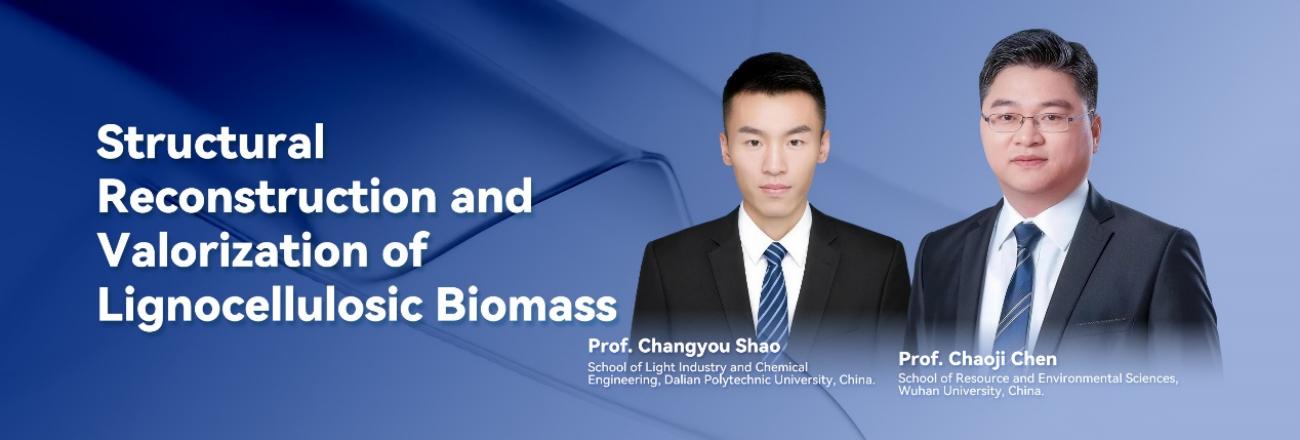
Structural Reconstruction and Valorization of Lignocellulosic Biomass


Contents
Guest
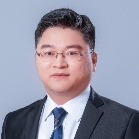
Prof. Chaoji Chen
Wuhan University
Chaoji Chen is a Professor and Doctoral Supervisor at the School of Resource and Environmental Sciences, Wuhan University. He received his Ph.D. from Huazhong University of Science and Technology (HUST) in 2015. From 2015 to 2021, he conducted postdoctoral research at HUST and the University of Maryland, College Park. In May 2021, he joined Wuhan University, where he established the X-Biomass Research Group.
His research focuses on the multiscale structural design, functionalization, and high-value utilization of biomass-based materials, including wood, bamboo, cellulose, and chitin. His work aims to harness natural materials to address the intertwined challenges of materials, environment, and energy for sustainable development.
Prof. Chen has published more than 100 SCI-indexed papers as first or corresponding author (including co-first and co-corresponding author) in leading journals, including Nature, Science (three papers), and their affiliated journals (18 papers). His publications have received more than 44,000 citations, and he has an H-index of 112.
He has been recognized as a Clarivate Highly Cited Researcher in Materials Science for five consecutive years (2021–2025). His other honors include the MIT Technology Review Asia-Pacific Innovators Under 35 (TR35), the American Chemical Society (ACS) Young Investigator Award, the Young Scientist Award of the Cellulose Division of the Chinese Chemical Society, the Advanced Science Young Innovator Award, the International Union of Materials Research Societies (IUMRS) Frontier Materials Young Scientist Award, the Alibaba DAMO Academy Young Fellow Award (Finalist), the Outstanding Impact Award for Emerging Chinese Scientists and Technologists, and the R&D 100 Award.
Prof. Chen serves as an Academic Editor of The Innovation Materials. He is also an Editorial Board Member or Young Editorial Board Member of National Science Review, The Innovation, Science Bulletin, Research, SusMat, npj Soft Matter, and Green Carbon. In addition, he serves as a Committee Member of the Cellulose Division of the Chinese Chemical Society.
His research focuses on the multiscale structural design, functionalization, and high-value utilization of biomass-based materials, including wood, bamboo, cellulose, and chitin. His work aims to harness natural materials to address the intertwined challenges of materials, environment, and energy for sustainable development.
Prof. Chen has published more than 100 SCI-indexed papers as first or corresponding author (including co-first and co-corresponding author) in leading journals, including Nature, Science (three papers), and their affiliated journals (18 papers). His publications have received more than 44,000 citations, and he has an H-index of 112.
He has been recognized as a Clarivate Highly Cited Researcher in Materials Science for five consecutive years (2021–2025). His other honors include the MIT Technology Review Asia-Pacific Innovators Under 35 (TR35), the American Chemical Society (ACS) Young Investigator Award, the Young Scientist Award of the Cellulose Division of the Chinese Chemical Society, the Advanced Science Young Innovator Award, the International Union of Materials Research Societies (IUMRS) Frontier Materials Young Scientist Award, the Alibaba DAMO Academy Young Fellow Award (Finalist), the Outstanding Impact Award for Emerging Chinese Scientists and Technologists, and the R&D 100 Award.
Prof. Chen serves as an Academic Editor of The Innovation Materials. He is also an Editorial Board Member or Young Editorial Board Member of National Science Review, The Innovation, Science Bulletin, Research, SusMat, npj Soft Matter, and Green Carbon. In addition, he serves as a Committee Member of the Cellulose Division of the Chinese Chemical Society.
Moderator

Prof.Changyou
Shao Dalian Polytechnic University
Changyou Shao is a Distinguished Professor and Ph.D. Supervisor at Dalian Polytechnic University. He has been selected for the National High-Level Young Talent Program, the 8th China Association for Science and Technology (CAST) Young Talent Support Program, the Liaoning Provincial Outstanding Young Scientists Fund, and the Liaoning Xingliao Talent Program for Young Top Talents.
His research focuses on biomass-derived intelligent hydrogels and their advanced applications. To date, he has published more than 50 SCI-indexed papers as first or corresponding author in leading international journals, including Progress in Materials Science (1), Advanced Materials (1), The Innovation (1), Advanced Functional Materials(6), ACS Nano(3), Nano-Micro Letters (2), Science Bulletin(1), Advanced Science (2), and Nano Energy (3). Six of his publications have been recognized as ESI Highly Cited Papers.
Professor Shao has contributed to two academic books (in both English and Chinese) and has filed seven invention patents, four of which have been granted. He has led 17 competitive research projects, including the General and Young Scientists Programs of the National Natural Science Foundation of China (NSFC).
His awards include the Second Prize of the Liaoning Provincial Natural Science Award (ranked first, 2024), the Baosteel Outstanding Teacher Award, and a nomination for the Dalian May Fourth Youth Medal. In education, he has been recognized for developing both a National First-Class Undergraduate Course and a Provincial First-Class Virtual Simulation Experimental Course.
Professor Shao serves as a Young Editorial Board Member for eight international journals, including Nano-Micro Letters, Green Carbon, and Exploration, and is an active reviewer for more than 40 leading journals, including Science, Nature Sustainability, and Advanced Materials.
His research focuses on biomass-derived intelligent hydrogels and their advanced applications. To date, he has published more than 50 SCI-indexed papers as first or corresponding author in leading international journals, including Progress in Materials Science (1), Advanced Materials (1), The Innovation (1), Advanced Functional Materials(6), ACS Nano(3), Nano-Micro Letters (2), Science Bulletin(1), Advanced Science (2), and Nano Energy (3). Six of his publications have been recognized as ESI Highly Cited Papers.
Professor Shao has contributed to two academic books (in both English and Chinese) and has filed seven invention patents, four of which have been granted. He has led 17 competitive research projects, including the General and Young Scientists Programs of the National Natural Science Foundation of China (NSFC).
His awards include the Second Prize of the Liaoning Provincial Natural Science Award (ranked first, 2024), the Baosteel Outstanding Teacher Award, and a nomination for the Dalian May Fourth Youth Medal. In education, he has been recognized for developing both a National First-Class Undergraduate Course and a Provincial First-Class Virtual Simulation Experimental Course.
Professor Shao serves as a Young Editorial Board Member for eight international journals, including Nano-Micro Letters, Green Carbon, and Exploration, and is an active reviewer for more than 40 leading journals, including Science, Nature Sustainability, and Advanced Materials.
Abstract
Biomass is one of nature's most abundant and valuable renewable resources. Among various biomass feedstocks, lignocellulosic biomass - including wood, bamboo, and agricultural residues - is the most widely distributed renewable biological resource on Earth. Despite its tremendous potential, the efficient utilization of biomass, particularly waste lignocellulosic biomass, remains hindered by several critical challenges, including low utilization efficiency, high energy consumption and carbon emissions during processing, secondary environmental pollution caused by process-generated waste, and limited value addition.
The sustainable and circular utilization of lignocellulosic resources, especially waste biomass, represents a key pathway toward achieving sustainable development and carbon neutrality in China and worldwide. This presentation will discuss recent advances in the structural reconstruction, low-carbon conversion, and functional valorization of lignocellulosic biomass. Particular emphasis will be placed on the design and fabrication of biomass-derived low-carbon functional materials and their emerging roles in addressing the interconnected materials, energy, and environmental challenges associated with sustainable development and the transition toward a carbon-neutral society.
The sustainable and circular utilization of lignocellulosic resources, especially waste biomass, represents a key pathway toward achieving sustainable development and carbon neutrality in China and worldwide. This presentation will discuss recent advances in the structural reconstruction, low-carbon conversion, and functional valorization of lignocellulosic biomass. Particular emphasis will be placed on the design and fabrication of biomass-derived low-carbon functional materials and their emerging roles in addressing the interconnected materials, energy, and environmental challenges associated with sustainable development and the transition toward a carbon-neutral society.