


High-Content Biofabrication of Human Tissues
Time
Beijing Time (UTC+8): 10:00 AM, January 16, 2026
Join the Webinar

Share
Contents
Guest
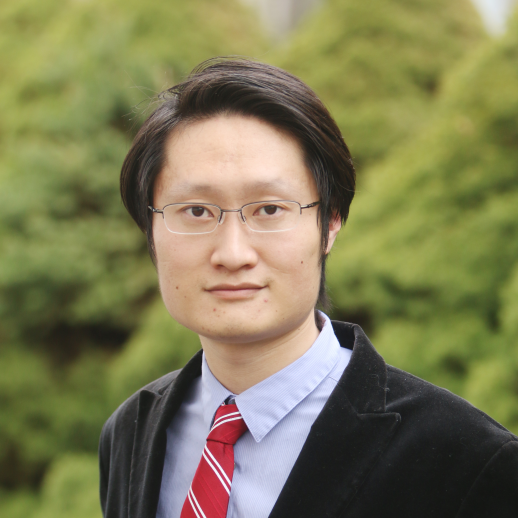
Y. Shrike Zhang
Department of Medicine, Harvard Medical School
Division of Engineering in Medicine, Brigham and Women's Hospital
Dr. Zhang is currently Associate Professor in the Department of Medicine at Harvard Medical School and Associate Bioengineer in the Division of Engineering in Medicine at the Brigham and Women’s Hospital. Dr. Zhang is directing the Laboratory of Engineered Living Systems (www.shrikezhang.com), where the research is focused on innovating medical engineering technologies, including 3D bioprinting, organs-on-chips, microfluidics, and bioanalysis, to recreate functional tissues and their biomimetic models, for applications in regenerative medicine and personalized medicine. He has citations of ~49,000 and h-index=110). His scientific contributions have been recognized by >50 international, national, and regional awards.
Moderator
Shuai Li
Zhejiang University
Dr. Shuai Li is currently a Research Fellow in the Department of Orthopedics at the First Affiliated Hospital, Zhejiang University School of Medicine. He obtained his Ph.D. in Mechanical Engineering and Biofabrication under a joint program supported by the China Scholarship Council, conducted between Shanghai University and the Georgia Institute of Technology. Subsequently, he completed his postdoctoral training in the Department of Orthopedics at the Ninth People's Hospital, Shanghai Jiao Tong University School of Medicine.
In addition to his research role, Dr. Li serves as a Young Editorial Board Member for the journals Soft Science and Biomaterials Translational, and has been recognized as an Outstanding Young Editorial Board Member of Biomaterials Translational. His research focuses on engineered vascular network fabrication, biomaterial-cell interaction mechanisms, and the application of functional hydrogels in tissue regeneration. He has authored or co-authored more than 20 SCI-indexed papers in leading journals such as Advanced Materials, Advanced Functional Materials, Bioactive Materials, Biomaterials, and Biofabrication, among others. Dr. Li also holds five authorized Chinese invention patents and has led several research grants, including projects from the National Natural Science Foundation of China, the China Postdoctoral Science Foundation, and the Zhejiang Provincial Natural Science Foundation.
In addition to his research role, Dr. Li serves as a Young Editorial Board Member for the journals Soft Science and Biomaterials Translational, and has been recognized as an Outstanding Young Editorial Board Member of Biomaterials Translational. His research focuses on engineered vascular network fabrication, biomaterial-cell interaction mechanisms, and the application of functional hydrogels in tissue regeneration. He has authored or co-authored more than 20 SCI-indexed papers in leading journals such as Advanced Materials, Advanced Functional Materials, Bioactive Materials, Biomaterials, and Biofabrication, among others. Dr. Li also holds five authorized Chinese invention patents and has led several research grants, including projects from the National Natural Science Foundation of China, the China Postdoctoral Science Foundation, and the Zhejiang Provincial Natural Science Foundation.
Abstract
Over the last decades, the fabrication of three-dimensional (3D) tissues has become commonplace. However, conventional 3D fabrication techniques are limited in their capacity to produce complex tissue constructs with the required precision and controllability that is needed to replicate biologically relevant tissues. To this end, 3D bioprinting offers great versatility in the fabrication of biomimetic volumetric tissues that are structurally and functionally relevant. It enables precise control of the composition, spatial distribution, and architecture of bioprinted constructs facilitating the recapitulation of the delicate shapes and structures of target organs and tissues. This talk will discuss our recent efforts on developing various bioprinting methods that allow high-content biofabrication of human-relevant tissues to recapitulate the important biological and physiological parameters of their in vivo counterparts. These biomimetic tissues are anticipated to provide new opportunities in constructing functional tissues and their models for broad applications in regenerative medicine, drug discovery, therapeutics screening, and precision medicine.