


How Animal Vision Inspires the Future of Robotic Eyes
Time
Beijing Time (UTC+8): 3:00 PM, January 9, 2026
Korea Standard Time (UTC+9): 4:00 PM, January 9, 2026
Korea Standard Time (UTC+9): 4:00 PM, January 9, 2026
Join the Webinar

Share
Contents
Guest

Prof. Young Min Song
Korea Advanced Institute of Science and Technology, South Korea.
Dr. Young Min Song is a KAIST Endowed Chair Professor in the School of Electrical Engineering at the Korea Advanced Institute of Science and Technology (KAIST), Korea. Prior to joining KAIST, he held faculty positions at the Gwangju Institute of Science and Technology (GIST), where he progressed through the ranks from Assistant to Full Professor, and at Pusan National University as an Assistant Professor. He received his M.S. and Ph.D. degrees in Information and Communications from GIST in 2006 and 2011, respectively, and a B.S. degree in Biomedical Engineering from Yonsei University in 2004. From 2011 to 2013, he was a postdoctoral research associate in the Department of Materials Science and Engineering at the University of Illinois at Urbana-Champaign. Dr. Song’s research interests include advanced optoelectronic devices and systems, multifunctional nanophotonics, and optical healthcare systems. He is a Senior Member of Optica, and a member of SPIE and MRS. He currently serves as a Senior Editor of the IEEE Photonics Journal and as an Editorial Board Member of the Journal of Optical Microsystems (JOMs) and Soft Science. He is also a member of the Young Korea Academy of Science and Technology (Y-KAST), Korea.
Moderator
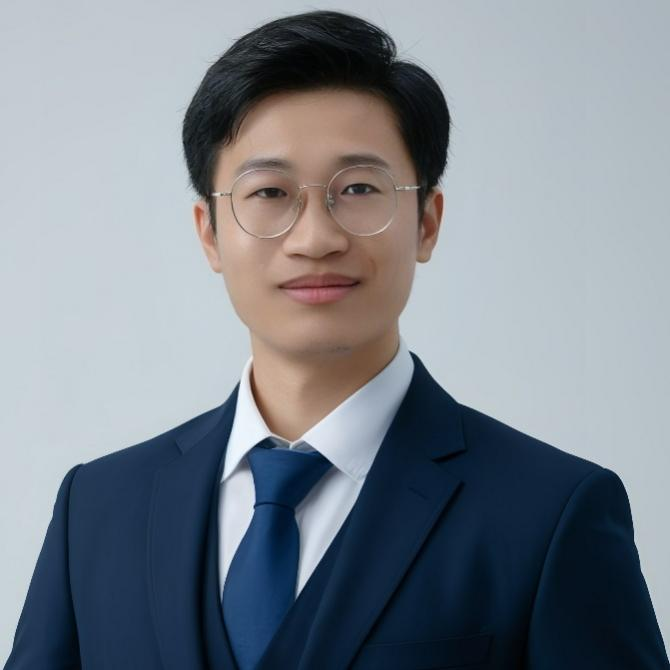
Prof. Changhong LINGHU
City University of Hong Kong, Hongkong, China
Prof. Changhong LINGHU is a Presidential Assistant Professor in the Department of Mechanical Engineering at City University of Hong KONG. He has been a Postdoctoral Research Fellow at Nanyang Technological University (NTU), Singapore since June 2023. He received his Ph.D. from NTU in 2023, and his M.S. and B.E. in Mechanics from Zhejiang University in 2020 and 2017, respectively.
He works at the interdisciplinary frontiers of mechanics, materials, robotics, and engineering, focusing on Smart Interfacial Science and Engineering (contact, adhesion, friction, etc.). His research spans fundamental mechanics, advanced manufacturing, collaborative/climbing robots, perching aerial vehicles, flexible/wearable devices, biomedical adhesives, and mechanical metamaterials. So far, he has published over 36 SCI papers in journals such as JMPS, PNAS, NSR, Sci. Adv., Nat. Commun., IJSS, and EML. He serves as the Associate Editor of the Journal of Polymer Materials, the guest editor and early career board (ECB) member of Int. J. Smart Nano. Mater., and ECB member of The Innovation Materials, SmartBot, Exploration, Additive Manufacturing, Micro-Nano Letters, and reviewers for more than 20 international journals, including Sci. Adv., Natl. Sci. Rev., Adv. Funct. Mater, Adv. Intell. Syst., JMPS, EML, the Innovation, Research, Acs Applied Materials & Interfaces, etc. He has mentored/co-supervised over 80 students, with 56 pursuing graduate studies at top universities like Stanford, MIT, Yale, and Cambridge.
He works at the interdisciplinary frontiers of mechanics, materials, robotics, and engineering, focusing on Smart Interfacial Science and Engineering (contact, adhesion, friction, etc.). His research spans fundamental mechanics, advanced manufacturing, collaborative/climbing robots, perching aerial vehicles, flexible/wearable devices, biomedical adhesives, and mechanical metamaterials. So far, he has published over 36 SCI papers in journals such as JMPS, PNAS, NSR, Sci. Adv., Nat. Commun., IJSS, and EML. He serves as the Associate Editor of the Journal of Polymer Materials, the guest editor and early career board (ECB) member of Int. J. Smart Nano. Mater., and ECB member of The Innovation Materials, SmartBot, Exploration, Additive Manufacturing, Micro-Nano Letters, and reviewers for more than 20 international journals, including Sci. Adv., Natl. Sci. Rev., Adv. Funct. Mater, Adv. Intell. Syst., JMPS, EML, the Innovation, Research, Acs Applied Materials & Interfaces, etc. He has mentored/co-supervised over 80 students, with 56 pursuing graduate studies at top universities like Stanford, MIT, Yale, and Cambridge.
Abstract
In the field of robotics, particularly aimed at enabling robots to autonomously navigate and seamlessly collaborate with humans, the significance of unconventional imaging techniques and efficient data processing capabilities is paramount. The dynamic array of environments encountered by robots, along with the multitude of tasks they are assigned, presents numerous challenges that necessitate diverse visual functionalities. Consequently, the development of multifunctional robotic vision systems has become indispensable. The rich diversity inherent in the vision systems of animals, honed over evolutionary epochs to meet their survival demands across varied habitats, serves as a profound source of inspiration for designing sophisticated vision systems tailored for robotic platforms with complex missions in unstructured environments. This talk summarizes recent advances in cutting-edge multifunctional robotic vision systems, drawing inspiration from the distinctive characteristics of natural ocular structures, with a particular focus on bio-inspired electronic eyes