Topic: Obesity Treatment and Disease Modification
A Special Topic of Metabolism and Target Organ Damage
ISSN 2769-6375 (Online)
Submission deadline: 31 Mar 2027
Guest Editors
Special Topic Introduction
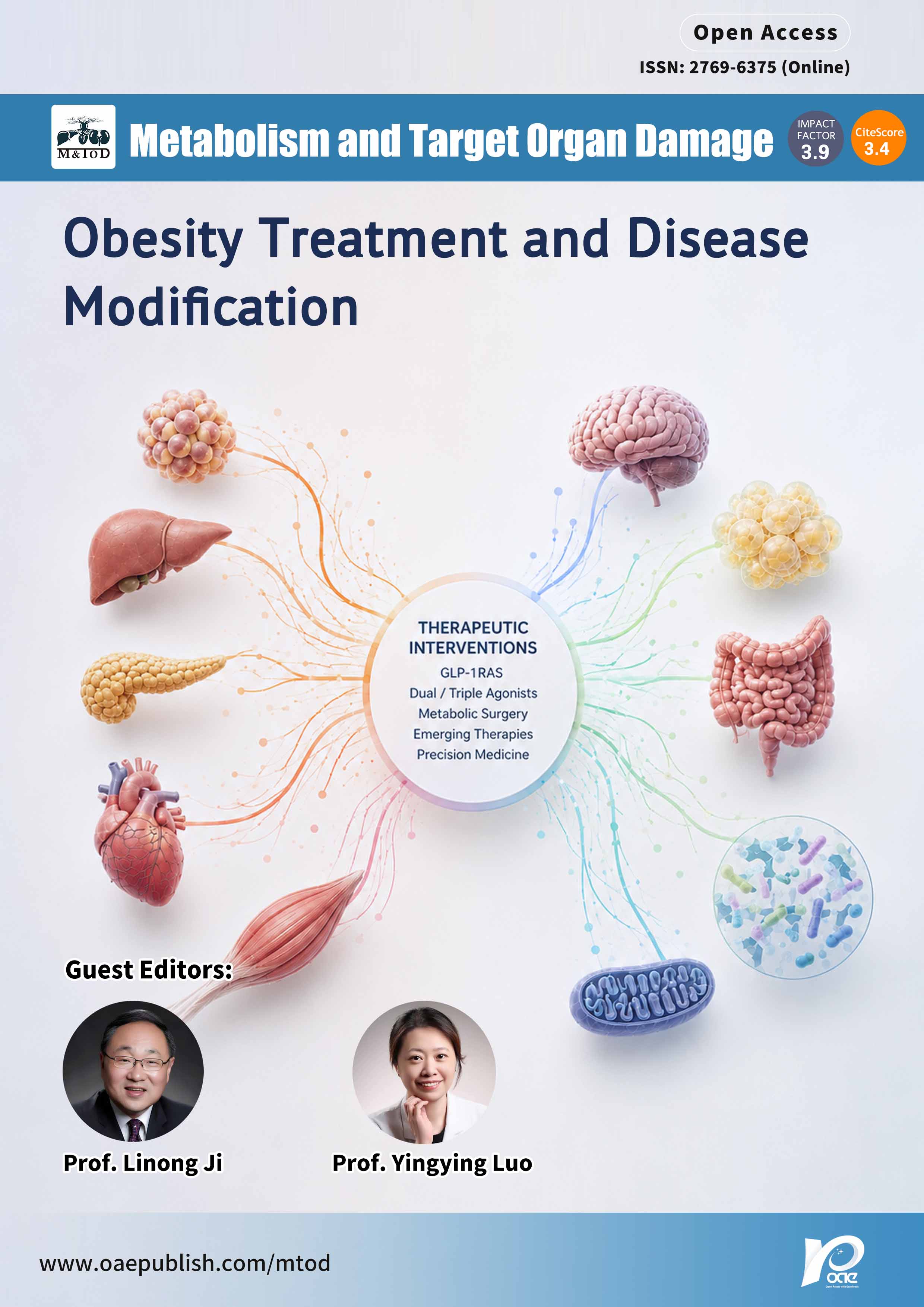
Obesity has now surpassed simple energy balance disorders and is recognized as a chronic, recurrent, and progressive endocrine metabolic disease. Through its damage to multiple target organs such as the cardiovascular system, kidney, liver, and pancreas, it drives multiple systemic pathologies. Importantly, obesity is a heterogeneous disease encompassing diverse pathophysiological phenotypes, with substantial interindividual differences in metabolic dysfunction, fat distribution, inflammation, and target-organ involvement. Sex differences may further influence obesity-related pathophysiology, treatment responses, and long-term outcomes. At the same time, the treatment concept has undergone a fundamental transformation, shifting from being limited to weight loss to a more long-term "disease correction" goal: that is, through mechanistic intervention, to reverse, or permanently alter the natural course of obesity and its related target organ complications.
In recent years, significant progress has been made in the field of obesity treatment. Incretin based medications have achieved unprecedented weight loss and have clearly demonstrated protective effects on multiple organs and systems, opening new paths for comprehensive metabolic regulation. Additionally, the combined application of metabolic weight loss surgery and anti-obesity drugs is also being systematically explored through sequential or combined approaches. At the same time, the rise of precision medicine, multi-omics analysis, gut microbiome research, and artificial intelligence-driven phenotypic classification is driving the stratification of patients based on biomarkers and individualized treatment options. Such approaches may help identify distinct obesity pathophenotypes and determine which patients are most likely to benefit from specific interventions, while also accounting for potential sex-related differences in treatment efficacy and safety. Various new weight management drugs, including oral peptide drugs, oral non-peptide small molecule drugs, dual or triple agonists, and ultra-long-acting weight loss drugs, have further enriched the research pipeline and are expected to address unmet clinical needs such as weight maintenance, maintenance of lean body mass, and long-term disease course correction.
This special issue centers on the theme “Obesity Treatment and Disease Modification” establishing a multidisciplinary integrative platform grounded in evidence from endocrinology, metabolism, nutrition, bariatric surgery, and related fields. It features high-quality original research, comprehensive systematic reviews, and expert perspectives that advance mechanistic understanding of emerging interventions—particularly their capacity to modify disease trajectories—and inform both clinical decision-making and future research directions. Particular attention will also be given to the heterogeneity of obesity, including distinct pathophenotypes and sex-related differences, and to how these factors may influence treatment selection, therapeutic response, and the modification of obesity-related target organ damage.
Submission Deadline
Submission Information
For Author Instructions, please refer to https://www.oaepublish.com/mtod/author_instructions
For Online Submission, please login at https://www.oaecenter.com/login?JournalId=mtod&IssueId=mtod26083110596
Submission Deadline: 31 Mar 2027
Contacts: Alani Luo, Managing Editor [email protected]