


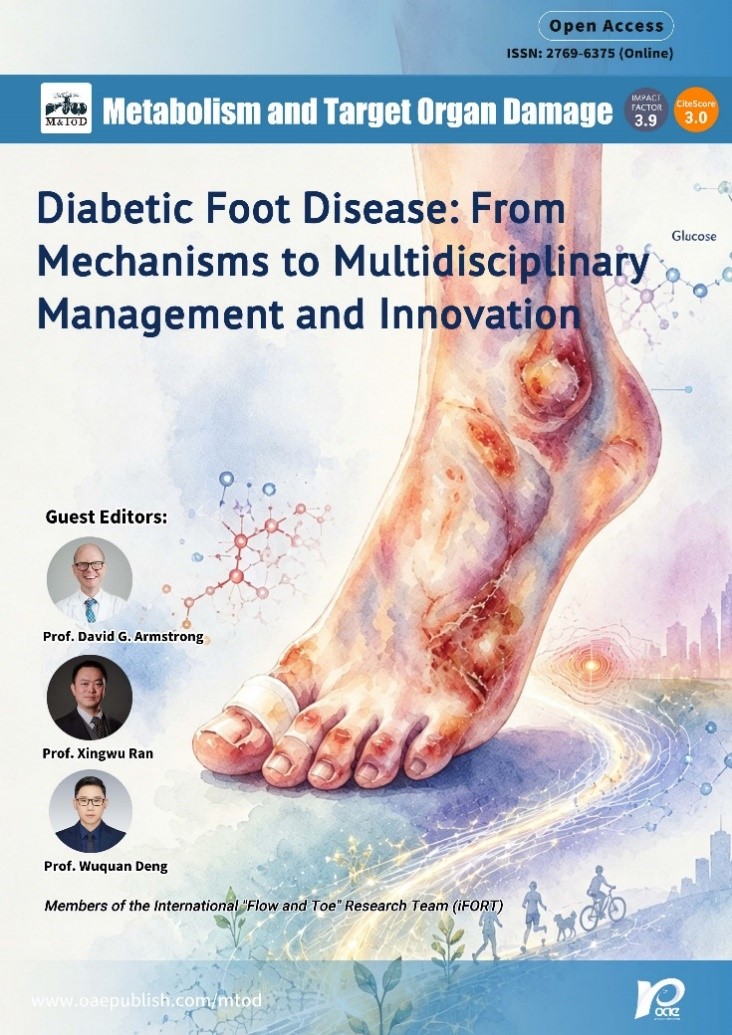
Topic: Diabetic Foot Disease: From Mechanisms to Multidisciplinary Management and Innovation
A Special Topic of Metabolism and Target Organ Damage
ISSN 2769-6375 (Online)
Submission deadline: 31 Jan 2027
Guest Editors
Special Topic Introduction
Diabetic foot disease (DFD) should be viewed not as an isolated lower-limb complication, but as a clinical expression of systemic metabolic dysregulation, neurovascular injury and multi-organ dysfunction in diabetes mellitus. Comorbid conditions — including heart failure, chronic kidney disease, cerebrovascular disease, immune dysfunction and malnutrition — markedly increase the risk of ulceration, delayed wound repair, amputation and death. Accordingly, improving outcomes requires a conceptual shift from lesion-focused care towards an integrated understanding of how systemic organ crosstalk shapes tissue breakdown, healing trajectories and long-term prognosis.
This Special Issue aims to provide a multidisciplinary platform that integrates progress in basic science, translational research, and clinical management of DFD, enabling a shift from “treating the foot” to “treating the whole patient.”
Objectives:
● To highlight recent advancements in the pathophysiology of DFD;
● To explore the impact of systemic organ dysfunction on the outcomes of diabetic foot;
● To evaluate the multidisciplinary strategies for prevention, wound healing, and limb preservation;
● To promote the adoption of innovative technologies for early diagnosis and personalized management;
● To conduct an in-depth exploration of the health economics associated with the prevention and management of DFD.
Topics Covered:
● Neurovascular dysfunction, including peripheral artery disease, diabetic neuropathy, revascularization strategies, and neuroprotective interventions;
● Mechanisms of impaired wound healing, involving inflammation, oxidative stress, advanced glycation end products, autophagy dysfunction, and emerging therapies such as exosomes and stem cells;
● Diabetic foot infection, microbiome characteristics, antimicrobial resistance, and anti-biofilm therapies;
● The influence of cardiac, renal, cerebral, immune, and respiratory dysfunctions on ulcer development, ulcer healing, amputation, and patient survival, as well as the management of multidisciplinary comorbidities;
● Evidence-based guidelines and digital innovations, including wearable devices, artificial intelligence-based risk prediction, remote monitoring, and metabolic and nutritional support;
● Health economics associated with the management of DFD;
● Role of lifestyle habits as risk factors for DFD;
● Sex discrepancies in the risks of developing DFD, access to care, and treatment outcomes.
Target Audience:
This Special Issue is targeted at endocrinologists, diabetologists, vascular surgeons, podiatrists, wound care specialists, infectious disease physicians, rehabilitation specialists, primary care physicians, and researchers dedicated to diabetic foot disease and diabetes-related complications. We invite original research articles, reviews, and clinical studies that advocate integrated, patient-centered approaches to diabetic foot management.
Submission Deadline
Submission Information
For Author Instructions, please refer to https://www.oaepublish.com/mtod/author_instructions
For Online Submission, please login at https://www.oaecenter.com/login?JournalId=mtod&IssueId=mtod26070310530
Submission Deadline: 31 Jan 2027
Contacts: Ashley Chen, Assistant Editor, [email protected]