
Aim
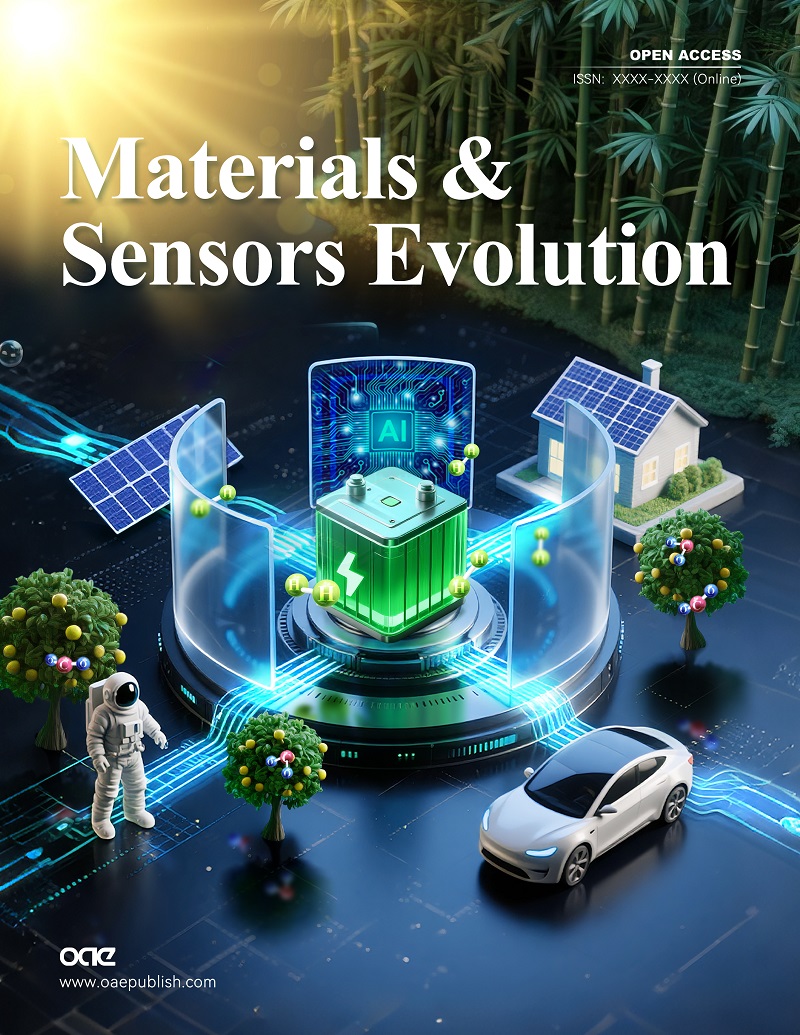
Materials & Sensors Evolution aims to serve as a forward-looking platform that advances the science and technology in the multidisciplinary domains of advanced energy materials and smart sensing devices. The journal focuses on the dynamic evolution from fundamental materials design and experiment to system-level applications, emphasizing how innovative materials drive the development of next-generation performance, reliability and sustainability.
It welcomes original research, reviews, and perspectives focusing on AI-guided materials discovery, energy storage and conversion, hydrogen sensing and safety, photovoltaic and photothermal self-powered sensors, phase-change thermal regulation, building energy conservation, and environmental, biological as well as agricultural monitoring, including the detection of VOCs, heavy metals, blood glucose, microorganism, and greenhouse gases. Contributions on bio-based and sustainable materials, flexible and transparent electronics, and sensing technologies and devices for extreme environments are also encouraged.
By integrating expertise from materials science, engineering, physics, chemistry, theoretical computation, machine learning and data science, Materials & Sensors Evolution promotes interdisciplinary collaboration and drives the development of innovative solutions for energy, environment, health-related, and advanced technological challenge within a rapidly advancing field.
Scope & Topics
Materials & Sensors Evolution is dedicated to the synergistic development of functional materials and sensing technologies, publishing original research articles, comprehensive reviews, and forward-looking perspectives covering the following areas:
- Materials design and structure-property relationship study guided by AI for sensing and energy applications
- Electrochemistry (such as metal-ion batteries, liquid battery, supercapacitors, and bio/fuel cells) and electrocatalytic processes
- Hydrogen energy: technologies for production, purification/separation, storage, sensing and safety, and fuel cells.
- Solar energy conversion and photocatalysis
- Photovoltaic, photothermal, and self-powered sensors
- Phase-change materials for thermal storage and temperature regulation
- Flexible and transparent electronics enabling next-generation sensing platforms
- Wearable and health-monitoring sensors, including smart textiles and personal diagnostic devices
- Environmental sensing technologies for the detection of VOCs, greenhouse gases, humidity, and air quality
- Agricultural and food monitoring, encompassing crop health assessment, soil analysis, and food safety detection
- Bio-derived and sustainable materials, environmentally friendly fabrication methods, and life-cycle evaluation
- Intelligent living environments: monitoring of indoor air quality, thermal comfort, and smart building materials
- Sensing technologies for transportation and mobility, including applications in electric vehicles, hydrogen-powered transport, and aerospace system
- Reliability, standardization, and security in sensing systems to ensure long-term performance

