

Soft Science Expert Interview Series - Prof. Ting Lei
On November 20, 2024, the Editorial Office of Soft Science conducted an online interview with Prof. Ting Lei, Associate Professor at the School of Materials Science and Engineering, Peking University, Beijing, China. Prof. Lei shared insights into his recent research in materials science, focusing on organic semiconductors and conjugated polymer functional materials, as well as their applications in biomedical and flexible electronics.
Prof. Lei introduced his research on integrating organic semiconductor optoelectronic materials with traditional hydrogels, resulting in materials that combine excellent optoelectronic properties with biocompatibility. He explained that such semiconducting hydrogels offer promising opportunities for applications at the interface of electronics and biology, especially for applications in wearable and implantable devices.
He further highlighted the advantages of multi-network composite gels over conventional hydrogels, noting improvements in mechanical properties, electrical conductivity, and biocompatibility. Prof. Lei also discussed key challenges in this research area, particularly those related to polymer design and the construction of stable hydrogel networks that effectively balance material performance and flexibility.
Finally, drawing on his own experience, Prof. Lei offered guidance to young researchers in materials science, encouraging them to remain patient, maintain a long-term perspective, and actively pursue interdisciplinary collaboration to foster innovation.
Watch the full interview with Prof. Ting Lei:
Interview Questions:
Q1. Could you provide a concise overview of your research focus?
Q2. What inspired you to explore the integration of semiconducting properties into hydrogels?
Q3. What advantages do multi-network composite gels offer over traditional hydrogels for bioelectronic applications?
Q4. What were the key challenges in developing high-performance semiconducting hydrogels?
Q5. What advice would you give to young aspiring researchers in materials science?
About the Interviewee:
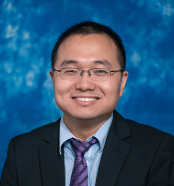
Prof. Ting Lei
Associate Professor, School of Materials Science and Engineering, Peking University, Beijing, China
Research Interests
• Organic/polymeric functional materials
• Flexible wearable electronics and bioelectronics
• Wearable and implantable electronic devices for biomedical applications
Selected Honors and Awards
• Chinese Chemical Society Prize for Young Scientists (2023)
• Beijing Outstanding Young Scientist Fund (2022)
• Young Polymer Chemistry Award, Chinese Chemical Society (2021)
• Jingqing Chemistry New Talent Award, Chinese Chemical Society (2020)
Editor: Mirra Du
Language Editor: Catherine Yang
Production Editor: Ting Xu
Respectfully Submitted by the Editorial Office of Soft Science