

In Conversation with Prof. Yury Gogotsi: Pioneer of MXenes and Advisory Editor of Soft Science
On December 23, 2025, Soft Science successfully hosted an online academic interview featuring Prof. Yury Gogotsi, a newly appointed Advisory Editor of the journal and a world-renowned materials scientist widely recognized as the pioneer of MXenes. Moderated by our Editorial Board Member Prof. Huanyu Cheng from Pennsylvania State University, USA, the conversation provided a concise yet comprehensive overview of the evolution of MXene research, spanning fundamental mechanisms, application-driven innovation, and long-term sustainability.
Key discussion topics included:
- Strategies for balancing fundamental research with application-oriented development in MXene science
- Practical challenges related to scalability, stability, and manufacturability
- Environmentally responsible design and life-cycle assessment of MXene-based materials
- Talent cultivation and interdisciplinary collaboration as drivers of future breakthroughs
Interview Questions:
1. In your recent seminar presentations, you emphasized the tunability of MXene structures and their optical/electronic properties. How do you prioritize fundamental studies (e.g., controlling surface chemistry, phase engineering) versus application-driven projects in your group, and has this balance shifted recently?
2. Looking ahead 5-10 years, which interdisciplinary collaborations (e.g., electrochemistry, membrane science, photonics, bioengineering, or AI-guided materials discovery) do you think will most accelerate breakthroughs in MXene research, and where do you personally plan to invest your group's efforts?
3. Your group has expanded MXene research into diverse areas - from energy storage to membranes and nanozymes. Based on your most recent publications and talks, which emerging MXene application do you believe is closest to practical translation, and what technical or scale-up hurdles remain to be solved?
4. Environmental and sustainability concerns are increasingly important in nanomaterials research. How does your lab assess the life cycle, recyclability, and environmental impact of MXene-based devices (e.g., batteries, filters), and what materials design strategies are you pursuing to improve sustainability?
5. You've been active in both academic research and outreach/education (including MXene courses, seminars). What skills or mindsets do you most strongly encourage doctoral students and postdoctoral researchers to acquire to succeed in the MXene/nanomaterials field?
About the Interviewee:
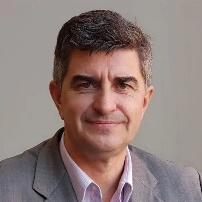
Prof. Yury Gogotsi, Director, A.J. Drexel Nanomaterials Institute, Drexel University, Philadelphia, Pennsylvania, USA
Prof. Gogotsi is internationally recognized for his pioneering contributions to nanomaterials science and is widely known as the "Father of MXenes." He aims to develop assembled nanomaterials that will redefine the future of technology. He and his research group discover, modify, manufacture, and process two-dimensional (2D) carbides and nitrides (MXenes). They combine MXenes with organic and inorganic nanostructures to design innovative advanced materials with unique combinations of properties. These materials show transformative potential across various fields, ranging from healthcare to energy, optoelectronics, communications, and space exploration.
Honors and Distinctions
- Fellow, European Academy of Sciences
- Fellow, National Academy of Inventors (USA)
- Clarivate Highly Cited Researcher (2014-2025)
Selected Awards
- Blaise Pascal Medal, European Academy of Sciences
- Ceramic Award, World Ceramic Society
- MRS Medal, Materials Research Society
- ACS Materials Chemistry Award, American Chemical Society
About the Interviewer:
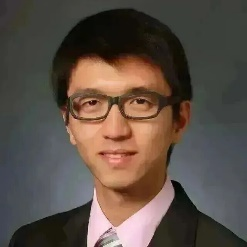
Prof. Huanyu Cheng, James L. Henderson Memorial Associate Professor, Pennsylvania State University, University Park, Pennsylvania, USA
Prof. Cheng's research spans advanced materials and devices, applied mechanics and biomechanics, nanoscience and bio-nanoscience, and structural and human health monitoring.
Honors and Recognition
- Recipient of the National Institutes of Health (NIH) Pioneer Award
- Clarivate Highly Cited Researcher in Cross-Disciplinary Fields (2021-2025)
- MIT Technology Review Innovators Under 35 (TR35) Award
Editor: Mirra Du
Language Editor: Catherine Yang
Production Editor: Ting Xu
Respectfully Submitted by the Editorial Office of Soft Science