

The rise of flexible high-temperature electronics 2026
 0
0 


 Download PDF
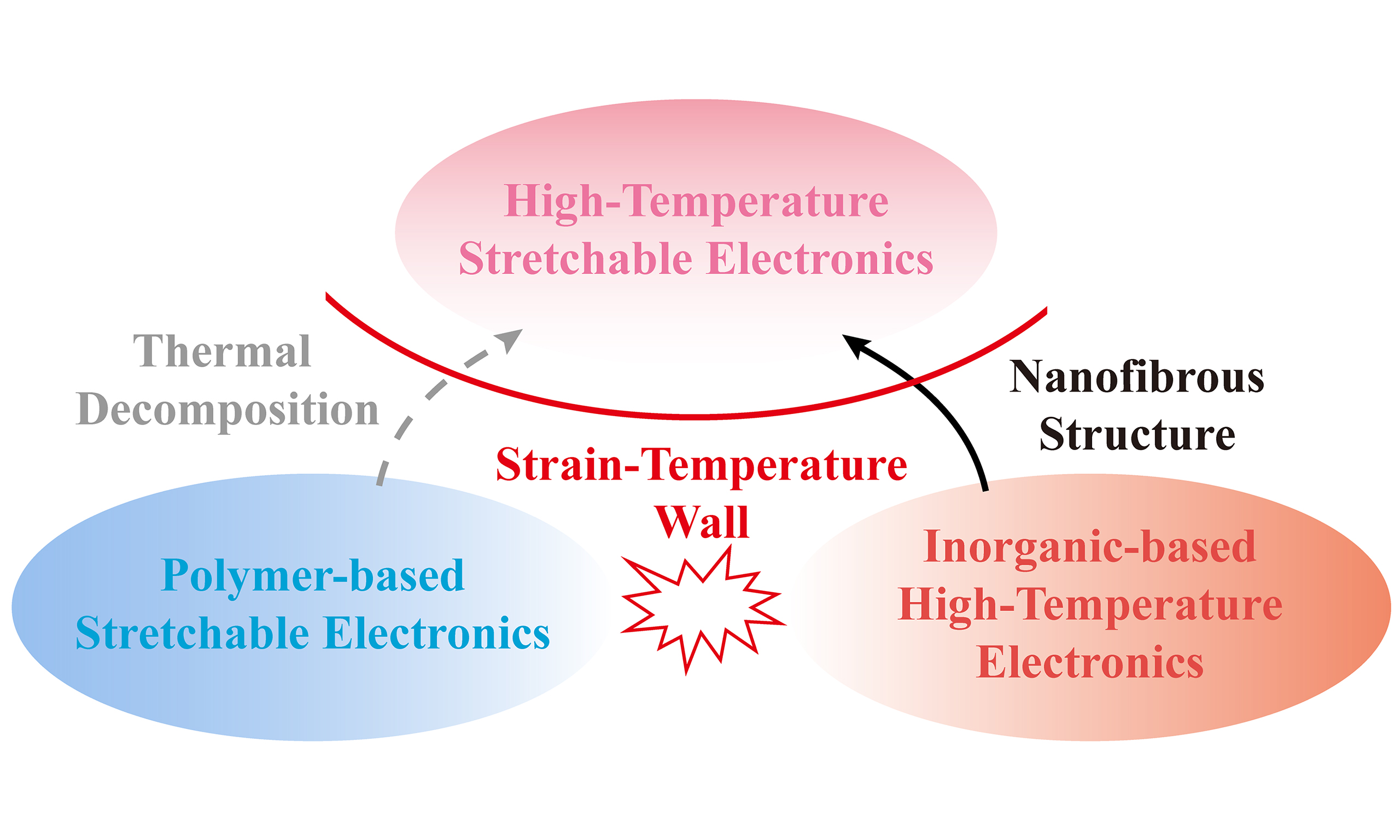
Flexible electronics encapsulated in polymers achieve exceptional stretchability but suffer thermal decomposition at elevated temperatures[1-7]. Conversely, ceramic and metallic sensors withstand temperatures up to 1,000 °C yet fracture under minimal strain[8-12]. This intrinsic strain-temperature wall has long excluded flexible electronics from harsh, high-temperature environments. Ceramic nanofibrous platforms[13-17] now overcome this barrier. Their interconnected fibre networks integrate reversible large deformability and robust thermal stability across an ultrabroad temperature range spanning cryogenic conditions to 1,300 °C. In this Perspective, we trace the emergence of flexible high-temperature electronics[18-22], surveying structural design principles and conductive functionalization strategies that enable multi-parameter sensing of temperature[18], heat flux[19], strain[20], and pressure[21,22] under extreme thermal loads. We also envision combining superelastic ceramic aerogels with electrical functionalization approaches to yield thermally tolerant, highly stretchable electronic systems. These platforms hold promise for health monitoring and diagnostics across deep-space exploration, protective suits, and nuclear energy systems.
Deep-space exploration and hypersonic aerospace missions impose stringent demands on electronic devices, particularly for high-temperature resistance and mechanical stretchability[23]. Foldable solar sails and functional spacesuits, for example, must endure extreme temperature fluctuations and complex mechanical deformation during orbital operation and extravehicular activities[24]. Aero-engines and power systems, meanwhile, sustain prolonged high-temperature service and dynamic structural vibration[1]. These harsh operating environments demand sensors that integrate thermal tolerance with mechanical stretchability, a combination that no existing electronic device provides.
Traditional thermally stable electronics such as ceramic and metallic sensors are intrinsically brittle and poorly conformable, failing to match the deformable curved aerospace structures[8,9]. Thin-film metal strain gauges on superalloy substrates operate at elevated temperatures yet fracture under thermal expansion mismatch[10]. Polymer-derived SiCN cantilever sensors[11] and all-sapphire-based pressure sensors[12] function up to 800 °C yet remain intrinsically rigid. Thermal resistance and conformability remain mutually exclusive, forming the well-known strain-temperature trade-off.
Flexible electronic devices for extreme scenarios are required to maintain stable mechanical compliance and reliable electrical performance under coupled high-temperature and large-strain conditions. Conventional flexible electronic systems based on organic encapsulation and polymer matrices exhibit limited thermal resistance and are prone to mechanical failure and functional attenuation at elevated temperatures[1]. Qi et al. reviewed PDMS-based stretchable electronics, noting Sylgard 184 retains elasticity up to 200-250 °C with bulk elongation at break of 100%-200%[2]. Poly(3,4-ethylenedioxythiophene):poly(styrenesulfonate) (PEDOT:PSS) electrodes on polyurethane (PU) sustain tensile strains beyond 100% in intrinsically stretchable organic photovoltaics, yet these devices remain confined to near-room-temperature operation[3]. Hazarika et al. achieved high piezoelectric output in poly(vinylidene fluoride) (PVDF) via ion-dipole interaction and directional alignment, enabling self-powered flexible sensors with 60,000-cycle stability[4]. Bai et al. developed a crack-modulated thermoplastic polyurethane (TPU) strain sensor using liquid metal and a cracked Pt electrode, achieving a gauge factor exceeding 108 with a strain range > 100% and 2,000-cycle durability[5]. Li et al. developed a high-temperature flexible piezoelectric sensor based on polyacrylonitrile (PAN)/Zn(Ac)2/multi-walled carbon nanotube (MWCNT) composite nanofiber mats, which maintains stable piezoelectric performance across a broad temperature window of 25-550 °C[6]. Yin et al. recently developed an all-polyimide capacitive pressure sensing skin (iFlexSense) that maintains hermetic sealing and mechanical compliance at -196 °C, achieving a detection limit of 0.01 kPa and stable operation over 900 cryogenic loading cycles[7]. Organic-based platforms thus deliver reliable flexible electronics for cryogenic environments, yet developing flexible devices stable above 500 °C remains an unresolved challenge. Figure 1 situates polymer sensors, conventional high-temperature sensors, ceramic aerogel sensors, and stretchable ceramic aerogels on a unified strain-temperature map, making visible the intrinsic strain-temperature wall [Stwall(T, ε) < C] of flexible high-temperature sensors, where ε and T are the maximum tensile strain and working temperature of the materials and C is a fitting constant. Breaking the wall demands both encapsulation and sensing materials that decouple mechanical compliance from thermal degradation.
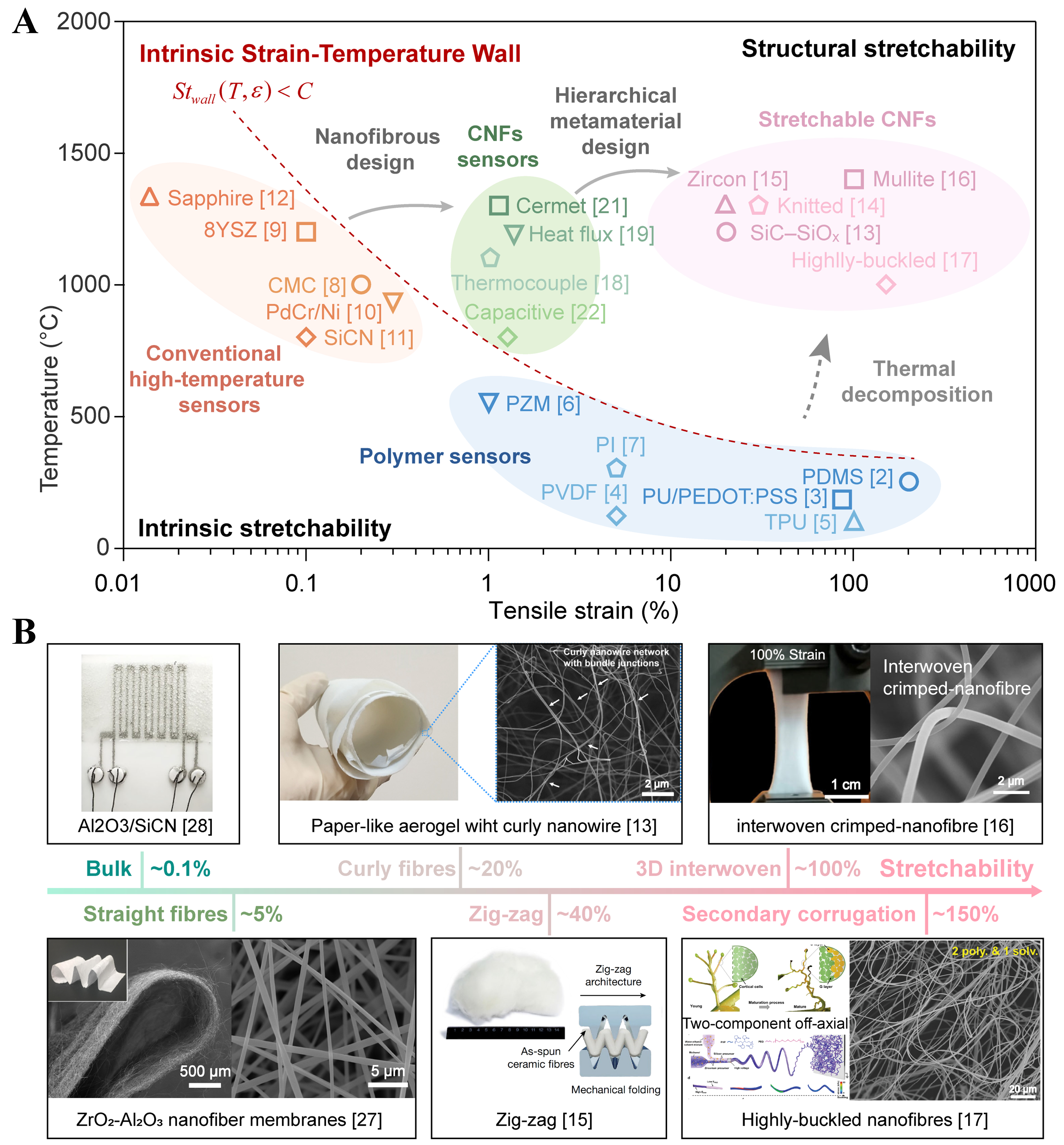
Figure 1. Materials for flexible high-temperature electronics. (A) The intrinsic strain-temperature limitation of sensor materials. Data points were collected from previous reports (Refs.[2-19,21,22,27,28]); (B) Evolution of thermo-mechanically robust ceramic nanofibrous platforms. Reprinted with permission from Ref.[13]. Copyright © 2021, American Chemical Society. Adapted from Ref.[15]. CC BY 4.0. Adapted from Ref.[16]. CC BY 4.0. Reprinted from Ref.[17]. © 2024 Wiley‐VCH GmbH. Reprinted with permission from Ref.[27]. Copyright © 2020, American Chemical Society. Reprinted from Ref.[28]. © 2026 Wiley‐VCH GmbH. CNFs: Carbon nanofibers; PZM: polyacrylonitrile/Zn(Ac)2/multi-walled carbon nanotube; PI: polyimide; PVDF: poly(vinylidene fluoride); PU: polyurethane; PEDOT:PSS: poly(3,4-ethylenedioxythiophene):poly(styrenesulfonate); TPU: thermoplastic polyurethane; PDMS: polydimethylsiloxane.
We argue that the most promising strategy for breaking this wall lies in sensors based on ceramic nanofibrous architectures. Unlike monolithic ceramics that shatter under strain, nanofibrous aerogels derive their structure from ceramic nanofibers rather than fused particles, opening a pathway to mechanical compliance that sol-gel aerogels cannot access. In nanofibrous architectures, by contrast, the fibres can slide, buckle, and straighten relative to one another. Stress distributes across the fibre network rather than concentrating at particle junctions. This architectural transition from a particle network to a fibre network is the single design principle that has enabled the mechanical breakthroughs surveyed below. The rise of flexible high-temperature electronics begins here.
Over the past decade, research on ceramic aerogels has largely focused on realizing high-temperature resistance, ultralow density, superior thermal insulation, and exceptional compressive resilience. Xu et al. designed SiO2-Al2O3 nanofibrous aerogels with hyperbolic nodes that steer stress away from junctions, achieving 80% compression with full recovery[25]. Hierarchical cellular designs distribute load across fibres, bundles, and cell walls, extending temperature-invariant elasticity to 1,000 °C[26]. Lamellar multiarch structures produced by directional freeze-casting recover from 60% compression after 1,300 °C exposure with under 5% permanent deformation[27]. Compressive resilience, the first axis of the mechanical design space, has been systematically established through fibre-network architecture design. Without dedicated tensile architecture, these fibre membranes reach ~3% strain, already an order of magnitude beyond the inherent tensile capacity of ceramics.
Tensile compliance, the second axis, has advanced through pre-buckled fibre architectures. Pre-buckled fibres straighten under tension rather than extending, so fibre strain remains negligible, and fatigue damage does not accumulate. The first generation of pre-buckled platforms achieved 20% reversible tensile strain with bicrystal SiC-SiOx nanowires, maintaining 80% recoverable compression from -196 to 1,200 °C[13]. Prestressed knitted ceramic fibrous aerogels achieve 30% tensile strain through multistable constraints and survive rapid thermal cycling to 1,300 °C[14]. A parallel advance used multiscale hypocrystalline design to create zircon nanofibrous aerogels with a zig-zag architecture. These withstood 1,300 °C butane flame exposure while achieving 95% recoverable compression and 40% tensile fracture strain[15]. In situ chemical cross-linking during electrospinning then locked the buckled geometry into place, yielding 100% tensile strain with 40% full recovery and repeatable performance at temperatures up to 1,300 °C[16]. Highly buckled architectures further decoupled thermal and mechanical signals, featuring ultra-high stretchability up to 150% tensile strain and high restorability up to 80% tensile strain[17]. Such structural breakthroughs address the brittleness limitation of monolithic ceramics[28] and build robust mechanical performance. Overall, pre-buckled, crimped interwoven 3D fibrous architectures support reversible slippage and entanglement under loading to avoid catastrophic fracture. Although the sustainable tensile capacity under long-term cyclic loading is considerably lower than the ultimate tensile strain achieved in single-cycle tests, this mechanism expands sustainable tensile strain from ~3% to over 80%, removing the intrinsic strain-temperature wall of the mechanical materials.
Specific material design strategies enable aerogels to maintain structural stability at higher temperatures. Dome-celled carbon architectures sustain superelasticity to approximately 2,000 °C (2,273 K) in inert atmospheres, demonstrating what fibre architecture alone can achieve when the oxidation constraint is removed[29]. Yuan et al. fabricated stacked films of super-aligned carbon nanotubes that achieved an ultralow thermal conductivity at room temperature in vacuum and maintained structural stability up to 2,600 °C[30]. For oxide-based fibre aerogels operating in air, crystallisation onset at 1,200-1,400 °C marks the practical ceiling. In inert or reducing environments[29,30], carbon architectures extend this envelope by another 600-
To translate these structural platforms into functional sensors requires a parallel electrical design effort. The electrode materials must maintain both conductivity and mechanical compliance at elevated temperatures, while the electrode-substrate interface must withstand thermal expansion mismatch without delamination.
Substantial progress has been made in realizing flexible sensors capable of operating across extreme temperature windows through the judicious selection of encapsulation substrates, electrode materials, and functional sensing layers, as shown in Table 1. Thermally stable Al2O3-SiO2 aerogel felts act as encapsulating carriers for screen-printed In2O3 and ITO thermoelectric electrode pairs[18]. This architecture delivers flexible thermocouples operating from -196 up to 1,200 °C with a Seebeck coefficient of 226.7 μV·°C-1, confirming that oxide electrodes sustain such wide thermal excursions when combined with thermally matched ceramic substrates. Dual-purpose ceramic nanofibrous membranes provide thermal insulation and encapsulation for printed sensing architectures. Direct ink writing produces Wheatstone-bridge platinum detectors for heat-flux detection up to 1,330 kW/m2 at 1,200 °C[19]. Engineered MoWNb medium-entropy alloy ink enables piezoresistive strain sensors functional from -150 to 1,100 °C. Restricted by low-stretch mica supporting layers, these devices still demonstrate that printed conductive films with 18% tensile strain are promising high-temperature electrode candidates[20]. Integrating inkjet-patterned conductive electrodes with ceramic nanofibrous networks supports robust electrical integration across wide temperature windows.
Comparison of flexible, rigid, and ceramic nanofibrous platforms for high-temperature electronics
| Substrate encapsulation | Sensing type | Max. strain | Operating temp. | Sensitivity | Stability | Ref. |
| PDMS | Strain | 200% | ≤ 250 °C | - | - | [2] |
| TPU | Strain | > 100% | ≤ 100 °C | GF > 108 | Tensile: 2,000 cyc, RT | [5] |
| PAN/Zn(Ac)2/MWCNT | Piezoelectric | - | 25-550 °C | - | - | [6] |
| Polyimide | Capacitive pressure | - | -196~300 °C | 0.01 kPa | Cryogenic: 900 cyc | [7] |
| Ni-based superalloy | Strain | < 0.1% | ≤ 800 °C | - | - | [10] |
| SiCN PDC | Strain/Temp. | - | ≤ 800 °C | - | - | [11] |
| Sapphire | Pressure | - | ≤ 800 °C | - | - | [12] |
| Al2O3-SiO2 aerogel | Temperature | - | -196~1,200-°C | 226.7 μV/°C | - | [18] |
| Al2O3-SiO2 nanofiber membrane | Heat flux | - | Up to 1,200 °C | ~1,330 kW/m2 | - | [19] |
| Mica | Strain | 0.454% | -150~1,100 °C | GF: 752.7 | 0.0258%, > 1,200 cyc, 900 °C | [20] |
| SiO2 nanofibre membrane | Pressure | - | 600 °C | 112.18 kPa-1 | Compression: > 1,000 cyc | [21] |
| ZrO2-SiO2 nanofiber aerogel | Capacitive pressure | - | -196~800 °C | 0.262 kPa-1 | Compression: > 1,000 cyc, 800 °C | [22] |
| Free-standing RGO film | Temperature | - | 10-3,000 K (vac.) | - | - | [31] |
| TiC–SiC nanofiber membrane | Pressure | - | 900 °C (1,800 °C inert) | - | 5 h at 1,800 °C | [32] |
Ceramic aerogels also represent dielectric candidates for high-temperature pressure-sensing architectures. One viable route relies on ceramic fibre–metal composite piezoresistive devices. Interdigital Au3Cu-CuSiO3 electrodes fabricated through deposition coupled with in situ thermal reactions maintain reliable sensing performance under continuous 600 °C operation and tolerate transient thermal shocks up to 1,300 °C[21]. In an alternative capacitive design, ceramic aerogel serves as the dielectric separator sandwiched between conductive electrodes. Sensors constructed in this configuration sustain a sensitivity of 0.262 kPa-1 at 800 °C over 1,000 operational cycles[22]. These examples confirm that ceramic nanofibrous scaffolds can simultaneously act as structural encapsulation and functional dielectric layers. Combined cermet electrodes and aerogel dielectric networks deliver durable high-temperature pressure-sensing capability with cycling stability unattainable within polymer-based pressure sensor systems.
Carbon and carbide fibrous conductive networks offer a distinctive material strategy that leverages the intrinsic conductivity of functional layers, eliminating the need for externally deposited electrodes. Thermally annealed reduced graphene oxide (RGO) thin films can integrate electrode and sensing functionalities into a single layer. Benefiting from the monotonic temperature-dependent resistance characteristic of RGO, such devices achieve reliable resistive temperature sensing over an ultrabroad thermal range spanning 10 to 3,000 K under vacuum conditions[31]. Similarly, TiC-SiC fibrous membranes serve as robust functional platforms for extreme-environment pressure sensing. These composite membranes maintain stable electrical resistivity up to 900 °C and sustain reliable sensing performance under direct butane flame exposure, while retaining excellent long-term thermal stability after 5 h of continuous annealing at 1,800 °C in inert atmospheres[32]. Collectively, carbon and carbide-based intrinsically conductive fibrous systems represent a unique family of ultra-high-temperature-tolerant electrical materials. Their superior thermal stability provides aerogel-based flexible electronics with feasible technical routes for extreme-condition electrical integration and stable service.
Conductive functionalization strategies for flexible ceramic nanofibrous sensors fall into two categories. Printed electrodes (Pt ink[19], W/Mo ink[20,33,34]) and deposited metallic electrodes[21] form well-defined conductive-dielectric interfaces that support systematic thermo-electro-mechanical sensor design, yet these interfaces induce critical vulnerabilities at high temperatures. Thin deposited metallic electrodes suffer from thermal agglomeration, oxidation, and stress cracking above material-specific thresholds, deteriorating structural continuity and electrical reliability[35]. Thickened layers alleviate thermal failure but increase stiffness, sacrificing the scaffold’s intrinsic tensile compliance[36]. In contrast, intrinsically conductive ceramic networks (e.g., RGO[31] and TiC-SiC[32]) fully eliminate interfacial mismatch and hold greater potential for high-temperature flexible electronics. Although they degrade under long-term atmospheric service above
Building on this progress, the stretchable ceramic nanofibrous platforms combined with high-temperature conductive functionalization represent a new direction for extreme-environment flexible electronics. These advances trace an evolution from ceramic nanofibrous structural scaffolds toward functional sensors operable across an ultrabroad temperature range, from cryogenic to ultrahigh temperatures. This integration breaks the performance bottlenecks of traditional polymer sensors and rigid inorganic detectors. Ceramic nanofibrous sensing systems integrate multi-parameter detection of strain, pressure, heat flux, and temperature. They maintain reliable operation under cryogenic, ultrahigh-temperature, and flame exposure, featuring ultralight weight, superb thermal insulation, and large recoverable deformation.
The convergence of large-strain structural platforms with functional sensing layers renders flexible high-temperature electronics a tractable near-term goal. Looking ahead, advances in high-temperature interconnection reliability, multimodal signal separation, and scalable fabrication will accelerate the deployment of ceramic nanofibrous flexible sensors across diverse harsh thermomechanical coupling scenarios[1,23,24]. On hypersonic airframes, these platforms would enable structural health monitoring at surface temperatures where no current electronics survive. On deep-space landers and foldable solar sails, they would provide intelligent perception through thermal cycles of hundreds of degrees with no opportunity for replacement. In nuclear reactor cores, they would deliver in situ temperature, strain, and heat flux data from positions that wired instrumentation cannot reach. In protective suits, they would enable distributed heat-flux and strain sensing across the garment surface, delivering real-time hazard alerts under direct flame exposure and mechanical impact. The above-mentioned high-temperature flexible electronic systems chart a viable development route for next-generation multifunctional electronic devices. The evidence surveyed in this perspective suggests that this convergence is no longer a question of feasibility. The immediate challenge is manufacturing: identifying a scalable process that deposits conductive phases onto stretchable fibre skeletons without compromising either.
DECLARATIONS
Authors’ contributions
Writing - original draft: Hou, C.
Writing - review and editing: Hou, C.; Xia, T.; Yin, R.; Zhou, Y.; Huang, Y.
Conceptualization: Hou, C.; Zhou, Y.; Huang, Y.
Investigation: Hou, C.; Xia, T.; Yin, R.
Data curation: Hou, C.; Xia, T.; Yin, R.
Visualization: Hou, C.
Supervision: Zhou, Y.; Huang, Y.
Funding acquisition: Huang, Y.
Availability of data and materials
Not applicable.
AI and AI-assisted tools statement
Not applicable.
Financial support and sponsorship
This study was supported by the National Natural Science Foundation of China (52525502, 52188102), the Special Project of Central Government for Local Science, and Technology Development of Hubei Province (2024AFE002).
Conflicts of interest
Huang, Y. serves as the Editor-in-Chief of the journal Soft Science; however, he was not involved in any stage of the editorial process for this manuscript, including reviewer selection, manuscript handling, or decision-making. The other authors declare no conflicts of interest.
Ethical approval and consent to participate
Not applicable.
Consent for publication
Not applicable.
Copyright
© The Author(s) 2026.
REFERENCES
1. Pradhan, D. K.; Moore, D. C.; Francis, A. M.; et al. Materials for high-temperature digital electronics. Nat. Rev. Mater. 2024, 9, 790-807.
2. Qi, D.; Zhang, K.; Tian, G.; Jiang, B.; Huang, Y. Stretchable electronics based on PDMS substrates. Adv. Mater. 2021, 33, e2003155.
3. Wang, J.; Ochiai, Y.; Wu, N.; et al. Intrinsically stretchable organic photovoltaics by redistributing strain to PEDOT:PSS with enhanced stretchability and interfacial adhesion. Nat. Commun. 2024, 15, 4902.
4. Hazarika, D.; Lu, J.; Wu, J.; et al. Ion dipole interaction and directional alignment enabled high piezoelectric property polyvinylidene fluoride for flexible electronics. npj. Flex. Electron. 2025, 9, 393.
5. Bai, Y.; Zhou, Y.; Wu, X.; et al. Flexible strain sensors with ultra-high sensitivity and wide range enabled by crack-modulated electrical pathways. Nanomicro. Lett. 2024, 17, 64.
6. Li, Y.; Yin, R.; Fan, K.; et al. High‐temperature flexible piezoelectric sensors based on PZM composite nanofiber mats for structural health monitoring in extreme environments. Adv. Funct. Mater. 2026, 36, e20608.
7. Yin, L.; Zhang, F.; Li, J.; et al. Flexible, all-polyimide sensing skin for cryogenic engineering. Engineering 2026.
8. Yu, G.; Jia, Y.; Xie, C.; et al. Transverse tensile mechanical experimental method and behavior of ceramic matrix mini-composites. Compos. Struct. 2022, 297, 115923.
9. Yin, G.; Hua, C.; Huang, T.; et al. Effects of the metal-ceramic continuous transition region on the tensile strength and crack propagation behavior of 8YSZ/CoNiCrAlY coating. Surf. Coat. Technol. 2024, 481, 130630.
10. Liu, H.; Mao, X.; Yang, Z.; Cui, J.; Jiang, S.; Zhang, W. High temperature static and dynamic strain response of PdCr thin film strain gauge prepared on Ni-based superalloy. Sens. Actuators. A. Phys. 2019, 298, 111571.
11. Yang, M.; Ma, C.; Hu, Y.; et al. A strain‐temperature integrated polymer‐derived SiCN ceramic high temperature sensor with wide‐range and ultra‐short response time. Adv. Funct. Mater. 2024, 34, 2400400.
12. Tan, J.; Qin, F.; Wang, N.; Shao, Z.; Zhang, J.; Zhu, Y. All-sapphire-based high-temperature pressure sensor system with in situ temperature compensation: innovative cavity design, fabrication, and APSC-FFT algorithm. Microsyst. Nanoeng. 2026, 12, 159.
13. Su, L.; Wang, H.; Jia, S.; et al. Highly stretchable, crack-insensitive and compressible ceramic aerogel. ACS. Nano. 2021, 15, 18354-62.
14. Wang, H.; Cheng, L.; Yu, J.; Si, Y. Self-adaptable mechanical ceramic fibrous aerogels from prestressed topology and multistable constraints. Nat. Commun. 2025, 16, 6885.
15. Guo, J.; Fu, S.; Deng, Y.; et al. Hypocrystalline ceramic aerogels for thermal insulation at extreme conditions. Nature 2022, 606, 909-16.
16. Cheng, X.; Liu, Y. T.; Si, Y.; Yu, J.; Ding, B. Direct synthesis of highly stretchable ceramic nanofibrous aerogels via 3D reaction electrospinning. Nat. Commun. 2022, 13, 2637.
17. Dang, S.; Guo, J.; Deng, Y.; et al. Highly-buckled nanofibrous ceramic aerogels with ultra-large stretchability and tensile-insensitive thermal insulation. Adv. Mater. 2025, 37, e2415159.
18. Liu, Z.; Tian, B.; Jiang, Z.; et al. Flexible temperature sensor with high sensitivity ranging from liquid nitrogen temperature to 1200 °C. Int. J. Extrem. Manuf. 2023, 5, 015601.
19. Huang, Y.; Xu, L.; Zhuang, Q.; et al. High-temperature flexible heat flux sensors. Chem. Eng. J. 2025, 504, 158986.
20. Li, W.; Li, Y.; Xu, M.; et al. Highly customizable, ultrawide-temperature free-form flexible sensing electronic systems based on medium-entropy alloy paintings. Nat. Commun. 2025, 16, 7351.
21. Guo, Y.; Zhang, X.; Jiang, F.; Tian, X.; Wu, J.; Yan, J. Large‐scale synthesis of flexible cermet interdigital electrodes with stable ceramic‐metal contact for fire‐resistant pressure tactile sensors. Adv. Funct. Mater. 2024, 34, 2313645.
22. Xiao, W.; Lu, L.; Xu, Z.; et al. A superelastic ceramic aerogel for flexible pressure sensor in harsh environment. Compos. Part. B. Eng. 2025, 292, 112110.
23. Peters, A. B.; Zhang, D.; Chen, S.; et al. Materials design for hypersonics. Nat. Commun. 2024, 15, 3328.
24. Peng, R.; Chirikjian, G. S. Thick-panel origami structures forming seamless surfaces. Nat. Commun. 2025, 16, 3881.
25. Xu, X.; Zhang, Q.; Hao, M.; et al. Double-negative-index ceramic aerogels for thermal superinsulation. Science 2019, 363, 723-7.
26. Dou, L.; Zhang, X.; Cheng, X.; et al. Hierarchical cellular structured ceramic nanofibrous aerogels with temperature-invariant superelasticity for thermal insulation. ACS. Appl. Mater. Interfaces. 2019, 11, 29056-64.
27. Zhang, X.; Wang, F.; Dou, L.; et al. Ultrastrong, superelastic, and lamellar multiarch structured ZrO2-Al2O3 nanofibrous aerogels with high-temperature resistance over 1300 °C. ACS. Nano. 2020, 14, 15616-25.
28. Jia, S.; Li, Y.; Li, W.; et al. Bioinspired interfacial stabilization for ultrahigh‐temperature wide‐range conformal thin‐film strain sensors. Adv. Funct. Mater. 2026, 36, e76808.
29. Pang, K.; Xia, Y.; Liu, X.; et al. Dome-celled aerogels with ultrahigh-temperature superelasticity over 2273 K. Science 2025, 389, 290-4.
30. Yuan, Z.; Chen, G.; Zhou, D.; et al. Carbon nanostructure–enabled high‐performance thermal insulation for extreme‐temperature application. Adv. Funct. Mater. 2026, 36, e14142.
31. Zeng, Y.; Li, T.; Yao, Y.; Li, T.; Hu, L.; Marconnet, A. Thermally conductive reduced graphene oxide thin films for extreme temperature sensors. Adv. Funct. Mater. 2019, 29, 1901388.
32. Yang, T.; Shen, Y.; Zhao, Y.; et al. Strong yet flexible TiC-SiC fibrous membrane with long-time ultrahigh temperature resistance for sensing in extreme environment. Nanomicro. Lett. 2026, 18, 177.
33. Li, W.; Kong, L.; Xu, M.; et al. Microsecond-scale transient thermal sensing enabled by flexible Mo1-xWxS2 alloys. Research 2024, 7, 0452.
34. Li, Y.; Li, W.; Xu, M.; et al. Flexible and thermally regulable high-temperature sensing electronics. Nano. Lett. 2026, 26, 5720-30.
35. Wang, H.; Liu, Z.; Wang, B.; et al. Stability enhancement of the platinum thin-film temperature detector up to 1400 °C by printing Al2O3 protective layer. IEEE. Sensors. J. 2024, 24, 17433-40.
Cite This Article
 Open Access
How to Cite
Download Citation
If you have the appropriate software installed, you can download article citation data to the citation manager of your choice. Simply select your manager software from the list below and click on download.
Export Citation File
Type of Import
Tips on Downloading Citation
Citation Manager File Format
Type of Import
Direct Import: When the Direct Import option is selected (the default state), a dialogue box will give you the option to Save or Open the downloaded citation data. Choosing Open will either launch your citation manager or give you a choice of applications with which to use the metadata. The Save option saves the file locally for later use.
Indirect Import: When the Indirect Import option is selected, the metadata is displayed and may be copied and pasted as needed.
About This Article
Copyright

Data & Comments
Data
0












Comments
Comments must be written in English. Spam, offensive content, impersonation, and private information will not be permitted. If any comment is reported and identified as inappropriate content by OAE staff, the comment will be removed without notice. If you have any queries or need any help, please contact us at [email protected].