




From surface signals to subsurface intelligence in wearable hand tracking
 0
0 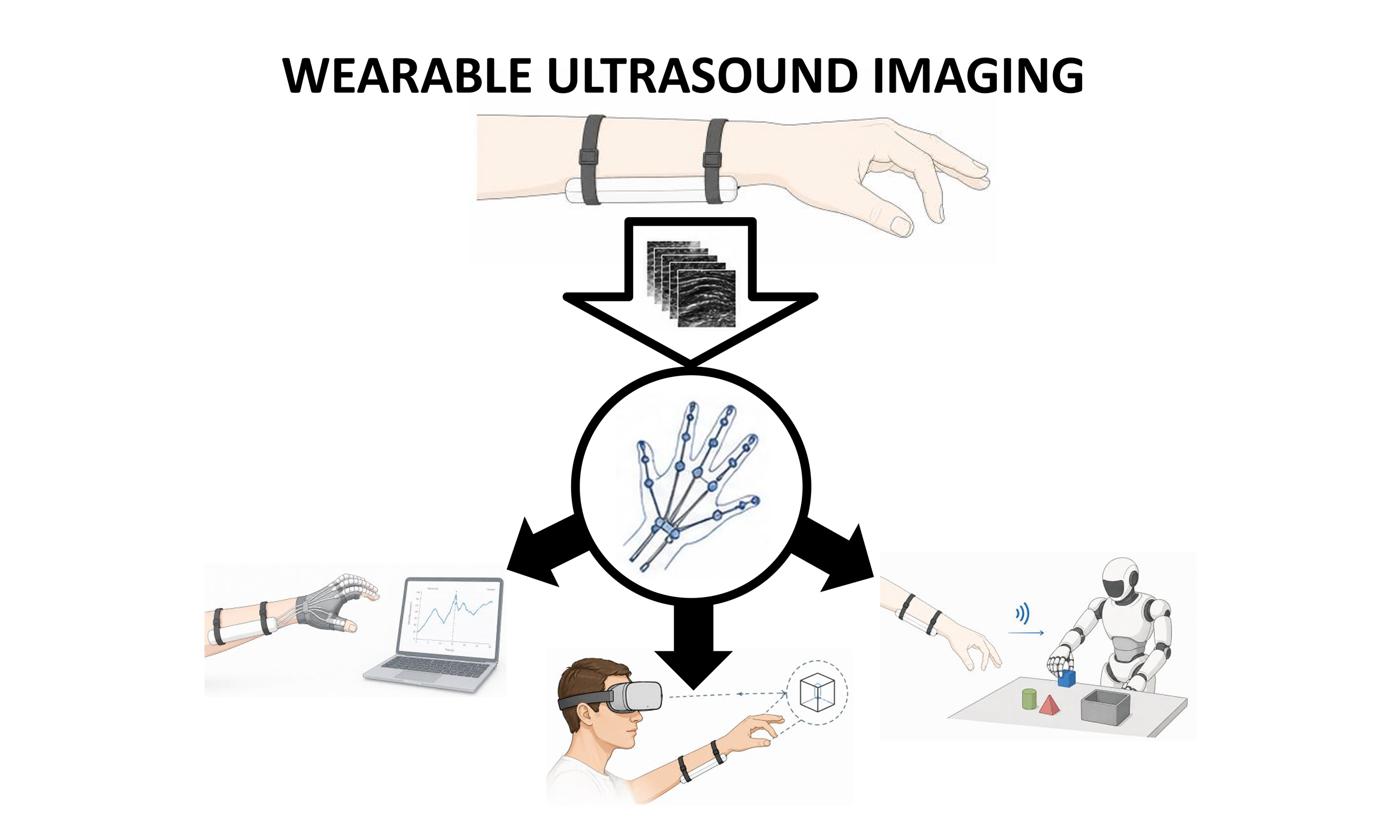
A SHIFT FROM SURFACE SENSING TO BIOMECHANICAL INTELLIGENCE
The ability to accurately and continuously track human hand motion remains a central challenge for robotics, human-computer interaction, and emerging spatial computing systems. For decades, dominant approaches have relied on surface-level sensing modalities, including vision-based tracking systems[1], electromyography (EMG)[2], and alternative wearable modalities such as strain[3] and inertial sensors[4] to infer hand kinematics. Fundamentally, they depend on indirect proxies of motion, inferring intent from surface electrical or kinematic signals rather than directly observing biomechanical actuation[5]. This often limits robustness, precision, and generalizability across environments and users[6,7].
In this context, the recent work by Lu et al. represents a new paradigm in subsurface intelligent sensing, enabling continuous reconstruction of all 22 degrees of freedom (DOFs) of the hand with high accuracy and low latency[8]. By integrating wearable ultrasound imaging with machine learning, the authors introduce a wrist-mounted system capable of directly observing subsurface anatomical structures, including tendons and muscles, in real time, as illustrated in Figure 1. Subsurface intelligence in this sense is defined as the direct inference of human intent from dynamically imaged internal anatomical structures, rather than from externally observable electrical, optical, or kinematic proxies. Unlike traditional sensors, subsurface intelligent sensing does not rely on external cameras or restrictive instrumentation and bypasses the inherent ambiguity of surface measurements. This aligns closely with the broader paradigm of embodied intelligence, where sensing, control, and physical structure are tightly integrated[9].
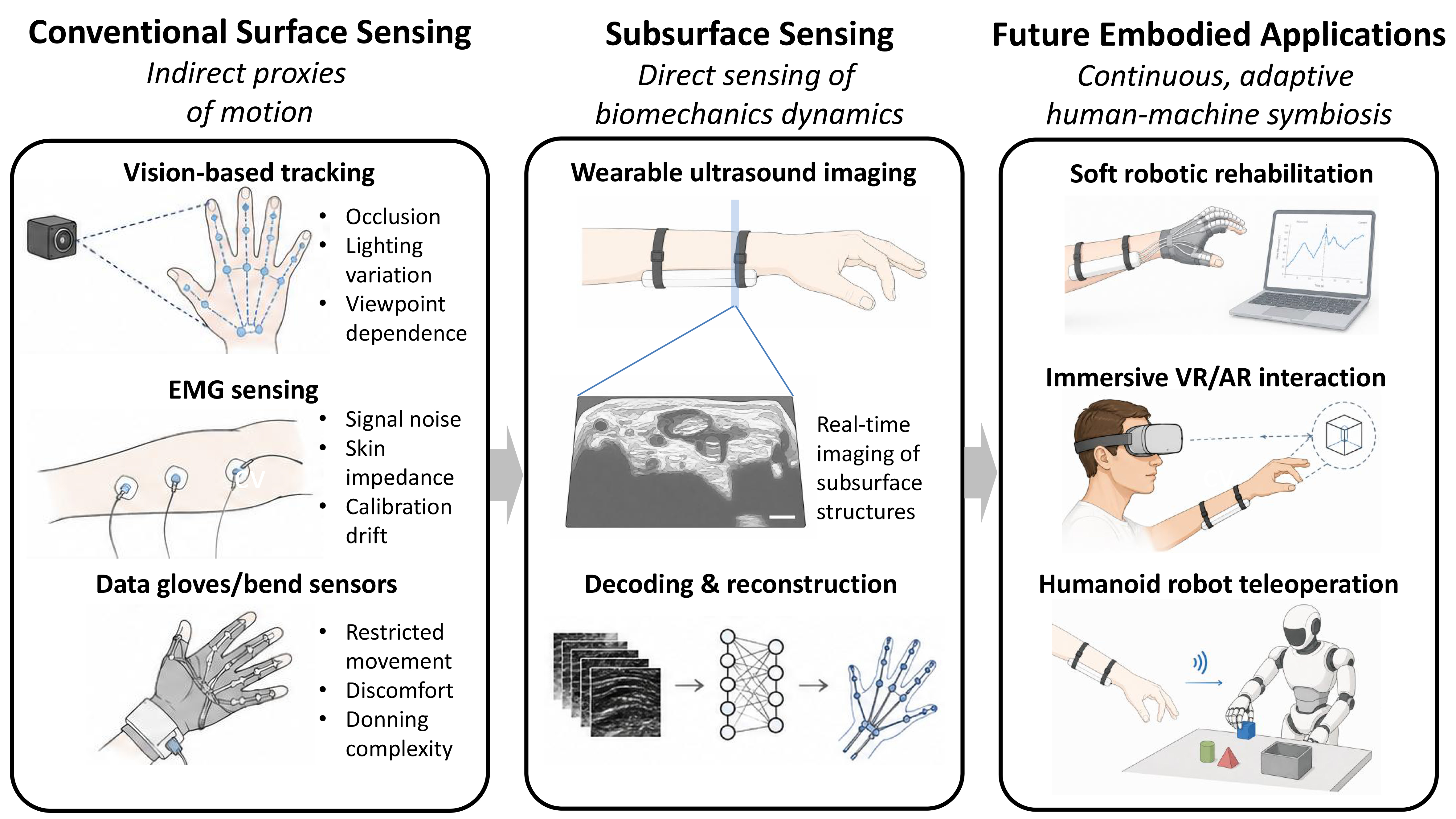
Figure 1. From surface sensing to subsurface intelligence for wearable hand tracking. Conventional methods infer hand motion from surface-level electrical or kinematic proxies (left), while contemporary subsurface sensing directly images deep tissue dynamics (center). This progression drives real-time reconstruction of continuous 22-DOF hand kinematics for VR control, rehabilitation, and teleoperation (right). DOF: Degree of freedom; VR: virtual reality; EMG: electromyography; AR: augmented reality.
Importantly, this approach also addresses persistent limitations in existing hand-tracking systems [Table 1]. Vision-based methods, while powerful, are susceptible to occlusions, lighting variability, and viewpoint constraints[10,11]. EMG-based systems, though wearable, often suffer from signal variability due to electrode placement, skin impedance, and user-specific physiology[7]; these systems are typically limited to recognizing predefined discrete gestures rather than continuously reconstructing arbitrary hand configurations. By contrast, Lu et al. showed that ultrasound imaging provides a stable and anatomically grounded sensing modality, capable of capturing deep tissue motion with high fidelity across diverse conditions[8].
Comparison table of key technologies and device architectures involving wearable tracking
| Approach | Sensing modality | Wearing site | Motion adaptability | Latency | Clinical stage |
| Vision-based tracking[10,11] | RGB/depth cameras | External | Limited by occlusion, lighting, and viewpoint | Real-time | Widely adopted in human machine interfaces |
| EMG-based wearable systems[12] | Surface EMG | Forearm | Sensitive to electrode placement, perspiration, and muscle fatigue | Real-time | Extensively investigated in prosthetics and rehabilitation |
| Smart gloves[13] | Flex, strain or inertial sensors | Hand | Good under controlled use; may restrict natural movement | Real-time | Commercial and clinical motion assessment |
| Lu et al.[8] | Wearable ultrasound imaging + deep learning | Wrist | Continuous 22-DOF tracking; robust to visual occlusion but sensitive to coupling quality and sensor placement | < 9 ms inference | Clinical translation remains to be established |
Enabling continuous and natural human-machine interaction
Beyond its sensing novelty, the system introduced by Lu et al. enables continuous reconstruction of hand motion where subtle variations in movement can be captured and interpreted[8]. This capability has profound implications for emerging domains such as virtual and augmented reality, teleoperation, and assistive technologies[14]. In immersive environments, natural hand tracking is essential for intuitive manipulation of virtual objects[15], including continuous pinch-based scaling and multi-axis object control in real time. Current solutions often require external cameras or instrumented gloves, whereas a compact, wrist-worn system that operates independently of environmental infrastructure could significantly improve usability, enabling seamless integration into everyday settings.
Similarly, in robotic teleoperation, continuous hand motion tracking can enhance the fidelity of human-robot interaction, as evidenced by real-time control of robotic hands for dexterous tasks. Learning-based control frameworks increasingly rely on rich demonstration data to train visuomotor policies[16]. High-resolution, temporally continuous hand kinematics, captured directly from the user, could provide valuable supervision signals, improving both the efficiency and generalization of such systems, particularly in data-driven manipulation frameworks[17]. In this sense, wearable ultrasound sensing may serve not only as an interface, but also as a high-resolution data-generation platform for learning from demonstration and imitation-based control[18]. Crucially, the robustness of subsurface sensing also opens the door to deployment in unstructured, real-world environments and is particularly important for applications in healthcare and rehabilitation, where consistent performance is essential.
IMPLICATIONS FOR SOFT ROBOTICS AND WEARABLE REHABILITATION
The implications of this work are especially compelling for soft robotics and wearable rehabilitation, which aim to translate human intent into assistive actuation. Soft robotic gloves have emerged as promising devices for restoring hand function after neurological trauma by using compliant materials for safe and adaptive interaction with the human body[19,20]. However, most devices rely on EMG signals or simple motion sensors, which provide limited resolution and require user-specific calibration. A biomechanical intelligent system could hence enable more precise and responsive control of assistive devices.
Recent magnetic resonance imaging (MRI)-compatible[21] and fully fabric-based soft robotic gloves[22] illustrate the growing maturity of wearable rehabilitation platforms. The work of Lu et al. complements these systems by providing a high-fidelity biomechanical sensing layer in closed-loop assistive control[8]. Compared with state-of-the-art systems[23], a model inference time of less than 9 ms shows promise for real-time closed-loop feedback. Additionally, unlike prior ultrasound-based sensing research[24,25], this framework enables continuous, high-dimensional estimation of hand kinematics that respond in real time to the user’s biomechanical state.
For instance, a controller would compute the error between estimated kinematics and a desired trajectory and modulate actuator assistance accordingly. A proportional assistive force will be provided by a soft robotic actuation system, either tendon- or pneumatic-driven, to the deficit between the patient’s voluntary movement and a desired trajectory, thereby implementing the assist-as-needed paradigm for motor rehabilitation robotics.
CHALLENGES AND THE ROAD TOWARD EMBODIED INTELLIGENCE
Despite its promise, several challenges must be addressed before wearable ultrasound-based hand tracking can achieve widespread adoption.
First, ensuring cross-user applicability remains a key concern, particularly given the current reliance on user-specific model training. As Lu et al. pointed out, variations in anatomy, tissue composition, and sensor placement can affect signal quality and model performance[8]. Ultrasound imaging is inherently sensitive to acoustic coupling between the transducer and skin. Probe pressure directly affects the degree to which the soft interface maintains conformal contact with the wrist surface, where moderate changes in strap tightness may alter acoustic impedance and introduce spatial artifacts. Moreover, small shifts in sensor position caused by natural wrist movement may further alter imaging planes, producing temporal inconsistencies that challenge model robustness during unconstrained daily activities. These changes the apparent morphology of the muscles that the AI model was trained on. Addressing these challenges will likely require the development of large-scale datasets, of which there is much scarcity[26] and few standardized data augmentation methods[27]. More generalizable learning frameworks are needed considering data scarcity, potentially drawing on recent advances in foundation models for sensorimotor intelligence.
Second, while ultrasound provides rich biomechanical information, translating these signals into accurate and interpretable motion representations is nontrivial, particularly due to entanglement between joint configuration and muscle force[28]. In real-world applications, distinguishing between these two sources of morphological change is essential for reliable interpretation. The proposed system focuses on decoding joint angles under controlled conditions without accounting for variations in muscle strength at fixed joint postures. This means there may be different predictions for the same hand configuration depending on grip force, which is a critical limitation for safety-critical applications in assistive and rehabilitation robotics where distinguishing voluntary intent from isometric co-contraction is essential. The relationship between internal tissue dynamics and external kinematics is complex and context-dependent, necessitating sophisticated modeling approaches. In this regard, integrating physics-informed models with data-driven learning may offer a promising path forward.
Third, practical considerations related to hardware miniaturization, power consumption (~5 W), and long-term wearability constraints must be addressed. Advances in flexible electronics, low-power ultrasound transducers, and integrated system design will be critical in this regard. Broader literature on biomechanical energy harvesting offers a conceptually relevant connection. For instance, Zou et al. propose a wire-driven mechanism integrated into a vest-like garment that allows joint motion to excite an onboard generator without direct mechanical loading of joints[29]. Admittedly, the 5W budget is beyond what biomechanical harvesters can currently supply, so this energy-harvesting connection should be framed as a medium-to-long-term prospect rather than a near-term engineering solution.
Looking ahead, three directions will be pivotal: (1) cross-user generalization via large-scale learning; (2) multimodal sensing to disentangle force and motion; and (3) miniaturized, low-power wearable ultrasound systems. Together, these developments will determine whether such systems evolve from compelling laboratory demonstrations into ubiquitous human-machine interfaces.
Ultimately, the work of Lu et al. points toward a future in which human motion is no longer inferred but reconstructed directly from subsurface biomechanical dynamics[8]. By bridging the gap between sensing and embodiment, wearable ultrasound technologies may redefine how humans interact with machines, thereby enabling more natural, adaptive, and high-fidelity human-machine interfaces.
DECLARATIONS
Authors’ contributions
Conceived and contributed to the original draft of the manuscript: Ang, B. W. K.; Yeow, R. C. H.
Availability of data and materials
Not applicable.
AI and AI-assisted tools statement
During the preparation of this manuscript, the AI tool ChatGPT (version 5.5, released 2026-04-23) was used for language editing. The tool did not influence the study design, data collection, analysis, interpretation, or the scientific content of the work. Both authors take full responsibility for the accuracy, integrity, and final content of the manuscript. All the icons used in Figure 1 and the graphical abstract were generated by the same AI tool (version 5.5, released 2026-04-23).
Financial support and sponsorship
None.
Conflicts of interest
Both authors declared that there are no conflicts of interest.
Ethical approval and consent to participate
Not applicable.
Consent for publication
Not applicable.
Copyright
© The Author(s) 2026.
REFERENCES
1. Avogaro, A.; Cunico, F.; Rosenhahn, B.; Setti, F. Markerless human pose estimation for biomedical applications: a survey. Front. Comput. Sci. 2023, 5, 1153160.
2. Zhang, J.; Zhao, Y.; Shone, F.; et al. Physics-informed deep learning for musculoskeletal modeling: predicting muscle forces and joint kinematics from surface EMG. IEEE. Trans. Neural. Syst. Rehabil. Eng. 2023, 31, 484-93.
3. Zhao, S.; Liu, D.; Yan, F. Wearable resistive-type stretchable strain sensors: materials and applications. Adv. Mater. 2025, 37, e2413929.
4. Xu, J.; Chen, X.; Li, S.; et al. On-skin epidermal electronics for next-generation health management. Nanomicro. Lett. 2025, 18, 25.
5. Castellini, C.; van der Smagt, P. Surface EMG in advanced hand prosthetics. Biol. Cybern. 2009, 100, 35-47.
6. Scheme, E.; Englehart, K. Electromyogram pattern recognition for control of powered upper-limb prostheses: state of the art and challenges for clinical use. J. Rehabil. Res. Dev. 2011, 48, 643-59.
7. Farina, D.; Merletti, R.; Enoka, R. M. The extraction of neural strategies from the surface EMG: 2004-2024. J. Appl. Physiol. 2025, 138, 121-35.
8. Lu, G.; Kim, S.; Chen, X.; et al. Hand tracking using wearable wrist imaging. Nat. Electron. 2026, 9, 426-40.
9. Pfeifer, R.; Lungarella, M.; Iida, F. Self-organization, embodiment, and biologically inspired robotics. Science 2007, 318, 1088-93.
10. Zimmermann, C.; Brox, T. Learning to estimate 3D hand pose from single RGB images. In 2017 IEEE International Conference on Computer Vision (ICCV), Venice, Italy, Oct 22-29, 2017. IEEE; 2017. pp. 4913-21.
11. Buckingham, G. Hand tracking for immersive virtual reality: opportunities and challenges. Front. Virtual. Real. 2021, 2, 728461.
12. Ni, S.; Al-qaness, M. A. A.; Hawbani, A.; Al-Alimi, D.; Abd Elaziz, M.; Ewees, A. A. A survey on hand gesture recognition based on surface electromyography: fundamentals, methods, applications, challenges and future trends. Appl. Soft. Comput. 2024, 166, 112235.
13. Caeiro-Rodríguez, M.; Otero-González, I.; Mikic-Fonte, F. A.; Llamas-Nistal, M. A systematic review of commercial smart gloves: current status and applications. Sensors 2021, 21, 2667.
14. Chen, Z.; Min, H.; Wang, D.; Xia, Z.; Sun, F.; Fang, B. A review of myoelectric control for prosthetic hand manipulation. Biomimetics 2023, 8, 328.
15. Wang, Z. M.; Rao, M. H.; Ye, S. H.; Song, W. T.; Lu, F. Towards spatial computing: recent advances in multimodal natural interaction for Extended Reality headsets. Front. Comput. Sci. 2025, 19, 1912708.
16. Levine, S.; Finn, C.; Darrell, T.; Abbeel, P. End-to-end training of deep visuomotor policies. arXiv 2015, arXiv:1504.00702. Available online: https://doi.org/10.48550/arXiv.1504.00702. (accessed on 27 Jul 2026).
17. Ud Din, M.; Akram, W.; Saad Saoud, L.; Rosell, J.; Hussain, I. Multimodal fusion with vision-language-action models for robotic manipulation: a systematic review. Inf. Fusion. 2026, 129, 104062.
18. Tsuji, T.; Kato, Y.; Solak, G.; et al. A survey on imitation learning for contact-rich tasks in robotics. arXiv 2025, arXiv:2506.13498. Available online: https://doi.org/10.48550/arXiv.2506.13498. (accessed on 27 Jul 2026).
19. Laschi, C.; Mazzolai, B.; Cianchetti, M. Soft robotics: technologies and systems pushing the boundaries of robot abilities. Sci. Robot. 2016, 1, eaah3690.
20. Cappello, L.; Meyer, J. T.; Galloway, K. C.; et al. Assisting hand function after spinal cord injury with a fabric-based soft robotic glove. J. Neuroeng. Rehabil. 2018, 15, 59.
21. Yap, H. K.; Kamaldin, N.; Lim, J. H.; Nasrallah, F. A.; Goh, J. C. H.; Yeow, C. H. A magnetic resonance compatible soft wearable robotic glove for hand rehabilitation and brain imaging. IEEE. Trans. Neural. Syst. Rehabil. Eng. 2017, 25, 782-93.
22. Yap, H. K.; Khin, P. M.; Koh, T. H.; et al. A fully fabric-based bidirectional soft robotic glove for assistance and rehabilitation of hand impaired patients. IEEE. Robot. Autom. Lett. 2017, 2, 1383-90.
23. Yu, M.; Cheng, X.; Peng, S.; et al. A self-sensing soft pneumatic actuator with closed-Loop control for haptic feedback wearable devices. Mater. Design. 2022, 223, 111149.
24. Engdahl, S. M.; Acuña, S. A.; Kaliki, R. R.; Sikdar, S. Sonomyography for control of upper-limb prostheses: current state and future directions. J. Prosthet. Orthot. 2024, 36, 174-84.
25. Akhlaghi, N.; Baker, C. A.; Lahlou, M.; et al. Real-time classification of hand motions using ultrasound imaging of forearm muscles. IEEE. Trans. Biomed. Eng. 2016, 63, 1687-98.
26. Knudson, D. Confidence crisis of results in biomechanics research. Sports. Biomech. 2017, 16, 425-33.
27. Halmich, C.; Höschler, L.; Schranz, C.; Borgelt, C. Data augmentation of time-series data in human movement biomechanics: a scoping review. PLoS. One. 2025, 20, e0327038.
28. Hug, F.; Tucker, K.; Gennisson, J. L.; Tanter, M.; Nordez, A. Elastography for muscle biomechanics: toward the estimation of individual muscle force. Exerc. Sport. Sci. Rev. 2015, 43, 125-33.
Cite This Article
 Open Access
How to Cite
Download Citation
Export Citation File:
Type of Import
Tips on Downloading Citation
Citation Manager File Format
Type of Import
Direct Import: When the Direct Import option is selected (the default state), a dialogue box will give you the option to Save or Open the downloaded citation data. Choosing Open will either launch your citation manager or give you a choice of applications with which to use the metadata. The Save option saves the file locally for later use.
Indirect Import: When the Indirect Import option is selected, the metadata is displayed and may be copied and pasted as needed.
About This Article
Copyright

Data & Comments
Data
0











Comments
Comments must be written in English. Spam, offensive content, impersonation, and private information will not be permitted. If any comment is reported and identified as inappropriate content by OAE staff, the comment will be removed without notice. If you have any queries or need any help, please contact us at [email protected].