fig5
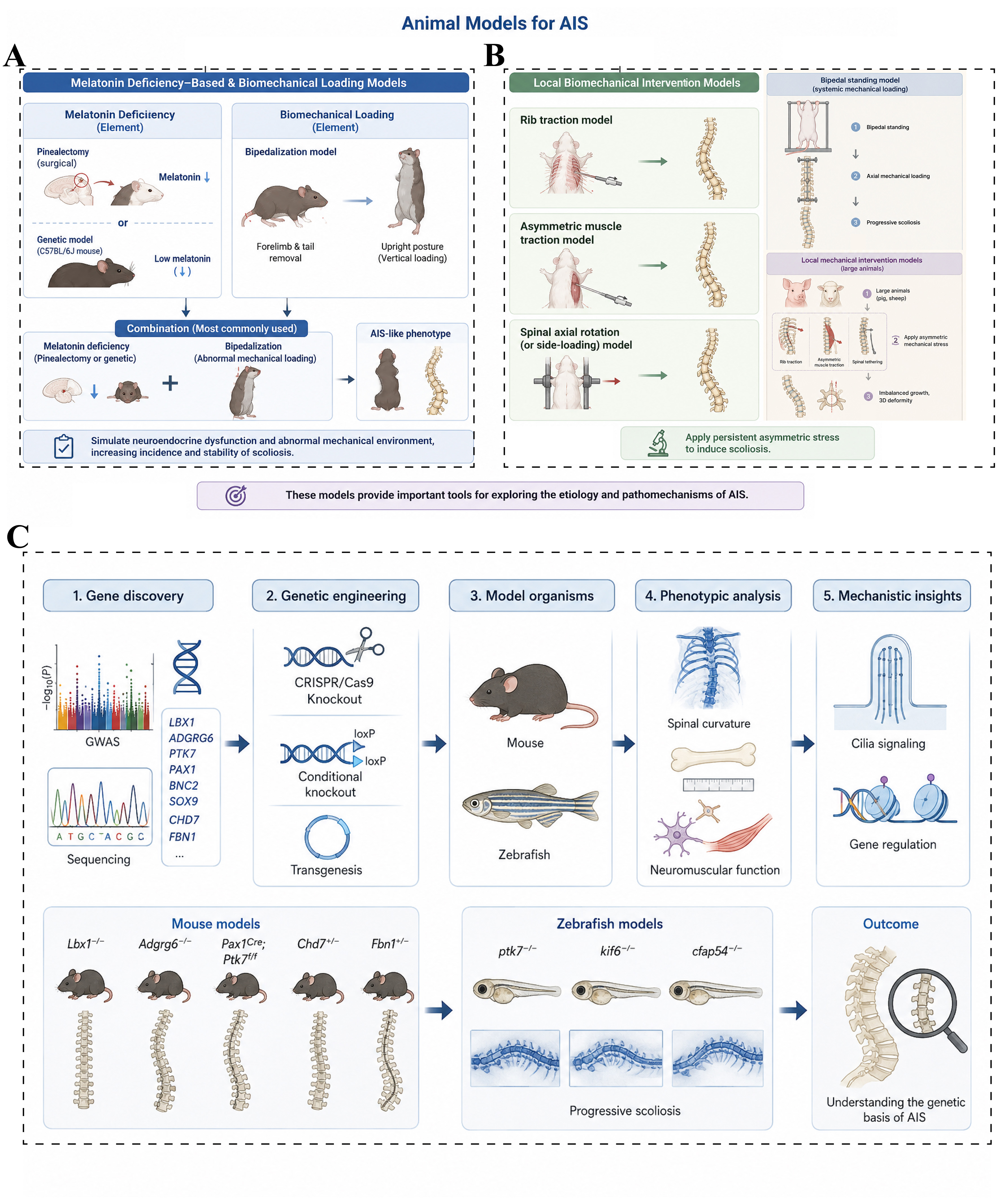
Figure 5. Animal models of scoliosis. (A) Melatonin deficiency-based models: Melatonin deficiency is established either by pinealectomy or by using animals with naturally low melatonin levels, followed by bipedalization to simulate abnormal vertical loading. The combined effects of melatonin deficiency and altered mechanical loading can induce AIS-like scoliosis; (B) Biomechanics-based models: Local mechanical intervention models, including rib traction, asymmetric muscle traction, and asymmetric spinal loading, induce scoliosis through sustained asymmetric mechanical stress and are used to investigate the mechanobiological mechanisms underlying AIS progression; (C) Genetic models: Based on AIS susceptibility genes identified through GWAS and sequencing analyses, mouse and zebrafish models are generated using gene-editing technologies. Phenotypic assessments of spinal curvature, growth and development, and neuromuscular function are then performed to elucidate the genetic factors and molecular mechanisms associated with AIS. AIS: Adolescent idiopathic scoliosis; GWAS: genome-wide association studies.